



✨ Your curated wrap-up from The Southeast Asia Desk.
Welcome back.
After a week off to observe Day of Silence and the joyous gatherings of Eid al-Fitr, our newsroom returns to a region that has not paused, even as we did.
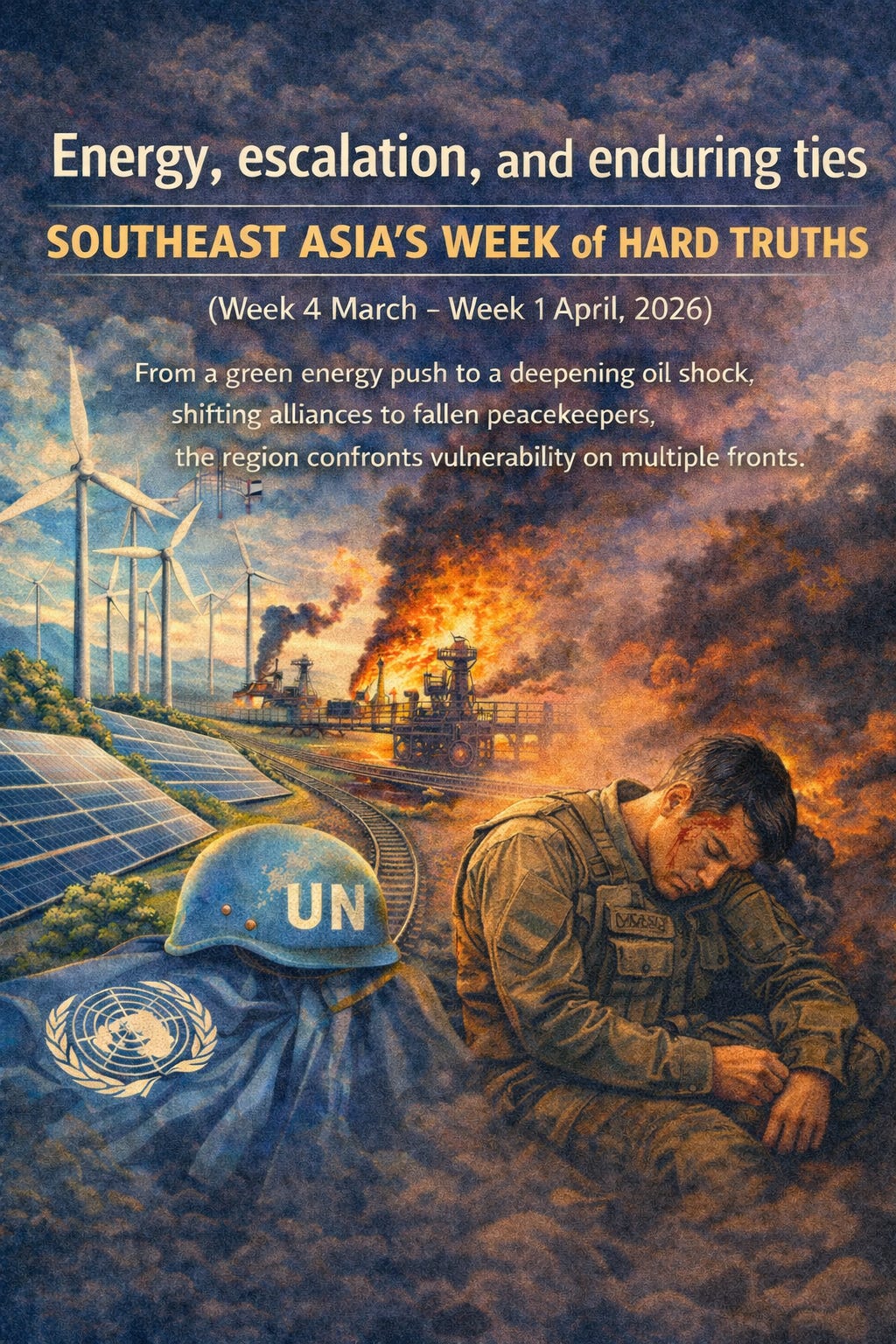
This week brought news that spans the spectrum of Southeast Asia’s modern reality: ambition for a cleaner future, the sudden pain of geopolitical distance, the quiet recalibration of loyalties, and the ultimate sacrifice made far from home.
Here is your week in focus:
🌍⚡ UN backs new climate foundation for ASEAN’s energy leap
The United Nations ESCAP has launched the Energy Transition for Green Growth and Prosperity (ETGTP), a $4 million, three-year initiative to help Southeast Asian nations shift from coal to clean energy. For a region that produces 80% of the global coal supply, this is a quiet but critical pivot.
Read more:
https://www.thesoutheastasiadesk.com/p/un-support-on-sea-climate-foundations
🛢️ Southeast Asia scrambles as Hormuz closure triggers oil crisis
The effective closure of the Strait of Hormuz has sent shockwaves through regional fuel markets. From four-day workweeks in the Philippines to fuel rationing in Cambodia and export bans in Thailand, governments are scrambling. With reserves as low as 21 days in Indonesia, the crisis has exposed a fundamental vulnerability: Southeast Asia’s economy runs on connectivity, but its energy infrastructure runs on borrowed time.
Read more:
https://www.thesoutheastasiadesk.com/p/southeast-asia-scrambles-as-strait
🌏 What Southeast Asians think about ASEAN Dialogue Partners?
A major new survey by the Foreign Policy Community of Indonesia (FPCI) reveals a strategic realignment in public opinion across all 11 ASEAN states. Trust and respect for the United States have fallen, while China’s standing as the most trusted and respected partner has risen, and Japan remains the region’s most trusted partner overall.
Read more:
https://www.thesoutheastasiadesk.com/p/what-southeast-asian-think-about
🇺🇳 Indonesia mourns three peacekeepers killed in Lebanon
In a stark reminder of the human cost of global instability, three Indonesian UN peacekeepers were killed within 48 hours in southern Lebanon—not in combat, but while carrying out logistics and humanitarian duties. With over 1,900 Southeast Asian personnel currently in UNIFIL, the incident underscores a new reality: peacekeepers are now operating inside active conflict zones.
Read more:
https://www.thesoutheastasiadesk.com/p/indonesia-mourns-three-peacekeepers
🌏 Bottom line: No longer distant shocks
This week’s stories share a single thread: distance is no longer protection. A strait 6,000 km away emptied fuel stations in Vientiane. A tariff debate in Washington reshaped loyalties in Jakarta. A conflict in Lebanon brought grief to villages across Indonesia.
Southeast Asia is no longer a spectator to global crises. It is on the front lines of energy, diplomacy, and sacrifice.
✨ Stories to linger over, one week at a time.
(ELS/QOB)