




🎣 The Hook
Check, check, one, two…
Ehmmm
Attention, Ladies and gentlemen
We have an important update
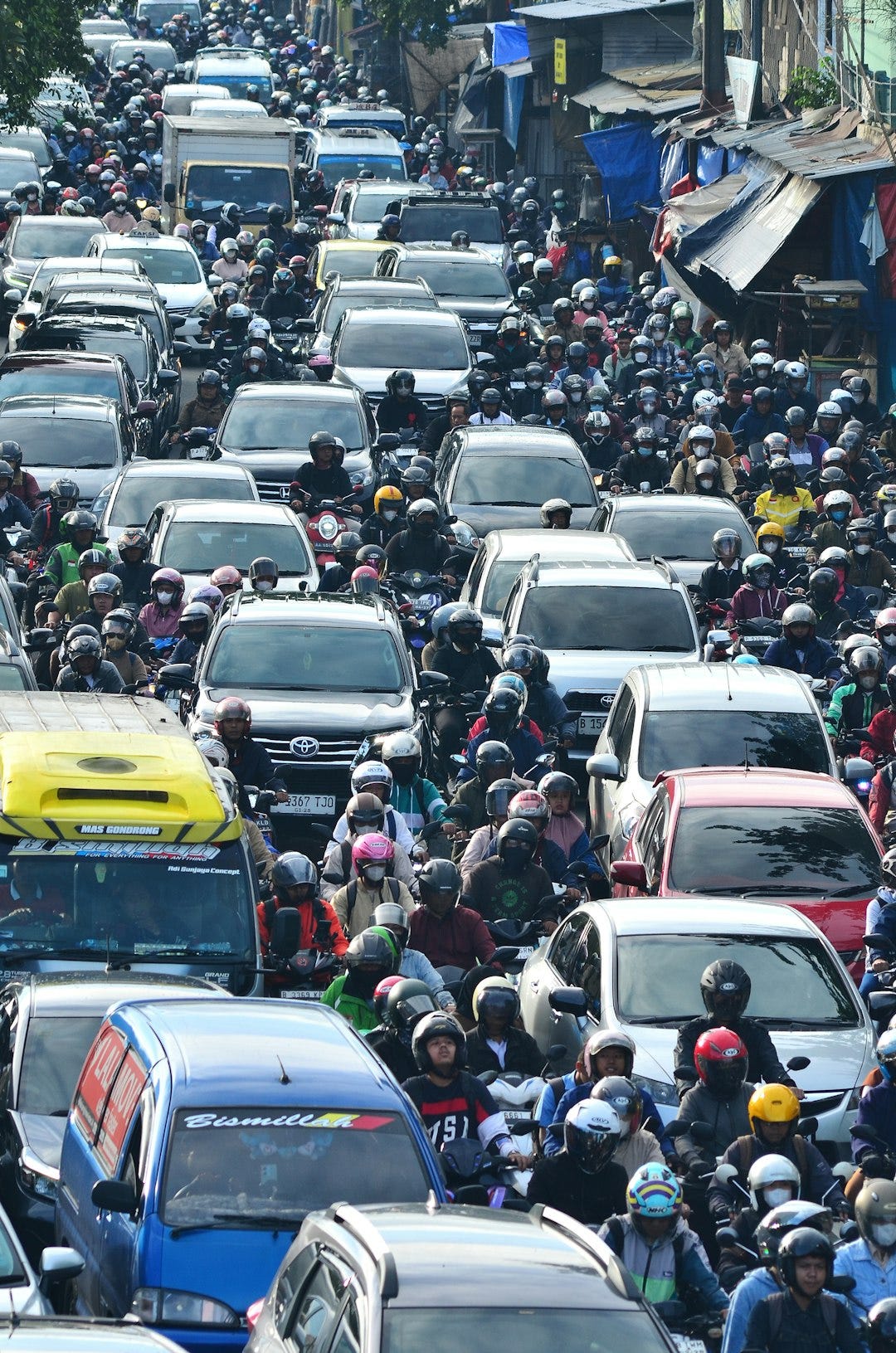
Jakarta has officially beaten Tokyo as the world’s largest city.
And for the first time in 25 years, Tokyo has to take off its crown.
On the other side, Asia dominates the top ten, and Southeast Asia is very much part of that story
But the question is
Is this a moment to celebrate, or a reason to worry?
Hello and welcome to The Southeast Asia Desk Weekly Dispatch Podcast.
I’m Akasha Viandri.
This is where we slow down the headlines and make sense of the stories shaping our region.
Did you hear the announcement? That’s insane
So how did this happen?
🏆 The “Winner” list
The United Nations Department of Economic and Social Affairs, specifically, its Population Division, just released The World Urbanization Prospects 2025.
This is the 22nd edition of a report the UN has been publishing since 1963.
So yes, they’ve been watching this for a very long time.
In this report, they reveal the world’s megacities.
It sounds impressive.
The UN defines a “megacity” as an urban area with 10 million people or more.
But what it really means is simple: most populous.
Back in 1975, there were only eight megacities.
Today? That number has quadrupled to 33.
And here’s the fun part: 19 of them are in Asia.
Asia dominates the top ten. Literally, nine out of ten cities.
I’ll show you the leaderboard:
Number one is Jakarta, Indonesia, with close to 42 million people.
Second comes Dhaka, Bangladesh, nearly 37 million.
Tokyo drops to third with 33.4 million.
And at number four, Cairo, Egypt, the only non-Asian city in the top ten.
Then come New Delhi in India, Shanghai and Guangzhou in China, Manila in the Philippines, Kolkata in India, and lastly, Seoul in South Korea.
But not every win comes with a good prize.
This surge isn’t driven by economic opportunity alone.
Climate displacement, rural migration, and affordability crises are pushing millions into major Asian cities.
Prize ❌ Challenge ✅
Let’s zoom in on our top three: Jakarta, Indonesia; Dhaka, Bangladesh; and Tokyo, Japan.
Jakarta, for one, is quite literally sinking.
Every year, parts of the city sink between one and fifteen centimeters.
Rising sea levels could submerge up to 25 percent of the city by 2050.
Add flooding, waste management problems, air pollution, you name it.
At the same time, the cost of living keeps rising, while wages struggle to keep up.
Low-income workers have taken to the streets in protest.
And infrastructure? It’s being pushed to the breaking point.
Dhaka faces similar pressures, made worse by climate-driven migration from flood-prone rural areas.
Meanwhile, Tokyo faces a different set of challenges, like sky-high property prices, relentless congestion, an aging population, and the constant risk of a major earthquake beneath the city.
These challenges are more likely to happen in some Southeast Asian countries as well, since they’re also on the megacity list, like Bangkok, Kuala Lumpur, and Singapore.
Their growth may be slower and more controlled, but they’re not immune to climate stress.
⭐ Can cities overcome this?
So governments are under pressure to work harder and work smarter.
In Indonesia, one solution on the table is moving the capital to Nusantara to ease Jakarta’s burden.
The buildings are there
Oh don’t forget the famous Garuda statue.
Some people say it looks like Batman’s head. Others say Lord Voldemort’s home. Some even say Jack from Oggy and the Cockroaches.
They said that. Not me.
But progress has been slow, especially under the current administration.
So for now, we cross our fingers and wait.
Because the future is still a mystery, and yes, that includes this new capital city.
In Japan, the government is offering financial support to people willing to move out of Tokyo and settle in rural areas
To reduce density and address labor shortages.
Because let’s be honest, people move to cities for a reason
Cities are hubs of economic and social development.
And today, cities are home to about 45 percent of the world’s 8.2 billion people.
But rapid urban growth also brings real risks to infrastructure, to social equity, and to environmental sustainability.
So back to the question, is this something to cherish, or to worry about?
The answer is both.
Research shows that dense cities can actually help fight climate change through better land use, walkable streets, urban forests, green roofs, and smarter public transport.
This means governments have to step up, to build cities that are sustainable and inclusive,
where people can live comfortably, with affordable homes, reliable public transport, clean water, sanitation, healthcare, you name it
🎧 The Wrap
As Li Junhua, UN Under-Secretary-General for Economic and Social Affairs says
“Urbanization is a defining force of our time. When managed inclusively and strategically, it can unlock transformative pathways for climate action, economic growth, and social equity.”
I’m Akasha Viandri, and this has been The Southeast Asia Desk Weekly Dispatch Podcast, where we slow down the noise and follow the region’s compass.
If you enjoyed this episode, subscribe to our newsletter at thesoutheastasiadesk.com, and join us again next weekend for stories to linger over, one weekend at a time.
(AKS/QOB)


