




✨ Opening
Do you know salak? No?
How about snake fruit? Does that ring a bell?
Salak is a native fruit of Indonesia.
A quirky fruit with scaly skin and a sweet-tart bite, one that often gets misunderstood.
Some people decide very quickly that it’s not their favourite.
Hmm. Poor you.
But behind the look, this fruit has just earned something bigger: Indonesia’s first-ever global recognition.
And no, this isn’t about fruit exports. It’s about an agricultural system shaped by tradition.
Let’s hear the story.
Hello and welcome to The Southeast Asia Desk Weekly Dispatch Podcast.
I’m Akasha Viandri. This is where we slow down the headlines and make sense of the stories shaping our Southeast Asia Region.
🌱 The Story
To understand this, let’s go back for a moment to 2025.
Last year, Indonesia, along with 13 other countries, received recognition at the GIAHS Awards Ceremony in Rome.
GIAHS stands for Globally Important Agricultural Heritage Systems, a programme under the Food and Agriculture Organization of the United Nations.
The countries selected aren’t recognised just for beautiful landscapes, but for agricultural systems that in one living system sustain:
rural livelihoods,
while combining biodiversity,
resilient ecosystems,
tradition, and
innovation.
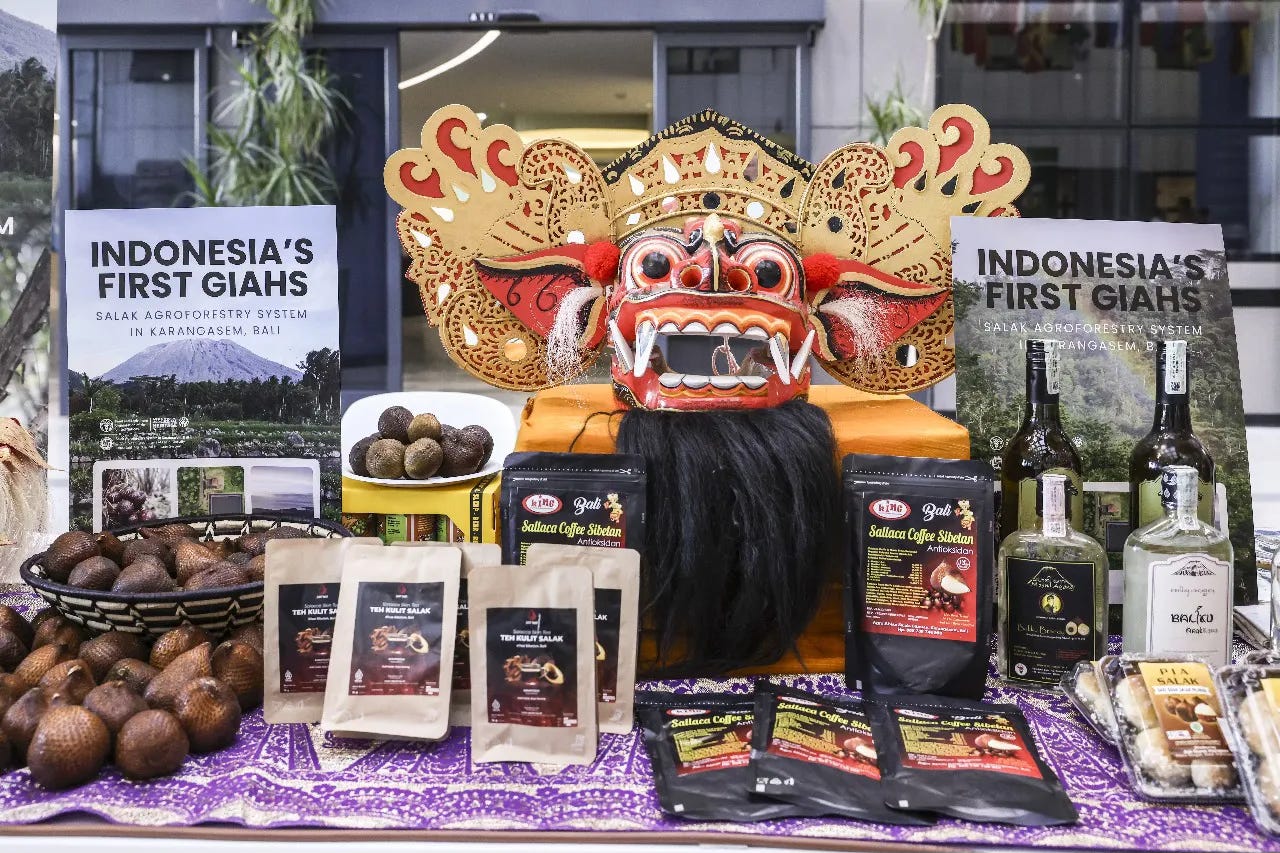
For Indonesia, the nomination was awarded to Salak Agroforestry System of Karangasem, Bali.
And this marked the first time Indonesia has received this recognition.
If that sounds like a mouthful, just stick with me. Because what it stands for is even richer.
🌾 What is This System?
So what exactly is the Salak Agroforestry System?
In Karangasem, one of the driest regions of Bali, around 2,800 farmers cultivate 12 local salak varieties, alongside coconuts, vegetables, and other crops.
So what makes it special?
First, integration.
This isn’t just about salak. Multiple crops grow together in one system, reducing dependence on a single harvest and lowering the risk of pests and disease.
Second, structure.
Taller canopy trees provide shade, while understory plants benefit from filtered sunlight, maximising land use and supporting diverse habitats.
Third, nothing goes to waste.
Every part of the salak plant is used.
All of this is rooted in Bali’s philosophies of Tri Hita Karana and Tri Mandala—ways of life that emphasise harmony between people, nature, and spirit.
The system is managed by local communities and protected by customary regulations known as awig-awig.
In short, this isn’t just farming.
It’s a way of life shaped by generations of ecological wisdom.
🌍 What This Means for Southeast Asia
With this recognition, Indonesia now joins a global network of heritage food systems across 29 countries, including Brazil, Italy, Kenya, Morocco, China, and more.
And the good news? Our neighbours, the Philippines and Thailand, are on the list too.
In the northern Philippines, the Ifugao Rice Terraces were recognised for their community-based management, guided by customary laws, social taboos, and traditions passed down through generations.
In Thailand, the Thale Noi wetland pastoral buffalo agro-ecosystem was recognised for its shared resource management, where survival depends on cooperation, collective rules, and sustainable use of wetlands.
These recognitions go beyond prestige.
Southeast Asia is home to many traditional farming systems, from rice terraces to agroforestry.
This recognition reinforces the role of agroecology and heritage-based farming as pathways toward:
resilient,
diversified, and
culturally rooted food systems,
amid challenges, like:
land conversion,
climate change, and
declining youth interest.
It also opens space for the exchange of traditional knowledge, ecological practices, and cultural values across countries.
And it reminds us of something important:
Local knowledge often dismissed as “old ways” can offer solutions to very modern problems, from unsustainable agriculture to land-use practices that threaten food security and rural livelihoods.
🎙️ Closing
For now, only three Southeast Asian countries are on the list, but this opens the door for many more agricultural systems across the region to be recognised.
Because these systems don’t just preserve tradition. They offer alternatives for the future.
I’m Akasha Viandri, and this has been The Southeast Asia Desk Weekly Dispatch Podcast, where we slow down the noise and follow the region’s compass.
If you enjoyed this episode, subscribe to our newsletter at thesoutheastasiadesk.com
and join us again next weekend for stories to linger over, one weekend at a time.
(AKS/RHZ)


