




🎣 The Hook ⭐
Let’s talk about home.
Simply, home means a place where you live.
Emotionally speaking, home is where the heart is, said a random coffee cup.
And if you follow your heart, then your home can be everywhere, including Southeast Asia.
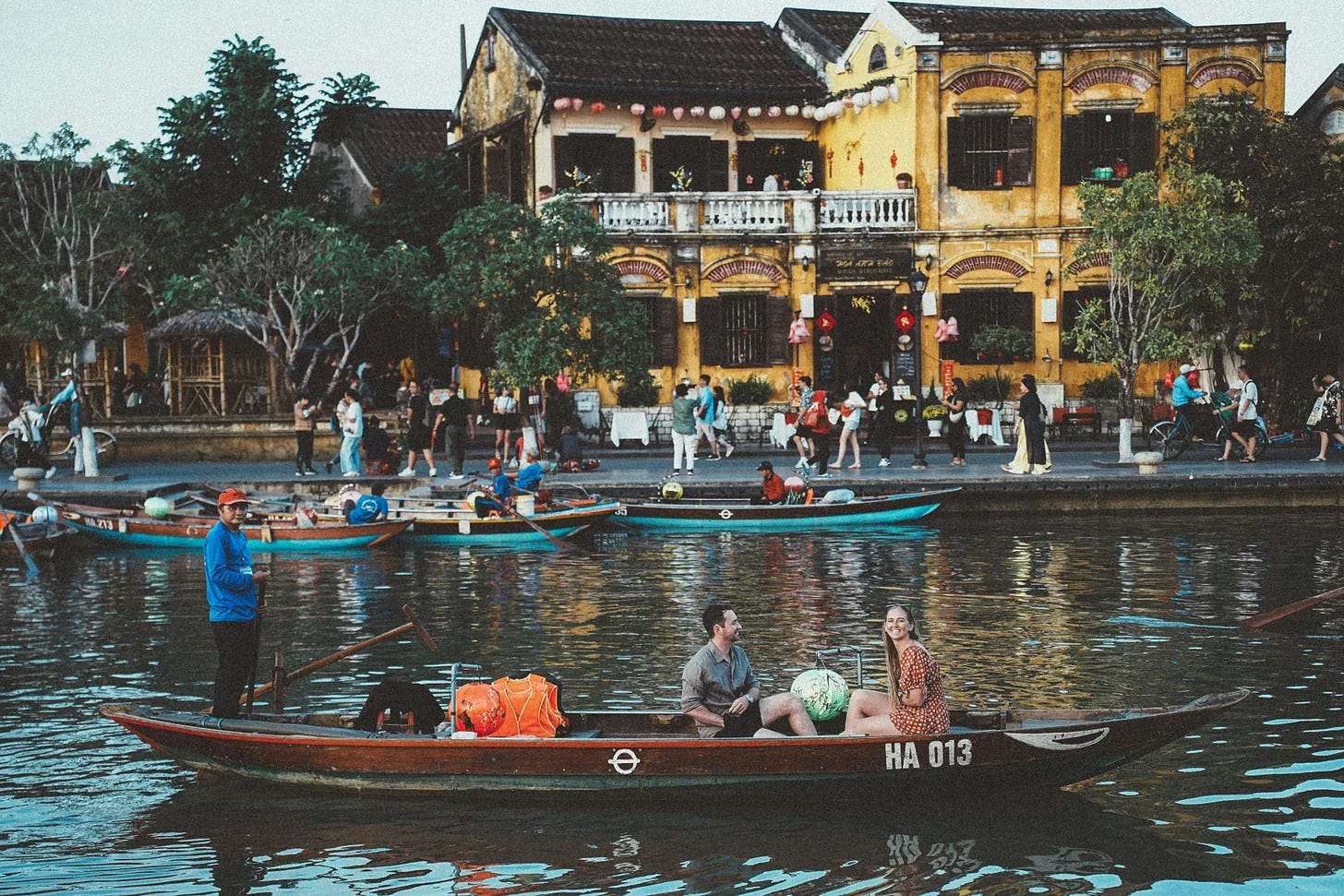
Numbers have proven that Southeast Asia is the second home for foreigners to live, because of its affordability
But how about the people who really live in the country? Do they live comfortably?
Hello and welcome to The Southeast Asia Desk Weekly Dispatch Podcast.
I’m Akasha Viandri.
This is where we slow down the headlines and make sense of the stories shaping our region.
💸 SEA is Affordable for Expatriates?
So, in this episode, we’re talking about affordable living in Southeast Asia, particularly in Indonesia, for long-stay foreign workers, such as expatriates and digital nomads.
Who says it’s affordable?
Well, the 2025 Expat Insider study by InterNations surveyed over 10,000 expats from 172 nationalities.
And the result?
Vietnam was crowned the world’s most affordable country for expats, for the 5th straight year.
Survey participants were asked to rate their satisfaction with their financial situation and the general cost of living, and to indicate whether their disposable household income was sufficient to lead a comfortable life in their country of residence.
If that sounds like a mouthful, here’s the summary: Southeast Asia is a wallet-friendly region to live in.
Other Southeast Asia countries are also on the list, like Thailand on the 5th, Indonesia on the 6th, the Philippines on the 7th, and Malaysia on the 9th.
How about Singapore? That’s a different animal.
Still, half of ASEAN made the top 10.
And another group of long-stayers agrees, digital nomads.
The digital-nomad boom strengthened after the pandemic, especially in Indonesia, Thailand, and Malaysia, all of which now offer longer-stay visas for remote workers.
According to 2019 data from ASEAN Post and Nomad List, the big 4 of digital nomad destinations: Bali, Indonesia, attracted around 4,000 digital nomads; Chiang Mai, Thailand, had more than 1,600 digital nomads; Bangkok, Thailand, with around 500 digital nomads; and Kuala Lumpur, Malaysia, with nearly 150 digital nomads.
Fast-forward to 2025, and those numbers have doubled.
Bali alone is projected to host over 9,000 digital nomads this year.
What is their reason? The answers vary, from scenery to culture, but the essential one is affordability.
🪙 The Economic Impact
So what can we expect from all of this?
Well, for one thing, it is a bigger contribution to the economy.
When more long-stayers choose a place to live, it often leads to more businesses opening, more jobs available, and higher economic returns for local communities.
Take Bali, for example.
There’s no precise data on the impact of long-stayers alone, but together with other tourists, they make a significant contribution to the island’s economic growth.
Bank Indonesia estimates that Bali’s economy in 2025 will reach the upper limit of 5.0 to 5.8 percent, with 41% of that growth coming from the tourism sector, and the rest from agriculture, the creative economy, and investment.
It’s expected to continue rising in 2026 and 2027.
Another example is Thailand.
According to a government statement, they want to engage long-stayers more actively in local activities.
Why? Because the returns are huge.
From January to November 2025, Thailand welcomed more than 28 million foreign tourists, generating about 1.3 trillion baht, or roughly 40.6 billion US dollars.
Sounds great, doesn’t it?
🧭 What We Miss
But here’s the part that we miss.
Quoting CNA, observers and activists say that the surge in long-stayers, here digital nomads, has led to overtourism and soaring property prices in many parts of the world.
And the numbers back it up.
In 2024, Phuket, Thailand, saw property prices jump 8%; Langkawi, Malaysia, recorded a 4% rise; and Denpasar, Bali, Indonesia, climbed up to 15.1%.
Let’s zoom in on Bali.
Local said, before the digital-nomad boom, most tourists stayed in hotels or hostels.
But now?
Remote workers want privacy and space, so villas have become the new norm.
And that changes everything.
Landowners who have money are converting rice fields into villas.
Those who can’t?
Many ended up selling their land to local and foreign investors, especially during the pandemic.
And here’s the kicker: infrastructure hasn’t kept up.
Roads and drainage are struggling.
The result?
More traffic, more flooding, more strain on local communities.
And this is only a small part of what locals feel.
And besides, one reason long-stayers say Southeast Asia is ‘affordable’ is because they’re earning in dollars, euros, or pounds.
With those currencies, you can live like a queen or a king in many Southeast Asian countries — including Indonesia.
The 2025 average minimum wage across all provinces in Indonesia is around 3.3 million rupiah, and expatriate salaries can be seven to ten times that amount, or even more.
Another example is a digital nomad from the US, interviewed by Business Insider.
He lived in Bali for almost four years, earning about 140,000 dollars a year, roughly 2 billion rupiah.
He said things were getting more expensive, like rental costs.
But honestly? With that income, you can still live very comfortably here.
No offense.
📩The Wrap
So whose fault is this?
Honestly… I’m not here to blame anyone.
It’s complex, with many elements involved.
And it’s certainly not the fault of the long-stay foreign workers.
But the government…
Please, do more
If long-stay foreign workers can live comfortably here, ask yourself..
Can you build a comfortable life in your own country?
I’m Akasha Viandri, and this has been The Southeast Asia Desk Weekly Dispatch Podcast, where we slow down the noise and follow the region’s compass.
If you enjoyed this episode, subscribe to our newsletter at thesoutheastasiadesk.com, and join us again next weekend for stories to linger over, one weekend at a time.
(AKS/QOB)


