




🎯 Main Takeaway
The post-pandemic recovery of tourism in Southeast Asia has exceeded expectations, but the return of tourists has also brought new challenges, such as overtourism.
During the COVID-19 pandemic, Southeast Asia was the region that experienced the sharpest decline in tourism worldwide, yet it has managed to make an extraordinary recovery. As borders reopened and flight operations returned to normal, the flow of international tourists recovered rapidly and began to increase significantly again.
According to ASEAN data, tourism contributed approximately 12.1% of Southeast Asia’s GDP and supported up to about 42 million jobs before the pandemic. This highlights the importance of the tourism sector to the regional economy.
However, although the tourism sector has recovered quickly and has driven growth and job creation, several popular destinations in Southeast Asia are beginning to face negative impacts from this growth. From Bali and Phuket to Boracay and Ha Long Bay, there are concerns about visitor overcrowding, environmental degradation, and the burden that tourism places on local communities.
Backed by half a million travelers, Condé Nast's latest rankings show Southeast Asia isn't just recovering—it's rewriting the rules of travel. Curious which Southeast Asian islands topped the global travel charts? Read our full coverage here.

📡 Why It’s in Our Radar
This rapid recovery in tourism has brought with it certain pressures.
✈️ Tourism in Southeast Asia is growing at a very fast and rapid pace, with international tourist arrivals increasing by more than 150% year-over-year in 2023.
🏝️ Popular destinations such as Bali, Phuket, Boracay, and Ha Long Bay have experienced a sharp surge in visitors, even exceeding pre-pandemic levels.
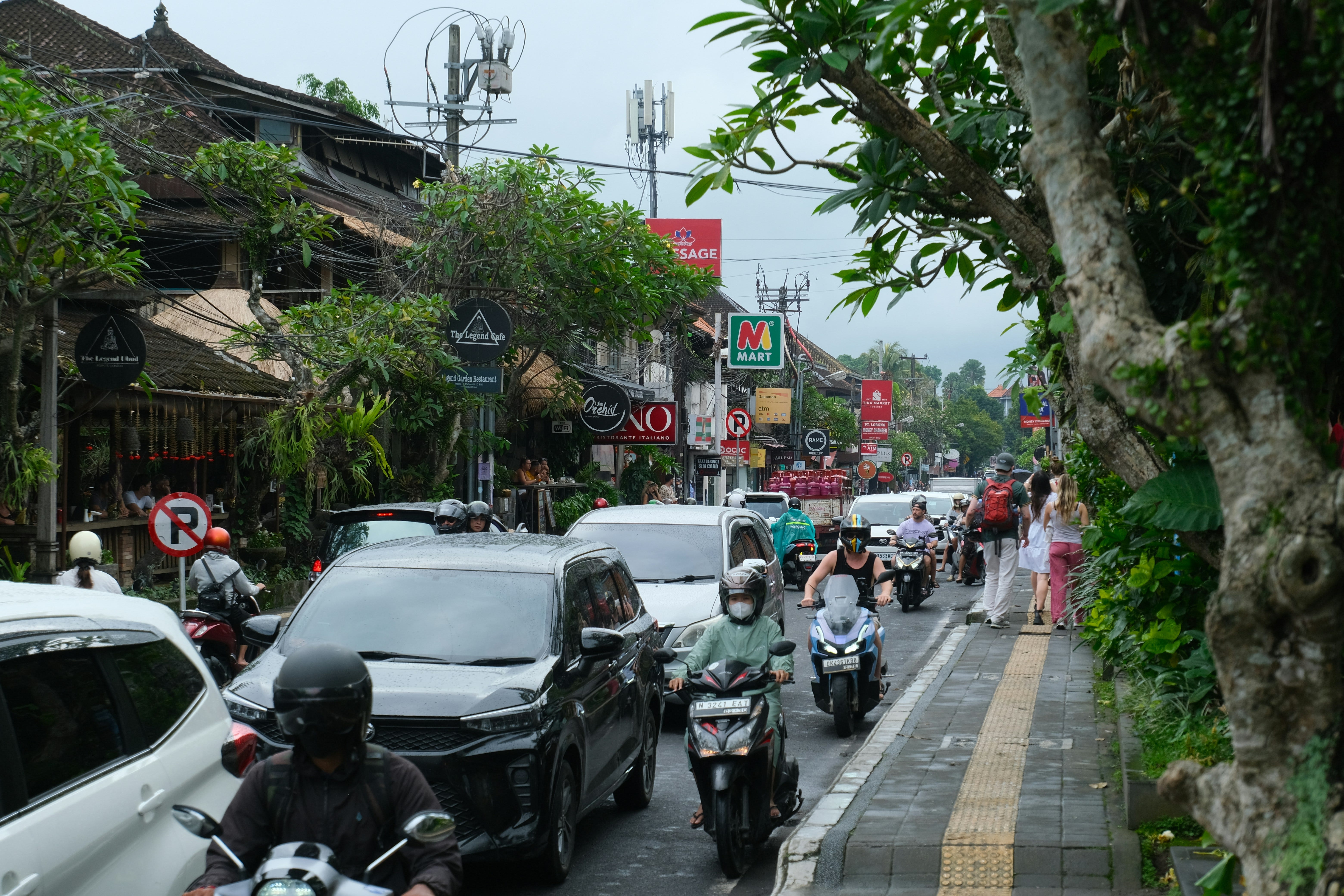
🚗 In Bali, concerns have arisen regarding waste management, traffic congestion, and pressure on water resources.
🌊 Boracay is one of the destinations frequently cited as suffering from overtourism following environmental degradation. This ultimately led authorities to temporarily close access to the island for rehabilitation.
🏘️ Overtourism is increasingly viewed as a social issue, not merely an environmental one. This is because local residents are also feeling the impact, such as rising rent prices, overcrowded public spaces, and growing tensions with visitors.
In short, the rapid recovery of tourism in Southeast Asia has created new challenges in ensuring that destinations remain livable for local residents while still accommodating the ever-increasing number of visitors.

❓ Why Now
✈️ Travel demand has surged following the pandemic: Post-pandemic pent-up demand for travel has driven millions of travelers back to international tourism. As a result, many tourist destinations have recovered faster than expected, with visitor numbers approaching pre-pandemic levels.
💸 Travel is becoming more affordable: The expansion of low-cost airlines has made regional travel cheaper and easier, allowing more travelers to visit popular destinations several times a year.
📱 Social media is changing travel behavior: Platforms like TikTok and Instagram can turn hidden gems into viral tourist attractions overnight. As a result, visitors are flocking in greater numbers to the same beaches, Instagrammable spots, cafes, and cultural sites, placing concentrated pressure on local infrastructure.
💻 Digital nomads are becoming a major trend: Places like Bali and Chiang Mai are attracting long-term expats in addition to short-term tourists, contributing to rising rental prices and increased demand for public services and utilities.

⚠️ What at Stake
The impact of overtourism goes beyond simply overcrowded tourist destinations.
🌱 Environmental
Increased waste production and pollution.
Increased demand for water and other natural resources.
Damage to coral reefs, beaches, and marine ecosystems.
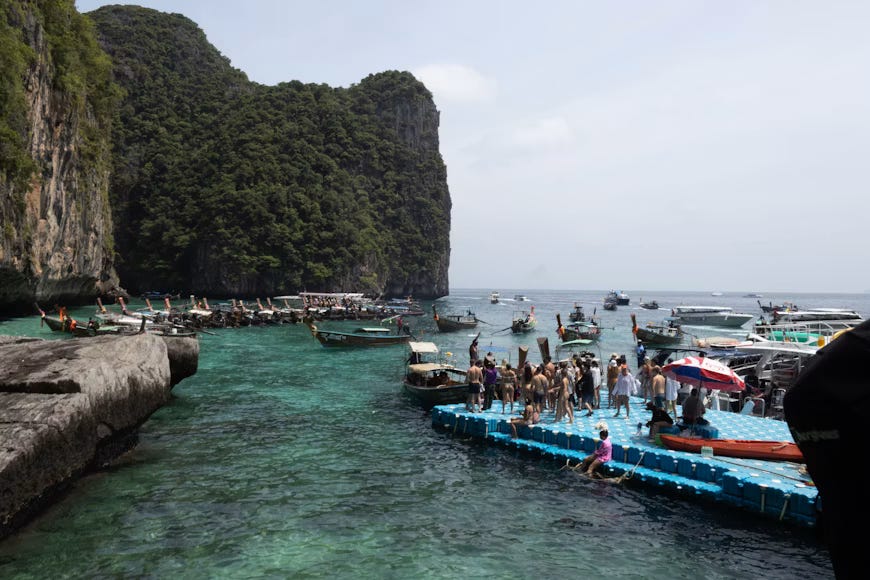
Maya Bay in 🇹🇭 Thailand and Boracay in the 🇵🇭 Philippines both required massive interventions following environmental degradation linked to mass tourism.
🏘️ Social
Rising housing and rental costs in popular tourist areas.
Overcrowded public spaces and infrastructure.
Pressure on local culture and cultural heritage sites.
Increased tensions between locals and visitors regarding behavior, resource use, and quality of life.
In Bali, for example, concerns over inappropriate tourist behavior have prompted authorities to enforce stricter guidelines and regulations to protect local culture and maintain public order.
💰 Economic
Visitor experiences may decline as tourist destinations become more crowded.
Negative news can damage a tourist destination’s reputation.
Governments may have to allocate larger budgets for infrastructure, transportation, and waste management.
Tourist destinations risk losing their competitiveness if environmental and social issues diminish their appeal.
In the long term, destinations associated with traffic congestion, pollution, or environmental degradation will ultimately lose their competitive edge compared to alternative locations that offer better experiences and stronger sustainability credentials. Tourism growth can be counterproductive if not managed properly.
🌎 Regional Stake
Tourism will remain one of the most important pillars of the economy in Southeast Asia, making the phenomenon of overtourism a regional issue, not merely a local one.
ASEAN itself is striving to strengthen its position as a global tourism hub, but it faces a difficult dilemma. The tourism sector has become a source of jobs and foreign exchange, and it supports local businesses. However, on the one hand, an uncontrolled surge in the number of tourists can place a strain on ecosystems, infrastructure, and even local communities.
Therefore, in its regional tourism strategy, ASEAN places greater emphasis on 🌱 sustainable tourism development, 🗺️ destination management, ♻️ environmental protection, and 👥 community participation. Policymakers must also find ways to distribute tourists more evenly across various destinations, rather than concentrating tourism activities solely in a handful of famous tourist spots.
The primary goal today is not only to attract more tourists but also to ensure that tourism growth continues to provide economic benefits while minimizing negative impacts on the environment and local communities.
🏠 Why this Hits Home
Overtourism is an important issue to highlight because Southeast Asia is closely tied to the tourism sector. In particular, this region has experienced firsthand what happens when tourism exceeds local carrying capacity.
🇵🇭 Boracay, in the Philippines, was temporarily closed for six months in 2018 for environmental rehabilitation after years of uncontrolled tourism.
🇹🇭 Maya Bay in Thailand also closed the island for four years, from 2018 to 2022, for large-scale environmental rehabilitation. Currently, Maya Bay restricts excessive access after environmental damage threatened its marine ecosystem.
🇮🇩 Bali continues to face issues related to waste management, traffic congestion, and pressure on natural resources.
On the other hand, the government is actively promoting new tourism destinations to spread economic benefits beyond established tourism hubs.
Destinations such as Labuan Bajo, Raja Ampat, Luang Prabang, and lesser-known islands throughout the region may eventually face similar pressures if visitor growth is not balanced by adequate infrastructure, planning, and environmental protection.
📌 Bottom Line
The recovery of tourism in Southeast Asia has been a remarkable story, helping to revitalize economies and create jobs across the region.
However, the return of tourists has also highlighted the limitations of a tourism model that prioritizes growth. Overtourism is emerging as one of the most significant challenges, raising concerns about environmental sustainability, community well-being, and long-term competitiveness.
The challenge ahead is not to attract more tourists, but to manage tourism more effectively. Without stronger planning, infrastructure investment, and sustainability measures, the destinations that fueled Southeast Asia’s tourism boom may ultimately be threatened by their own popularity.
For Southeast Asia, the future of tourism will not depend on how many visitors arrive, but rather on whether these destinations remain livable for residents and attractive to tourists in the years to come.
🔍 Need More Angle?
ASEAN ASEAN for Business Bulletin - February 2024
CNN Badly-behaved tourists create problems in Asia’s travel hot spots | CNN
Conde Nast Traveler Boracay’s Big Tourism Problem | Condé Nast Traveler
The Diplomat Southeast Asia’s Uneven Tourism Recovery, Explained – The Diplomat
The Jakarta Post The global problem of over tourism, and why Bali is at a tipping point - Academia
The Jakarta Post Tourism associations raise concerns over Bali’s overtourism, waste problems - Archipelago
SEADS When Second Is Best: How ASEAN Is Tackling Overtourism | SEADS
Sunway University Over-Tourism in Post-Pandemic Asia: Navigating the Travel Boom | Explore, Sunway University
Time Can Bali Solve Its Tourist Dilemma?
Waste4Change Popular Travel Destinations that Suffer from Overtourism - Artikel dan berita pengelolaan sampah dari Waste4Change
(DHM/ELS)