



🎯 The Main Takeaway
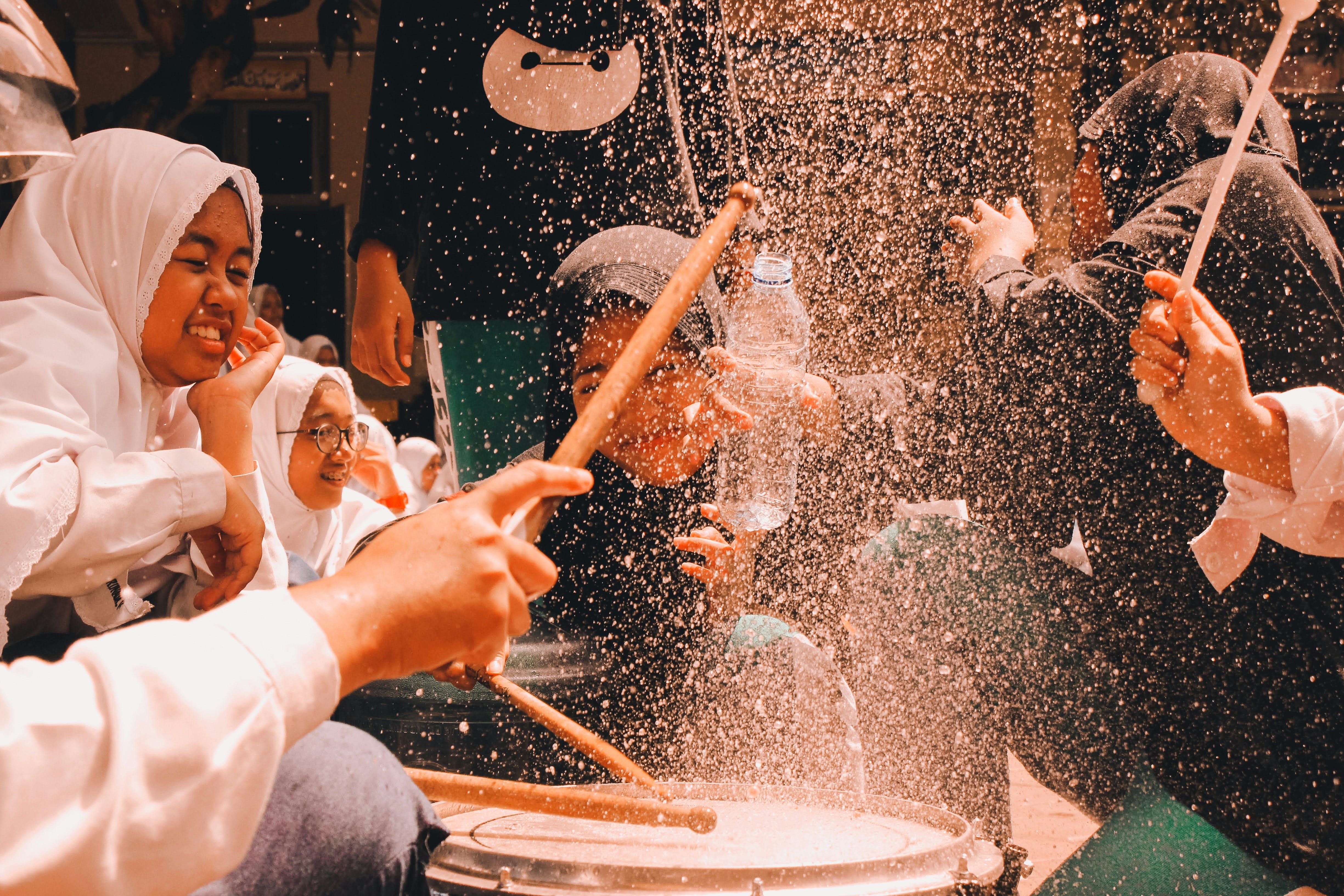
Imagine traveling across a country where every few hours you may hear a completely different language. In Indonesia, this is not imagination—it is everyday reality. Stretching across more than 17,000 islands, the nation is home to hundreds of ethnic groups and over 700 local languages. This extraordinary linguistic richness makes Indonesia the most linguistically diverse country in ASEAN. Each language serves as a living archive, preserving local wisdom, history, and cultural heritage that cannot be fully translated into any other tongue.
This feature is not measured by economic growth or technological advancement, but by something far more profound: the richness of human stories. Across the archipelago, every local language carries centuries of history, traditions, beliefs, and collective memories, forming a cultural treasure that reflects the nation's extraordinary diversity. At a time when many indigenous languages around the world are facing extinction, Indonesia's linguistic heritage stands as both a source of pride and a reminder that some of the country's greatest assets are not found beneath the ground or within skyscrapers, but in the voices of its people.
Loved this? Explore Southeast Asia's top Michelin food cities and the region's obsession with horror.
🌏 The Regional Stakes: A Shared Feature
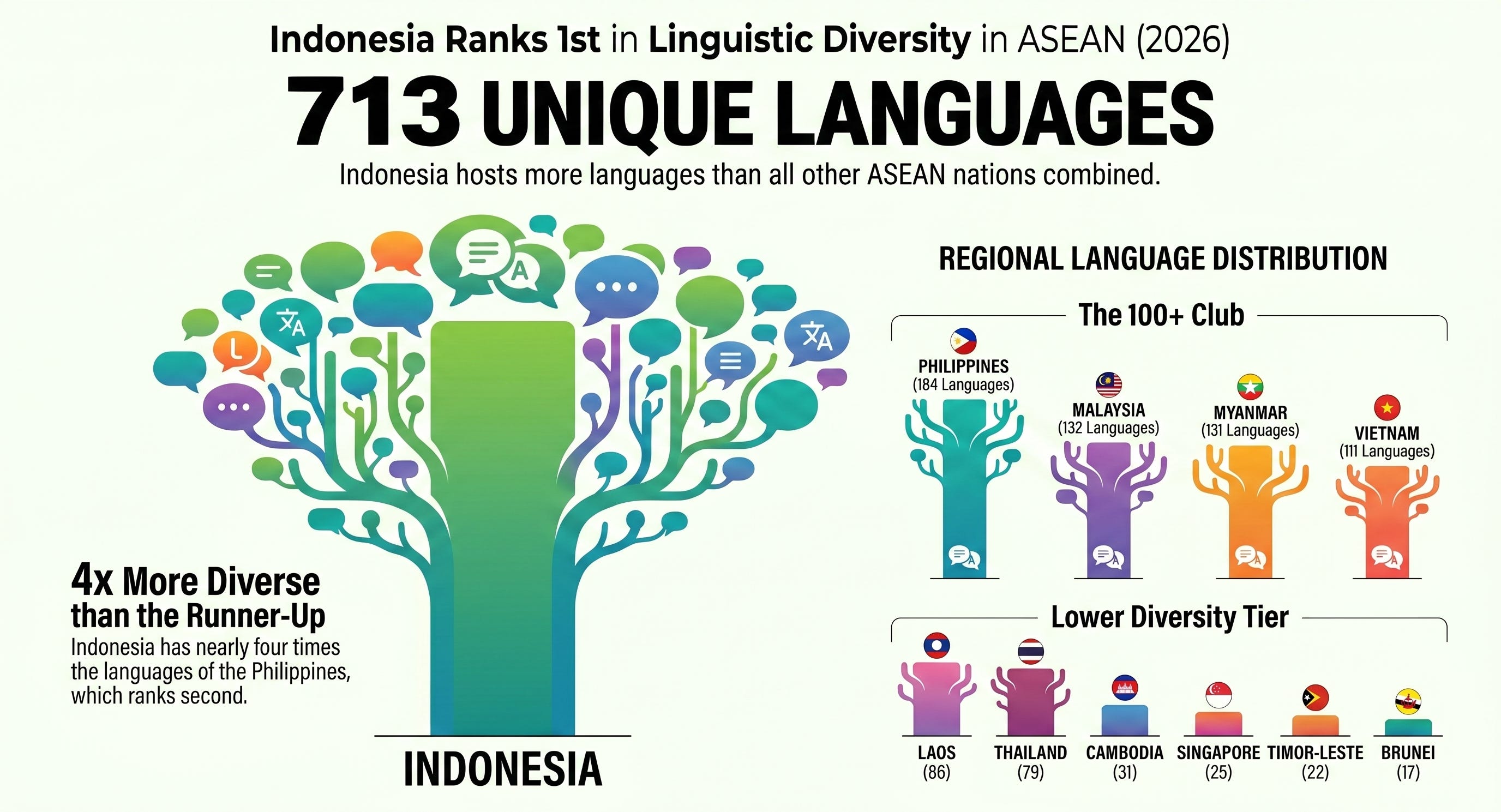
Linguistic diversity varies widely across Southeast Asia, but no country comes close to Indonesia. According to Ethnologue (2026), Indonesia is home to more than 700 living languages, far surpassing the Philippines (184), Malaysia (132), Myanmar (131), Vietnam (111), Laos (86), Thailand (79), Cambodia (31), Singapore (25), Timor-Leste (22), and Brunei Darussalam (17). These numbers underscore Indonesia's remarkable position not only as the most linguistically diverse country in ASEAN, but also as one of the most linguistically diverse nations in the world. 🌏
The number reveal just how exceptional Indonesia’s linguistic landscape is. The country alone possesses nearly four times as many languages as the Philippines, highlighting a level of diversity unmatched in the region.
🔍 Why It’s on Our Radar
In an increasingly connected world, local languages are disappearing at an alarming rate ⚠️. While globalization has made communication easier than ever, it has also placed pressure on smaller languages as younger generations shift toward national and international languages 🌍.
Indonesia’s linguistic diversity is more than a statistic. Each language carries stories, traditions, oral histories, and local wisdom that have been passed down through generations. When a language disappears, an irreplaceable piece of cultural heritage disappears with it.
💔 What Could Be Lost?
The disappearance of a language means more than losing words 💬. It means losing songs, folklore, customs, traditional knowledge, and unique perspectives 🎶📖 that may exist nowhere else in the world.
Across Indonesia, some indigenous languages are spoken by only a small number of people. Without efforts to preserve and pass them on, future generations may inherit fewer voices and fewer stories than those who came before them.
🗣️ The Big Picture
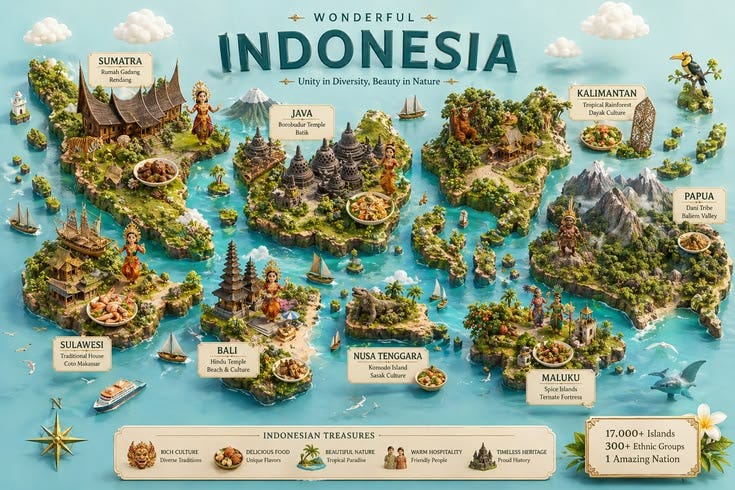
Indonesia’s linguistic richness is rooted in geography and history. Spread across thousands of islands, communities developed independently for centuries, allowing distinct languages and dialects to evolve over time.
This diversity can be heard from Aceh to Papua 🇮🇩, where local languages continue to shape regional identities. Among the most widely spoken are Javanese, Sundanese, Madurese, Minangkabau, and Betawi.
Remarkably, Javanese alone is spoken by tens of millions of people, making it one of the world's largest regional languages. Yet this linguistic giant exists alongside hundreds of smaller languages, some spoken by only a handful of communities. Together, they form a linguistic landscape unlike any other in Southeast Asia.
❤️ Why This Hits Home
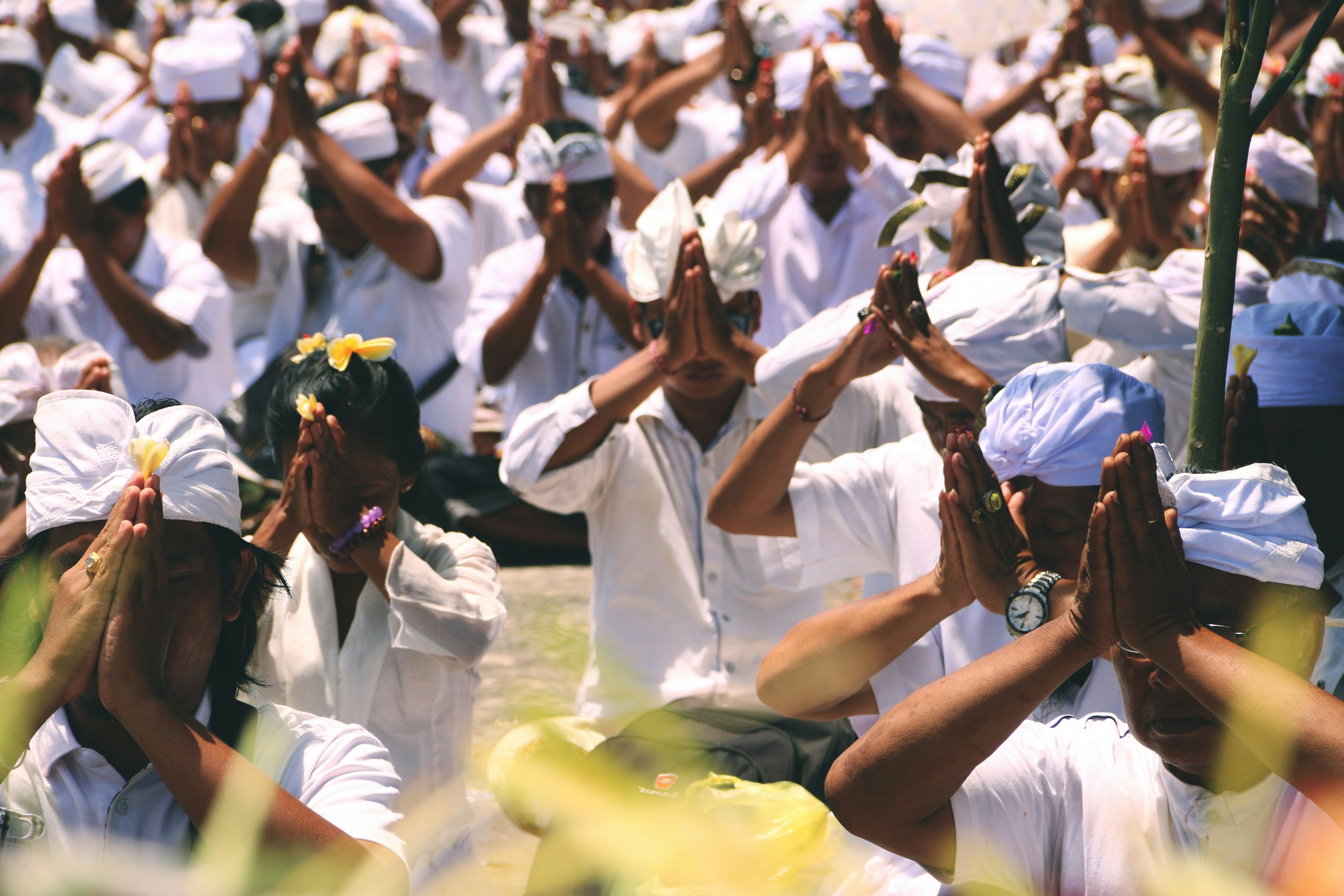
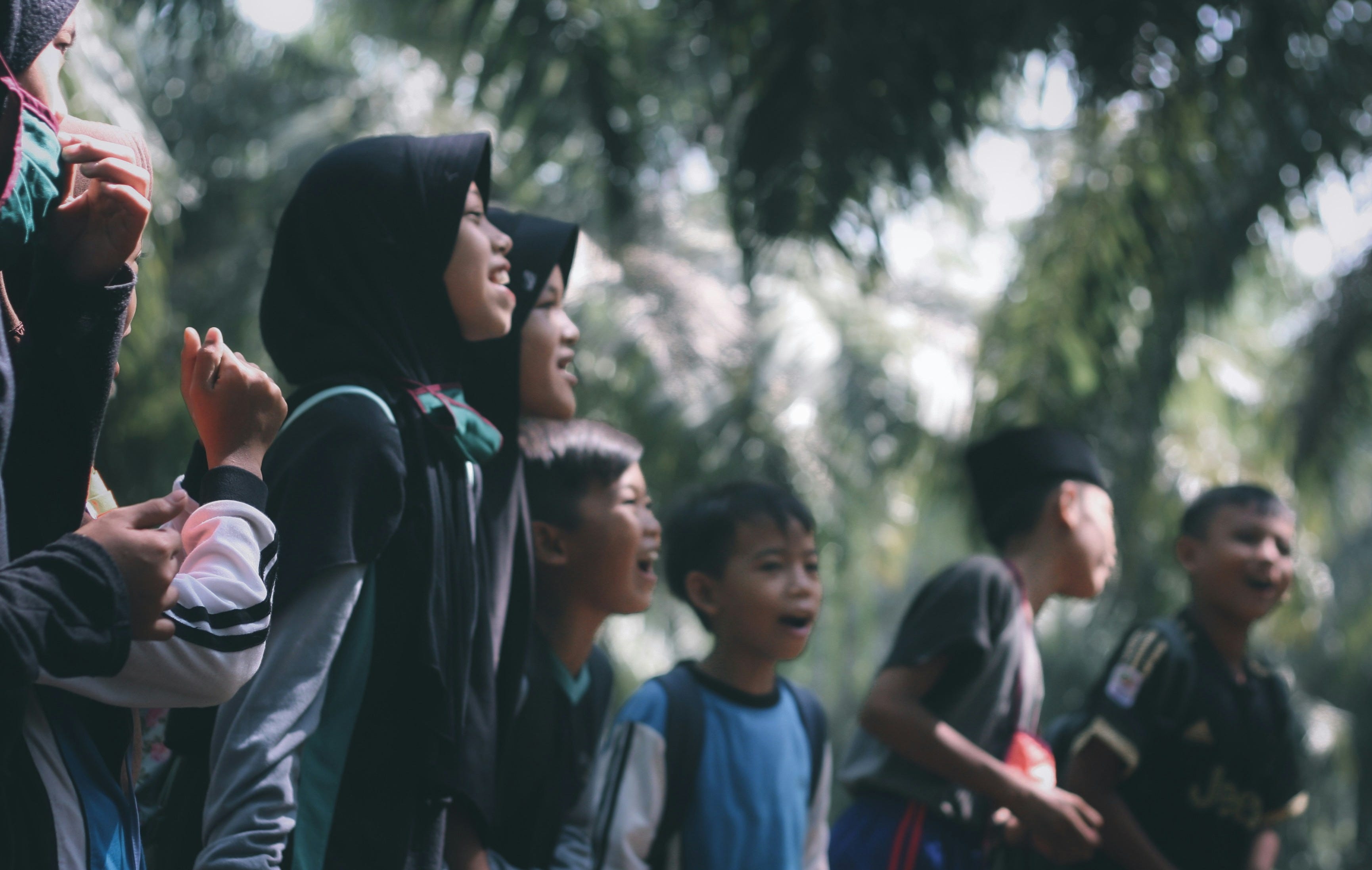
What makes Indonesia’s story especially remarkable is that despite its extraordinary linguistic diversity, the country remains united through a shared national language: Bahasa Indonesia 🇮🇩.
While local languages preserve regional identities, Bahasa Indonesia serves as a bridge connecting people from different provinces, cultures, and ethnic backgrounds 🤝. It allows a nation of more than 280 million people to communicate across thousands of islands while still celebrating local traditions.
Few countries in the world have managed to maintain such extraordinary linguistic diversity while fostering a strong sense of national unity. ✨
🔎 Beyond the Headlines
Language is often viewed simply as a tool for communication. In reality, it is also a living record of human experience 📖.
Every local language reflects centuries of migration, trade, storytelling, and cultural exchange 🌏. Many preserve unique words, expressions, and ways of understanding the world that cannot be found anywhere else.
Indonesia’s more than 700 languages are not merely a source of national pride—they represent one of the nation’s greatest cultural treasures ✨.
🤝 A Shared Responsibility
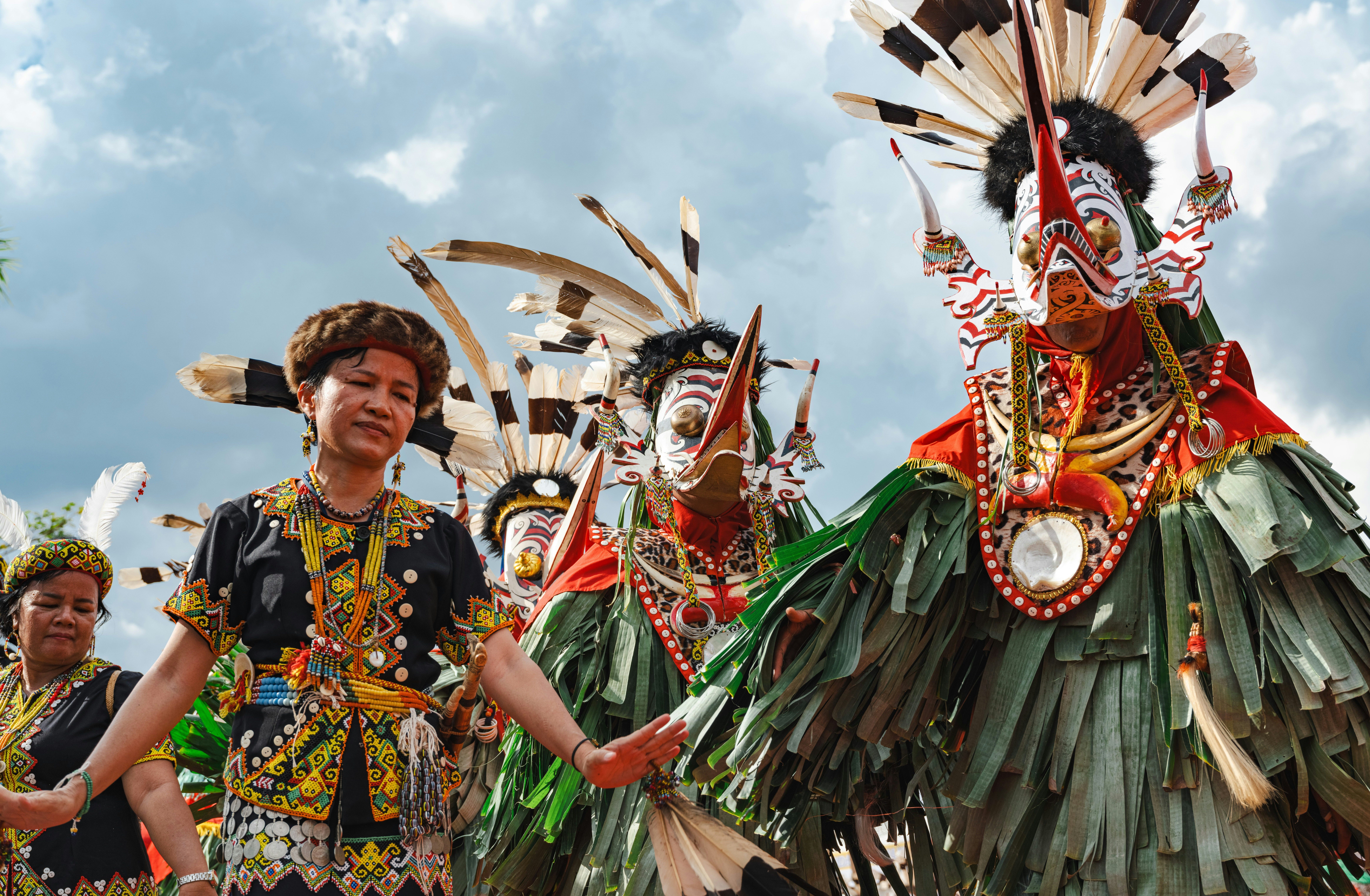
🇮🇩 More than 700 languages. Thousands of islands. One shared identity.
Behind every local language is a story waiting to be told—a grandmother’s lullaby, a community’s folklore, a centuries-old tradition, a way of understanding the world that exists nowhere else.
The future of Indonesia’s linguistic heritage depends on whether these stories continue to be spoken, shared, and valued. Because when a language falls silent, more than words are lost; a unique piece of history, culture, and identity fades with it.
In a rapidly changing world, preserving language is ultimately about preserving memory, identity, and culture for generations to come. Because some of a nation's greatest treasures are not found in monuments or museums, but in the voices of its people.
🔎 Need More Angles?
(VIL/ELS)