



🎯 The Main Takeaway
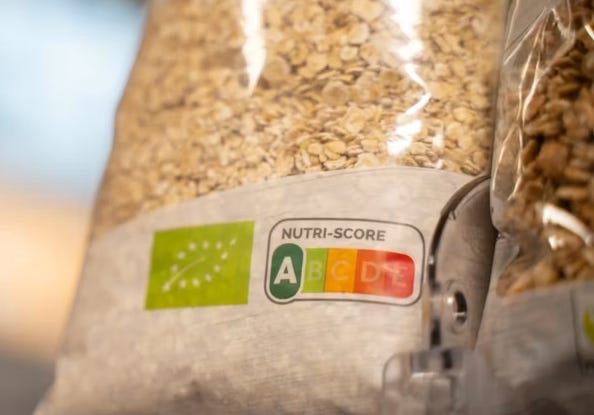
Indonesia, through BPOM, officially launched the Nutri-Level nutrition labeling system in April 2026, marking the latest step in efforts to enhance food information transparency for consumers. This policy has placed Indonesia among Southeast Asian countries that increasingly rely on nutrition labeling as a tool to help the public choose healthier food and beverages.
Some countries like Singapore, Thailand, and Malaysia have implemented similar systems, although their approaches differ. This shows that nutrition labeling is no longer viewed merely as additional information on packaging, but rather as part of a broader public health strategy.
However, Nutri-Level is still in its early stages. It currently applies only to ready-to-drink beverages and is not yet mandatory for all products. As of the time of publication of this article, the author has not yet seen these labels on store shelves, confirming that Indonesia's transition to a broader nutrition labeling system is still unfolding.
Curious how traditional foods are becoming a $107 billion economic driver? Read our deep dive on Heritage 2.0 here.
📡 Why it’s in Our Radar
Amid the pace of urbanization and changes in lifestyle, the consumption of processed foods and sweetened beverages has become normal in society. Meanwhile, at the same time, cases of obesity, diabetes, and various non-communicable diseases (NCDs) continue to rise. Therefore, health education campaigns become very important, but with an approach that can more directly reach all consumers when they make purchasing decisions.
This is when nutrition labeling will play its role. Instead of banning the public from consuming certain products, nutrition labels provide simpler and more easily understandable information. Consumers no longer need to read complicated nutrition tables because the information can be seen at a glance directly from the front of the packaging.
This approach is expected to have a broad impact on consumer behavior, making them aware of what they will consume.
📌 Why it Matters
This policy is also closely related to the health conditions in the Southeast Asian region itself. According to the World Health Organization (WHO), non-communicable diseases (NCDs) such as diabetes, heart disease, and chronic respiratory diseases account for about 55% of deaths in the Southeast Asia region, or approximately 9.5 million deaths each year.
Diabetes has become one of the biggest challenges. The WHO estimates that more than 276 million adults in Southeast Asia live with diabetes, yet many of them are unaware of their condition.
The pattern of food and beverage consumption is one of the major contributing factors to this condition. The high content of products such as sugar, salt, and fat is often difficult for consumers to identify, especially when nutritional information is only available in the form of a complex table on the back of the packaging.
Front-of-pack nutrition labeling is increasingly seen as a tool that can help the public make quicker and more informed decisions. The impact is not only felt by consumers; this system will also encourage producers to adjust their product formulations.
🌏 How Southeast Asian Countries Are Labeling Food
🇮🇩 Indonesia
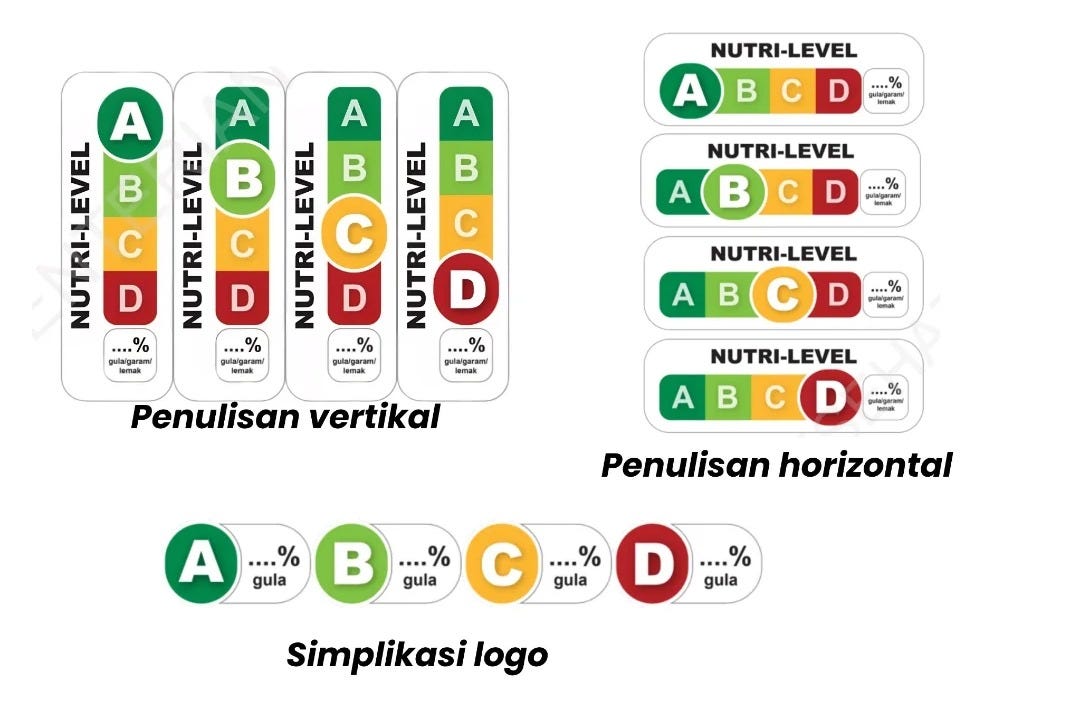
Nutri-Level Indonesia officially launched Nutri-Level in April 2026 as a front-of-pack nutrition labeling system. This system uses four levels, A to D, combined with color indicators to show the nutritional quality of a product.
Category A (dark green): low sugar, salt, and fat content
Category B (light green): relatively low sugar, salt, and fat
Category C (yellow): moderate level
Category D (red): high sugar, salt, or fat content
Products with C and D ratings are required to display labels on the front of the packaging, while healthier categories can use a healthy choice logo. For category D, there are certain marketing restrictions.
However, the implementation of Nutri-Level is still being carried out gradually. In the initial stage, this system is focused on ready-to-drink beverages and does not yet apply to all categories of food and beverages. Additionally, its implementation is not yet fully mandatory for all products, indicating that Indonesia is still in the early phase of transitioning toward a broader nutrition labeling system.
🇲🇾 Malaysia
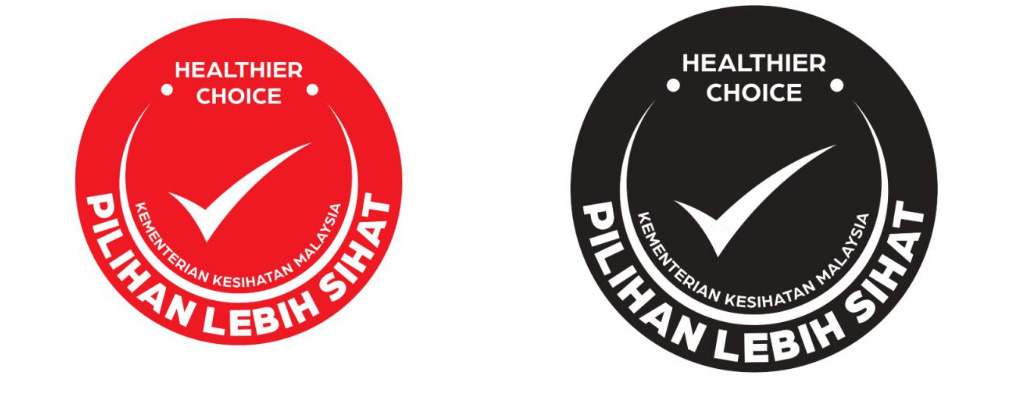
Healthier Choice Logo Malaysia introduced the Healthier Choice Logo in 2017 thru the Ministry of Health Malaysia. Like Thailand, Malaysia uses a healthier choice logo system, not a grading system. Products that wish to use this logo must meet certain nutritional limits set by the government, including: sugar, sodium, fat, and energy or calories content, depending on the product category.
The main goal is to help consumers recognize healthier products just by looking at the front of the packaging. In addition, this scheme is also designed to encourage companies to reformulate their products to meet the established standards.
🇸🇬 Singapore
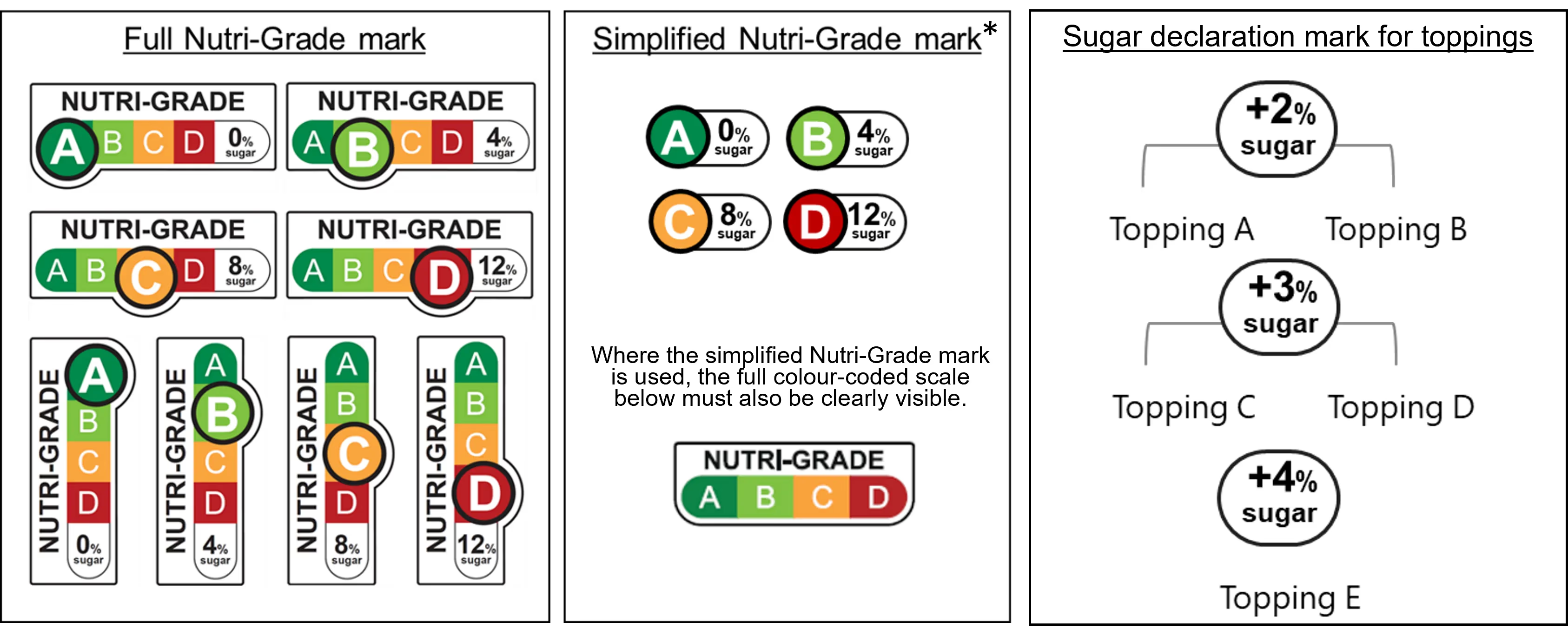
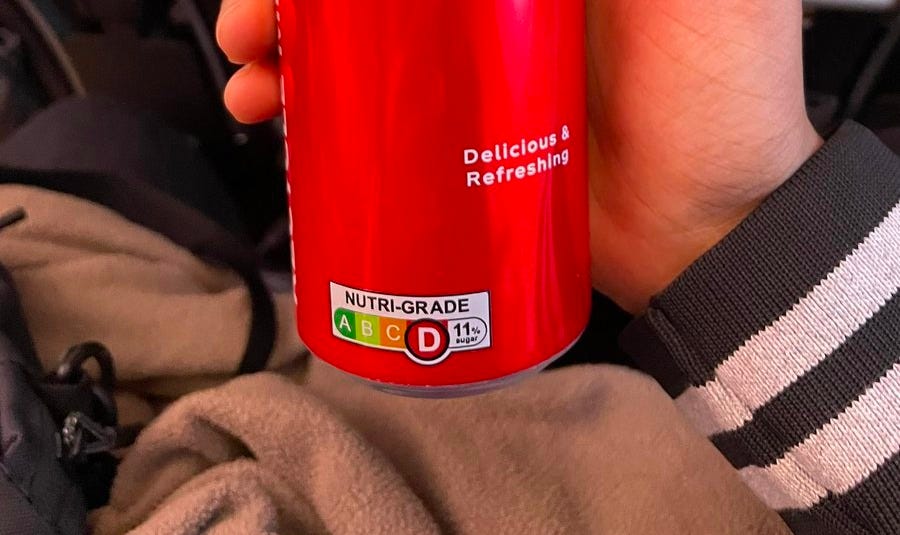
Nutri-Grade Singapore has become one of the countries with the most comprehensive nutrition labeling systems in Southeast Asia through Nutri-Grade, which came into effect in December 2022. This system assesses beverages based on their sugar and saturated fat content.
Nutri-Grade uses four categories:
Category A (green): healthiest, lowest sugar and saturated fat content
Category B
Category C
Category D (red): highest sugar and/or saturated fat content
For beverage categories:
Labels must be displayed for products in categories C and D
Category D products cannot be advertised through most media
Labels must also be displayed on fresh beverage menus such as bubble tea and coffee starting from the end of 2023
Interestingly, this policy also encourages product reformulation. Before the regulation took effect, many producers reduced the sugar content so that their products could move up to a better category.
🇹🇭 Thailand
Unlike Indonesia and Singapore, which use a tiered rating system, Thailand has adopted a label endorsement approach through the Healthy Choice Logo since 2016. This means that products are not given ratings from A to D. Instead, only products that meet certain nutritional criteria are allowed to display the logo. The assessment considers various factors, including: sugar, total fat, saturated fat, sodium, protein, fiber, and calcium and iron for certain categories.
In 2025, Thailand updated several criteria for various product categories to align with the latest health standards and encourage the industry to produce healthier products.
🧩 Bigger Picture
Food labels are becoming a public health tool
Nutritional labeling is no longer just additional information on packaging. The government is starting to use it as a health policy instrument to help the public make better consumption decisions.
Southeast Asia countries are moving toward the same goal
Although using different systems—from Nutri-Level, Nutri-Grade, to Healthy Choice Logo—countries in the region have a similar goal: to reduce the consumption of excess sugar, salt, and fat that contribute to the rise of non-communicable diseases.
Food manufacturers may face growing pressure
As nutritional information becomes more visible, food and beverage companies will face greater pressure to improve their product formulations. Reducing sugar and fat could potentially become an increasingly important business strategy in the future.
Adoption remains uneven across the region
Although nutrition labeling is becoming more common, its implementation varies significantly between countries. Some systems, such as Singapore’s Nutri-Grade, are mandatory for certain product categories, while others like the newly introduced Nutri-Level in Indonesia and the voluntary logo schemes in Thailand and Malaysia are still being gradually rolled out. This highlights the varying stages of readiness across Southeast Asia as governments balance public health goals with industry adaptation.
📝 Bottom Line
The launch of Nutri-Level in Indonesia shows that nutrition labeling is increasingly becoming part of public health strategies in Southeast Asia.
From Nutri-Grade in Singapore to the Healthier Choice Logo in Thailand and Malaysia, countries in the region are trying different approaches to help the public make healthier choices.
Labels on packaging may seem simple, but behind them lies a greater effort to reduce the burden of non-communicable diseases and encourage changes in consumption behavior. For consumers, clearer information means more informed choices. For the industry, this trend indicates that the quality of nutrition will become an increasingly important factor in the future competition of the food market.
🔍 Need More Angle?
Channel News Asia A healthier future for ASEAN: How unified labelling can benefit all
Food Navigator Thailand revises Healthy Choice logo eligibility criteria for multiple food products
Ministry of Health Malaysia GUIDELINES ON HEALTHIER CHOICE LOGO MALAYSIA
Produk Registration Indonesia BPOM Nutri-Level Indonesia: What Every Brand Must Know
Singapore Food Agency Labelling Requirements for Food
SQC Penang Guide to Food Labelling in Malaysia
Pack Lab Thailand Food Packaging Labelling Compliance | Pack-Lab
The Strait Times Empowering consumers through graded nutritional labelling
World Health Organization https://www.who.int/southeastasia/activities/management-of-ncd
World Health Organization Noncommunicable diseases
(DHM/ELS)