



🎯 The Main Takeaway
As Southeast Asia becomes increasingly interconnected through education, the digital industry and global mobility, proficiency in English is no longer merely an additional skill, but a strategic necessity.
Against this backdrop, Educational Testing Service (ETS) is hosting the TOEFL Experience Day Jakarta 2026. This event aims to introduce updates to the TOEFL iBT test, which are claimed to be more adaptive, relevant, and aligned with the demands of modern communication.
More than just a promotion of English language testing, this event opens up a broader discussion on how Southeast Asia—particularly Indonesia, which is currently facing the challenges of global competition, gaps in English language proficiency, and the need for future-ready skills in the current AI era—can address these issues.
📡 Why It’s on Our Radar
In Southeast Asia today, English is becoming increasingly important as a tool for social and academic mobility. English language proficiency influences various aspects, such as access to international education, scholarship opportunities, multinational careers, the digital industry, and regional labour mobility.
According to the EF English Proficiency Index (EF EPI) 2025, the gap in English proficiency across Southeast Asia remains quite significant.
🇸🇬 Singapore ranks #2 globally with a score of 609, due to its maintenance of English as the primary language in the workplace and education.
🇲🇾 Malaysia ranks #24 globally with a score of 581, making it one of the countries with the highest non-native English proficiency in Southeast Asia.
🇵🇭 The Philippines ranks #28 globally with a score of 569, largely due to the extensive use of English in the education sector and the Business Process Outsourcing (BPO) industry.
🇻🇳 Vietnam is ranked #64 globally with a score of 500, and 🇮🇩 Indonesia is ranked #80 globally with a score of 471, it’s remains in the ‘low proficiency’ category despite growing interest in international education.
EF EPI data also reveals disparities in English proficiency within Indonesia itself. Regionally:
Java has the highest score at 493
Papua stands at 437
And Maluku at 416
This indicates structural challenges regarding access to and the quality of English language education in Indonesia.
Read more about how important English is in Southeast Asia - 🌏 When English becomes Southeast Asia’s quiet infrastructure
📌 Why it Matters
The importance of English in Southeast Asia is currently very significant, as the region becomes increasingly globalised. Students from Southeast Asia are increasingly looking towards opportunities such as ✈️ studying abroad, 🎓 student exchanges, 🌏 international scholarships, 💼 cross-border internships, and 🏢 job opportunities in multinational digital industries.
Not only that, but the study destinations of students in Southeast Asia are also beginning to shift from major countries such as United States, United Kingdom, Canada, and Australia to countries such as 🇰🇷 South Korea, 🇯🇵 Japan, 🇨🇳 China, 🇩🇪 Germany, 🇹🇷 Turkey, 🇲🇾 Malaysia, and 🇦🇪 United Arab Emirates. Despite this shift in destination countries, English remains the primary link in the international education system.
Indonesia itself faces serious pressure to improve domestic English language proficiency. This can be seen from the following indicators:
📚 Plans to make English a compulsory subject from primary school (SD) starting in 2027.
🎓 The increasing number of Indonesian students wishing to continue their studies abroad.
🏆 High competition for scholarships.
🤖 And the development of an AI- and digital-based working environment.
📝 TOEFL Experience Day in Jakarta
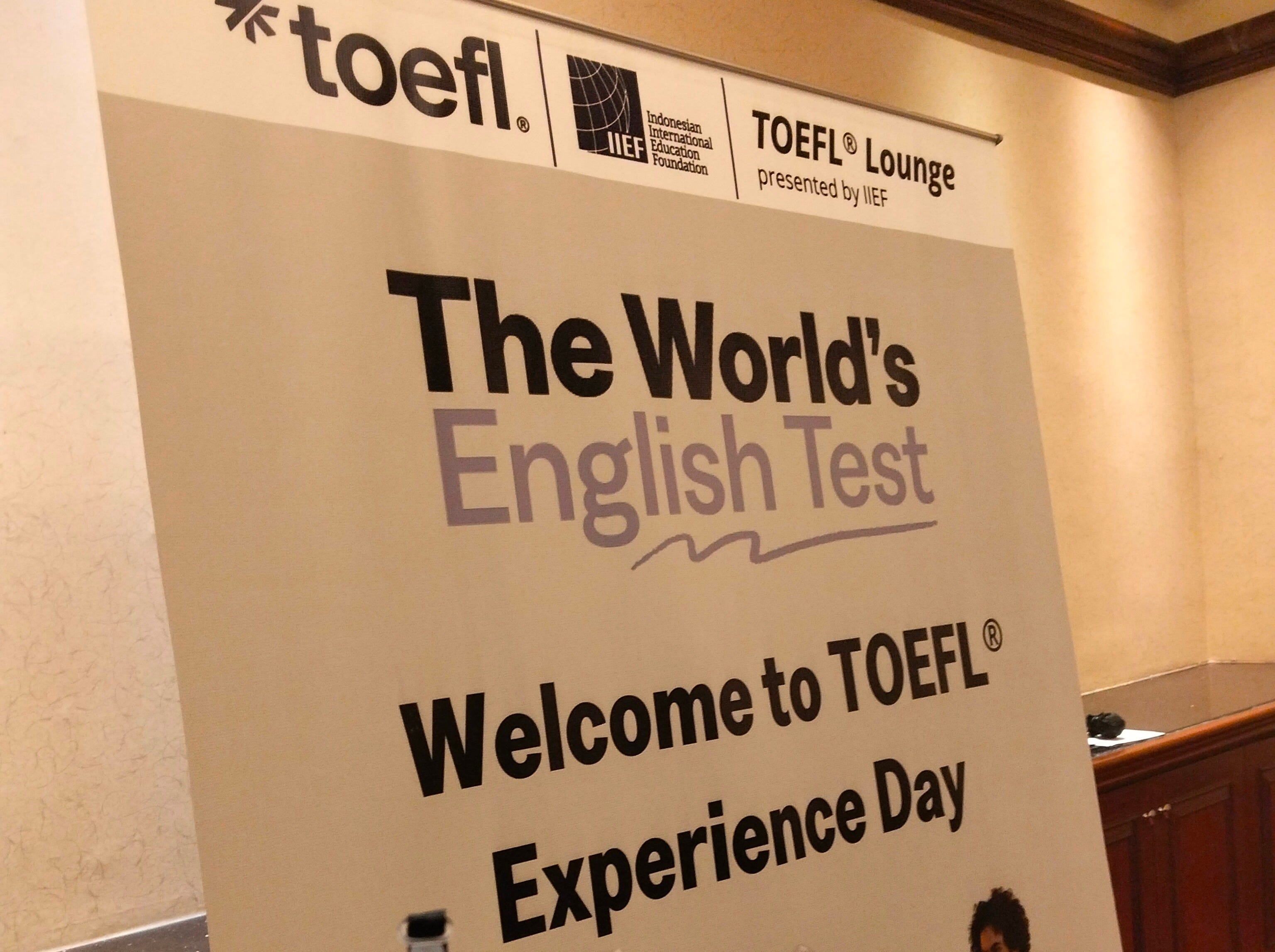
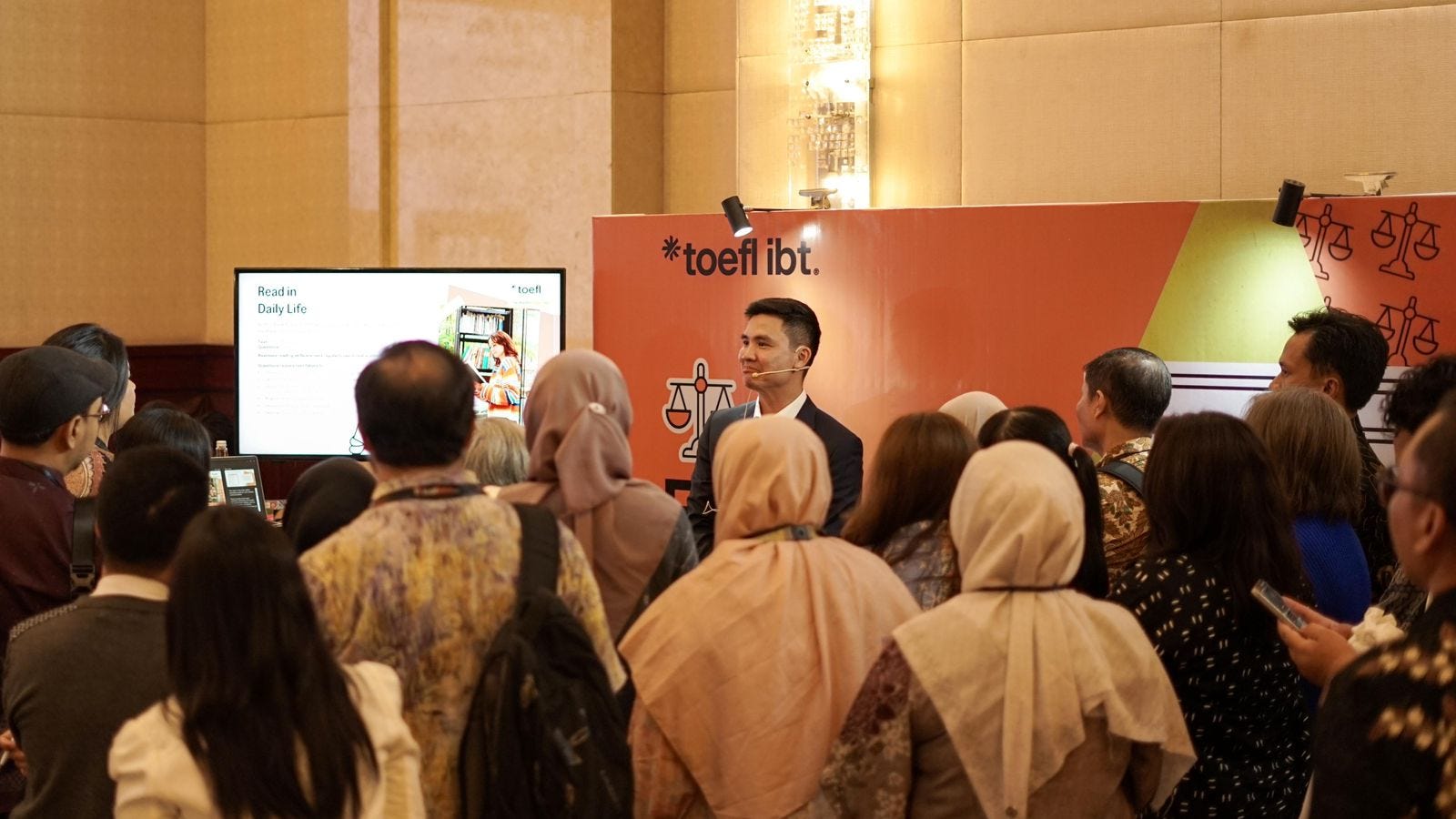
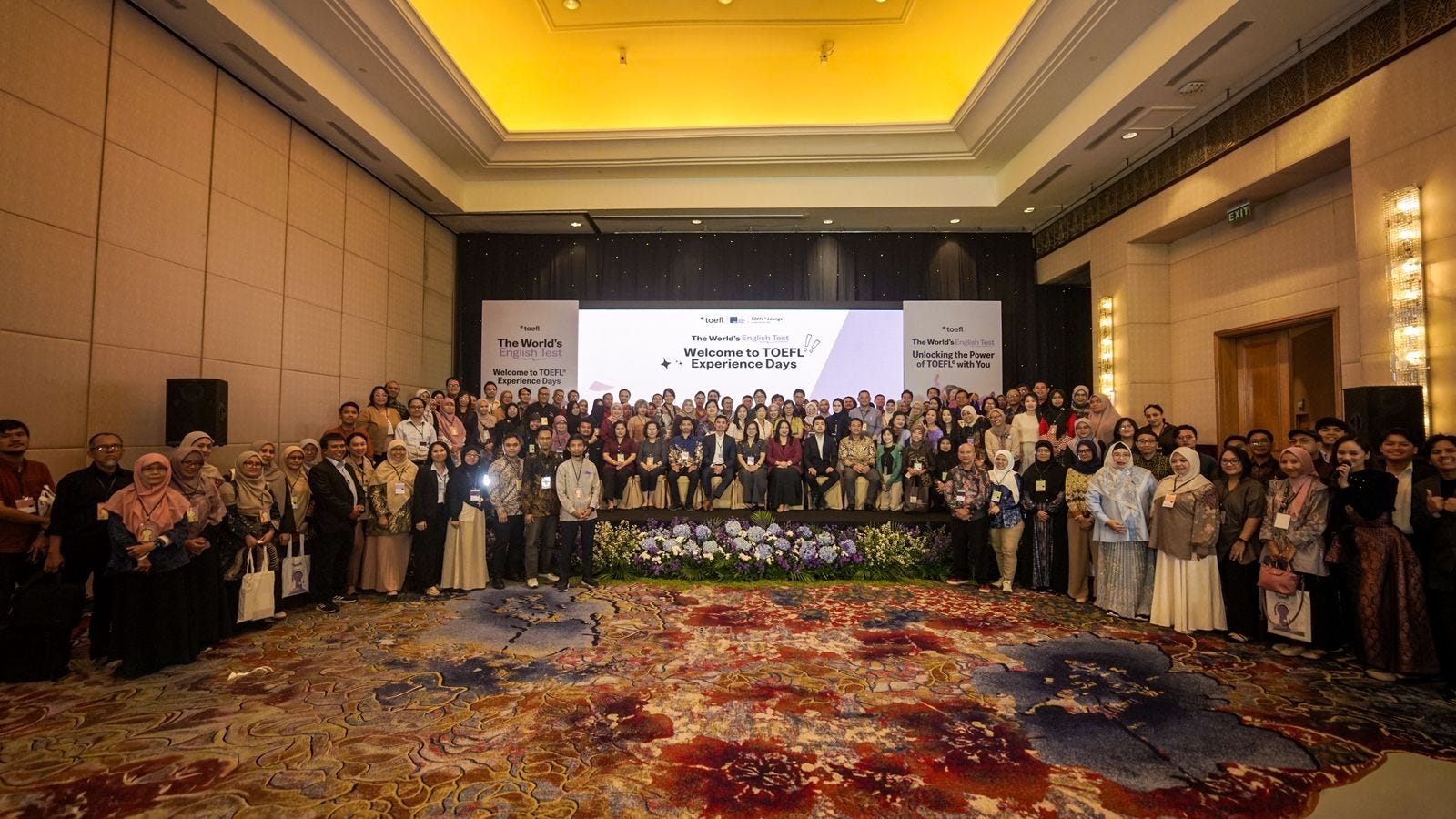
TOEFL Experience Day Jakarta 2026 take place on 21 May 2026 at The Ritz-Carlton Mega Kuningan, Jakarta. This event marks Educational Testing Services’ (ETS) first large-scale TOEFL Experience Day in Indonesia, following a previous event held in Vietnam.
The event is organised by Educational Testing Services (ETS) in collaboration with the Indonesia International Education Foundation (IIEF), bringing together various groups:
Educators
Students
English language communities
Media, and
Educational institution partners.
This TOEFL Experience Day was designed as an interactive experience to introduce the latest TOEFL iBT ecosystem. ETS also emphasised that TOEFL no longer wishes to be positioned merely as a formal test.
“TOEFL is really beyond the test. We want students to study the skills within the test to ensure that they can be future-ready.” - Chuong Nguyen, Channel Management Director for Southeast Asia, ETS
🛠 TOEFL iBT 2026: Changes You Need to Know
The update to the TOEFL iBT test system in January 2026 is one of the most significant changes to the TOEFL in recent years.
One of the most significant changes is the introduction of multi-stage adaptive testing in the Reading and Listening sections. This means that the difficulty level of the questions can be adjusted to suit the test-taker’s ability based on their previous performance.
According to ETS, this new system will make the test more personalised, efficient, and more accurate in assessing test-takers’ English language proficiency. Furthermore, the test duration has been shortened; ETS itself states that the latest TOEFL iBT test can now be completed in under two hours on average.
In addition, TOEFL has introduced a new scoring system based on a 1–6 scale aligned with the international CEFR (Common European Framework of Reference for Languages) standards. During the transition period, test-takers will receive
✅ their old TOEFL score
✅ the new 1–6 scale score
✅ a CEFR classification such as B1, C1, or C2.
The content of the test questions has also changed; previously, the TOEFL was frequently criticised for being too academic and full of unfamiliar references. ETS is now shifting the question format to be more contextual.
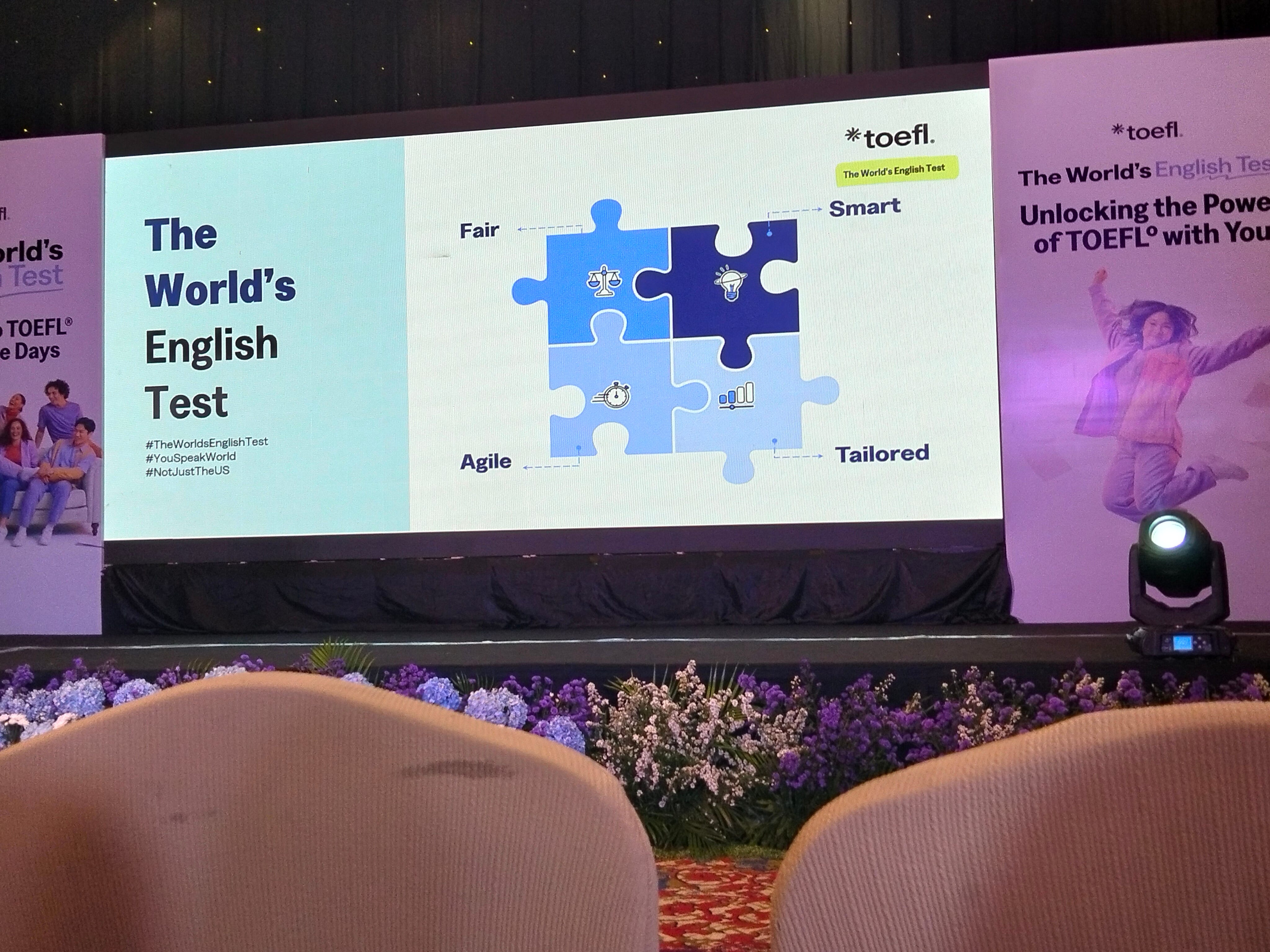
💡 Decoding the New TOEFL iBT Core Pillars
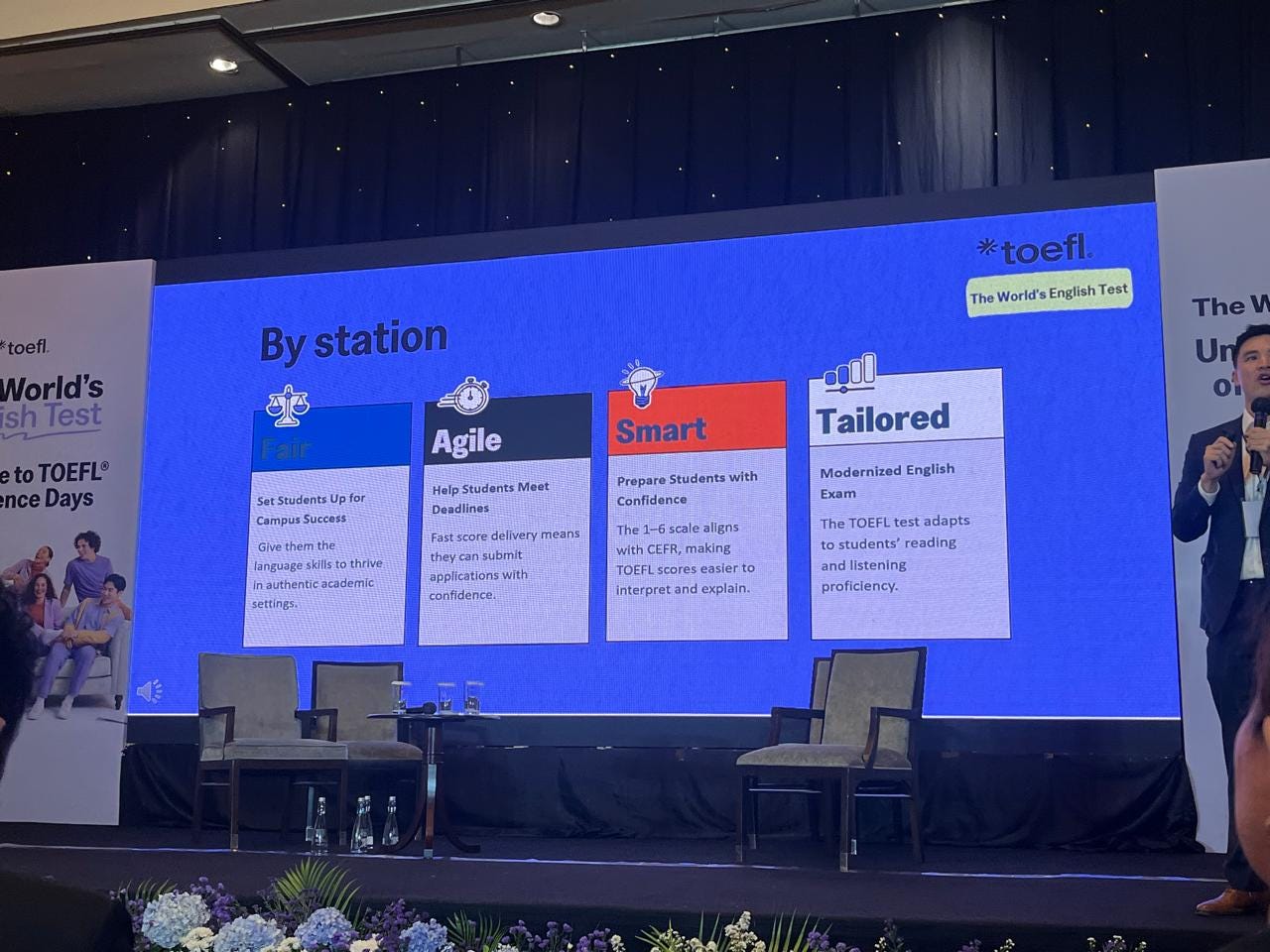
Fair
The “Fair” pillar focuses on reducing cultural bias in the test scoring system. ETS explains that the old version of the TOEFL sometimes used topics or references that were too culturally specific, making them less relevant for measuring real-world English language proficiency.
The latest version of the TOEFL iBT now places greater emphasis on practical communication, academic relevance, and a more universal context.
Agile
The “Agile” pillar represents a more streamlined and flexible testing system. Through adaptive testing and the use of AI technology in the assessment system, ETS aims to make the test faster and more efficient, whilst maintaining accuracy. This approach demonstrates that global assessment systems are beginning to adapt to an increasingly digital and dynamic educational environment.
Smart
The “Smart” pillar emphasises future-ready skills. English language proficiency is closely linked to critical thinking, global communication, collaboration, and digital literacy. Rather than viewing AI as a replacement for language skills, ETS believes that AI actually enhances the importance of human communication.
Tailored
The “Tailored” pillar is most clearly evident through the new adaptive testing system. Whereas previously all test-takers faced questions of the same difficulty level, the latest TOEFL iBT can now tailor questions to the test-taker’s ability level.
According to ETS, this system will:
✅ create a more comfortable testing experience
✅ provide more precise measurement
✅ reduce unnecessary cognitive load for test-takers.
🌐How TOEFL became the first step to unlock the World
The TOEFL iBT is no longer just an exam, it is a global passport. Recognized by over 13,000 elite institutions across 160 countries, this high-stakes academic assessment evaluates the full spectrum of linguistic mastery: Reading, Listening, Speaking, and Writing. It is the ultimate benchmark for academic mobility and cross-border communication.
In dynamic regions like Southeast Asia, English language certification has evolved far beyond its traditional role as a mere study-abroad prerequisite. Today, it stands as a vital tool for advancement. From securing prestigious local scholarships and competitive student exchange slots to unlocking elite professional career paths, mastering the TOEFL is officially the first definitive step to unlocking the big and vast world.
💸The Regional Pricing Dilemma
While the TOEFL iBT stands as the ultimate gateway to the global stage, it comes with the pressing reality of a financial barrier. A single test registration can cost a significant fraction of a monthly salary in developing economies, such as many Southeast Asian countries.
In Southeast Asia, the test costs $185 to $300 USD, with developed nations generally charging higher fees; a single TOEFL registration can consume 50% to 100% of an average entry-level monthly salary. The financial pressure intensifies when you factor in the high probability of a retest, as some institutions set strict minimum cutoffs for individual sections or as a whole.
📚 The TOEFL Ecosystem: Factoring in the Hidden Fees
The financial barrier does not only stop at the registration page, but for some candidates, it stops at the secondary expenses that turn into a massive financial spending
The Preparation Cost: Although most Southeast Asian countries have made English a compulsory subject from an early age, many of them still require additional materials to achieve test results that meet their needs. Access to official ETS preparation guides, premium prep books, simulated mock exams, structured guidance, preparation courses, or private tutoring can add an extra $50 USD up to matching the price of the test itself USD.
The “Home Edition” Toll: The introduction of the TOEFL iBT Home Edition promised convenience, it shifted the infrastructural cost to the test-taker. The candidates must possess a high-speed, uninterrupted internet connection, a high-quality webcam, and a private room which are not universally accessible or even for some can be counted as luxuries.
The Test Center Pilgrimare: For those opting for or forced to take the physical exam, the costs shift to logistics. Candidates from rural areas or secondary cities must budget for long-distance travel, overnight accommodation, meals, and local transit just to show up on test day.
⚔️The Counter Strategy
While inflation and operational costs led ETS to increase TOEFL iBT prices in 152 countries globally, Indonesia was intentionally chosen for a completely different trajectory: a price reduction.
The Lowest Global Tier: Recognizing local purchasing power, ETS placed Indonesia and select South Asian neighbors into its lowest market tier.
The Price Gap: While the average global price for the TOEFL iBT sits heavily at around $260 USD, the price in Indonesia has been slashed to $180 USD
Lifecycle Campaigns : to combat the financial anxiety of the two-year expiration window and the high probability of retests, the campaigns highly targeted local promotions offering significant discounts for candidates who need to retake the exam
Integration with National Programs: Integrating TOEFL ecosystem into major national programs, such as LPDP (Lembaga Pengelola Dana Pendidikan). Which during active application cycles, the official registration guides for these state scholarships feature exclusive, direct-access links provided by IIEF
Localized Infrastructure: Standard international registration portals strictly require conventional credit cards. To make the TOEFL iBT genuinely accessible, ETS is actively supporting local payment methods such as accommodating debit networks, local bank transfers, and digital wallets.
🔮 The Bottom Line
In a hyper-connected Southeast Asia driven by rapid digitalization and regional labor mobility, English proficiency has officially shifted from being a resume booster to an absolute strategic necessity.
While in developing countries, the financial and logistical barriers of global testing are undeniable, but they have not gone unnoticed. In Indonesia, the Educational Testing Service (ETS), in close collaboration with the Indonesia International Education Foundation (IIEF), is deploying a massive, localized counter-strategy.
🔍 Need More Angles?
EF EPI EF EPI 2025
Human Resource 2025 ranking: English proficiency levels around Asia | Human Resources Online
Humanities English in Southeast Asia & the supression of local languages
IIEF TOEFL iBT – IIEF
Media Indonesia ETS dan IIEF Perkenalkan Pembaruan TOEFL iBT 2026 di Jakarta
Vinpearl 10 best Asian countries to visit for English speakers
Zabeel International How Much Does TOEFL Exam Cost?