




🎯 The Main Takeaway
Across Southeast Asia, English is shifting from an educational advantage to a core economic capability.
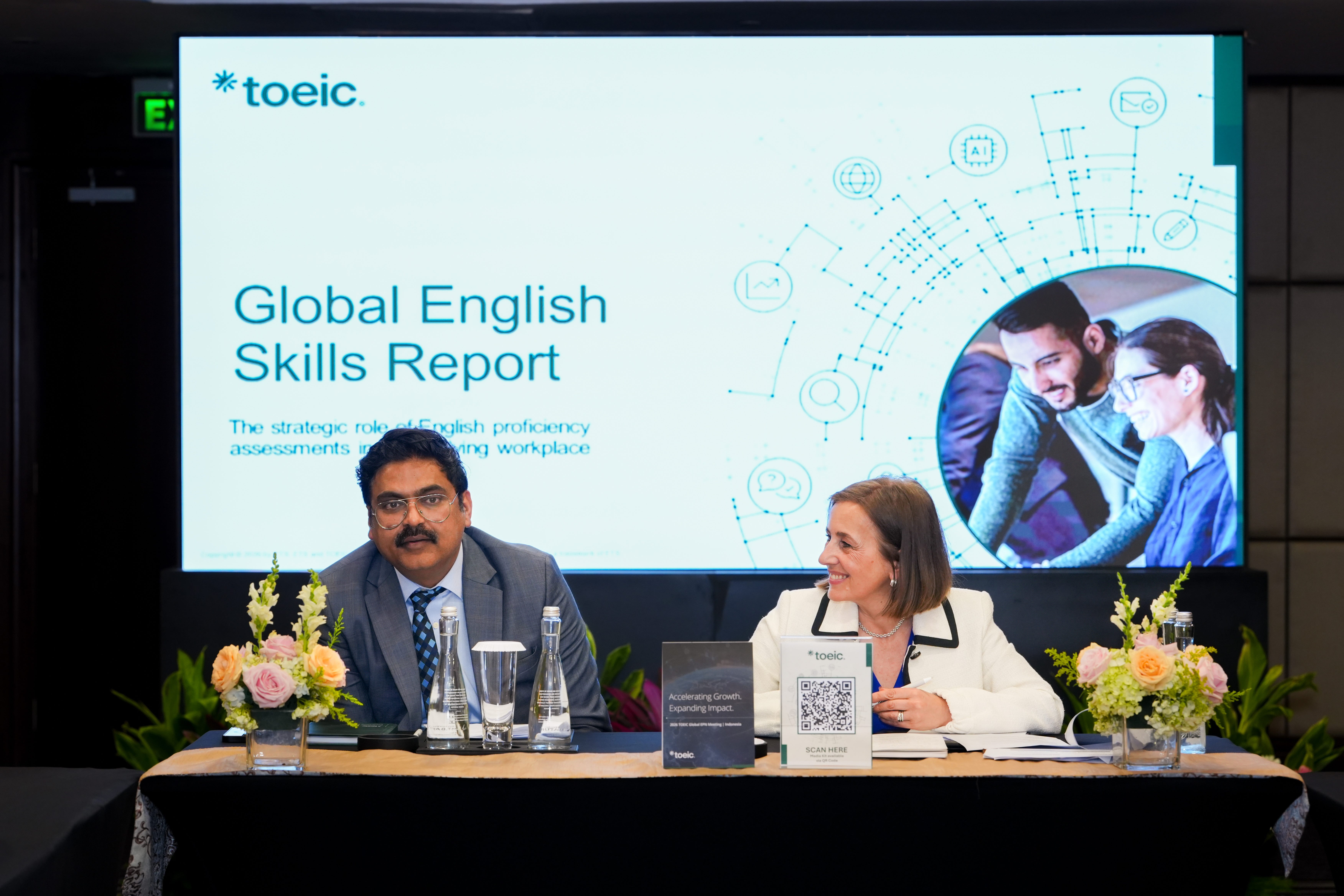
A global survey of more than 1,300 HR decision-makers conducted by ETS through its Global English Skills Report finds that 90% of employers say English proficiency is critical to organizational success, and 92% say it is more important today than five years ago.
The findings suggest that in a global economy increasingly shaped by digital collaboration, international trade, and artificial intelligence, language skills are becoming a foundational part of workforce readiness.
👀 Why It’s on Our Radar
Southeast Asia’s economic model is built on connectivity.
From manufacturing networks linking Vietnam, Thailand, and Malaysia to digital startups expanding from Singapore and Jakarta, the region operates through cross-border collaboration.
That collaboration requires a common working language.
The ETS Global English Skills Report, based on a survey of HR leaders across 17 countries, shows that English proficiency is increasingly tied to business performance, international partnerships, and workforce mobility.
In Indonesia, the trend is even more pronounced. According to the report’s Indonesia insights, 100% of surveyed employers say English proficiency is more important today than it was five years ago, reflecting the country’s growing integration into global markets.
🌏 The Big Picture
Three major forces are driving the rising importance of English across Southeast Asia.
1️⃣ Globalized workplaces
Companies in the region increasingly coordinate with partners, suppliers, and clients across continents.
Shared language enables faster decision-making, smoother collaboration, and easier integration into international supply chains.
2️⃣ The AI revolution
Contrary to the assumption that artificial intelligence might reduce the need for language skills, many employers say the opposite.
According to the ETS global survey, 81% of employers report that integrating AI tools actually increases the need for English proficiency, since many AI interfaces, prompts, and documentation operate primarily in English.
Workers must understand, evaluate, and communicate information generated by these tools.
“What this research makes clear is that English is now a core workforce capability, not a soft skill. It’s how employees collaborate across borders, how organizations unlock the value of AI, and how talent stays relevant in a rapidly changing economy. Companies that invest in English proficiency are investing directly in productivity, innovation, and global competitiveness.” - Ratnesh Jha, Global General Manager of Institutional Products at ETS
3️⃣ Competition for talent
As Southeast Asia attracts investment and technology firms, the labor market is becoming more competitive.
The report finds that 86% of employers believe organizations without fluent English speakers face a competitive disadvantage in global markets.
Language skills, in other words, influence not just communication, but competitiveness.
🇮🇩 Why This Hits Home
For Indonesia, the implications are significant.
With a workforce of more than 140 million people and an expanding digital economy, the country stands to benefit enormously from deeper participation in global industries.
Yet language capability will increasingly determine how easily Indonesian talent can plug into those networks.
According to the ETS survey, 87% of Indonesian HR leaders say organizations lacking English proficiency face competitive disadvantages, particularly in collaboration, productivity, and growth.
As global collaboration intensifies, the ability to communicate effectively across borders is becoming a professional baseline.
⚖️ What’s at Stake
The stakes go beyond individual career prospects.
English proficiency can influence a country’s ability to:
attract international investment
participate in global value chains
adopt advanced technologies
integrate into knowledge economies
For Southeast Asia, where economies are deeply interconnected with global markets, communication capacity can quietly shape economic outcomes.
🧭 The Bottom Line
Infrastructure once meant roads, ports, and power plants.
In today’s economy, language is emerging as another kind of infrastructure—the connective tissue that links talent, technology, and opportunity.
As Southeast Asia navigates the AI era and deeper economic integration, English proficiency will increasingly determine how effectively its workforce participates in the global system.
For Indonesia and its neighbors, the question is no longer whether English matters.
The question is how quickly the region can scale language capability to match its economic ambitions.
(QOB/VBD/ELS)