




🎯 The Main Takeaway
If you haven't updated your weekend playlist yet, you might want to pay attention. no na isn’t quietly asking for the spotlight—they’re kicking the door down and taking it.
Southeast Asian girl groups are officially done waiting for an invite to the global pop party. With no na’s latest single “Rollerblade” smashing past 2 million views in two weeks and landing at #25 on the trending charts, it’s clear: the fusion of global pop with unapologetic Indonesian cultural identity is here, and it’s thriving. 📈
🔍 Why It’s on Our Radar
For years, the Asian pop conversation started and ended with K-pop and J-pop. But the tide is turning. 🌊
no na—88rising’s first-ever girl group—just dropped a single that throws reggaeton, Jakarta club energy, dangdut, and gamelan into a blender to create something genuinely fresh. The track effortlessly flips between English and Indonesian, backed by heavyweight production from three-time Latin GRAMMY nominee Andrés Rebellón and razor-sharp choreography by Sienna Lalau (the mastermind behind moves for Justin Bieber and BTS).

What makes this moment hit different is the intention. This isn’t just about mashing up genres; it’s a flex. Southeast Asian artists are no longer tweaking their sound to fit the global mold—they are the mold. 🛠️
🎥 The Big Picture
Debuting in May 2025, no na brings together four members—Baila, Shaz, Christy, and Esther—each representing a different corner of Indonesia’s diverse cultural map. Even their name, a nod to the Indonesian word nona (meaning “miss”), strikes a perfect balance between cultural heritage and Gen Z swagger. ✨
Since launch, the girls have racked up nearly half a billion streams globally. Club-ready tracks like “Work,” “Shoot,” and “Sad Face :(” set the stage, but it was their explosive U.S. debut at Head In The Clouds (Los Angeles and New York 2025) that proved their international staying power. ✈️
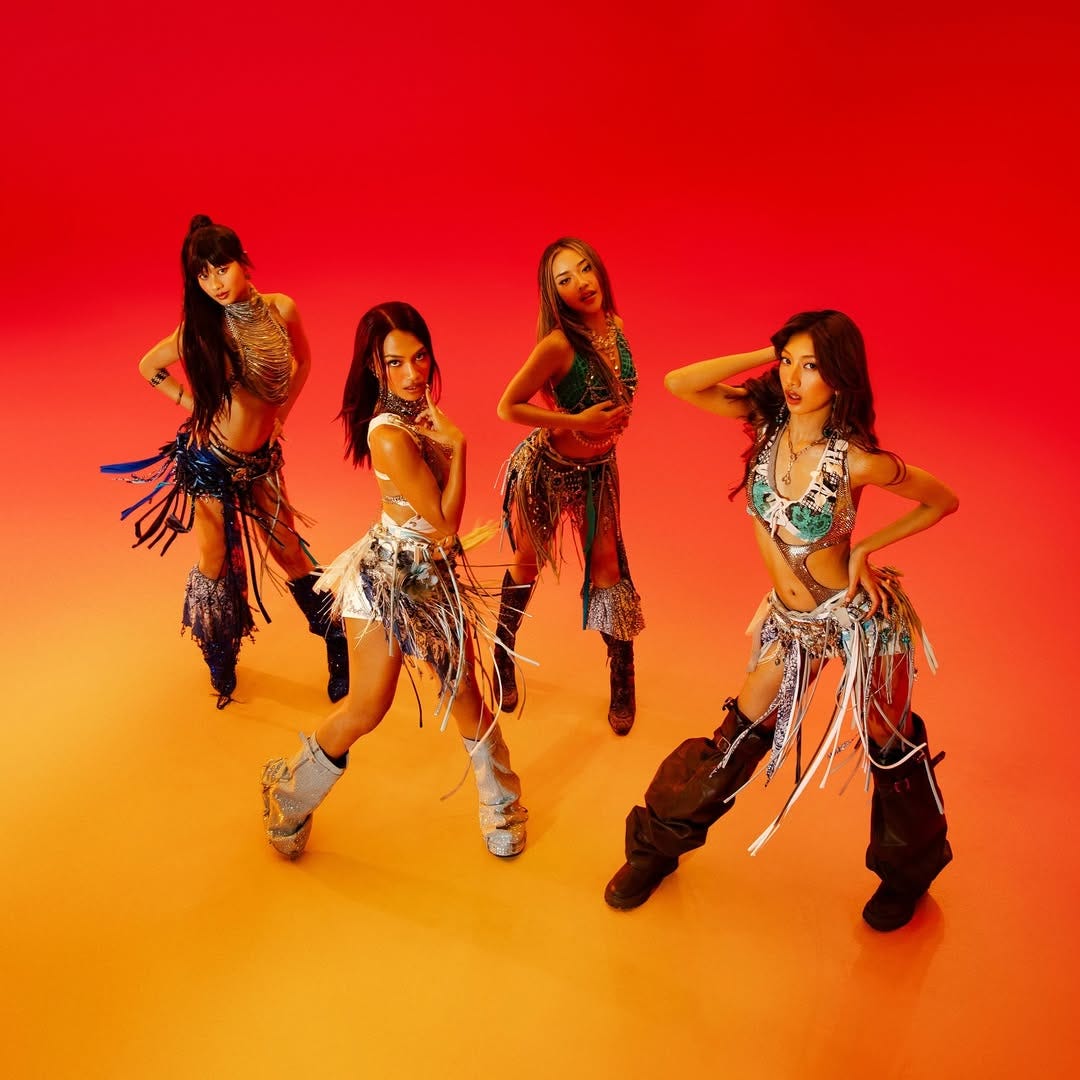
Their momentum was further amplified through performances at Head In The Clouds Los Angeles and New York 2025—marking their U.S. stage debut and expanding international exposure.
⚖️ What’s at Stake
The global music industry is watching closely. Can Southeast Asia sustain this momentum, or is it just a blip in the K-pop era?
For artists like no na, the stakes are massive. Success proves that authenticity sells—that bringing raw Indonesian, Filipino, Malaysian, and Thai identities to the studio is a superpower, not a hurdle. For the region, it means a gold rush of new talent, investment, and creative infrastructure. For K-pop’s dominance? It means real competition is finally here. 🏆
🌏 The Regional Heavyweights
Grab your iced kopi ☕, because no na isn’t doing this alone. Across the region, girl groups are carving out massive lanes with distinct, local flavor:
🇵🇭 BINI (Philippines)

Dubbed “The Nation’s Girl Group,” this eight-member P-pop powerhouse is unstoppable. They’ve topped Billboard charts, snatched Best Asian Act at the 2024 MTV EMAs, and made history as the first Filipino act at Coachella 🌸. After collaborating with Indonesian icon Agnez Mo on the “Cherry On Top” remix, they just leveled up again with a performance at the Grammy Museum in April 2026.
🇹🇭 4EVE (Thailand)

Born from a 2020 survival show, this seven-member T-pop crew runs social media. 📱 Their recent team-up with 88rising on “Girls Like Me” proves they’re eyeing the global stage, backing up major wins like New Artist of The Year at the JOOX Thailand Music Awards.
🇲🇾 DOLLA (Malaysia)

Serving edgy, modern concepts since 2019, this trio constantly draws K-pop comparisons while remaining fiercely, undeniably Malaysian. 🐅 They are still the only Malaysian girl group to share the Seen Festival stage with heavy-hitters like NCT Dream, WayV, and KARD.
🔎 Beyond the Headlines
If you watch the “Rollerblade” music video—directed by visionary duo Fa & Fon—you’ll catch them breaking the fourth wall while traditional Indonesian instruments like the metallophone shine against a tropical backdrop. 🌴 It’s a brilliant aesthetic choice: top-tier global production meeting unapologetic local roots.
Behind the scenes, the fact that Grammy-nominated producers and top-tier choreographers are jumping on board means one thing: Western industry gatekeepers smell massive commercial potential. 💰
❤️ Why This Hits Home
For Southeast Asian listeners, these groups are the answer to a long-overdue question. Finally, we have pop stars who sound like the region—not just polished translations of Western or Korean trends.
When no na sings in Indonesian over a dangdut beat, or BINI takes P-pop to the Coachella desert, it screams to the world that our musical traditions are globally competitive. 🌍
The question is no longer whether Southeast Asian girl groups can compete on the world stage. They already are. The real question for your weekend pondering: Is K-pop ready to share the throne? 👑
(VIL/ARS)
Congrats... Proud of you girls! 🥰