



🎯 The Main Takeaway
In the last few months of 2026, the world confronts two interconnected crises that together paint a disturbing picture of how natural climate phenomena, amplified by human-induced warming, are unleashing unprecedented risks.
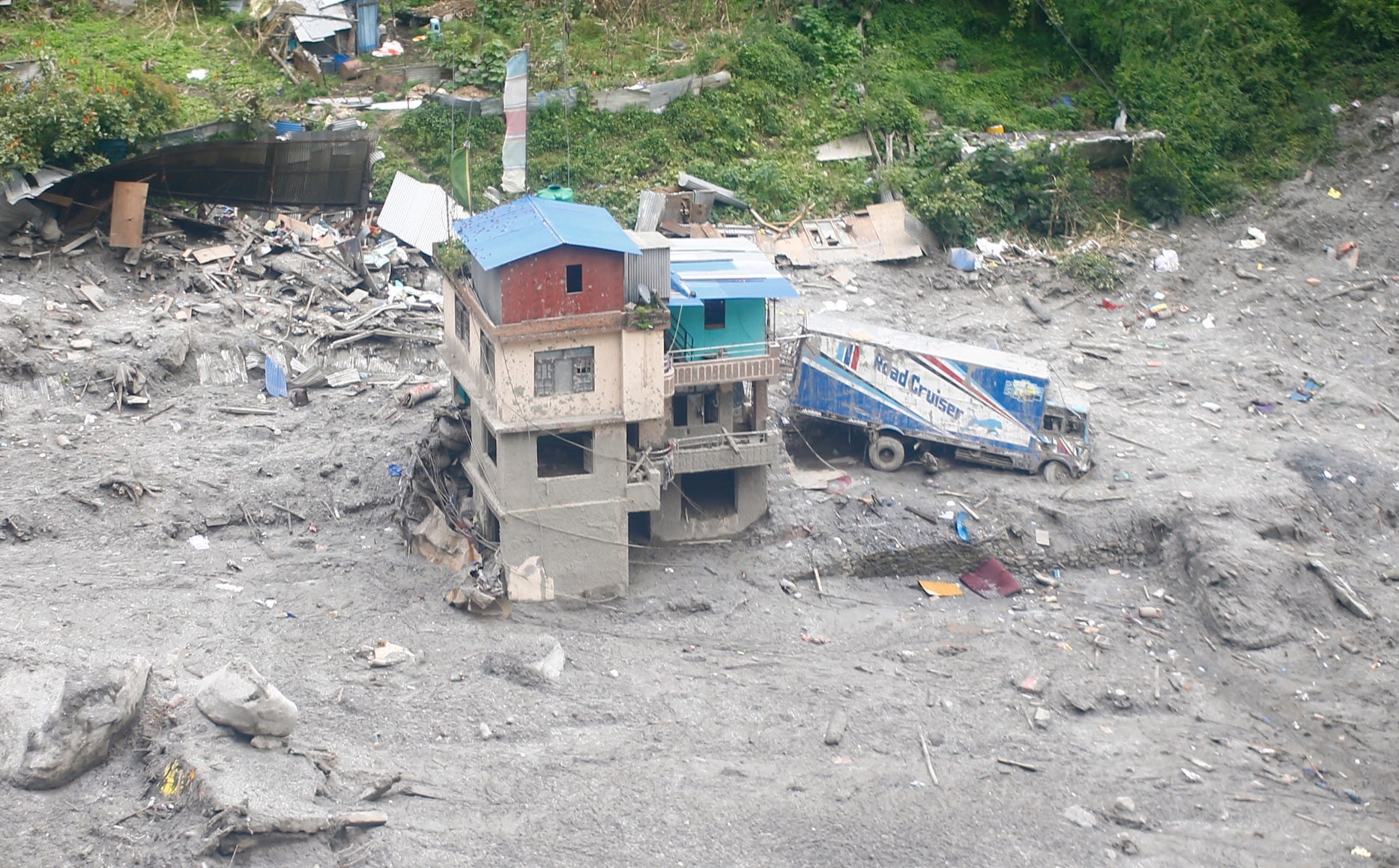
On one front, the Himalayan region has just witnessed one of its deadliest natural disasters on record: catastrophic flooding along the Nepal-Tibet border that has now claimed 1,342 lives, with 4,886 people still missing as of 5 September 2026.
On the other, the World Meteorological Organization (WMO) has issued a stark warning: the current El Niño event is intensifying into a “very strong” phenomenon and is expected to persist until February 2027 with “near 100%” probability.
The United Nations has now officially acknowledged what scientists have long warned: the world will inevitably exceed the 1.5°C warming limit.
As UN Secretary-General António Guterres put it: “Humanity is speeding past the limit to avoid climate catastrophe.”
The UN Environment Programme’s landmark “Overshoot Report,” released on 2 September, stated unequivocally that “the challenge has shifted from avoiding overshoot to navigating it.”
For Southeast Asia, this is not an abstract warning. The region is already experiencing the compounding effects of a climate crisis that moves faster than the systems meant to manage it. From the deadly Sumatra floods to a choking haze emergency across the archipelago, the season of cascading disasters is already here, and the region is not ready.
📡 Why It’s on Our Radar
The Himalayan Catastrophe: A Warning from the Roof of the World
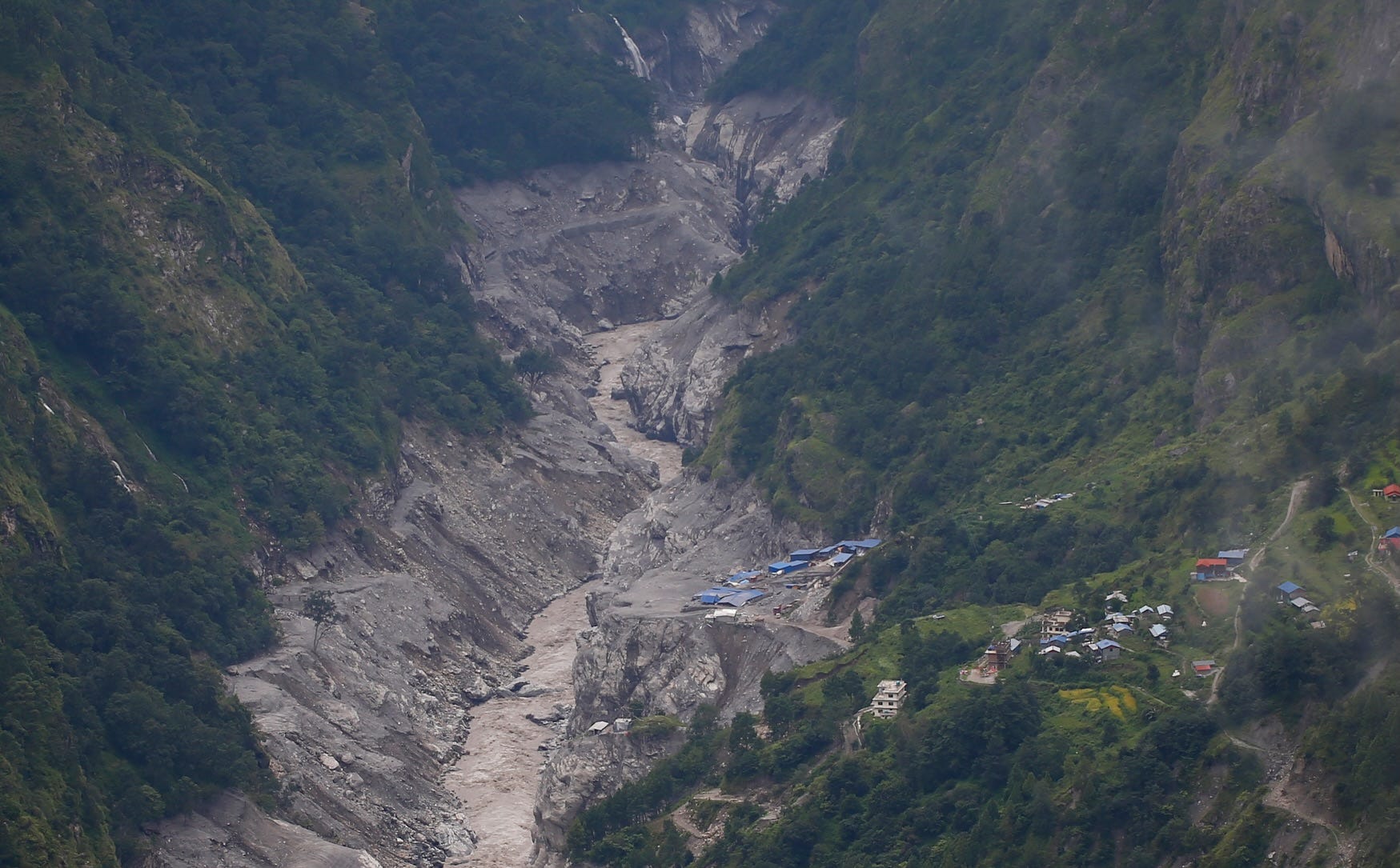
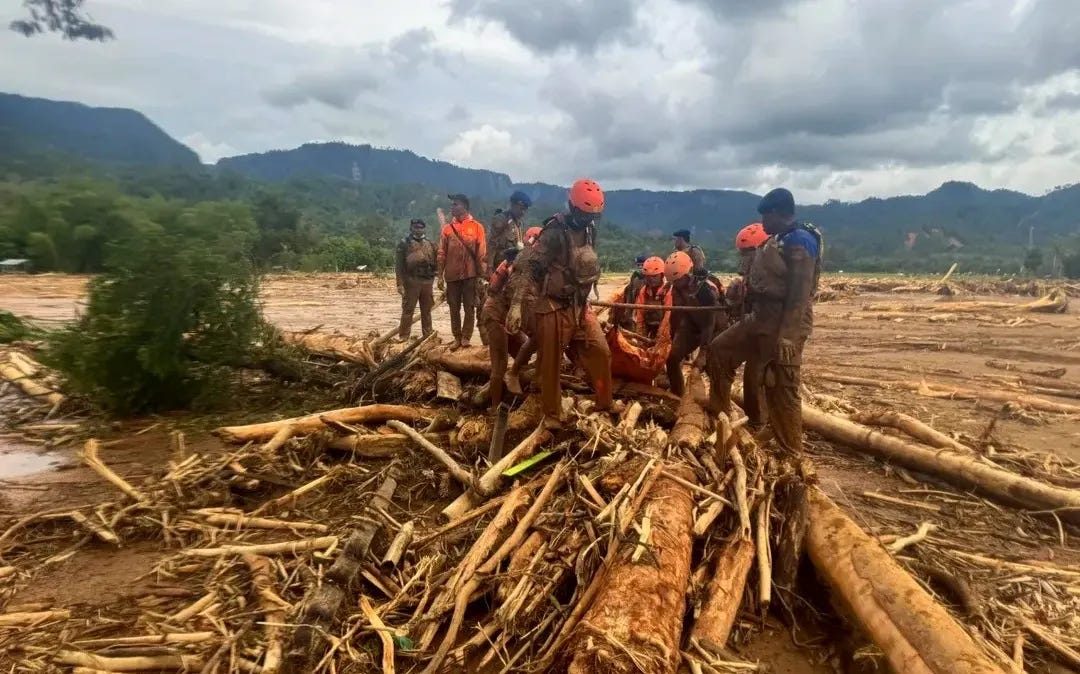
On 26 August 2026, a catastrophic flood triggered by a rock-ice avalanche swept through northern Nepal, bordering Tibet. By 5 September, the death toll had climbed to 1,342, with 4,886 people still reported missing.
Bodies were recovered across eight districts: 360 in Chitwan, 230 in Nawalparasi West, 222 in Nawalparasi East, 192 in Nuwakot, 160 in Rasuwa, 73 in Gorkha, 67 in Dhading, and 38 in Tanahun.
The floodwaters surged southwards along the Bhotekoshi River, destroying houses, vehicles, roads, and bridges, and damaging several hydropower projects. 1,030 bodies have been buried so far after DNA samples were collected.
Authorities have collected 2,272 DNA samples to help identify the dead, including 1,260 from bodies and 1,012 from relatives. 7,912 officers have been deployed for search and rescue operations, while about 3,240 people are being housed at holding centres in several districts.
What puzzled scientists most was the sheer volume of water. The flood carried several times as much water as the 2023 South Lhonak glacial lake outburst flood in Sikkim.
Yet satellite imagery did not reveal any large glacial lake in the vicinity. Researchers are still trying to understand where all the water came from and why the flood reached such terrifying speed.
Nepal’s Prime Minister Balendra Shah stated unequivocally on 1 September: “There is no doubt that climate change caused this disaster, because it has been confirmed that temperatures in the Himalayan region have risen by 1.8 degrees.”
The disaster has been described as a “Himalayan climate security warning.” Nepal’s Foreign Minister Shishir Khanal pointed out that Nepal contributes “almost negligible” greenhouse gas emissions, yet bears “disproportionate” consequences of global warming.
The UN’s Blunt Assessment: 1.5°C Will Be Breached
On 2 September 2026, the UN Environment Programme released its first-of-its-kind “Overshoot Report,” confirming that the world will inevitably exceed the 1.5°C warming limit. The report outlined how global temperatures might be brought back down through large-scale carbon removal.
“This summer’s scorching heat, devastating wildfires and deadly floods are a warning of what lies ahead. We must ensure that the 1.5-degree temperature rise is as small and as short-lived as possible.”
~ António Guterres, UN Secretary General
🌊 El Niño: A Climate Phenomenon Turning “Giant”
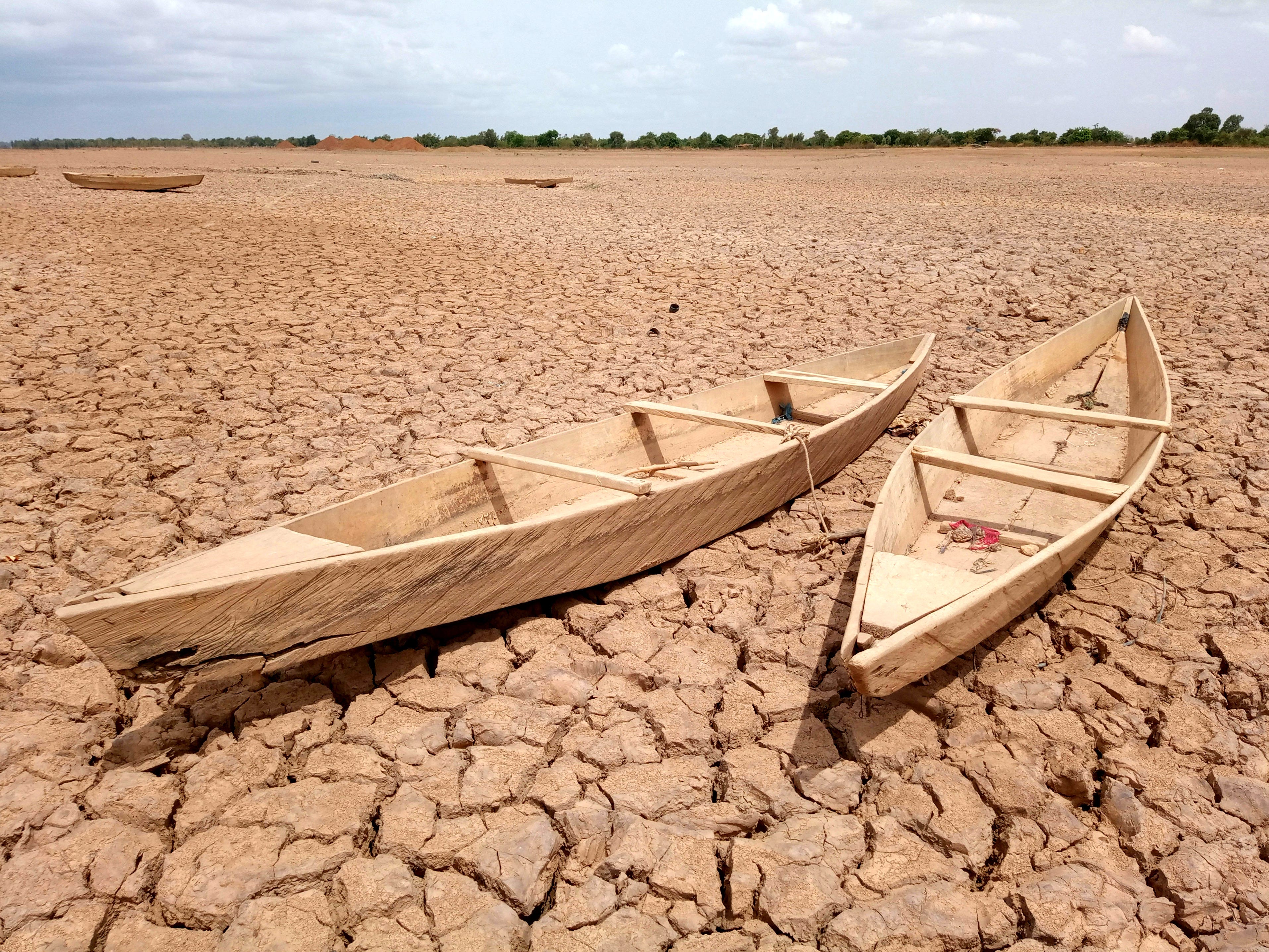
The WMO states that the probability of El Niño lasting until February 2027 is “near 100%.”
UN Secretary-General António Guterres warned: “El Niño is turning into a giant before our eyes. Science is no longer in doubt: the planet is in uncharted waters, and those waters are warming.”
WMO Secretary-General Celeste Saulo added that this “exceptional El Niño” could “deal a massive blow to communities and economies worldwide.”
El Niño’s effects reach far beyond the Pacific. It can reshape weather and climate patterns thousands of kilometres away.
The WMO projects that for the period September–November 2026, “nearly all land areas of the globe” will face an increased likelihood of above-normal temperatures.
The WMO notes that El Niño tends to peak at the end of the year, but the ocean releases heat into the atmosphere slowly, thereby pushing up global temperatures in the following year.
The hottest year on record was 2024, which followed the previous El Niño. This suggests that 2027 could bring another round of record-breaking heat.
⚠️ The Southeast Asian Cascade: A Region Under Siege
While the Himalayan tragedy captured global attention, Southeast Asia is simultaneously being battered by a cascade of climate-related disasters that test the limits of national and regional response systems.
🇮🇩 Indonesia: A Cascade of Crises
Indonesia is confronting a dual climate emergency that has already claimed hundreds of lives and sickened millions.
In late 2025, flash floods and landslides across Sumatra killed hundreds of people and displaced hundreds of thousands.
The November 2025 floods were not merely a meteorological event; they were an ecological one, amplified by deforestation, mining expansion, and poor land-use planning.
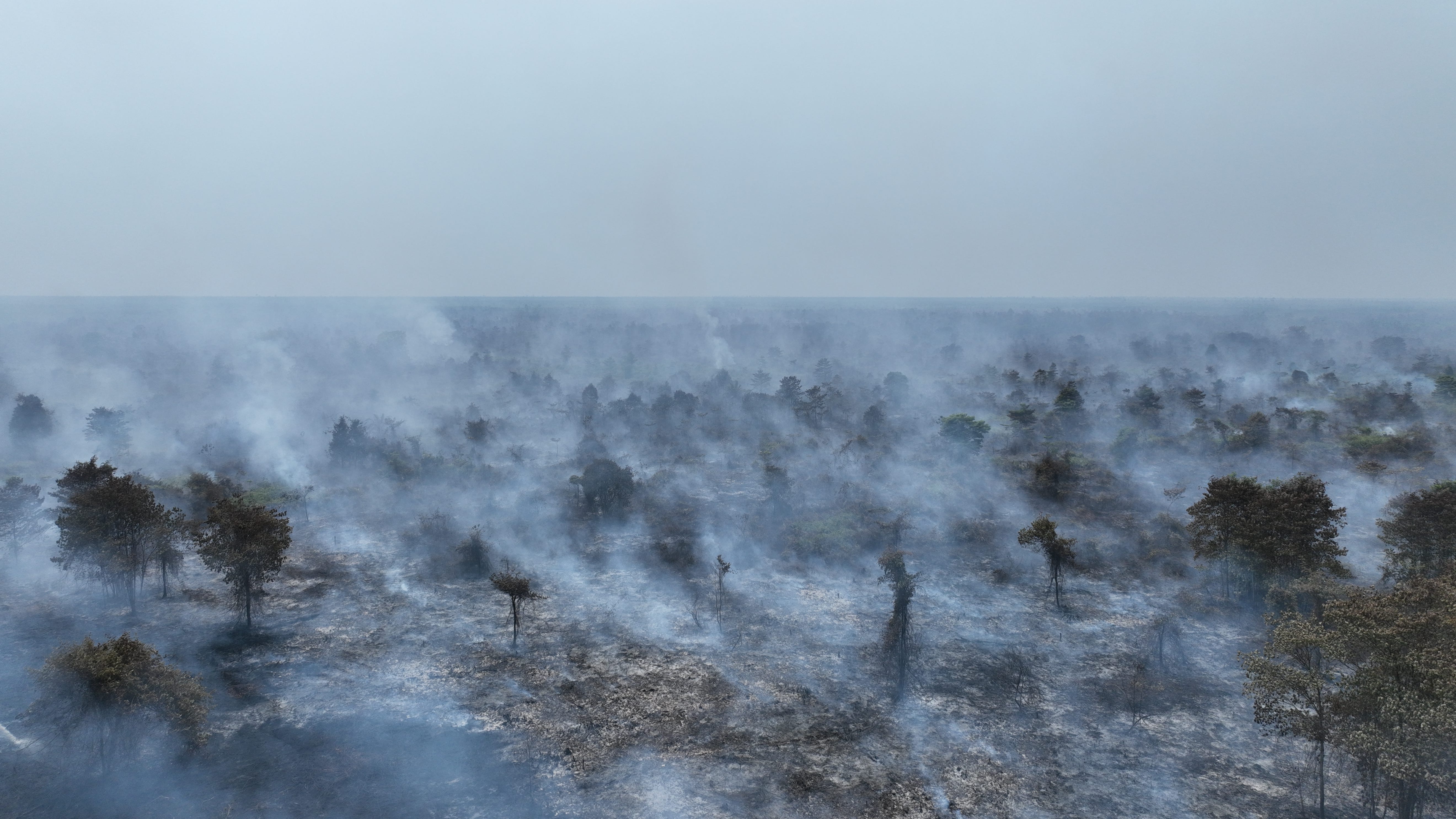
Indonesia is also burning again. As of 27 August 2026, the ASEAN Specialised Meteorological Centre has activated its highest transboundary haze alert (Level 3), with widespread smoke from Kalimantan and Sumatra drifting across the region.
3.4 million people are at risk of acute respiratory infections, with 9,313 ISPA cases recorded in Palembang alone in August.
The government’s response remains focused on reactive firefighting and cloud-seeding. But the structural drivers of the crisis- weak enforcement, corporate impunity, and cheap land-clearing- remain largely untouched.
The fundamental question is: why was the country so unprepared for disasters that experts had long warned were coming?
🇵🇭 Philippines: Monsoon Deluge and Infrastructure Failure
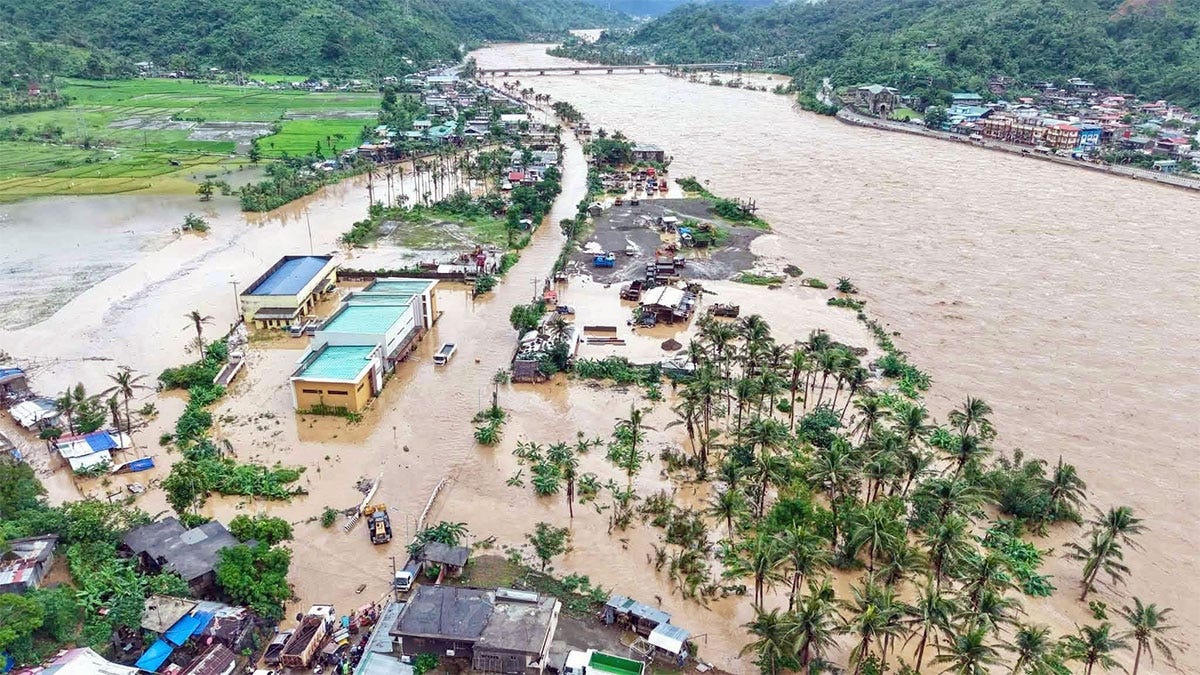
Heavy rainfall brought by the southwest monsoon (habagat) has triggered severe flooding across Luzon.
The North Luzon Expressway (NLEX) was inundated, causing a traffic nightmare that stranded thousands.
President Ferdinand Marcos Jr. has blamed garbage and heavy rain for the catastrophic flooding, but critics point to longstanding failures in flood control infrastructure and waste management.
Local governments in Benguet have ordered preemptive evacuations in high-risk areas as heavy rains saturate the soil and heighten the threat of landslides.
🇻🇳 Vietnam: Storms, Floods, and Landslides
Vietnam is bracing for up to three storms or tropical depressions in the East Sea this month.
Storm Saudel (Storm No. 5) has already made landfall, bringing heavy rain and raising the risk of flash flooding and landslides.
In Gia Lai Province, floodwaters up to 1.2 metres deep inundated residential areas on 3 September.
Damage from recent flooding has already risen to nearly US$17 million.
The Dong Nai River has also issued flood warnings, with water levels at the Ta Lai station exceeding Alert Level 2.
🇹🇭 Thailand: 54 Provinces on Alert
Thailand’s Department of Disaster Prevention and Mitigation has placed 54 provinces and Bangkok on alert for flash floods, forest run-off, mudslides, and waterlogging from 4 to 7 September.
The Thai Meteorological Department has warned of heavy to very heavy rain across northern and northeastern regions.
🔍 The Regional Stakes: Is Southeast Asia Ready?
The convergence of these disasters raises a sobering question: Is Southeast Asia prepared for what is coming?
The UN’s Overshoot Report confirms that the 1.5°C threshold will be breached, meaning the region will face more frequent, more intense, and more unpredictable climate disasters in the years ahead.
The WMO’s forecast of a “very strong” El Niño persisting through February 2027 suggests that 2027 could bring record-breaking global temperatures.
The region’s bloc, ASEAN, has mechanisms for cooperation, including the Disaster Emergency Logistics System for ASEAN (DELSA), emergency simulation exercises, and training programs.
The ASEAN-UN Joint Strategic Plan of Action on Disaster Management 2026–2030 offers an opportunity to refocus on risk assessment, early warning, anticipatory action, and climate adaptation.
But implementation remains a challenge.
The haze crisis is a critical test of ASEAN’s capacity for cooperation, with mechanisms like the ASEAN Agreement on Transboundary Haze Pollution proving ineffective in practice.
Local authorities and disaster management agencies may have fewer financial resources due to tightening public budgets.
The Philippines has called on ASEAN to shift from reactive disaster response to proactive anticipatory action, building preparedness into the foundations of the region's disaster management.
Yet the gap between ambition and reality remains wide.
🏠 Why This Hits Home
For ordinary Southeast Asians, the abstract warnings of climate scientists have become lived reality.
Families in Luzon are stranded on flooded expressways.
Farmers in Sumatra watch their rice fields wash away.
Residents of 54 Thai provinces are bracing for flash floods.
Millions across the region are suffering from respiratory illnesses caused by choking haze.
The tragedy in Nepal is a preview of what the Himalayas, and other fragile mountain ecosystems, will face in a warming world.
The region’s disaster is not just a national calamity; it is a warning that when a country with negligible contribution to global warming bears the heaviest cost, the question of climate justice can no longer be avoided.
The UN’s admission that 1.5°C will be breached should not be read as surrender. It is a call to action: to prepare for the consequences, to protect the most vulnerable, and to work urgently to bring temperatures back down.
🏁 The Bottom Line
The convergence of the Himalayan tragedy, the cascading disasters across Southeast Asia, and the UN’s stark warning on 1.5°C overshoot points to an uncomfortable reality: we are entering an era of compounding extremes.
Natural climate variability and human-induced warming are interacting to produce disasters that exceed what either factor alone could explain. As Guterres said: “The race now is between growing risks and our commitments to climate action and protecting people. We must win that race.”
For Southeast Asia, the path forward requires:
Investing in proactive disaster preparedness, not just reactive response
Strengthening early warning systems, particularly for non-rainfall-triggered events
Scaling up climate adaptation financing, as current investments are inadequate
Deepening regional cooperation, including data sharing and joint response mechanisms
Addressing the root causes—including land-use practices, infrastructure failures, and waste management
The Nepal flood shows that some extreme hydrological disasters can occur without any precipitation trigger, simply through a slope process.
This observation is chilling. Traditional flood warning systems rely on rainfall monitoring, yet this disaster struck in complete absence of rain. And this essentially defeats every operational flood warning system in the world.
The WMO’s forecast is clear: this El Niño will persist until February 2027, and its impacts will be felt long after that. The question is not whether more disasters will come—but whether the region will be ready when they do.
📰 Need More Angles?
ASEAN ASEAN Framework on Anticipatory Action in Disaster Management
Kathmandu Post, The Nepal flood death toll reaches 1,342
Khaosod English Thailand Warns 54 Provinces of Flash Floods, Landslides
Saigon Giai Phong News Up to three storms may form in East Sea in September
UNEP Limiting Overshoot - Navigating exceedance of 1.5°C and pathways towards return
World Meteorological Organization El Niño set to become very strong, raising risks of extreme weather into 2027
#ElNiño2026 #NepalFloods #ClimateCrisis #15Celsius #UNEP #OvershootReport #HimalayanDisaster #SoutheastAsia #ClimateJustice #ASEAN #DisasterPreparedness #GlobalWarming
(ELS/QOB)