



🎯The Main Takeaway
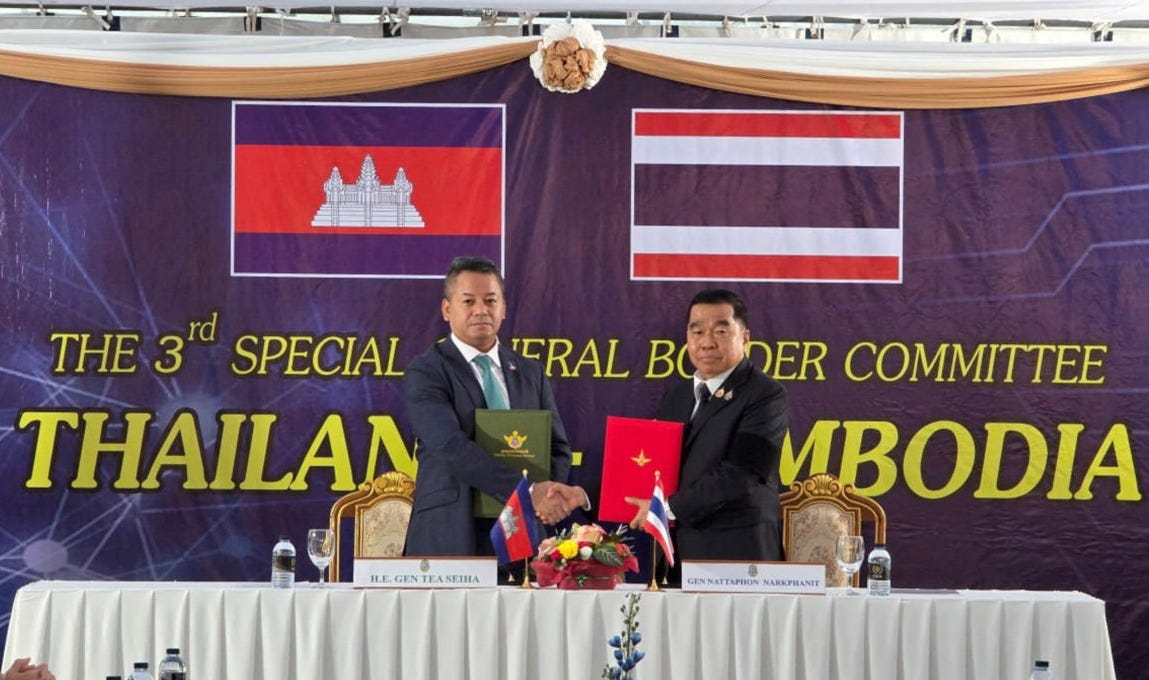
Thailand and Cambodia agreed to an immediate ceasefire to end the 20 days of border clash, starting effectively on Saturday, December 27, 2025.
The joint statement was announced by Cambodian Defense Minister Tea Seiha, and his Thai counterpart Nattaphon Narkphanit on the same day, after held the three days of 3rd Special Cambodia-Thailand General Border Committee Meeting, at the Prum-Ban Pak Kard border crossing, between the two kingdoms.
🤝What’s the Agreement?
There are 16 points of de-escalation efforts to restore peace, security, and stability that agreed by both countries, mainly include:
An immediate ceasefire takes effect at 12:00 a.m. on 27 December, banning all attacks and troop movements by both sides.
18 Cambodian soldiers will be returned after the ceasefire holds for 72 hours.
Troops will remain in their current positions, with no further movement or reinforcement along the border.
Civilians affected by the conflict may return home safely and resume normal livelihoods; force against civilians is prohibited.
Both sides commit to avoiding provocative actions, respecting international law, and preventing escalation.
Border issues will be addressed through the Joint Boundary Commission, without prejudice to the international boundary.
Humanitarian demining will continue under the Joint Coordinating Task Force (JCTF), in line with the Ottawa Convention and agreed procedures.
Cooperation will be strengthened to combat transnational crimes, cyber scams, and misinformation.
The ASEAN Observer Team, Border Coordination Units, and high-level military communication channels will oversee implementation, manage incidents, and ensure compliance.
➡️What’s the Next Step?
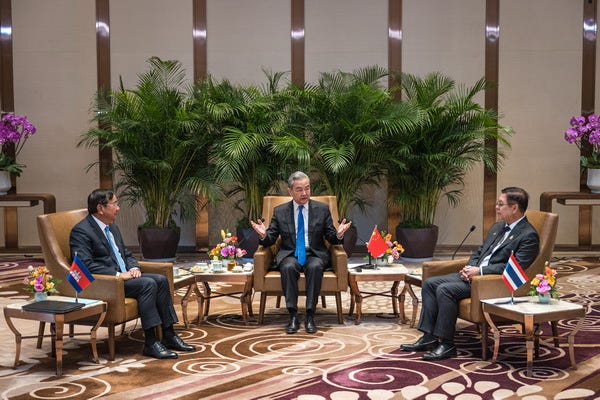
China mediated the next phase of the ceasefire by organizing a trilateral meeting on December 29 in Yunnan Province, attended by the foreign ministers of the three countries.
After the meeting, Thailand and Cambodia agreed to ease tensions, implement the ceasefire arrangements step by step, improve bilateral relations, and rebuild mutual trust to safeguard peace and stability along their border and in the region.
📡Why It’s on Our Radar?
The border clashes between Cambodia and Thailand, broke out around 5 a.m. local time on Monday (12/8). Both sides blamed each other for initiating the conflict.
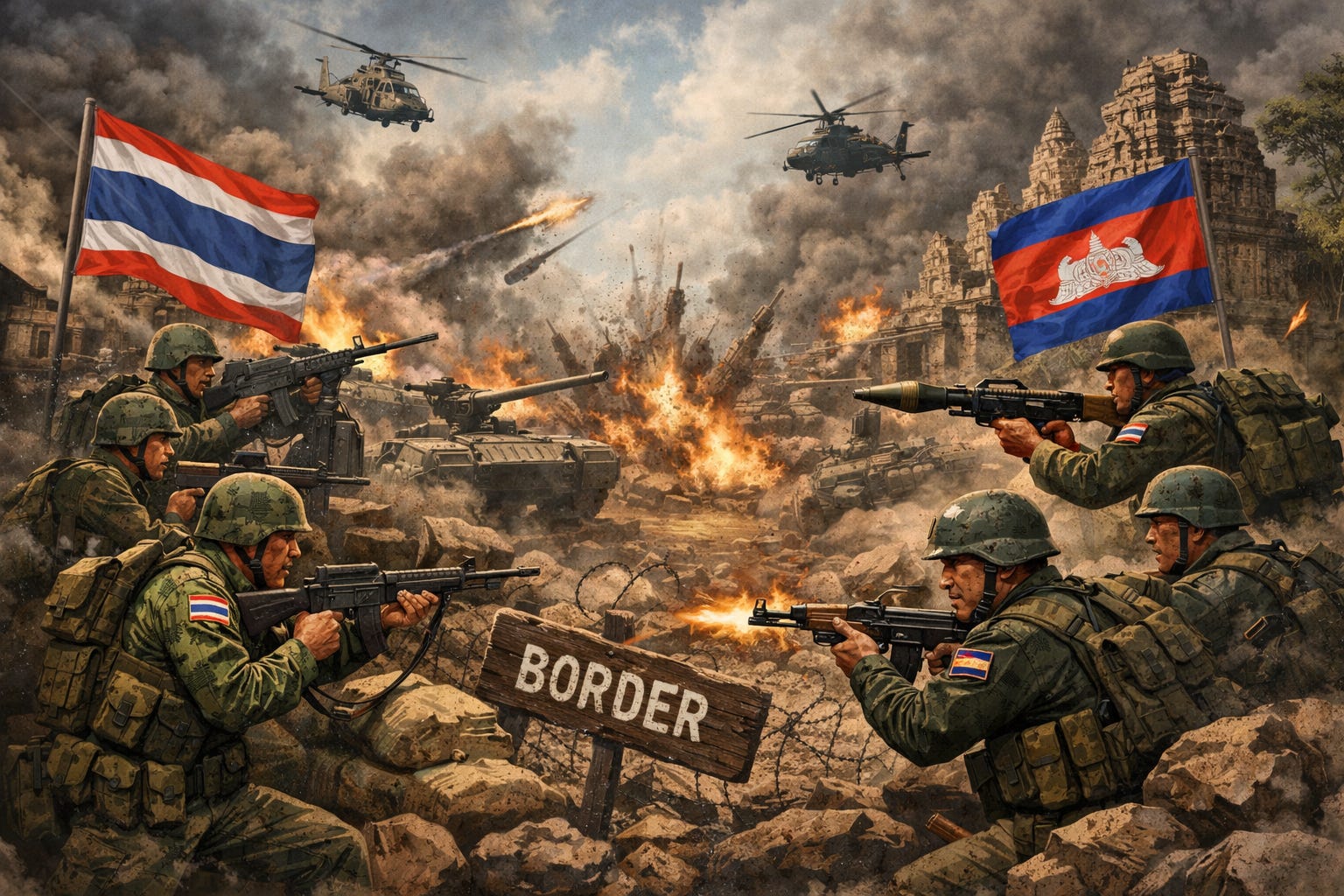
Both sides then exchanged fire using airstrikes, artillery, drones, and ground forces, destroying military targets and infrastructures in both countries.
The escalating tension broke the ceasefire agreement between the two kingdoms announced on Saturday (7/28), mediated by Malaysia as ASEAN Chair in Putrajaya, Malaysia.
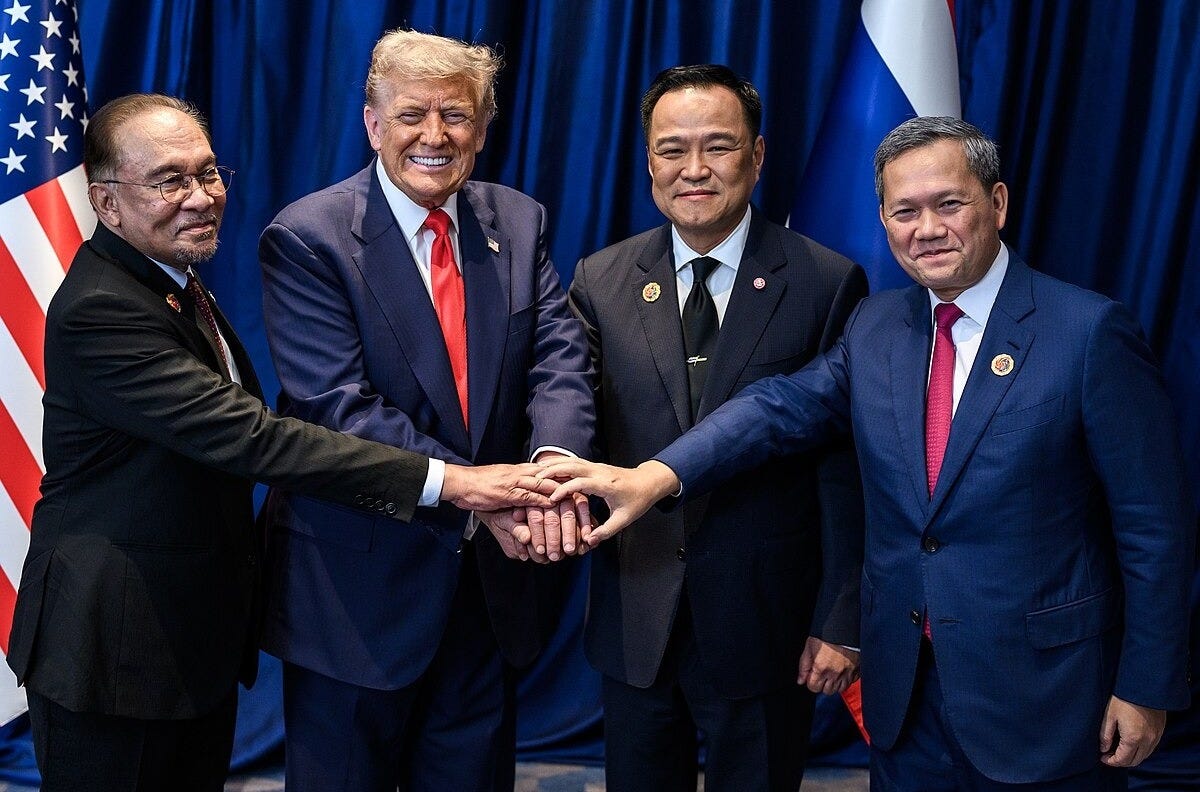
The agreement was later reaffirmed by both prime ministers and U.S. President Donald Trump, in a joint declaration at the ASEAN Summit on Sunday (10/26) in Kuala Lumpur, Malaysia, marking the end of the first conflict that began on July 24.
📊What’s at Stake?
☠️Death toll: At least 100 soldiers and civilians from both sides were reportedly killed during the 20 days of fighting.
🧳~1 million displaced: Around 640,000 people from Cambodia and 400,000 from Thailand along the 817-kilometer border were forced to evacuate, to prevent civilian casualties.
🏫School closures: ~1,300 schools in Cambodia and ~1,100schools in Thailand (102 of them used as temporary evacuation shelters) were closed during the border clashes, leaving thousands of students without access to education.
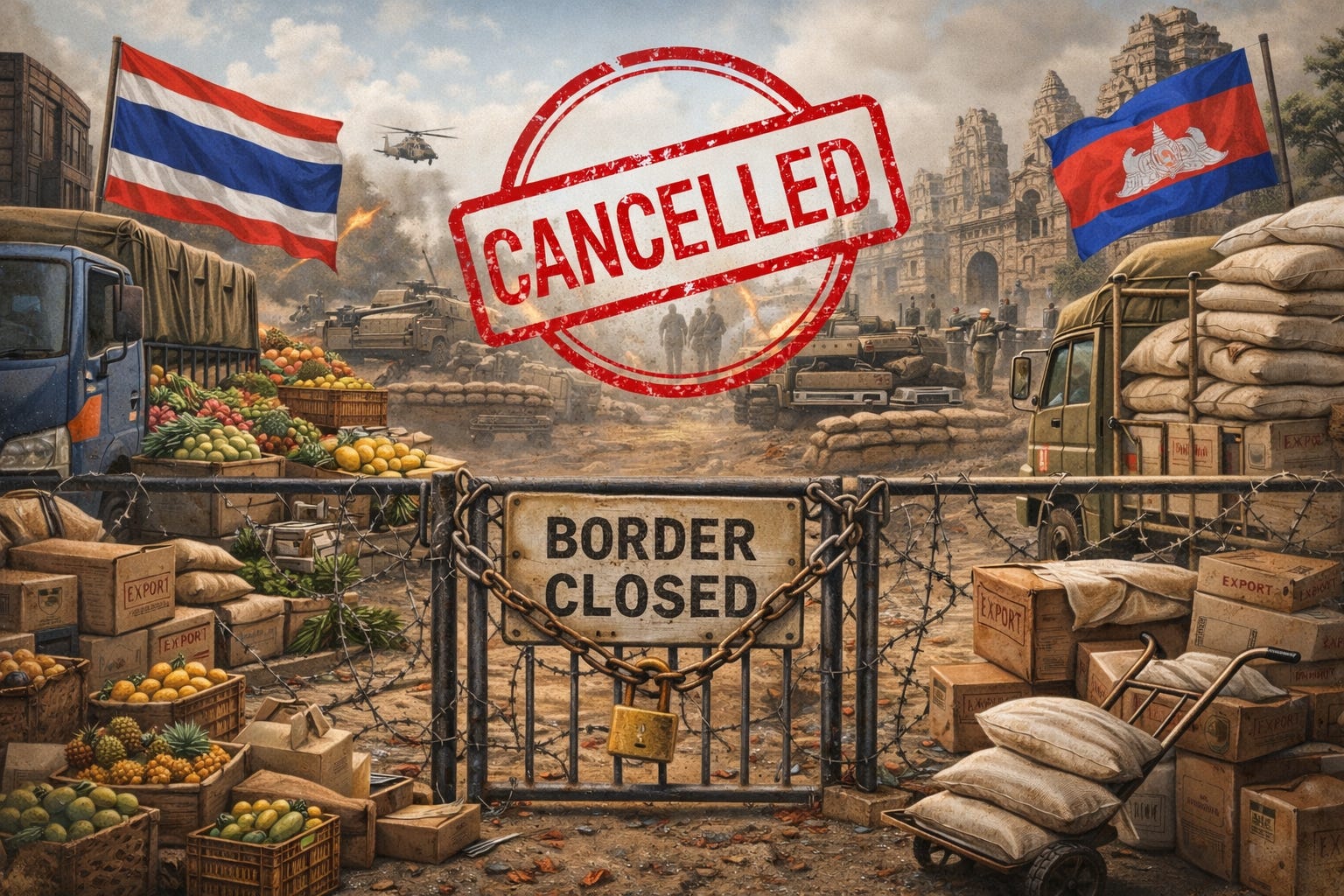
⛔Border closure: the clashes forced both kingdoms to close their borders, disrupting cross-border tourism, labor, logistics, and supply chains, and causing economic losses in both countries.
🏢Infrastructure damage: both countries suffered damage to civilian and military infrastructure, including the UNESCO World Heritage-listed 11th-century Preah Vihear Temple in Cambodia.
💥The Impacts
Various sectors were affected by the border clash between Thailand and Cambodia, mainly:
🛒Trade sector:
The Klong Luek–Poipet border is a crucial logistics hub for Thailand and Cambodia, generating around THB 174.5 billion (USD 4.7 billion) in annual trade. With the border closed, Thailand faces losses of around THB 66.6 billion (USD 2.12 billion) in exports and THB 20.37 billion (USD 0.65 billion) in imports, potentially reducing GDP by 0.74% in 2026. (UTCC)
Border trade with Cambodia fell by 99.5% due to checkpoint closures, resulting in an estimated loss of around THB 500 million (USD 16 million) per day. (Thai Customs Department)
✈️Tourism sector:
The international arrivals in Thailand are projected to fall to 32 million visitors by the end of 2025, a 9.8% drop from 35.5 million in 2024. (Tourism Authority of Thailand)
International tourism contributes about 9% of the nation’s GDP, generating over THB 1.7T (USD 54.2B) in revenue. (Bank of Thailand)
Cambodia reported 5.17 million international tourists in the first 11 months of 2025, a 13.8% decrease compared to 2024. (Ministry of Tourist)
Tourism contributed USD 3.63 billion, or 9.4% of GDP, in 2024. (Ministry of Tourism)
🚚Supply chain: Companies were forced to reroute shipments through Vietnam and Laos, driving transportation costs up by as much as 40% and potentially disrupting regional supply chains. (UTCC)
👷♂️Labor shortage: Over 780,000 Cambodian migrant workers in Thailand were forced to return home immediately, causing short-term labor shortages across many sectors in Thailand. (UTCC)
🏡Why This Hits Home?
According to Tangguh Chairil, a lecturer of International Relations at Binus University, each ASEAN member state has its own political conditions, which vary from one another.
“This clearly reflects a challenge for ASEAN, which has often been criticized for failing to take decisive action, on security and high-level political issues affecting member states. ASEAN must address the Thailand–Cambodia conflict seriously and work to resolve it.”
Tangguh Chairil, Lecturer of International Relations, Binus University
🌍 The Regional Stakes
There are several actions ASEAN can take to resolve the Thailand–Cambodia conflict and prevent further escalation:
🤝Mediation: Provide a platform to strengthen dialogue between the conflicting countries and other member states to seek long-term solutions and ease tensions.
🌱Address the root: Identify the primary drivers of the conflict, especially the border dispute, and offer win-win solutions for both countries.
🔍Deploy observer team: Deploy ASEAN Observer Teams from member states to Thailand and Cambodia, to monitor the implementation of the ceasefire agreement.
⚡Swift action: Take decisive action immediately when conflicts occur in the region, emphasizing dialogue over the use of force to resolve disputes.
🚑Provide humanitarian aid: Deliver humanitarian assistance to victims of the conflict, especially those forcibly displaced by infrastructure damage and left without homes.
🔗Reduce external reliance: Address regional issues independently with each ASEAN member state, to prevent distractions or personal interests from other countries, that could destabilize the region.
💪Strengthen ASEAN unity: Reaffirm ASEAN’s commitment to unity and centrality in building a peaceful, stable, and resilient region through dialogue, diplomacy, respect, transparency, international law, and ASEAN principles.
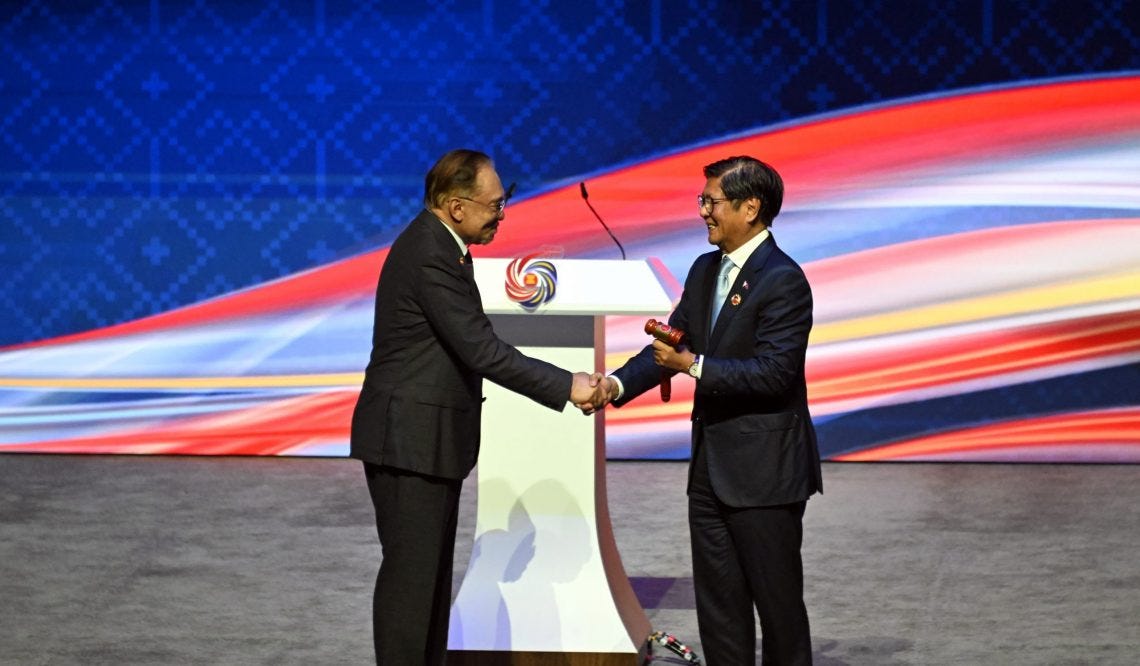
The Philippines will continue as ASEAN chair in 2026, focusing on three main priorities: peace and security, prosperity, and empowering people.
President Ferdinand Marcos Jr. said he will continue to emphasize dialogue, cooperation, and mutual understanding to maintain stability, address regional security issues, and uphold respect for international law.
“We believe that through cooperation and understanding, ASEAN can further strengthen its role as a force for peace and progress in the global community. Let us build together an ASEAN that is unified in its diversity, a steadfast body that stands close forever to its principles, and bold in its embrace of innovation.”
Ferdinand Marcos Jr. The President of The Philippines
With the U.S. and China involved in the conflict, the Philippines, representing ASEAN, must balance the approaches of both countries in mediating the dispute without compromising ASEAN’s neutrality.
“Considering current incentives and the presence of other actors, there is less pressure for Manila to force a decisive solution. Both the US and China are already actively engaged in keeping negotiations on track, with China in particular playing a hands-on role in facilitating dialogue between Thailand and Cambodia through processes and mechanisms consistent with Asean’s institutional role.”
Julio Amador, Interim resident of the Foundation for the National Interest and founder of the non-profit policy advisory firm FACTS Asia
⚖️Beyond the Headlines
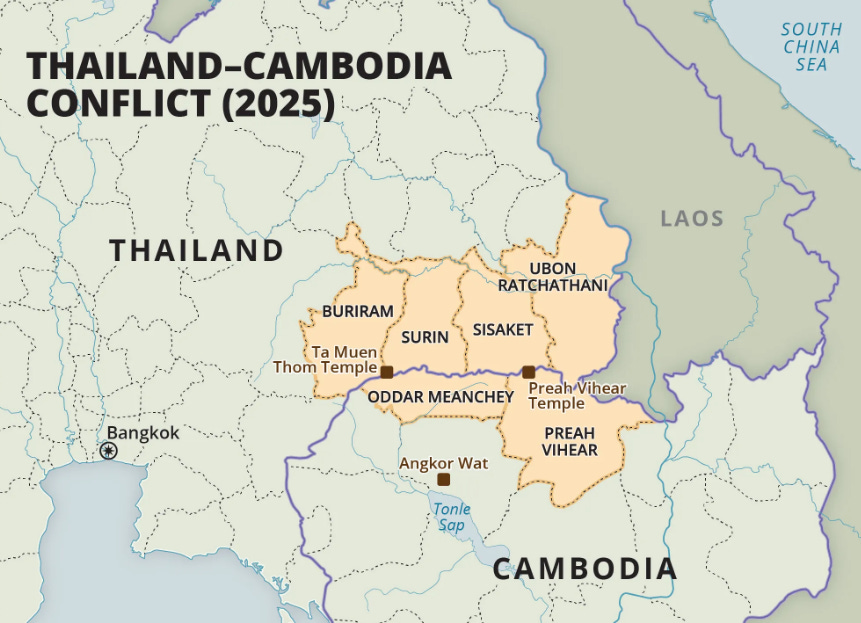
The Thai–Cambodian border tensions originate from historical territorial disputes:
🛡️1863: King Norodom of Cambodia sought French protection to prevent Siamese control over the already weakened Khmer monarchy.
🎁1867: Siam gave up claims over Cambodia for northern and western territories, including Preah Vihear.
🗺️1907: French officials mapped Preah Vihear entirely in Cambodia. Siamese (Thailand) reject the map, but neither carried out their own survey nor formally objected.
⚔️1941: Thailand took Preah Vihear and other areas during its wartime alliance with Japan, then later returned the territory to France.
🏴☠️1954: after France’s colonial defeat, Thai troops entered Preah Vihear to take over from the departing French soldiers.
📝1959: Cambodia filed a case against Thailand at the International Court of Justice (ICJ) over sovereignty of the Preah Vihear Temple.
⚖️1962: the ICJ awarded sovereignty over Preah Vihear to Cambodia.
🏰2008: Cambodia’s attempt to register Preah Vihear as a UNESCO site revived ownership disputes, causing clashes with Thailand until 2011.
⚖️2013: the ICJ issued a final ruling confirming Cambodia’s full sovereignty over the Preah Vihear temple.
💥Jul 2025: the Thai-Cambodian border conflict around Preah Vihear temple escalated after a landmine incident, sparking five days of exchange fire that killed at least 48 and left 18 Cambodian soldiers in custody.
🤝Oct 2025: The ceasefire agreement was officially announced at the ASEAN Summit in Kuala Lumpur, Malaysia.
🔥Dec 2025: The clashes erupted again for 20 days, with both sides blaming each other for starting the attacks, resulting in over 100 deaths, and ending with a ceasefire agreement on December 27.
Need More Angles?
Cambodian Office of The Council of Ministers, Press Release | Cambodia’s Rejects Thailand’s Allegations, Says Accusations Aim to Mislead Public and Create Military Tension
Khmer Times, Int’l tourists to Cambodia down 13.8 pct in first 11 months of 2025
Ministry of Foreign Affairs People’s Republic of China, Foreign Ministers of China, Cambodia, and Thailand Hold Trilateral Meeting
Philippine Presidential Communication Office, Speech by President Ferdinand R. Marcos Jr. at the National Launch of the Philippine Chairship of ASEAN 2026
South China Morning Post, Why Philippines as Asean chair may leave Thai-Cambodian peace problem to US, China
Stanford University, Thailand and Cambodia: The Battle for Preah Vihear
Thai Government Public Relation Department, Royal Thai Army: Cambodia Attacked to Cause Losses, Block Mine Clearance and Roadwork. Thai Response Followed International Self-Defense Rules
Thai Government Public Relation Department, Thailand and Cambodia Sign Joint Statement Agreeing to Immediate Ceasefire
The Nation Thailand, Education minister orders closure of 1,168 border schools, turns 102 into shelters
(NGO/ELS)