



(This article was updated on December 2, 2025)
🎯 The Main Takeaway
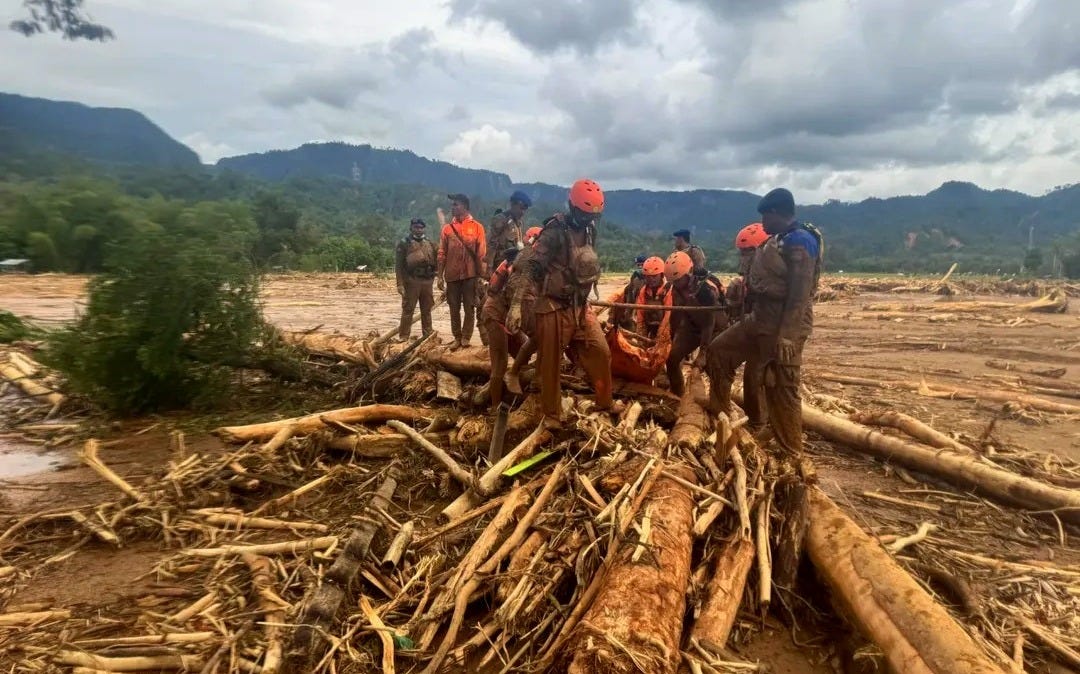
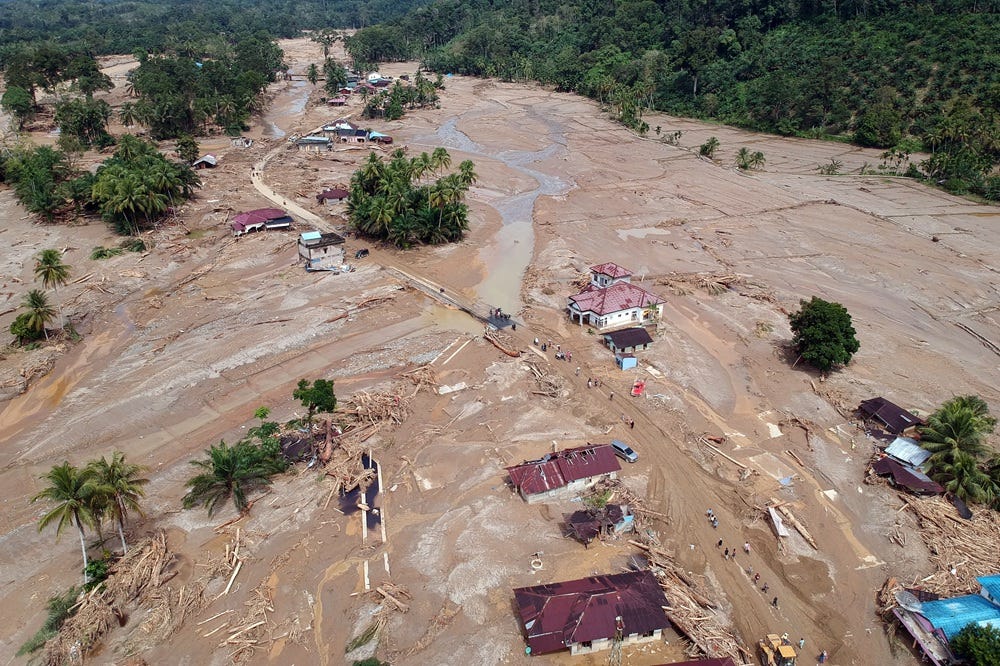
Flash floods and landslides across Aceh, North Sumatra and West Sumatra have now claimed at least 712 lives, with 507 people still missing, according to the National Disaster Management Agency (BNPB).
The scale is staggering: More than 3.3 million people affected, nearly 300,000 displaced, and entire districts cut off by landslides, washed-out roads, and collapsed bridges.
Although the death toll continues to rise, the Indonesian government has not yet declared the disaster in Sumatra a national disaster, and believes that local governments are still capable of handling it.
🕒 Timeline: How the Disaster Unfolded
⏰ 18–20 November
• Vortex forms in the Malacca Strait, the earliest precursor of Cyclone Senyar.
• Heavy rain begins over northern Sumatra.
⏰ 21–22 November
• BMKG identifies Tropical Disturbance 95B, intensifying rainfall in Aceh and North Sumatra.
• Several rivers reach alert status.
⏰ 23–24 November
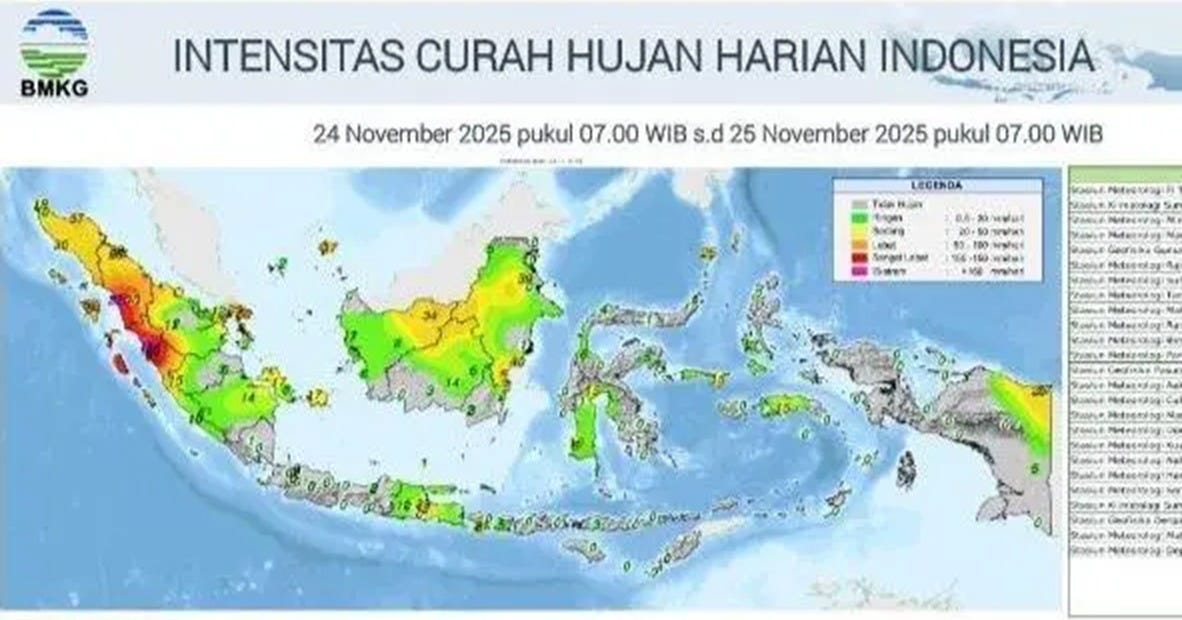
• Daily rainfall hits 160–226 mm, already above the monthly national average.
• First flash floods hit Aceh and West Sumatra.
• Landslides block major roads in Agam, Pesisir Selatan, and Tapanuli.
⏰ 25–26 November
• BMKG officially names Cyclone Senyar.
• West coast rainfall spikes to 300 mm/day in some areas.
• North Sumatra sees widespread power cuts; thousands begin evacuating.
• Communication networks collapse in parts of Aceh Tengah, Sibolga, and Central Tapanuli.
⏰ 27 November
• Floodwaters intensify into deadly surges described by residents as “like a tsunami.”
• Hundreds of homes are swept away.
• Aceh and North Sumatra declare emergency status.
• Army, police and Basarnas begin rescue by boat and helicopter.
• First reports of isolated districts emerge.
🌧️ What’s Happening Now
• North Sumatra is the hardest hit: 301 dead.
• West Sumatra reports 193 deaths; Aceh records 218.
• Two cities remain unreachable, Central Tapanuli and Sibolga.
• Roads, electricity and telecom networks are severely disrupted.
• Thousands of families are stranded without food, water, or power.
Cyclone Senyar, a rare tropical cyclone, forming unusually close to the equator, intensified extreme rainfall, triggering floods and landslides across the island.
BMKG warns that more heavy rain remains possible as the cyclone regenerates offshore.
🚨 Government Response
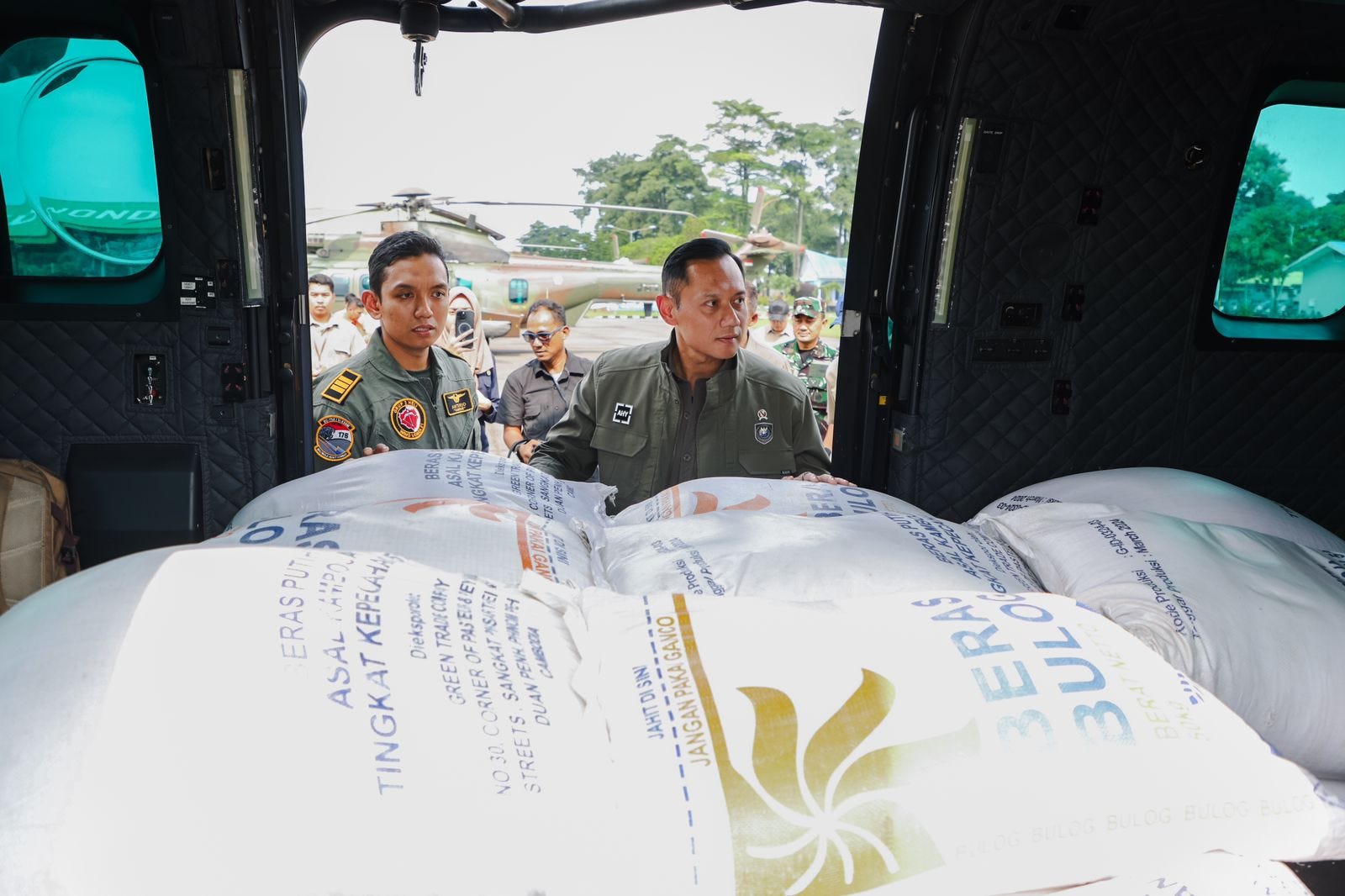
Indonesia has launched a large-scale national emergency operation:
11 helicopters, three C-130 Hercules, and one A400M deployed
Warships sent from Jakarta to deliver food, water, and fuel
Starlink internet units installed in cut-off regions
Search teams from TNI, Polri, Basarnas, BNPB operating round-the-clock
Temporary shelters set up for families who lost their homes
Field kitchens activated through SPPG to provide hot meals
Weather modification (OMC) initiated to reduce rainfall intensity
🌿 The Environmental Alarm
Scientists and environmental groups say this disaster is not only meteorological, it is ecological.
Why the floods were so severe
Experts point to a powerful combination:
Extreme rainfall driven by Cyclone Senyar
Deforestation and land clearing, especially in North Sumatra, West Sumatra, and Aceh
Damaged catchment areas unable to absorb or slow down runoff
Mining expansion and extractive industries that strip forest cover
River sedimentation from erosion, making waterways shallow and prone to overflow
Uncontrolled development, sealing soil surfaces with roads and concrete
Steep, fragile geomorphology in Sumatra’s earthquake-prone highlands
🧭 Why This Matters
Sumatra’s disaster is a climate–environment double shock:
Extreme weather is intensifying due to climate change.
Forest degradation is amplifying its impact.
Communities are increasingly exposed to floods, landslides, and infrastructure collapse.
Environmental decline makes response and recovery far harder.
The disaster spans three provinces, raising debate over whether it should be declared a national emergency.
📷 On the Ground: Voices from the Flood Zone
In Aceh, one survivor told BBC: “It was like a tsunami, the current was too fast. Within minutes the river overflowed and our house was underwater.”
Families waded through waist-deep water, slept without power, and rationed food. Some communities relied on rainwater for drinking as supplies dwindled.
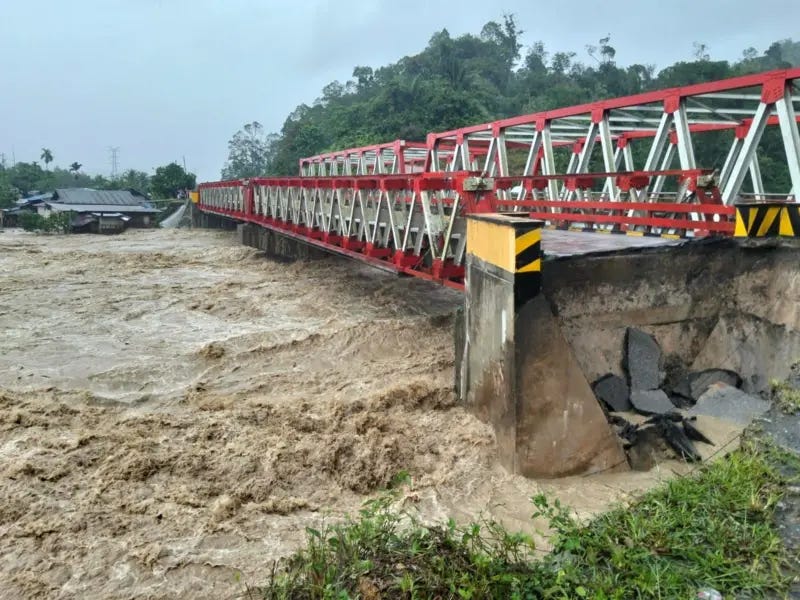
In West Sumatra, hospitals, schools and bridges have been destroyed; families gather at morgues hoping for news of loved ones.
In North Sumatra, fuel shortages, empty food shelves, and price spikes are widespread.
💡 The Bigger Picture
This disaster reveals what Indonesia now faces:
A future where climate extremes hit harder and more often
A landscape whose ecological buffers are eroding
A population increasingly vulnerable to hydrometeorological shocks
A national need to re-evaluate mining, land use, and forest protection policies
🌏 Beyond the Headlines: A Region Under Water
Severe weather has battered Southeast Asia in parallel with Indonesia’s crisis, revealing a broader climate emergency across the region.
🇲🇾 Malaysia
• Multiple deaths as rivers burst banks.
• Thousands evacuated in Johor, Kelantan, and Pahang.
🇹🇭 Thailand
• 170 deaths reported in widespread flooding.
• Several provinces submerged; emergency shelters overwhelmed.
🇵🇭 The Philippines
• Over 200 killed in successive floods.
• Tens of thousands protest government corruption, linking mismanagement to disaster fallout.
• Severe damage across Luzon and Visayas.
The regional pattern is clear:
Climate extremes are now overlapping, synchronised, and deadly.
📩 The Bottom Line
Sumatra’s floods are a national warning: Extreme weather may trigger disasters, but environmental damage determines how devastating those disasters become.
Indonesia’s emergency teams are working at full capacity. But recovery will take years. And prevention will require political courage, environmental enforcement, and a rethink of extractive expansion across the archipelago.
Need More Angles
Aljazeera Indonesia floods death toll rises to 442 as people hunt for food and water
BBC Indonesia searches for hundreds missing in deadly floods
Tempo English BMKG to Lead Weather Modification Operation in Response to Recent Disasters in Sumatra
Tempo English BNPB Update: Death Toll from Sumatra Disaster Rises to 442
(ELS/QOB)