



🎯 The Main Takeaway
Southeast Asian pop is going regional and global at the same time.
In the past few weeks, the region has delivered a wave of new music. Across pop, jazz, and electronic beats, artists are building their sound from local roots.
Veterans are leading the charge. Nearing their 25th year, Maliq & D’Essentials returned with a personal, story-driven record rather than relying on nostalgia singles.
The common thread is local identity. From Vietnamese folklore and Filipino empowerment anthems to a Malaysian power ballad, artists across the region are proudly showcasing where they come from—and this Saturday, three of them take on a very big stage.
📡 Why It’s On Our Radar
For the first time, Eurovision is being held in Asia. The inaugural Eurovision Song Contest Asia takes place in Bangkok on November 14, with 11 countries competing.
Six are from Southeast Asia: Cambodia, Laos, Malaysia, the Philippines, Thailand and Vietnam. The other five are Bangladesh, Bhutan, Mongolia, Nepal and South Korea.
The final is a snapshot of where SEA pop stands right now, and of how each country presents its culture and talent to the world.
Indonesia and Singapore aren’t in this year’s lineup. If more nations join later editions, imagine Jakartan dangdut or Singaporean pop on the same stage.
In honor of the contest, here are some of the newest releases from the region.
🎧 The Newest Southeast Asian hits
🇮🇩 Maliq & D’Essentials

Jakarta jazz-pop group Maliq & D’Essentials released their 10th studio album, Kabar Gembira, on November 11 ahead of their 25th anniversary in 2027.
Previewed by the hopeful, spontaneously written lead single “Arah Labuh,” the nine-track record is headlined by a standout guest list: the King of Dangdut, Rhoma Irama, joins them to re-record his classic “Penasaran”, a collaboration born from their Pestapora 2025 performance that reshaped frontman Angga Puradiredja’s view of dangdut, alongside Bilal Indrajaya on “Nyali” and Perunggu on “Pigura,” a track vaulted for roughly 11 years.
The album builds on massive recent momentum following their 2024 record Can Machines Fall in Love?, which surpassed 120 million Spotify streams and produced the viral hit “Kita Bikin Romantis” (44 million Spotify plays and 3.6 million TikTok videos).
Beyond Indonesia, the band also holds a strong regional following across Malaysia, Singapore and Brunei, dating back to their first standalone Kuala Lumpur show at KL LIVE in December 2011, though the Kuala Lumpur finale of their 2024 album tour had to be postponed.
🇻🇳 Tóc Tiên

Vietnamese superstar Tóc Tiên will open the inaugural Eurovision Asia broadcast with “Em Tiên” (“Fairy”).
Internally selected by national broadcaster Vietnam Television (VTV3) as the country’s representative, her competing song was officially released on September 20, 2026, before being chosen by viewers during the October national final, The Sound of Vietnam. To build momentum ahead of the Bangkok show, Tóc Tiên also launched a viral dance challenge for the track on November 5.
Blending traditional Vietnamese folk elements with contemporary electronic dance production, the track reimagines Vietnamese folklore for a modern regional stage.
A household name in Vietnam for over two decades, Tóc Tiên has built a multifaceted career as a chart-topping singer, film actress, and television host.
🇵🇭 CARMELLE

Carmelle Collado makes history as the Philippines’ first-ever Eurovision Asia representative with “Sobra-Sobra” (“Too Much”).
Performing sixth in the running order, she earned her ticket to Bangkok after winning the inaugural Philippine Selection Night, a performance that quickly surpassed one million views on Eurovision’s official YouTube channel.
Despite only being officially released on October 12, the single has already climbed to the No. 2 spot on the music charts in the Philippines this week.
Penned by acclaimed Filipino songwriters Nica del Rosario and Mat Olavides, the track is an upbeat, bilingual anthem of female empowerment that pushes back against double standards placed on women.
Long before landing on the Eurovision Asia stage, Collado had already become a familiar face to Filipino audiences as the first runner-up on The Voice Kids, a grand champion on Tawag ng Tanghalan, and a housemate on Pinoy Big Brother.
🇲🇾 Aina Abdul
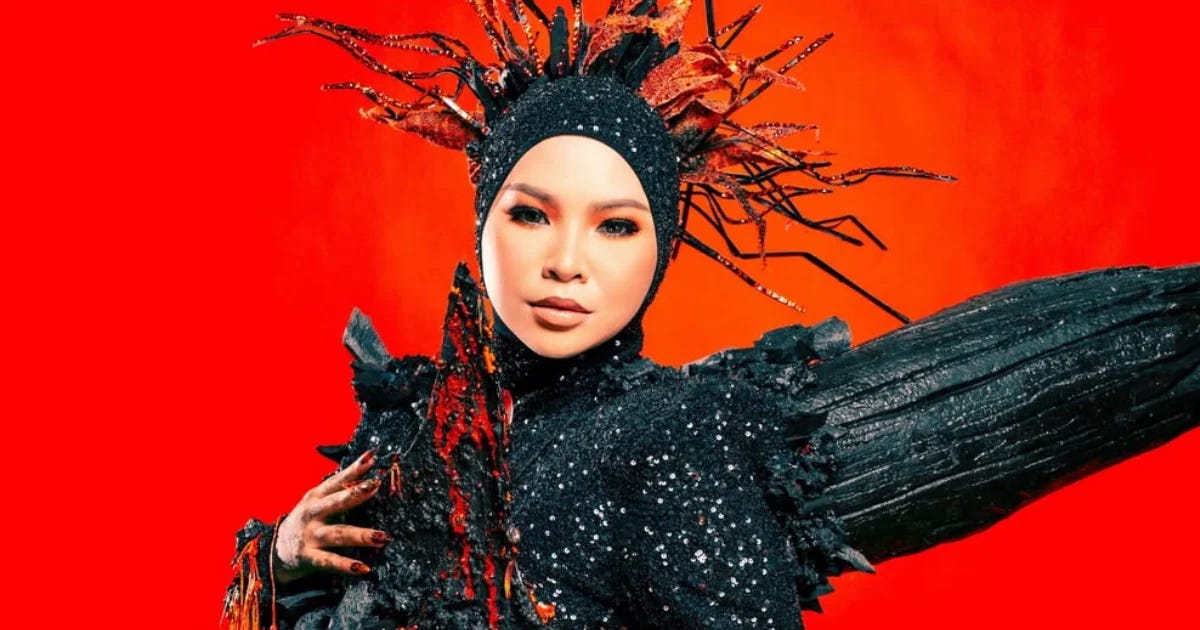
Malaysia’s choice for Eurovision Asia, Aina Abdul, was picked at the Anugerah Juara Lagu in August and sings “Bluest Sky” in English to reach a wider audience, taking the closing slot as the 11th and final act.
Officially released on October 9, the track has quickly gained traction online, surpassing 500,000 views on its official visualiser, over 330,000 plays on its official YouTube audio, and more than 260,000 views on the official Eurovision Song Contest channel.
Written by Aina herself and co-produced and arranged by acclaimed Malaysian musician Mac Chew, the orchestral power ballad is a love letter about love, heartbreak, and uncertainty, carrying the hope that moments of deep sadness will pass. Aina says it was one of the most emotionally demanding songs she has ever recorded.
🏁 The Bottom Line
Southeast Asia’s music scene has rarely felt this busy, or this confident.
MALIQ & D’Essentials returned with a deeply personal new record, while Tóc Tiên fused Vietnamese folklore with modern electronic beats. Alongside Carmelle’s chart-topping empowerment anthem and Aina Abdul’s soaring closing ballad, they prove that local stories and sounds travel effortlessly across borders.
New stages like Eurovision Asia give regional artists a bigger spotlight and give listeners everywhere a reason to pay attention.
Keep your ears close to home. The next big sound might come from right next door.
🧩 Need More Angle?
Eurovision Asia Running Order for Eurovision Asia
Southeast Asia Music Charts The Official Southeast Asia Music Charts
(MHS/ZIL/QOB)