



🎯 The Main Takeaway
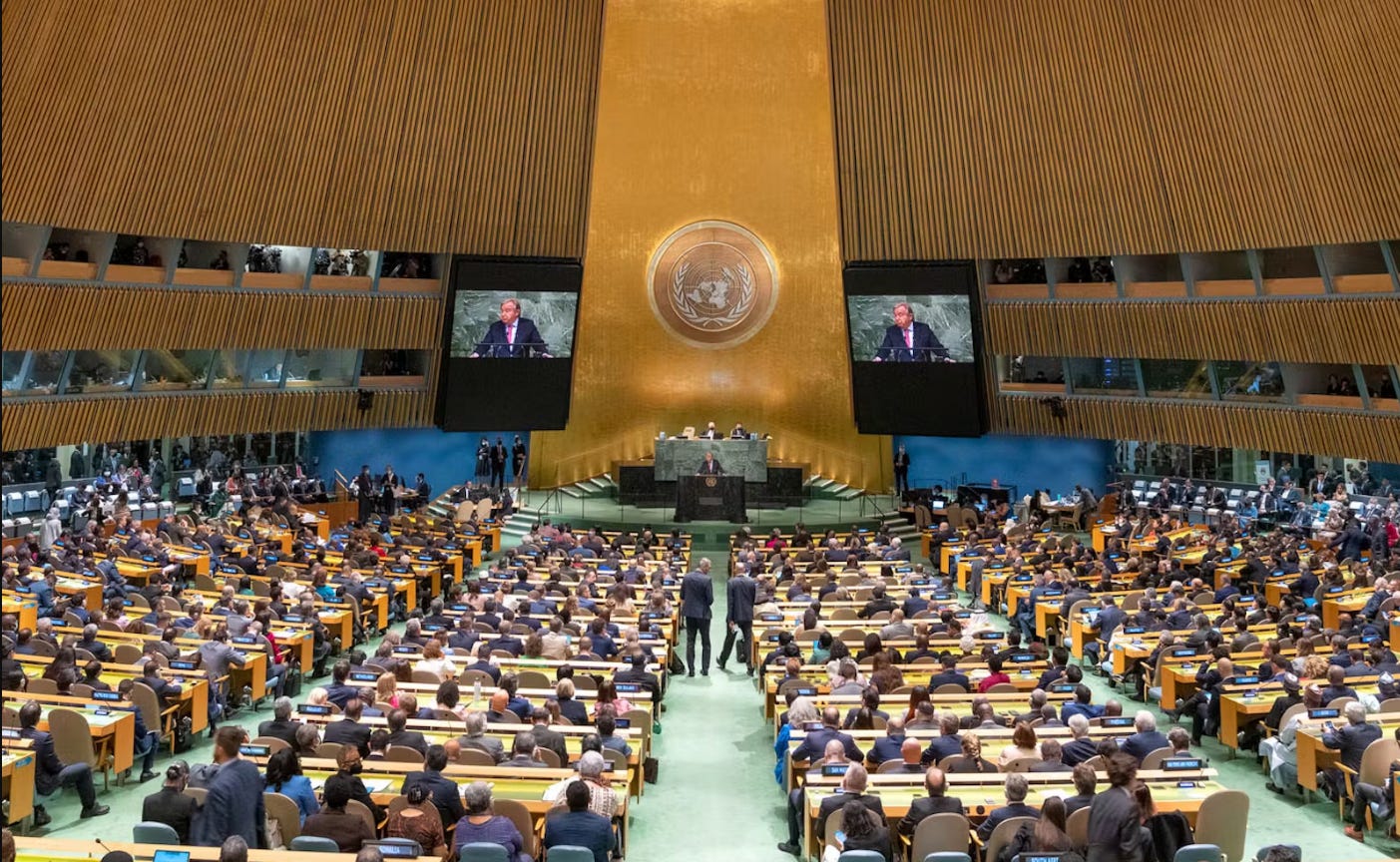
The United Nations (UN) held the 81st session of the United Nations General Assembly (UNGA) from 8 September 2026 to 7 September 2027, at the UN headquarters in New York.
All 193 UN member states were invited to join the year-long session, including the General Assembly High-level Week 2026, held from 18 to 28 September. The week included several high-level meetings and activities, including the General Debate.
🗣️ What Is the General Debate?
The General Debate ran from 22 to 28 September 2026, under the theme “Restoring Trust, Managing Transformation: A United Nations that Delivers for All”.
The theme highlights the UN’s commitment to strengthening multilateral cooperation to address global challenges through collaboration and transformative action.
During the one-week period, heads of state and delegates from UN member states share their views and priorities on global issues. They also discuss solutions, ways to restore international trust, and ways to promote collective action for peace, equal human rights, and sustainable development.
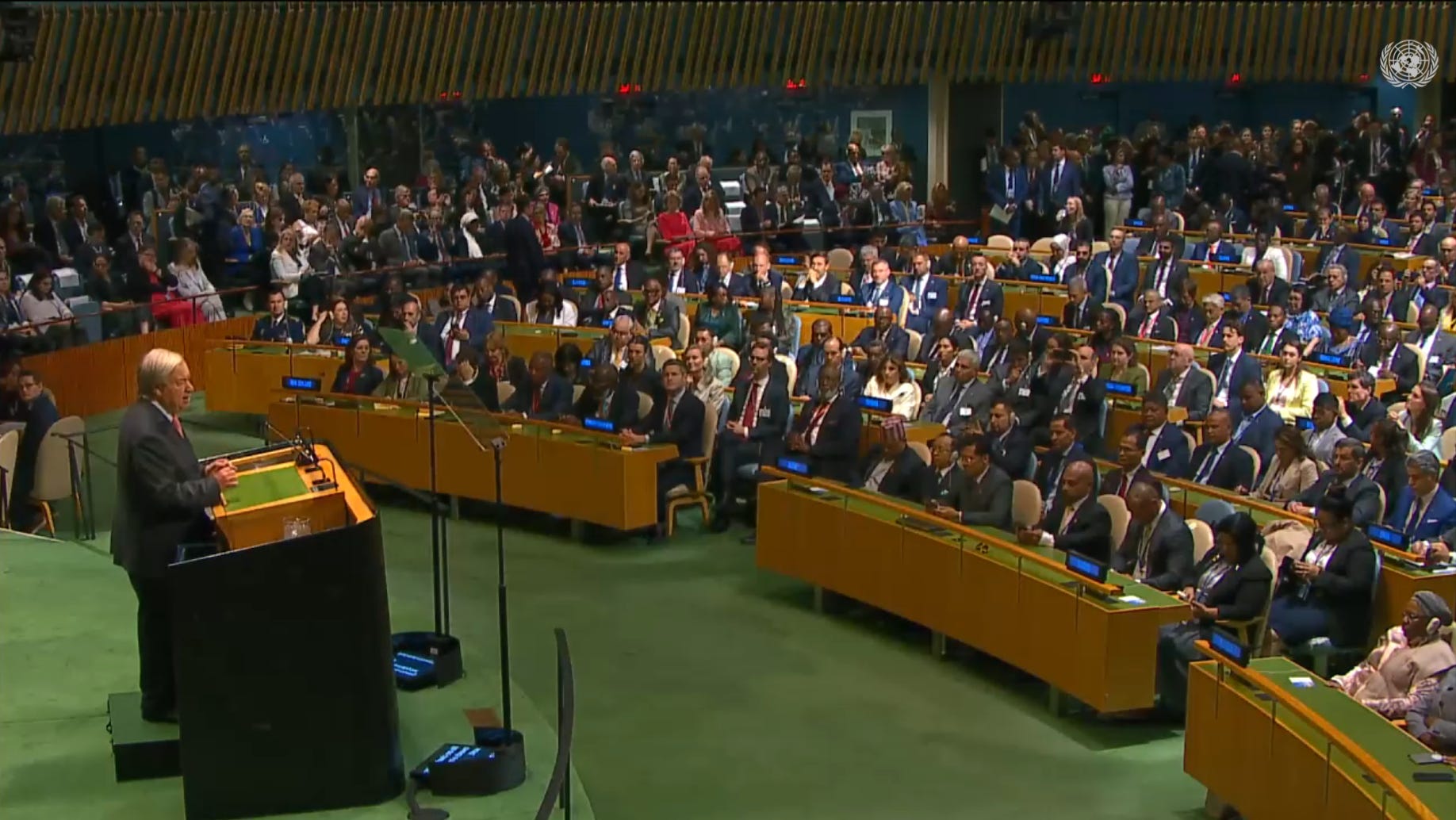
“We must defend the Charter without double standards, protect civilians without exception, ensure humanitarian access without obstruction, shield humanitarian personnel without fail, advance nuclear non-proliferation and disarmament without delay, and demand accountability without fear or favour.” - António Guterres, UN Secretary General.
📡 Why It’s on Our Radar?
There are several ongoing global issues that need to be addressed by the UN:
Eroding trust: Public trust in the UN is declining because of concerns about the organisation’s ability to take concrete action on major conflicts and apply international law equally.
Global rivalries: Competition for influence between major powers such as the US, China and Russia is reshaping global politics and the economy.
Regional conflicts: Major conflicts continue in several parts of the world, including Israel-Palestine, US-Israel-Iran, Russia-Ukraine, and conflicts across Africa.
Strong unilateralism: Some major powers tend to act independently to pursue their own interests rather than prioritise dialogue and diplomatic efforts.
The rise of AI: Rapid technological growth, including artificial intelligence (AI), is helping human activities but also creating new risks and threats to humanity.
Climate change: Rising global temperatures remain a major threat to the planet, driven largely by greenhouse gas emissions.
⚠️ Why Does It Really Matter?
There are several global impacts caused by these ongoing issues:
Institutional reform: The UN needs institutional reform, especially regarding its veto power, which can conflict with the principle of multilateralism. It also needs to apply international law equally, without prioritising the national interests of specific countries.
Global fragmentation: Countries worldwide are becoming more divided by their political choices, including support for specific major powers, blocs, or alliances, which can weaken multilateral cooperation.
Global uncertainty: Global conflicts are increasing economic uncertainty, disrupting commodity supply chains and contributing to higher energy and food prices.
Humanitarian crisis: Regional conflicts have triggered humanitarian crises, including thousands of deaths, millions of people being displaced and growing hunger.
Strengthening multilateralism: Growing unilateralism has encouraged some countries to form or strengthen multilateral groups such as BRICS, giving emerging and developing countries in the Global South a greater voice in global decision-making based on transparency, mutual respect and dialogue.
Extreme weather: Climate change is changing weather patterns, causing extreme droughts and heavy monsoons that can damage agricultural crops and the environment.
🏡 Why This Hits Home?
Southeast Asia is home to nearly 700 million people and represents one of the world’s major economic regions. The region consists of 11 ASEAN member states with different histories, political systems, levels of development and national interests.
Each member state has its own priorities and may not always agree on how to address regional and global crises. However, ASEAN continues to uphold multilateralism, unity and centrality by keeping dialogue open and managing the differences.
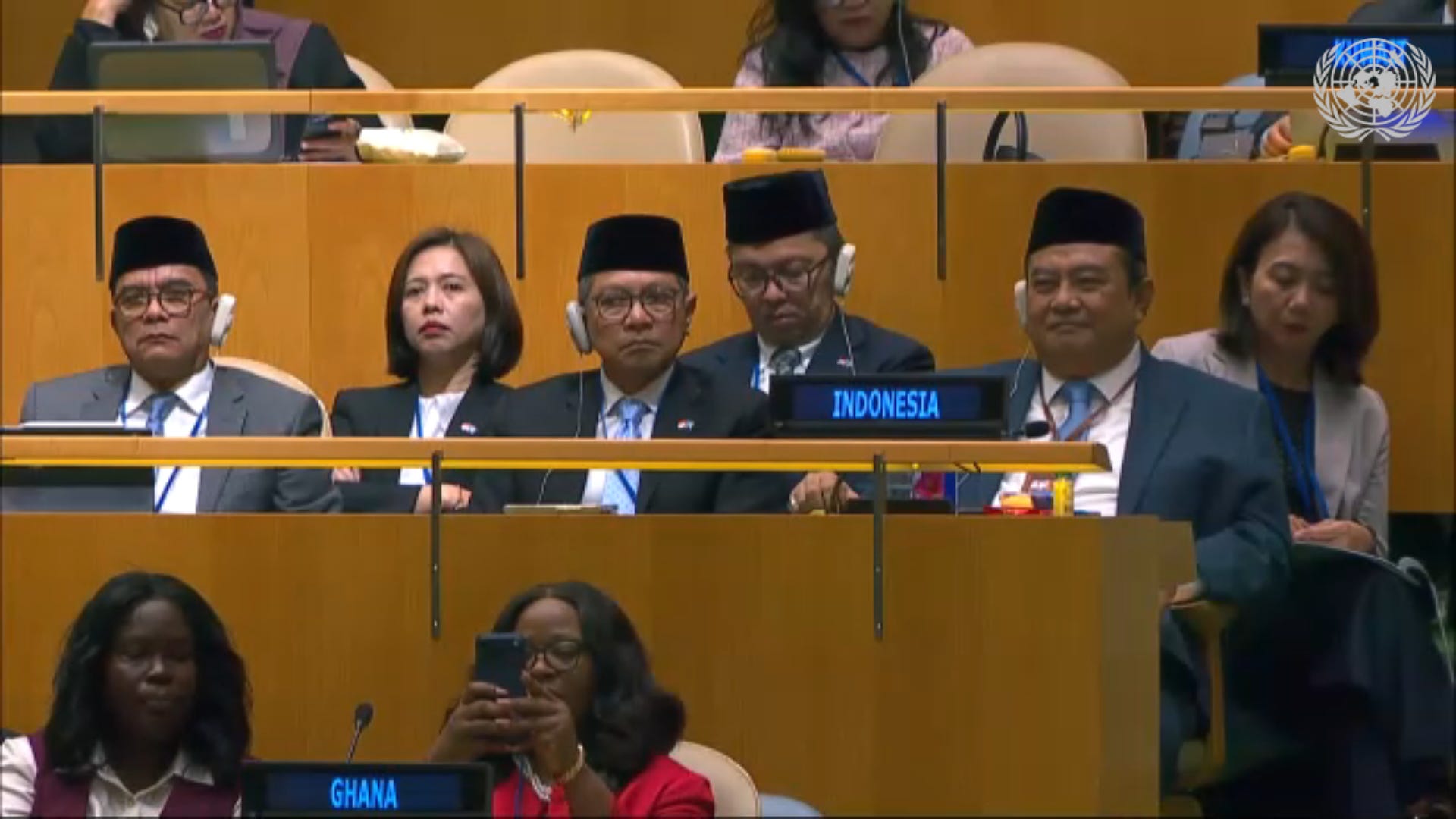
All ASEAN member states attended the UN General Assembly High-Level Week 2026, but only 10 countries delivered speeches during the General Debate. Myanmar was the only Southeast Asian country that did not take part in the General Debate.
🇲🇲 Why Didn't Myanmar Join?
This is linked to the ongoing dispute over Myanmar’s representation at the UN. Myanmar’s representative to the UN, Kyaw Moe Tun, was dismissed by the military government on 27 February 2021, following the military coup on 1 February 2021.
However, the UN continued to recognise Aung San Suu Kyi and Win Myint as Myanmar’s leaders, allowing Kyaw Moe Tun to continue representing Myanmar there.
The military government, led by Min Aung Hlaing, who was also elected as Myanmar’s new president, has sought to change the country’s representation at the UN.
It has written to UN Secretary-General António Guterres, asking for Kyaw Moe Tun to be removed and accusing him of using government funds without authorisation.
Meanwhile, Southeast Asian countries delivered similar views on how to address various global issues, mainly focusing on Palestine’s independence, institutional reform, multilateralism and AI. However, each country placed different emphasis on its own policy priorities.
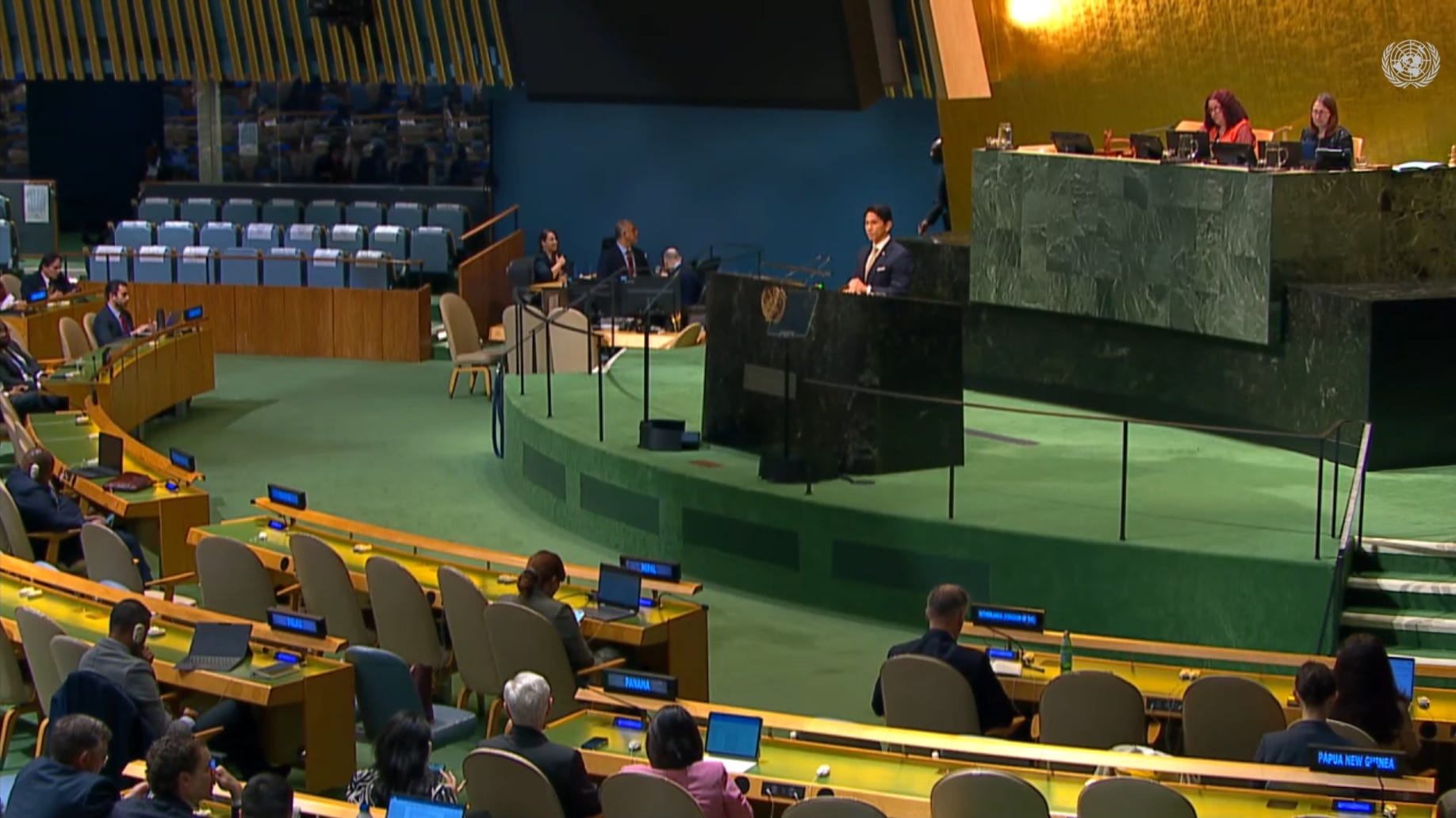
🇧🇳 Brunei Darussalam: Equal International Law, Palestine Statehood
Brunei Darussalam stated that multilateralism is not just a concept, but an assurance that sovereignty and territorial integrity will be respected, every nation has a voice, and international law must protect the weak.
This principle should be applied to resolving conflicts, especially in Palestine, including Gaza and the West Bank, where people have suffered for generations due to mass destruction, loss of lives, discrimination, illegal settlements and forced displacement from their homes and land.
The kingdom urged the UN to apply international law and the UN Charter equally to all countries, address the root causes of the Israel-Palestine conflict, and work towards realising a two-state solution.
“International law and the principles of the charter must apply equally to everyone. There cannot be one standard for some and another for others. A lasting peace requires more than managing the consequences of conflict. It requires addressing its root cause and realizing the Palestinian people's legitimate right to self-determination and an independent state of Palestine, based on the 1967 borders with East Jerusalem as its capital.” - Prince Abdul Mateen, Brunei Darussalam Foreign Affairs Minister.
Brunei Darussalam also called on the UN to reform and adapt to current global conditions, restore trust, ensure rules are respected, keep dialogue open, manage differences peacefully, strengthen its ability to prevent crises, and deliver outcomes that meaningfully improve people’s lives.
🇰🇭 Cambodia: Rebuilding Trust
Cambodia agreed that trust and confidence among nations and multilateral institutions are eroding because of growing geopolitical rivalries, regional conflicts, and transnational threats.
Cambodia experienced a similar situation during its border conflict with Thailand in July and December last year, which temporarily halted bilateral cooperation.
However, both sides agreed to sign a ceasefire deal to end the conflict, creating more room for dialogue and rebuilding trust. They also agreed to move forward and live side by side in peace based on mutual respect, while seeking to deliver mutual benefits.
“Trust is not restored by declaration alone. It is earned through consistency, when commitments are honoured, international law is respected, disputes are settled by peaceful means, and sovereignty must remain a principle, fundamental principle of international relations. Rebuilding trust is therefore not merely desirable. It is essential to the future of our bilateral relations and to a shared interest in lasting peace and good neighbourly relations” - Sokhonn Prak, Cambodian Deputy Prime Minister, Minister for Foreign Affairs and International Cooperation.
In addition, Cambodia urged all UN member states to pay attention to the rapid development of technology, especially AI. While AI can accelerate national development and create new opportunities, it can also pose security risks if misused for online scams and transnational crime.
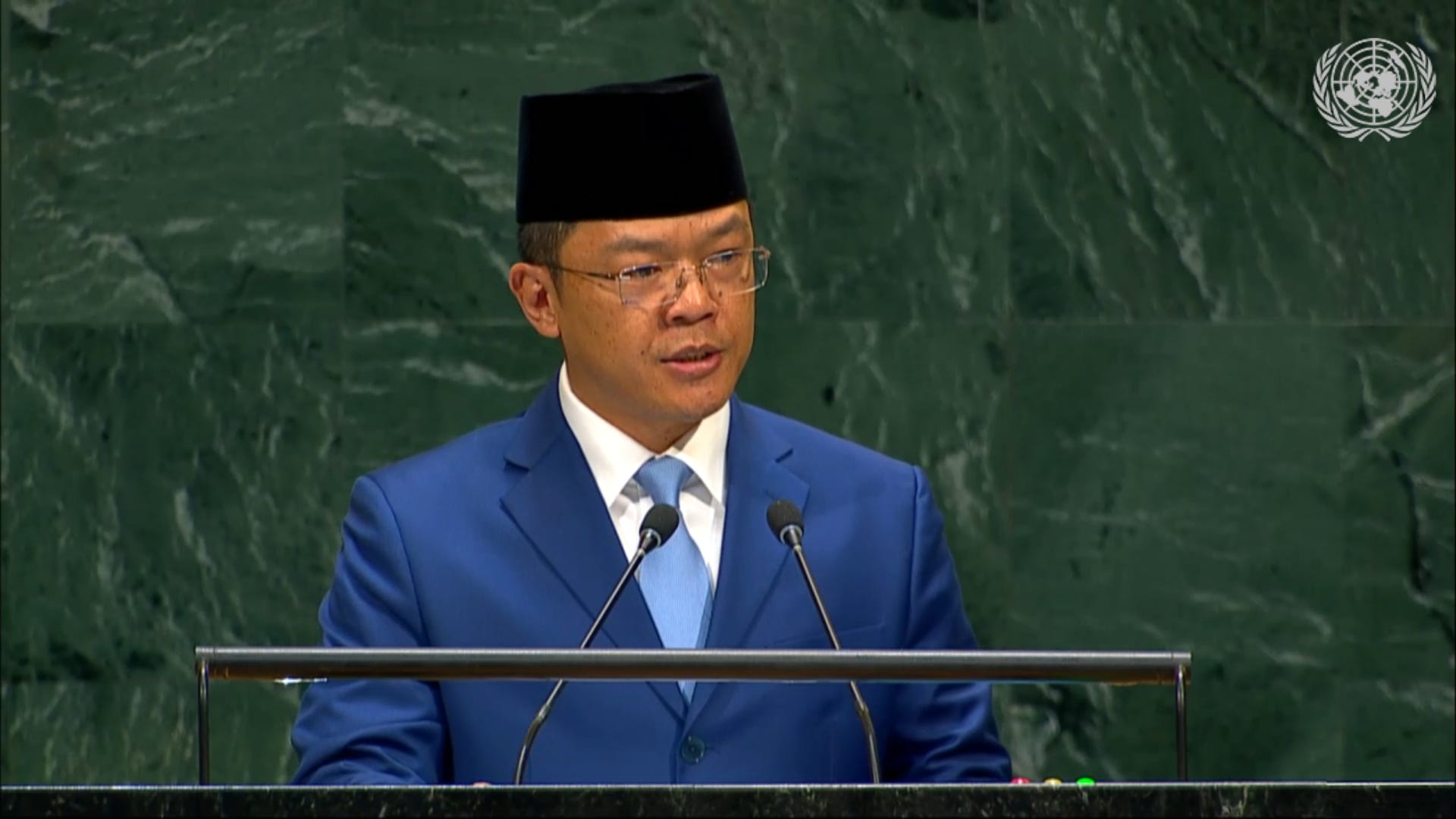
🇮🇩 Indonesia: Multilateralism, Palestine Statehood
Indonesia, home to 280 million people with diverse cultures and religions, has applied multilateralism to safeguard its identity, unity, and sovereignty.
According to Indonesia, diversity and multilateralism are not challenges to overcome, but differences to manage, respect and turn into strengths when facing various challenges and maintaining national resilience.
As a result, the same principle of multilateralism can also be applied at the UN to address and resolve global conflicts, while promoting peace, stability and sustainable development based on international law.
Palestine is one of the biggest tests of multilateralism, especially in addressing the humanitarian crisis in Gaza and the situation in the West Bank. Indonesia said Israel’s actions violate international law and UN principles.
Indonesia will continue to support Palestinian independence and a two-state solution, while working to strengthen unity, rebuild trust, keep dialogue open and promote peace based on international law.
“Indonesia will continue to stand with the Palestinian people, until their right to self-determination is fulfilled, and until an independent and sovereign State of Palestine is realized based on the Two-State Solution, in accordance with international law and internationally agreed parameters. Palestine is not only a question for one region, but also a test of whether the multilateral system can uphold the very principles it was created to defend, and whether it can deliver when it matters most” - Sugiono, Indonesian Foreign Affairs Minister.
🇱🇦 Laos: Palestine Statehood, Institutional Reform
Laos reaffirmed its concern over the situation in Palestine, especially the humanitarian crisis in Gaza and illegal settlements in the West Bank carried out by Israel.
Laos believes that the Palestinian people have the right to self-determination and supports a two-state solution to resolve the conflict.
“We remain deeply concerned by humanitarian catastrophe and amine reconstruction requirements in Gaza, as well as the mounting challenges in the West Bank to prevent the two state solution. Beyond the reach of the internet, the international community must secure a just, comprehensive and lasting peace on the last beat, and one that fulfills the legitimate rights to the Palestinian people to self-determination through an independent state of Palestine. With full membership in the United Nations.” - Thongsavanh Phomvihane, Laos Deputy Prime Minister, Minister of Foreign Affairs.
Laos welcomed the UN initiative to improve the coherence, transparency and effectiveness of the UN system, followed by systemic reform to ensure a balanced approach to its main pillars: peace and security, sustainable development and human rights.
In addition, Laos remains committed to ASEAN centrality in the changing regional landscape. It reaffirmed that a united and integrated ASEAN is important for maintaining regional peace and multilateral stability.
🇲🇾 Malaysia: Palestine Statehood, Institutional Reform
Malaysia stated that the current situation in Gaza, Palestine, is devastating, with many children, families, medics, aid workers and journalists killed by Israeli forces.
Malaysia, along with many other UN member states, said it was exhausted by the ongoing situation and urged the UN to take concrete action to pursue justice for Palestinians, while calling for an immediate ceasefire and more humanitarian aid for Gaza.
Malaysia also urged the UN to reform the Security Council, including its veto system, which it said does not fully reflect multilateralism. Malaysia argued that the veto can give a few countries more influence than most UN members and slow efforts to resolve conflicts.
“We have consistently called for immediate ceasefire and unrestricted supply of aid. We have supported humanitarian work in Palestine. We have pushed for punitive actions towards Israel, and we have advocated for full Palestinian membership in this hall. And yet again and again, Mr. President, the collective will of this Assembly has encountered the silencing effect of the veto. It is the veto that must be challenged, and it is the veto that must be abolished” - Mohamad Haji Hasan, Malaysian Minister for Foreign Affairs.
Malaysia called on the UN to restore trust among nations and ensure that international law is applied equally to all countries.
In addition, Malaysia highlighted the importance of regulating AI to prevent its misuse, as the technology is changing how economies operate, how societies function and how governments make decisions.
Furthermore, Malaysia called on AI investors to see the Global South as a partner in innovation, development and decision-making, not just as a market, customer or location for data centres.
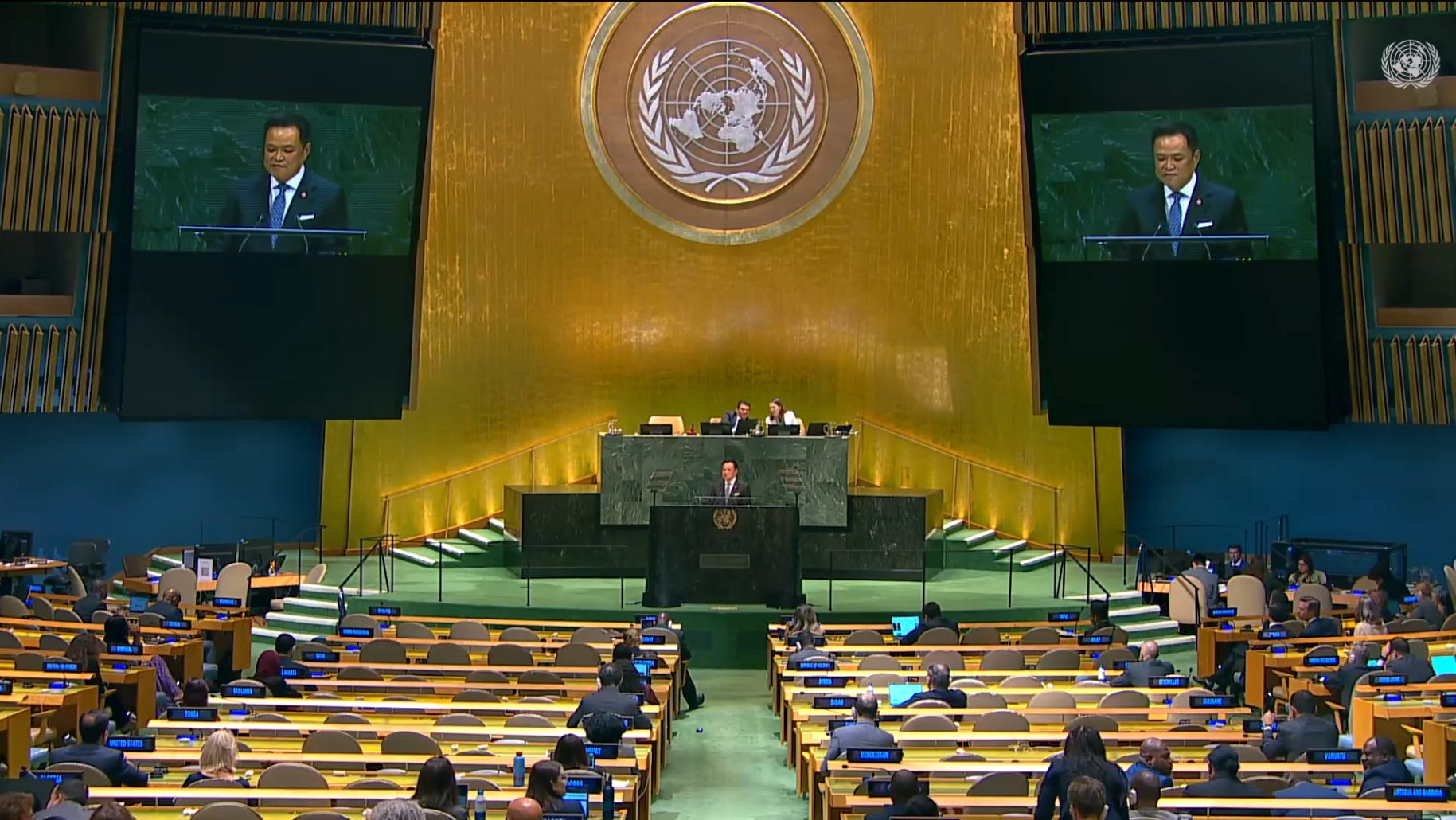
🇸🇬 Singapore: Multilateralism, Skill Development
Singapore agreed that global rivalries between major powers can trigger fragmentation and disrupt global supply chains, affecting small countries such as Singapore.
However, major powers cannot act alone. They rely on other countries to support their long-term national interests through cooperation and partnerships, which can strengthen multilateralism.
Following this approach, Singapore said the same principle can also be used to address global crises, as countries rely on each other and need to resolve differences through diplomacy, peace and mutual respect.
Moreover, Singapore highlighted the need for the UN to formulate new rules to safeguard AI and control its use, including testing and evaluation before deployment, clear limits and mechanisms to intervene in autonomous systems to ensure they operate as intended.
In addition, Singapore urged greater investment not only in AI and infrastructure, but also in human skills across sectors to help people adapt and remain competitive amid rapid technological growth.
“Every one of us has to continue to invest in science, the talent, and the infrastructure that will drive AI forward. For small states, his entails especially developing our people, equipping them with the skills necessary to master and deploy AI quickly, widely, at scale and safely. The real productivity gains from AI comes not from the IT department, but from our businesses and from workers who have the skills and the tools.” - Vivian Balakrishnan, Singapore Foreign Affairs Minister.
Furthermore, Singapore urged the UN to pursue institutional reform to give member states a more equal voice, turn better ideas into concrete actions, and rebuild trust. This would enable countries to contribute more to regional and global prosperity and mutual benefits.
🇹🇭 Thailand: Rebuilding Trust
Thailand said global society is becoming more fragmented because of rapid technological growth and competition between major powers.
As a result, many countries are losing their ability to work together because trust among nations, institutions, and international rules is eroding. This can reduce shared responsibility and slow down cooperation and investment.
To address this problem, countries need to rebuild trust by addressing each other’s concerns, listening to different voices, and gaining more perspectives through dialogue, institutional reform and turning commitments into action.
Thailand has also experienced a similar loss of trust with Cambodia following the border conflict in July and December last year, which ended with a ceasefire after both sides pursued diplomatic efforts.
The two countries agreed to move forward by rebuilding trust, working together, sharing responsibility and strengthening cooperation to counter transnational crime and online scams along their shared border, while promoting mutual benefits and shared prosperity.
“Let me be clear Thailand has never sought conflict, but peace can only be built when we work together in earnest, and surely this will require genuine effort from our neighbour Cambodia. That same commitment guides our approach to Myanmar. Thailand supports peace, national reconciliation and a durable solution for Myanmar, We believe in constructive and calibrated re-engagement within ASEAN and in coordination with relevant partners, while encouraging concrete, concrete progress on the ground.” - Anutin Charnvirakul, Thai Prime Minister.
Thailand also urged the UN to strengthen multilateralism to maintain trust among its members, uphold equal human rights, and address global conflicts, especially the humanitarian crisis in Palestine.
🇵🇭 The Philippines: Decolonisation, SDG Targets
The Philippines stated its support for ending all forms of apartheid, colonialism and racial discrimination. It also urged countries to resolve disputes and conflicts through diplomatic efforts based on international law, without using violence.
Following this statement, the Philippines called for an immediate ceasefire in Gaza and urged both sides to de-escalate tensions, exercise restraint, prioritise civilian protection and release all hostages.
As a result, the two-state solution remains a pathway to achieving peace between Israel and Palestine, allowing the two entities to live side by side in peace.
“The Philippines reaffirms its consistent and principled support for the inalienable right of the Palestinian people to self-determination. We firmly believe that the two state solution remains the only viable path to lasting and durable peace with Israel and Palestine, living side by side in peace and security and all others respecting their peaceful coexistence.” - Ma. Theresa Lazaro, Secretary for Foreign Affairs of the Philippines.
In addition, the Philippines urged the UN to pay more attention to progress towards the Sustainable Development Goals (SDGs), as only around 36% of targets are currently on track. It called for renewed political will, stronger partnerships and institutional reform within both the UN and the global financial architecture.
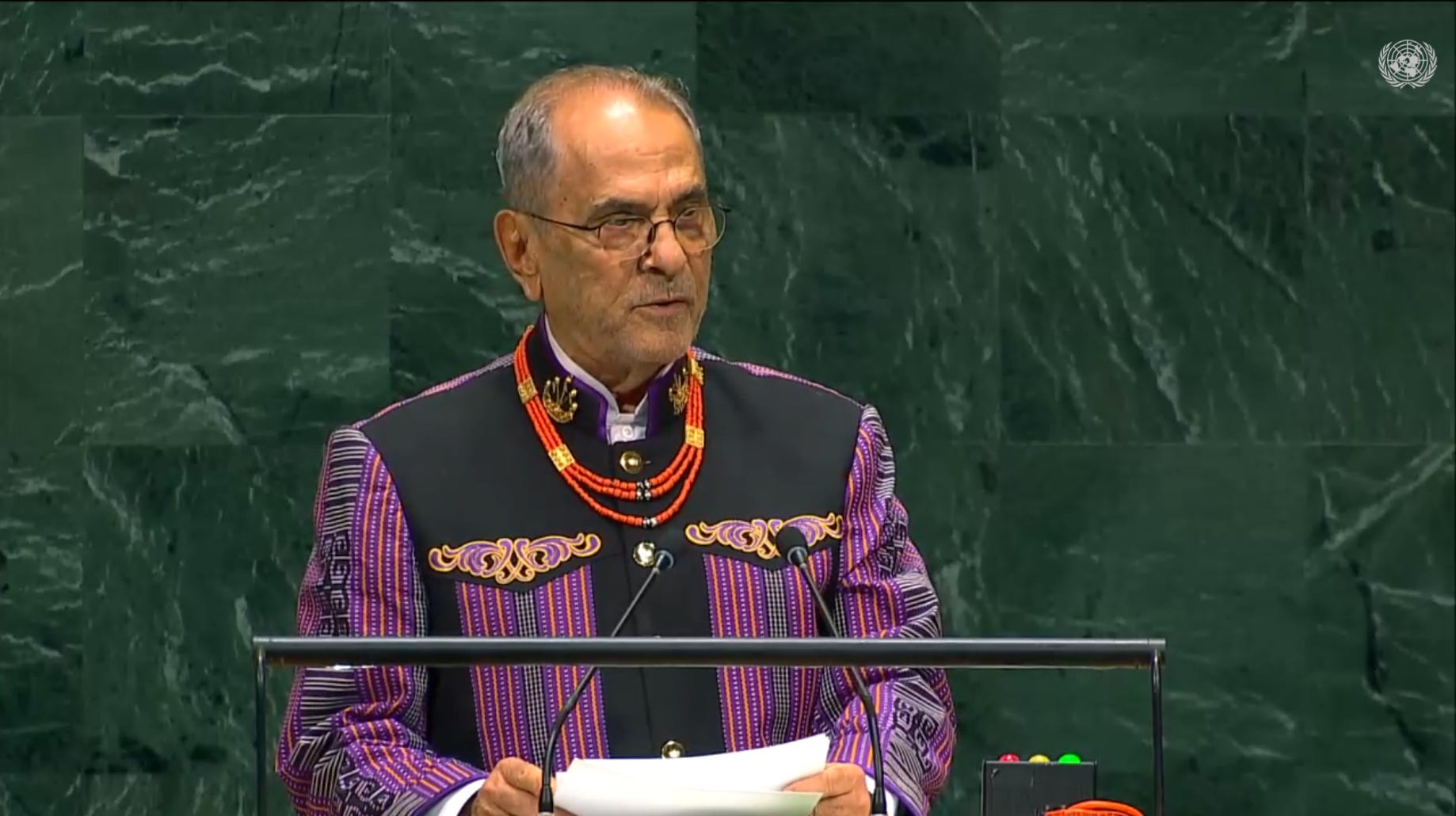
🇹🇱 Timor-Leste: Nuclear Weapons, Palestine Statehood
Timor-Leste stated that over the past decades, many countries have invested trillions of dollars in developing weapons, including nuclear weapons, to protect themselves during regional conflicts.
The existence of nuclear weapons can affect the balance of power, while countries without weapons of mass destruction could face greater risks during conflicts.
Timor-Leste called on US President Donald Trump to invite major military powers, especially nuclear-armed states, to sit together and make commitments not to use nuclear weapons, while also agreeing to reduce their nuclear arsenals.
“My invitation to President Trump, be audacious, be unpredictable, be visionary. Invite all nuclear powers and all major conventional military powers and industries, without exception, to a summit somewhere, maybe a town in Portugal, to talk on no first strike. Enhance regular communication between leaders of the nuclear powers, and draw their commitment on reduction of nuclear weapons, toward total deactivation and destruction of nuclear arsenals over a decade.” - Jose Ramos Horta, Timor-Leste President.
Timor-Leste also highlighted ongoing humanitarian crises around the world, including in Gaza, the West Bank, South Sudan, the Democratic Republic of the Congo and Myanmar, which have killed thousands, displaced millions and caused hunger.
However, it said there has been no immediate response to address these crises, partly because of a lack of urgency in responding.
Specifically on Palestine, especially Gaza, Timor-Leste agreed with many UN member states on the need to pursue a two-state solution to resolve the conflict and allow Israelis and Palestinians to live together in peace and harmony.
In addition, Timor-Leste called for institutional reform at the UN, especially regarding the use of veto power, which it said is inconsistent with the principles of multilateralism, equality and sovereignty.
🇻🇳 Vietnam: Institutional Reform, Palestine Statehood
Vietnam said the current global situation faces growing uncertainty due to the risk of confrontation, miscalculation, conflict, and large-scale war.
As a result, countries are becoming more fragmented, disrupting cooperation in trade, investment and development, while also eroding trust among nations and institutions.
To address this problem, Vietnam called for UN reform, especially within the Secretariat, General Assembly and Security Council, to make the organisation more democratic and inclusive and help restore trust.
The UN also needs to hear the voices of emerging and developing countries in the Global South and ensure their views are included in the organisation’s rule-making and decision-making processes.
In addition, Vietnam urged the UN to strengthen multilateralism to prevent wars, safeguard peace, promote cooperation, advance decolonisation, resolve conflicts and uphold the right to self-determination, with the aim of promoting peace, security, dignity and prosperity.
As a result, Vietnam supports a two-state solution for Israel and Palestine, while highlighting the need to protect civilians, provide more humanitarian aid to Palestinians and ensure humanitarian access.
“Vietnam supports the rights of the Palestinian people to self-determination and the two-state solution with an independent state of Palestine living peacefully alongside the state of Israel in line with international law and relevant UN resolutions in the Asia Pacific.”- To Lam, Vietnamese President.
🚀 Moving Forward…
Southeast Asian countries hope that, in the future, the strength of the UN will lie not in replacing states' responsibilities, but in its legitimacy and ability to build consensus, establish norms, develop rules, and mobilise global efforts to address common challenges and adapt to a changing world.
Trust in the international system is strengthened when promises are kept, international law is applied equally, dialogue is chosen over force, sovereignty is respected, and every nation, large or small, knows that its voice matters.
Global progress must uphold the spirit of humanity in relations among nations, safeguard their legitimate interests, and respect differences in history, culture and development conditions.
With a stronger UN and stronger multilateral cooperation, countries can work together to build a more peaceful, equitable, inclusive and better world for all.
📋 Beyond the Headline
A tense moment occurred before Israeli Prime Minister Benjamin Netanyahu delivered his speech, when delegates from over 70 countries walked out during the General Debate on Thursday (24/9).
Brunei Darussalam, Indonesia, Malaysia and Myanmar were among the Southeast Asian countries that joined the walkout as a form of protest against Israel’s alleged war crimes, genocide and humanitarian crisis in Gaza, as well as the occupation of the West Bank.
In addition, the International Criminal Court (ICC) issued an arrest warrant for Netanyahu, alleging that he was responsible for the war crimes of starvation as a method of warfare and intentionally directing attacks against civilians, as well as the crimes against humanity of murder, persecution and other inhumane acts.
📌 The Bottom Line
The UN General Debate is not just a platform for countries to deliver speeches, but also a place to build trust, strengthen dialogue and find common solutions to global challenges.
The UN must not only respond to crises, but also prevent them, keep competition under control, maintain dialogue, manage differences peacefully, and ensure that science and technology create opportunities rather than new global divides.
Restoring trust is not just about making promises, but also about treating all countries equally. Managing global change is not only about progress, but also about ensuring everyone benefits and the UN delivers results for all.
Sustainable peace is not built through force, but through diplomacy, respect for sovereignty and international law. Through multilateral cooperation, countries can work together to build a more peaceful, inclusive and sustainable future.
🔍 Need More Angles?
Ministry of Foreign Affairs, Republic of The Union of Myanmar, Statement regarding the Illegal Activities of Kyaw Moe Tun, Former Permanent Representative of Myanmar to the United Nations
United Nations, General Assembly High-level Week 2026
United Nations, Read what was said at the UN
United Nations Web TV, General Assembly
(NGO/QOB)