



🔍 Main Takeaway
The Hinrich Foundation reported that several Southeast Asian countries are recognized as part of an emerging nuclear power renaissance, especially in the development of small modular reactors (SMRs).
This region is also at the vortex of a geostrategic contest between the great nuclear powers, the United States and China, and involves several allies in East Asia and Europe, especially Russia.
Thus, the development of nuclear power would be an essential step to meet energy demand, especially after the crisis stemming from Middle East conflicts.
🤔 Why it Matters
Southeast Asian countries are experiencing soaring energy demand, especially in electricity consumption, which increased by around 25%, even though 70-80% of their energy comes from coal and gas, according to a Boston Consulting Group report.
Meanwhile, approximately 84% of oil and 83% of liquefied natural gas are transported through the Hormuz Strait, which Iran has closed due to Middle East conflicts.
It shows that Southeast Asia's reliance on fossil fuels is becoming increasingly vulnerable to its future.
Given that wars in the Middle East have weaponized energy imports, Southeast Asia needs to build energy independence, including by developing alternative, clean energy sources, such as nuclear power.
On the other hand, the advancement of digitalization and artificial intelligence would increase energy demand, as the development of data centers requires a massive supply of baseload energy, amounting to 945 terawatt-hours (TWh), according to the International Energy Agency (IEA).
⚡Nuclear Power Energy Superiority
Nuclear power has the highest capacity factor of any energy source. This basically means nuclear power plants are producing maximum power of more than 91% in 2025. That’s about nearly 2 times more than fossil fuel, and almost 3 times or more reliable than wind and solar plants.
Nuclear power plants require less maintenance than natural gas and coal plants, and reactors are also designed to operate for longer periods before refueling.
Nuclear reactors produce electricity without releasing carbon dioxide and also reduce emissions from earlier stages. It makes nuclear energy rank amongst the cleanest power sources across the entire lifecycle.
Unlike any other energy, nuclear power is also recognized as the safest one, considering the death rate from accidents and air pollution.
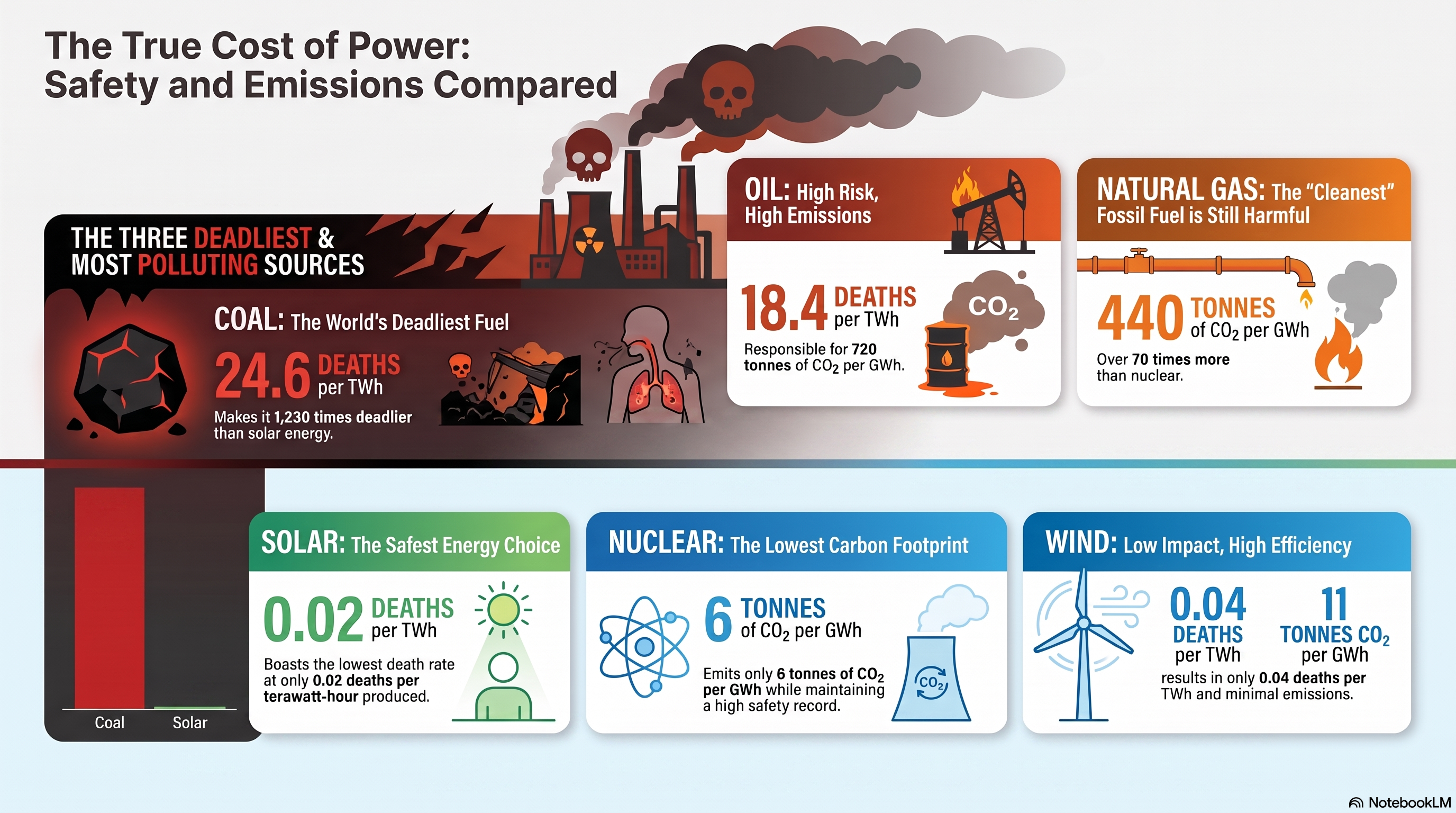
☢️ Southeast Asia Emerging Nuclear Power Countries
Several Southeast Asian countries have successfully completed Phase 1 of the International Atomic Energy Agency (IAEA) Milestones Approach—a three-phase framework that helps newcomer countries develop preparedness for a civilian nuclear power program—except Singapore, which is still in process.
Vietnam is the only country able to reach Phase 2 in the region, but Indonesia, Thailand, and the Philippines will follow. It means that SEA's nuclear capabilities are also potentially being developed further, including by deploying SMRs.
These ASEAN key member states are committed to strengthening the development of nuclear energy, including through cooperation with several partners:
🇮🇩 Indonesia
Capability Backgrounds:
Indonesia hosts the most developed nuclear research in Southeast Asia, with several national research institutions, including the State Nuclear Research and Development Agency (BATAN).
Indonesia is specifically targeting Generation IV technologies, such as High-Temperature Gas Reactors (HTGR) and Molten Salt Reactors (MSR).
Indonesia’s government also aims to deploy the first SMRs by 2032 and to expand nuclear capacity to 45 gigawatts (GW) by 2060, mainly for electricity generation.
This country has already completed Phase 1 of the Milestones Approach, though it has yet to proceed to Phase 2.
Cooperation Partner:
🇨🇳 China: A cooperation agreement was signed in 2016 to help in developing HTGRs in Indonesia.
🇩🇰 Denmark: Indonesia partnered with several Danish companies to co-develop thorium-fueled MSRs.
🇺🇸 United States: Indonesia signed an agreement with US Thorcon to co-develop thorium-fueled MSRs.
🇲🇾 Malaysia
Capability Backgrounds:
The government had established the Malaysia Nuclear Power Development Steering Committee (MNPC) in 2011 and the Nuclear Energy Program Implementation Organization (NEPIO), as a requisite under the IAEA framework for a country to start a civilian nuclear power program.
Malaysia also pursues the redevelopment of nuclear power after the MNPC was dissolved and Malaysia’s nuclear plans were indefinitely postponed in 2018.
In 2025, Malaysia’s Minister of Economy, Rafizi Ramly, revived NEPIO to address the country's reliance on imported fossil fuels.
Malaysia had embarked on Phase 1 of the IAEA Milestones Approach in 2017, supported by the MoU partnership-readiness with Japan and France.
Malaysia is looking into SMR deployment and considering floating nuclear platforms, and targeted the first Nuclear Power Plant to be operational in 2031, also intended to embark Phase 2 of the Integrated Nuclear Infrastructure Review
Cooperation Partners:
🇯🇵 Japan: Malaysia-Japan expands nuclear energy cooperation, including reactor technology options, site selection, and business and institutional arrangements
🇺🇸United States: Malaysia gained US support to strengthen nuclear capabilities, including in areas of technical expertise, regulatory development, human capital training, etc.
🇵🇭 The Philippines:
Capability Backgrounds:
The Philippines mothballed the Bataan Nuclear Power Plant in 1986 and did not seriously reconsider nuclear power until the late 2010s.
During Rodrigo Duterte's administration, the Philippines advocated for nuclear energy to be part of its electricity mix. The government also issued an executive order to include nuclear energy as part of its plan to phase out coal-fired plants in 2022.
Like Indonesia and Thailand, the Philippines also entered Phase I of the IAEA Milestone Approach.
Considering SMR’s development, President Ferdinand Marcos Jr. passed the Philippine National Nuclear Energy Safety Act to establish the Philippine Atomic Energy Regulatory Authority (PhilATOM) as an independent regulatory body for nuclear energy and radioactive materials
Cooperation Partners:
🇨🇦 Canada: The Philippines formalized a partnership with the Saskatchewan provincial government, which focused on joint Nuclear Engineering curricula, training TESDA educators, and technical cooperation.
🇰🇷 South Korea: The Korean nuclear authority has been awarded a contract to study the possibility of rehabilitating the Bataan Nuclear Power Plants, which were initially designed to provide stable baseload electricity to its capital, Manila.
🇺🇸 United States: The “123 Agreement” between the US and the Philippines allows active collaboration to strengthen regulatory frameworks and support Small Modular Reactor (SMR) Technology.
🇦🇪 United Arab Emirates: Under the Emirates Nuclear Energy Corp. (ENEC), the UAE is cooperating with the Philippine government to share operational experience, as hundreds of Filipino professionals currently work at the Barakah Nuclear Plant
🇸🇬 Singapore:
Capability Backgrounds:
The government established the Singapore Nuclear Research and Safety Initiative (SNRSI) in 2014 to conduct research in radiochemistry, radiobiology, and nuclear safety analysis to support the government’s capacity-building efforts in nuclear safety.
Singapore released its energy roadmap in 2022, which included assessing nuclear as one of the four switches in its energy transition strategy. Singapore also committed S$10 billion to the Future Energy Fund.
Singaporean planning to embark on an integrated nuclear infrastructure review (INIR) mission in 2027 as part of its participation in Phase 1 of the IAEA Milestones Approach.
Cooperation Partners:
🇺🇸 United States: Singapore signed a “123 Agreement” and is approved as a Generally Authorized Destination for U.S. civil nuclear tech exports. Singapore also had research partners with the Idaho National Laboratory and Battelle Memorial Institute.
🇬🇧 United Kingdom: Singapore signed an agreement with the United Kingdom’s Office for Nuclear Regulation to develop a nuclear regulatory cooperation and technical training agreement.
🇹🇭 Thailand:
Capability Backgrounds:
Thailand established the Office of Atomic Energy for Peace (OAP) in 1961 as a regulator of nuclear research. Then completely conducted Phase 1 of the INIR mission as part of the IAEA Milestones Approach in 2010.
Like Malaysia, Thailand also scrapped nuclear development by 2018 due to local protests. Then it was reintroduced into the Power Development Plan in 2024 to meet energy demand and align with the global trend toward SMR adoption.
Thailand aims to power its growing data center sector with SMRs, though there is no target timeline for their first deployment.
Cooperation Partners:
🇨🇳 China: Thailand partnered with the Chinese Academy of Sciences to build the Tokamak-1, supporting ongoing nuclear fusion and plasma physics research.
🇰🇷 South Korea: Korean and Thai energy authorities activated a Memorandum of Understanding to explore SMR options, share safety interpretations, and provide personnel training.
🇺🇸 United States: Through the “123 Agreement,” the US helps Thailand embark on capacity-building initiatives such as the Foundational Infrastructure for the Responsible Use of SMRs Technology (FIRST) program.
🇻🇳 Vietnam:
Capability Backgrounds:
Vietnam incorporated nuclear energy into the Power Development Plan (PDP), which led to the enactment of the general law and the establishment of a comprehensive legal and regulatory framework.
Currently, Vietnam is the only Southeast Asian country to have successfully reached Phase 2 of the IAEA Milestones Approach.
The Vietnam National Assembly revived the nuclear power plan in 2024, effectively reinstating nuclear energy in the national PDP, whilst passing the Law on Atomic Energy in 2025.
Cooperation Partners:
🇷🇺 Russia: Vietnam and Russia are cooperating to build the Ninh Thuan 1 plant, scheduled to be operational in 2031, which will utilize two Russian-designed VVER-1200 pressurized water reactors and feature a joint Center for Nuclear Science and Technology in Dong Nai.
🇺🇸 United States: Under the established Civil Nuclear Cooperation Agreement, U.S. firms are assisting Vietnam with nuclear safety systems, digital controls, and Small Modular Reactors (SMRs).
🌏 Southeast Asia Nuclear Development Greatest Partners
🇨🇳 China:
This East Asian nation has emerged as a strong competitor, capable of building reactors at a significantly lower cost thanks to its self-sufficient domestic supply chain, whilst aggressively promoting its Linglong SMR technology and waste management solutions similar to those of Russia
🇷🇺 Russia:
Russia wields dominant influence as the largest exporter of nuclear technology, controlling over 40 percent of the global uranium supply, whilst offering a Build-Operate-Own (BOO) model and guarantees for the take-back of spent fuel, which are highly attractive to new entrants
🇺🇸 United States:
The United States is relying on its technological leadership in small modular reactors (SMRs) through private-sector/Big Tech funding and strategic partnerships with allies to overcome the challenges of high costs and the limitations of its current supply chain
📌 The Bottom Line
Southeast Asia’s nuclear renaissance is a strategic pivot toward energy independence and decarbonization to meet surging digital and industrial demands. By adopting Small Modular Reactors and navigating geostrategic competition between global powers, the region is effectively addressing fossil fuel vulnerabilities.
As nations advance through IAEA milestones, nuclear energy will provide the reliable, clean baseload power necessary for the region’s long-term economic resilience.
📰 Need More Angles?
Boston Consulting Group Unlocking Green Energy Growth: Why Southeast Asia’s Power Market Need Reform
Clean, Affordable, and Secure Energy (CASE) for Southeast Asia Managing Energy Volatility: An Overview of Policy Responses Across Southeast Asia
Hinrich Foundation Going Nuclear: Statecraft, Security, and Safety in the Race for Asia’s Nuclear Energy Future
IAEA Five Reasons the Clean Energy Transition Needs Nuclear Power
Our World in Data What are the safest and cleanest sources of energy?
Recessary Nuclear energy renaissance in Southeast Asia: A role for China?
US Department of Energy Nuclear Power is the Most Reliable Energy Source and It’s Not Even Close
US Energy Information Administration Electric Power Monthly
(ADE/QOB)