



🎯 The Main Takeaway
Nishikigoi or the most known and legendary Koi are no longer just ornamental fish. The industry is undergoing a structural power shift as Southeast Asian breeders and collectors aggressively challenge Japan's historic monopoly on the world stage. 🌏
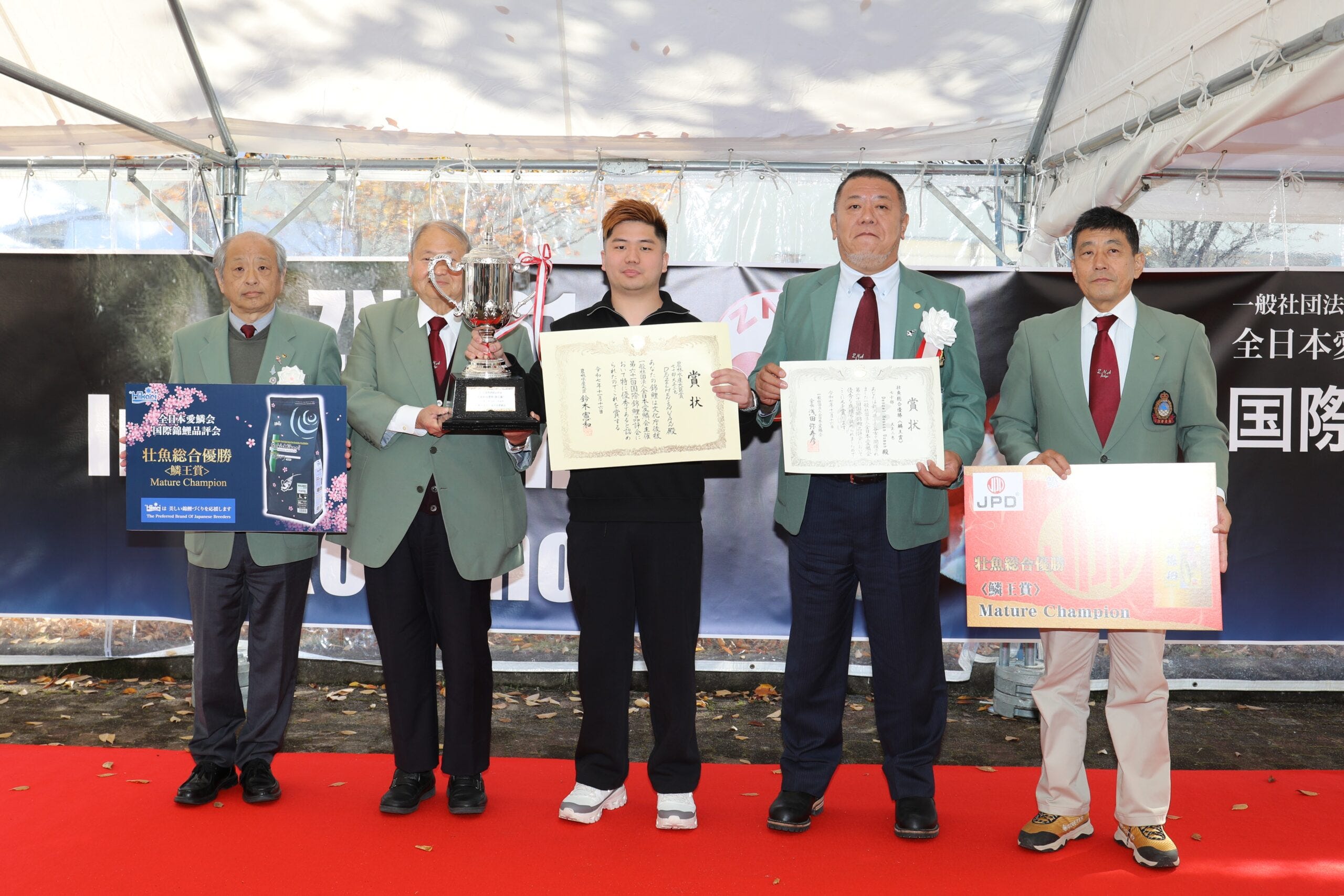
Long dominated by the Japanese monopoly, competitive Koi husbandry is being competed by Southeast Asian breeders and collectors. Resulting in the rising participation and winners of competitions such as the most prestigious “International Koi Show” by Zen Nippon Airinkai.
👀 Why It’s on Our Radar
The industry has escalated from backyard ponds to elite international grading competitions. 🏆 High-grade koi now function like thoroughbred racehorses—high-yield prestige assets commanding hundreds of thousands of dollars based on pedigree, age, and show records. 💰

This surge drives a lucrative secondary economy in Southeast Asia, demanding specialized services:
🏗️ High-end pond design and construction
💧 Advanced filtration and water technology
🩺 Specialized veterinary care
✈️ Complex import-export logistics
🐟 Koi Fish in Southeast Asia
While introduced decades ago, the regional market structurally transformed in the 2020s. The drivers:
📱 Visibility: Social media broadcasted elite competitions to a wider demographic.
📦 Logistics: Improved transport technology slashed international shipping stress.
📈 Capital: Rapid regional wealth generation expanded the luxury hobby market.
🧬 Genetics: Strategic partnerships unlocked premium Japanese bloodlines.
🏢 Standards: Local farms heavily professionalized their breeding operations.
The tipping point hit when Southeast Asian participants stopped merely exhibiting and started consistently winning major global awards. 🏅
🏆 The 61st International Koi Show
This event crystallized Southeast Asia’s growing influence.
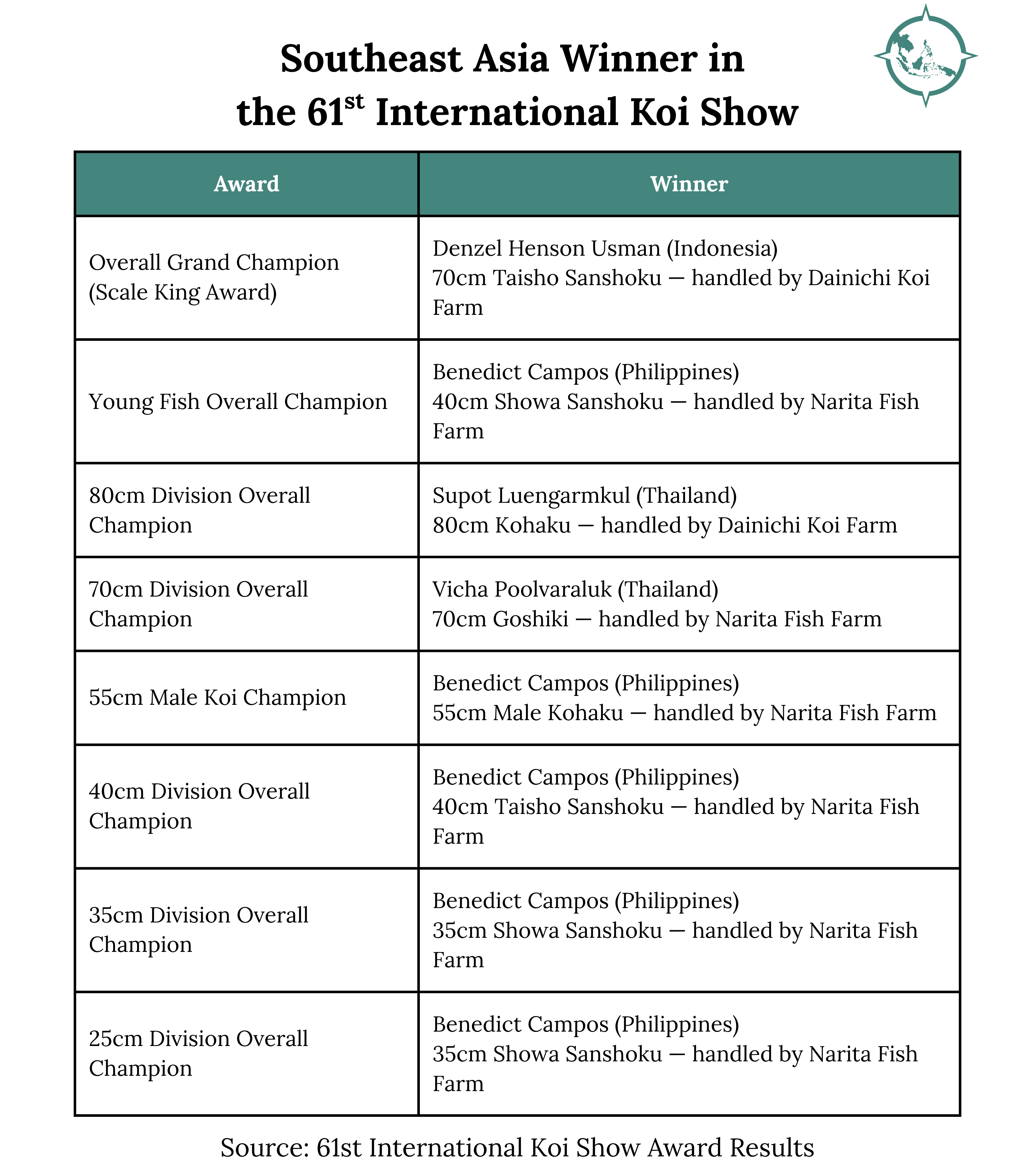
Regional competitors didn't just take the giant-fish divisions; they demonstrated excellence across diverse categories and developmental stages, dismantling traditional Japanese strongholds. 💥
🌴 The Tropical Advantage
Southeast Asia’s geography provides a massive competitive edge:
🌡️ Consistent, year-round water temperatures.
🍽️ Uninterrupted feeding cycles with zero winter dormancy.
📈 Accelerated growth potential for young koi.
🛡️ Elimination of winter-related physiological stress.
While climate alone doesn’t mint champions, it provides an unmatched foundation. Modern Southeast Asian farms now merge Japanese genetics and filtration tech with tropical growth conditions—a highly effective hybrid approach. 🧬🌴
🎪 Beyond The Show
🏭 Building a Stronger Local Industry
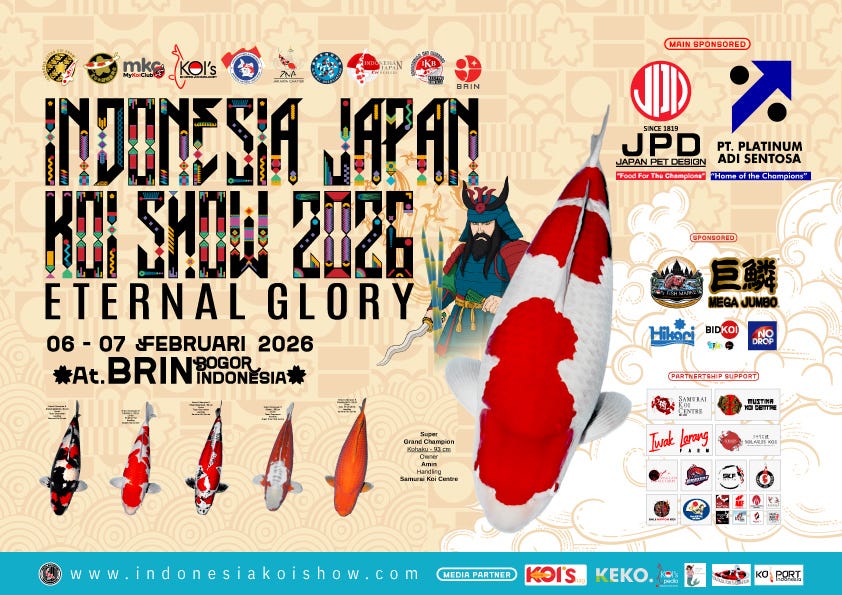
International wins trigger domestic investment. Koi keeping is transitioning into a specialized economic sector, driving aquaculture innovation and job creation. Local contests in Indonesia and Thailand now draw thousands, boosting micro-economies and tourism. 🇮🇩🇹🇭
🌏 International Influence: From Importers to Industry Competitors
Southeast Asia is evolving from one of the world’s largest koi consumers into a premier producer. Cultivating internationally recognized champions makes regional players highly attractive partners for global buyers and traditional Japanese farms. 🤝
💡 The Bottom Line
The next decade will likely be shaped by technology. Better water monitoring, genetic tracking, AI-assisted health detection, automated feeding systems, and improved transportation methods could further narrow the gap between emerging breeders and traditional leaders.
Southeast Asia is evolving from one of the world’s largest koi consumers into a premier producer. Cultivating internationally recognized champions makes regional players highly attractive partners for global buyers and traditional Japanese farms. 🤝
(DEV/ARS)
This is interesting to me that as humans we can turn every little thing into a competition.