




🎯 The Main Takeaway
SEAblings, have you ever realized that our home could totally pass for “Heaven is for real”?
For decades, Southeast Asia’s role in Hollywood was simple: supply the scenery.
🎬 From Vietnam standing in for Kong: Skull Island to Bali anchoring Eat Pray Love, the region has quietly hosted blockbuster after blockbuster. But the relationship is shifting — Thailand’s 2017 hit Bad Genius just got its own English-language Hollywood remake in 2024, and the Philippines made a local adaptation too.
Hollywood isn’t just borrowing our backdrops anymore. It’s starting to borrow our scripts.
👀 Why It’s on Our Radar
Southeast Asia has long competed for Hollywood's attention with tax rebates and cheap production costs — essentially, paying to be looked at.
A film like Bad Genius flips that dynamic: it's a story that traveled on its own merit, box office numbers and all, and pulled Hollywood toward it.
That's a meaningfully different kind of leverage than a cash rebate, and it's worth watching whether it's a one-off or the start of a pattern.
💭 What’s at Stake

The economic upside is real: tourism boosts, production jobs, and international visibility. But being a popular filming destination doesn’t guarantee accurate representation.
Doctor Strange (2016) swapped a Tibetan character and setting for Nepal specifically to avoid friction with China’s box office, proof that “filmed in Asia” doesn’t always mean “represented by Asia.”
The same tension applies here at home: locations get used, but whose culture, whose poverty, and whose story are actually told are still often decided somewhere in Los Angeles, not Jakarta, Manila, or Bangkok.
🎬 The Big Picture
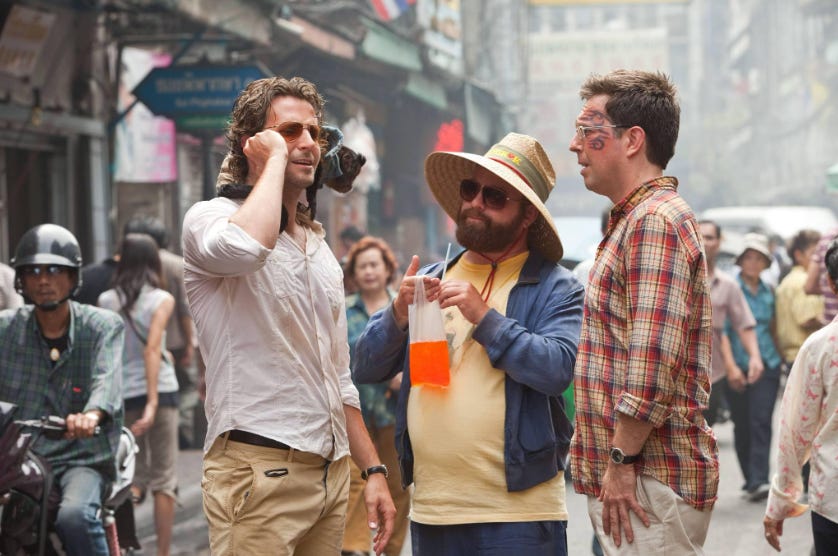
A quick rundown of the region’s Hollywood resume:
🦍 Kong: Skull Island (2017), Vietnam — the biggest production the country had ever hosted, chosen for its raw, “otherworldly” landscape.
🧘♀️ Eat Pray Love (2010), Indonesia — filmed on location in Ubud and Padang-Padang Beach to stay true to Elizabeth Gilbert’s real journey.
🏃♂️ The Bourne Legacy (2012), Philippines — Manila’s density and energy shaped its chase scenes, though the film drew criticism for how it framed local poverty.
💎 Crazy Rich Asians (2018), Singapore — real locations like Marina Bay Sands, but a portrait of wealth that barely reflects how private Singapore’s actual elite are.
🍻 The Hangover Part II (2011), Thailand — Krabi and Bangkok delivered the chaotic, “lost after a wild night” energy the sequel needed.
The pull isn’t just visual. Thailand and Malaysia both offer cash rebates of up to 30% on qualifying local spend, plus bonuses for hiring local crew — production incentives that make the region hard to pass up on a budget line alone. 💰
🌏 The Regional Stakes
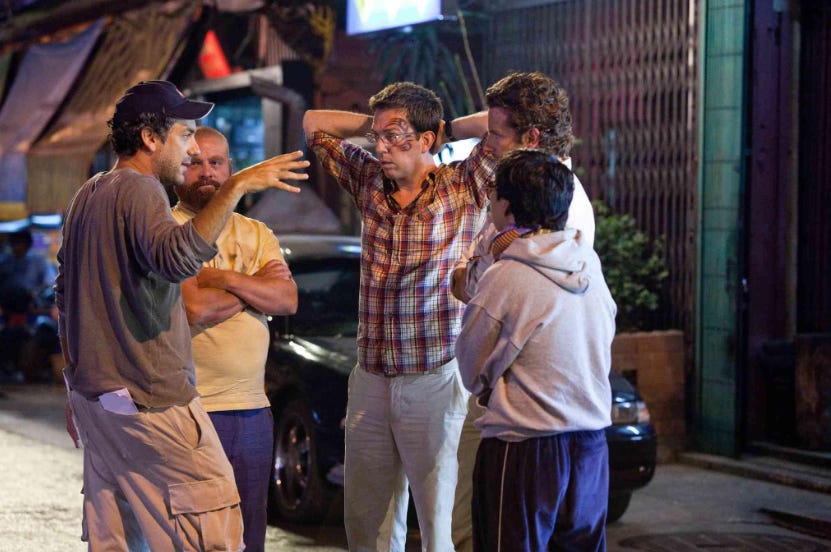
This shift could mean more than international recognition.
It could change who gets to tell Southeast Asia’s stories — and who benefits when those stories succeed. 🌏
When international productions film in the region, they can bring investment, employment opportunities, and tourism. 📈 But when local filmmakers gain greater visibility and ownership over their stories, the impact can go further.
More local voices get heard. More stories travel across borders. And instead of constantly being defined through someone else’s camera, Southeast Asia gets more opportunities to define itself. 📹➡️🖊️
A Hollywood remake doesn’t automatically mean equal creative power, of course. But it does signal something important:
Stories from this region are becoming harder to ignore.
✍️ When our stories travel
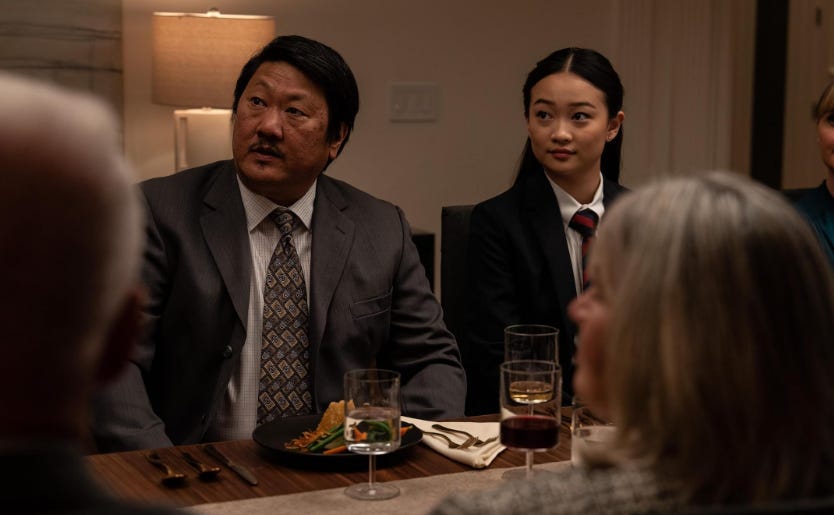
The clearest example is Bad Genius, the 2017 Thai heist-thriller about a scholarship student running an elaborate exam-cheating scheme. The film became a major success in Thailand and across several international markets, including China.
Hollywood took notice. 🎬
In 2024, an English-language remake was released in the US. The Philippines has also developed its own adaptation.
That’s the interesting part: the story traveled because the story worked — not because a studio needed a beautiful jungle in the background. 🌴❌
Indonesia has its own examples. The Raid helped reshape how global audiences think about action choreography, while Indonesian horror films such as Pengabdi Setan have reached viewers far beyond the country’s borders.
Meanwhile, Filipino and Thai filmmakers continue to bring distinctly local perspectives to international audiences and festival circuits.
Southeast Asia isn’t just a location scouts flip through anymore — it’s becoming a place stories come from. ✨
🏙️ Why This Hits Home
We’ve probably all had that moment.
You’re watching a Hollywood movie when suddenly —
“Wait, isn’t that Bali?” 👀📍
Or Manila. Singapore. Bangkok. Vietnam.
There’s something exciting about recognising your part of the world on a massive screen. That little “I’ve been there!” moment when somewhere familiar suddenly becomes cinematic.
But maybe there’s a bigger question behind that excitement:
Are we just the view out the window, or are we finally getting to hold the pen? 🖊️
(VIL/QOB)