



🎯 The Main Takeaway
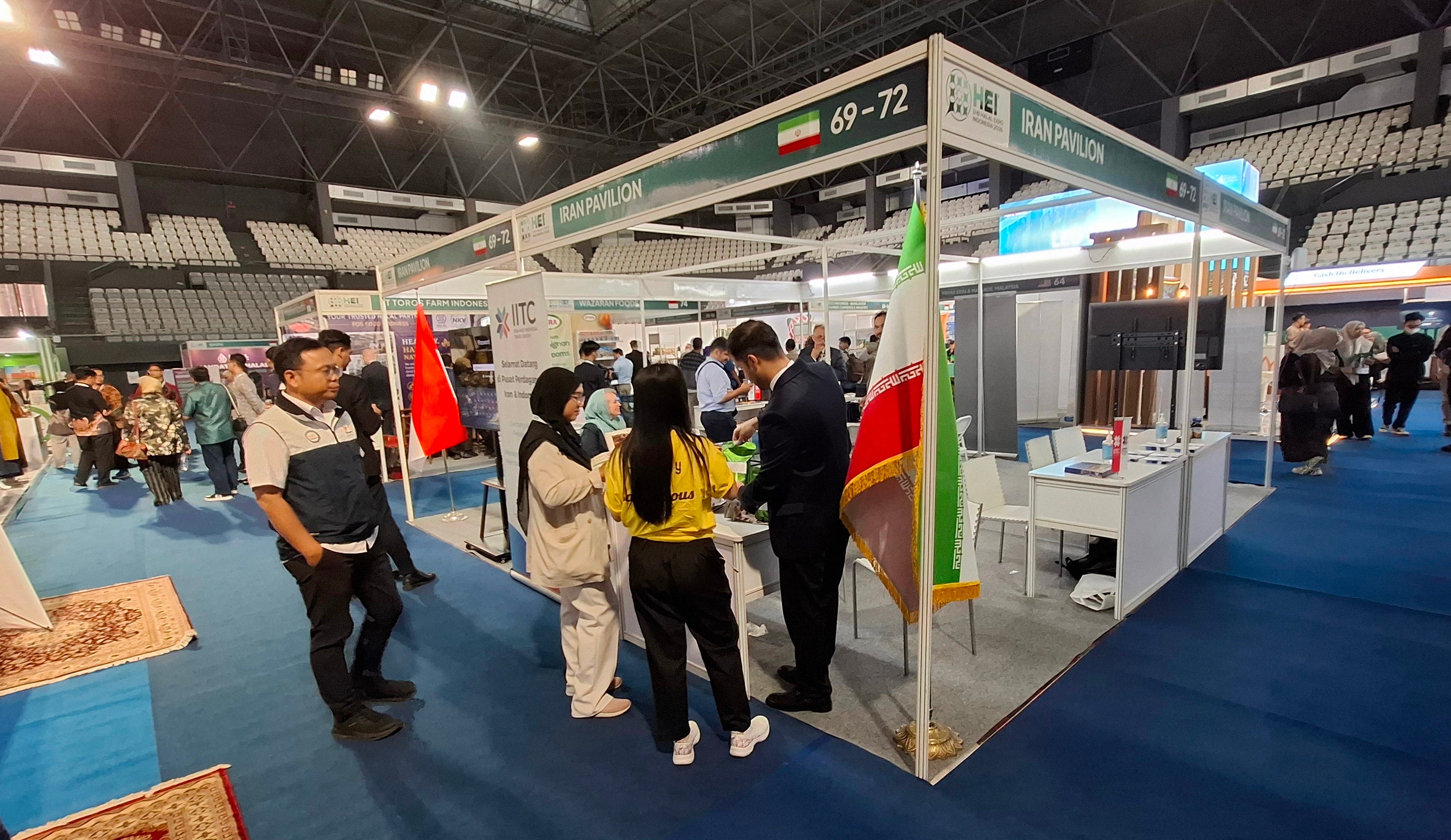
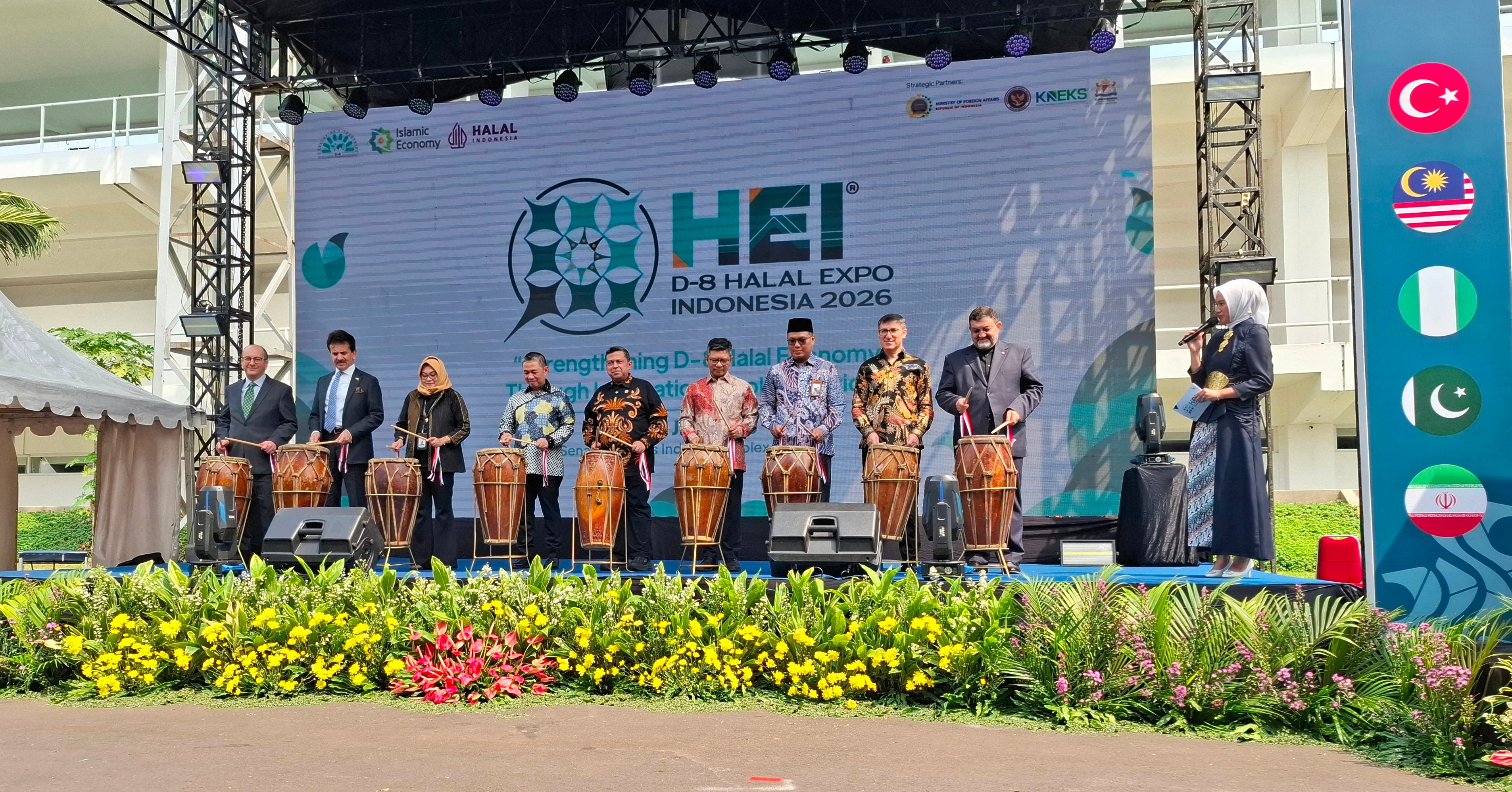
The Indonesian Ministry of Foreign Affairs, together with several government agencies and the Indonesian Chamber of Commerce (Kadin), hosted the D-8 Halal Expo Indonesia 2026 from July 8–12 in Jakarta.
The expo featured 80 companies from D-8 member states and partner countries, showcasing halal products and services across the food, lifestyle, healthcare, finance, tourism, and digital sectors.
Under the theme "Strengthening D-8 Halal Economy Through International Collaboration," the event brought together governments, businesses, investors, and innovators to promote the halal economy and strengthen global partnerships.
📡 Why It’s on Our Radar?
Several factors highlight the growing importance of the global halal economy:
Muslim Population: Islam is the world's second-largest religion, with more than 2 billion followers. As a result, Muslims represent one of the world's largest markets for halal products and services.
Global Distribution: Muslim communities are spread across every continent, with the largest populations concentrated in Africa, Southeast Asia, and West Asia, creating strong demand for halal goods and services.
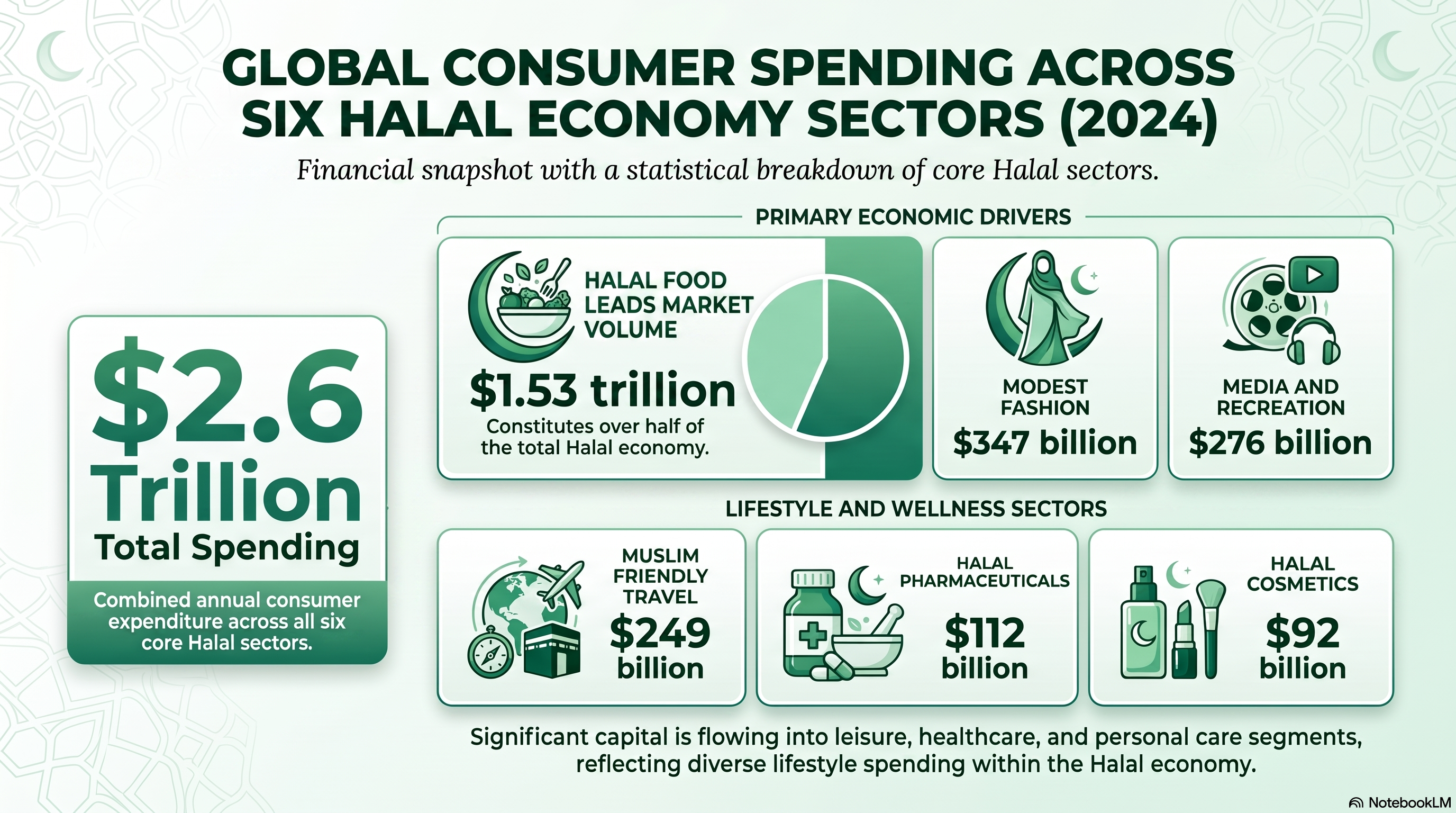
Halal Economy: Global Muslim spending across six major halal sectors reached USD 2.6 trillion in 2024 and is projected to grow to USD 3.6 trillion by 2029, with the halal food industry remaining the largest contributor.
💡 How About D-8?
The D-8 Organization for Economic Cooperation (D-8) is an economic bloc established in 1997 comprising nine Muslim-majority developing countries: Azerbaijan, Bangladesh, Egypt, Indonesia, Iran, Malaysia, Nigeria, Pakistan, and Türkiye.
Together, the bloc represents 1.3 billion people, or 16% of the world’s population, with a combined GDP of USD 5.1 trillion. Intra-D-8 trade has also reached USD 160 billion, reflecting the bloc’s growing economic cooperation.
“The D-8 countries share a common history and identity, while their abundant resources and growing technological capabilities give the bloc strong economic potential. However, the group does not represent all major Muslim-populated regions.” - Anis Matta, Indonesian Deputy Foreign Affairs Minister.
⚠️ Why It Matters?
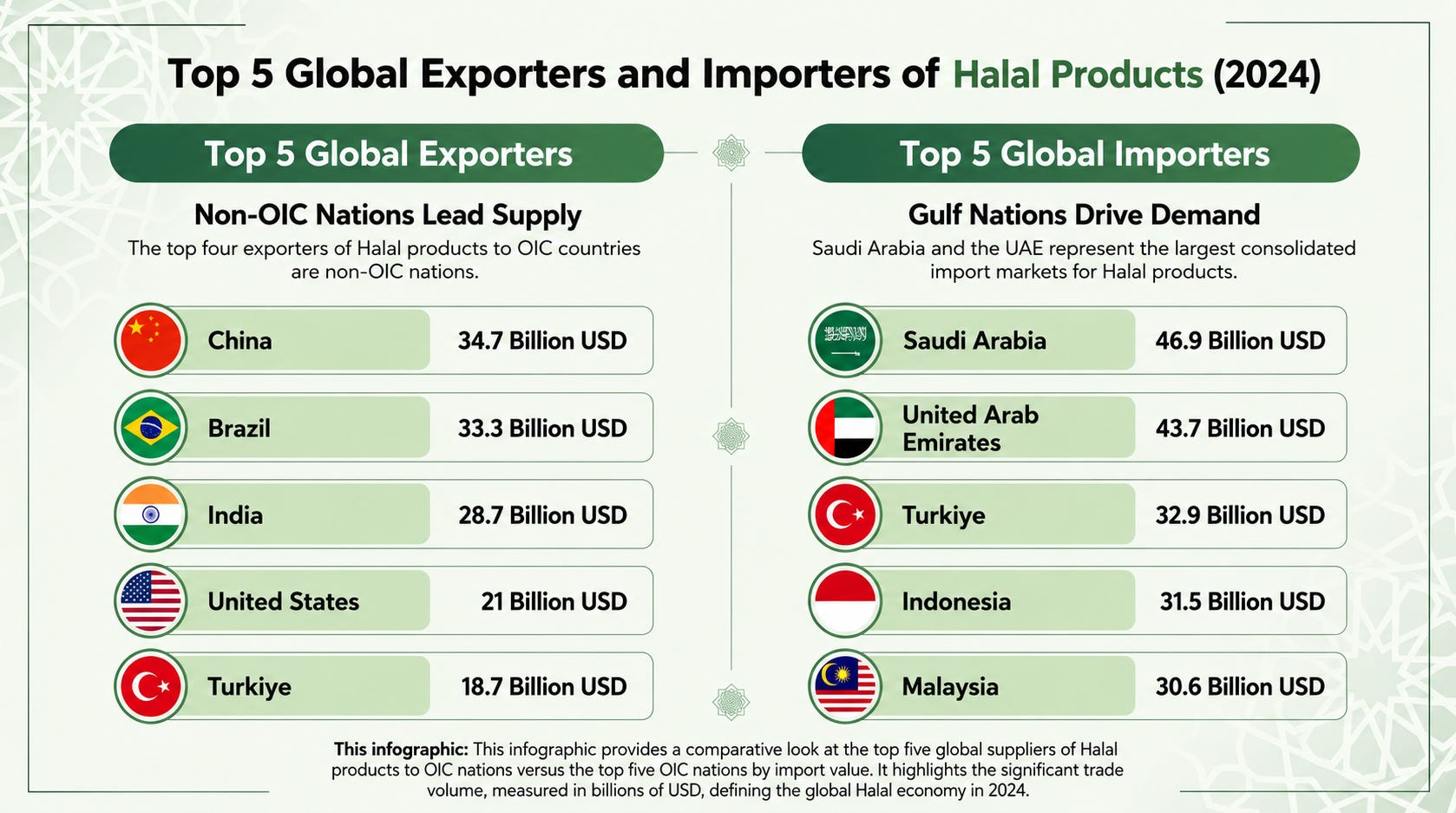
Despite their large Muslim populations, none of the D-8 or OIC member countries are among the world’s top halal exporters. Instead, the top three exporters are China (USD 34.7 billion), Brazil (USD 33.3 billion), and India (USD 28.7 billion).
The largest destinations for halal exports were Saudi Arabia (USD 46.9 billion), the United Arab Emirates (USD 43.7 billion), Türkiye (USD 32.9 billion), Indonesia (USD 31.5 billion), and Malaysia (USD 30.6 billion).
To close this gap, D-8 members aim to increase intra-bloc trade to USD 500 billion by 2030. Achieving this target will require stronger halal production, more integrated supply chains, and closer trade and investment cooperation among member countries.
“Our objective is to help build more competitive, resilient, and future-ready economies that deliver tangible dividends for our people. Within this broader vision, the halal economy occupies a unique and strategic position as it naturally integrates trade, manufacturing, agriculture, logistics, finance, digital technologies, sustainability, and innovation into one of the fastest-growing sectors of the global economy.” - Sohail Mahmood, D-8 Secretary General
🎪 What’s Inside the Event?
The expo facilitated a range of activities to strengthen the global halal economy while opening new opportunities for business expansion, including:
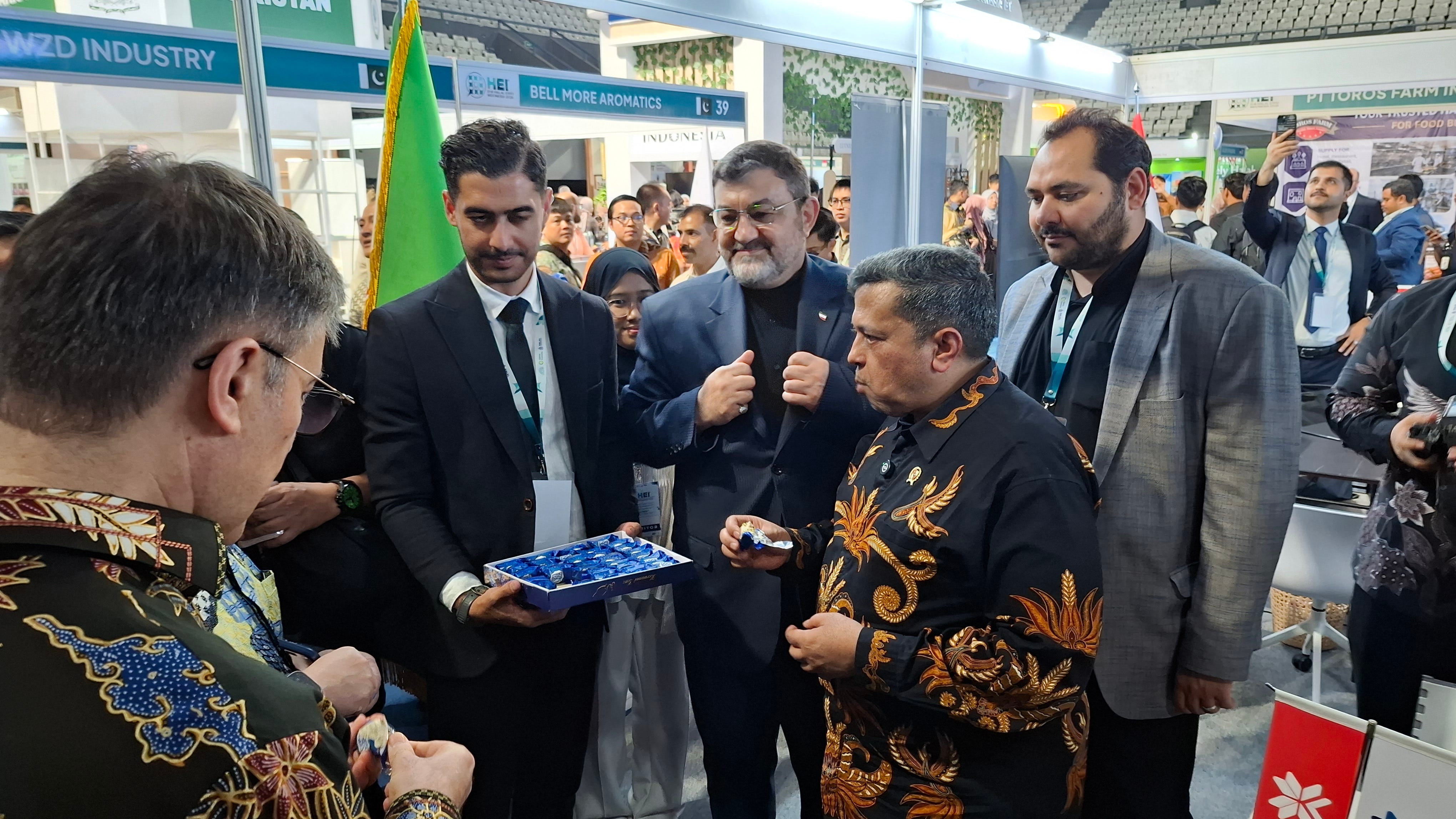
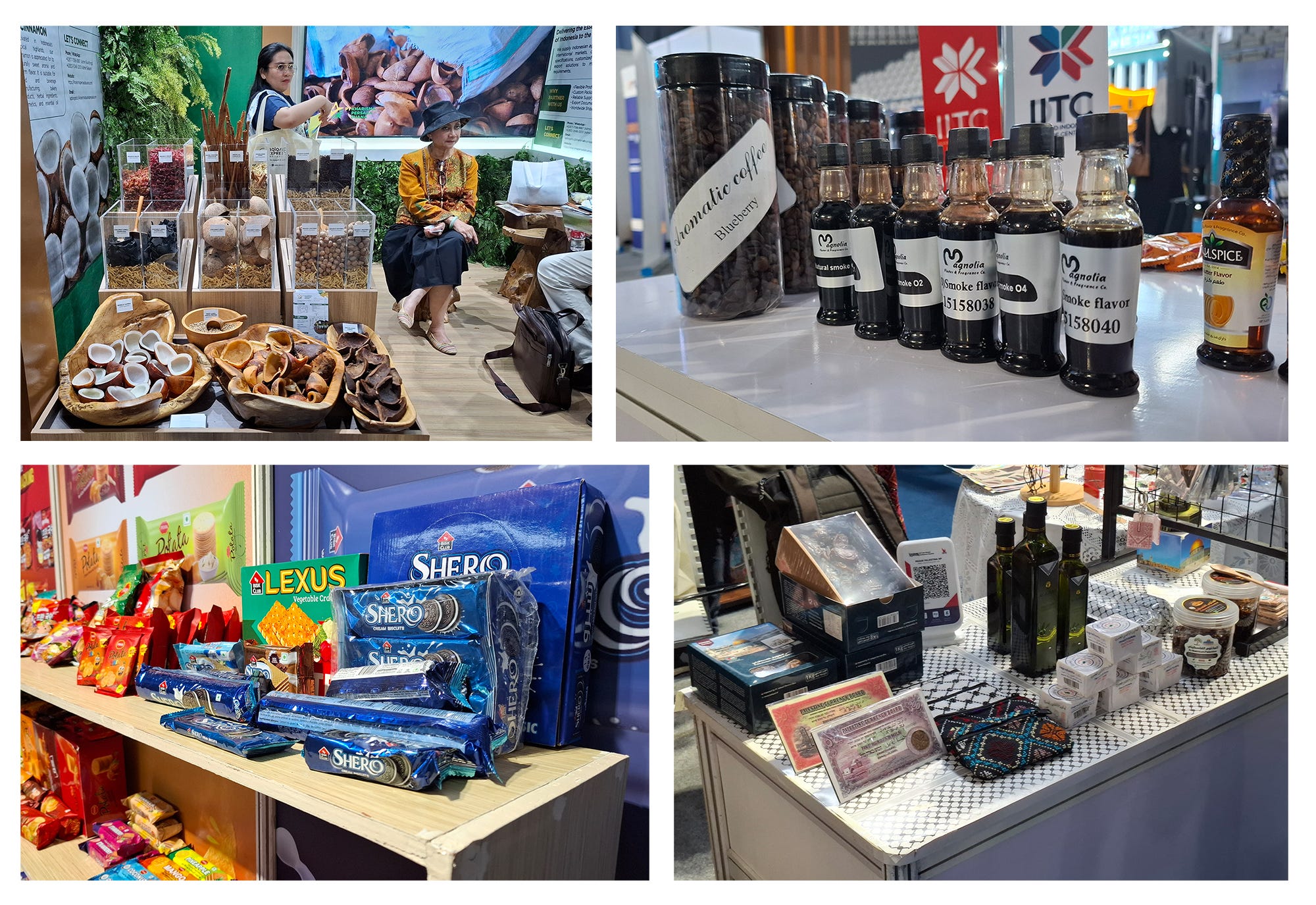
Exhibition: Companies from D-8 member countries and partner nations showcased halal products and services, including food, fashion, beauty, pharmaceuticals, tourism, finance, and digital services.
Business Matching: Businesses, exhibitors, buyers, and investors met to build partnerships, strengthen halal supply chains, network, and explore new trade and investment opportunities.
Panel Discussions: Government officials, policymakers, business leaders, and industry experts discussed halal trade, investment, regulations, and strategies to expand international business cooperation.
Knowledge Transfer: Experts and industry leaders shared insights, best practices, market trends, and innovations to help businesses obtain halal certification, improve competitiveness, and expand into the global halal market.
“Halal Expo is a good opportunity for networking, for expanding our connections. And I hope to develop my connections with governmental organizations, also with private organizations in the field of food and ingredients, also cosmetic. And after that, I hope to develop our exportation, our Halal products from Iran to Indonesia.” - Amir Hosein Mehrpouya, Indonesia Affairs Director, Iran and Indonesia Trade Center.
💰 The Result
The D-8 Halal Expo Indonesia 2026 attracted more than 5,000 local and international visitors and buyers during its five-day event. The expo also hosted 29 business-matching sessions, offering businesses opportunities to connect, explore new markets, and build international partnerships.
The event secured USD 13.4 million in partnership agreements through Memorandums of Understanding (MoUs) and Letters of Intent (LoIs) between Indonesian businesses and companies from D-8 member countries, helping strengthen the halal industry and supply chain.
🚀 Moving Forward…
The D-8 proposed some initiatives to strengthen the halal economy within the bloc and beyond:
Integrated Halal Trade Corridor: Create a more efficient halal trade network by harmonizing halal standards, improving certification systems, simplifying customs procedures, and strengthening halal logistics to make cross-border trade faster and more affordable.
Digital Halal Marketplace: Build a digital platform that connects businesses, investors, Islamic financial institutions, certification bodies, and buyers to support business matching, cross-border e-commerce, investment, and market access, especially for SMEs.
Future Halal Investment: Increase joint investment in research, innovation, halal industrial parks, food technology, pharmaceuticals, AI, blockchain, sustainable logistics, green manufacturing, workforce development, and university collaboration to drive long-term growth.
Annual D-8 Halal Expo: Make the D-8 Halal Expo an annual flagship event to strengthen institutional cooperation, improve policy coordination, boost private sector engagement, increase trade and investment, and support innovation in the global halal economy.
“We must transform ourselves into integrators of the halal global chain. Moreover, our market potential will not be meaningful without regulatory harmonisation, and human resource readiness that can connect us across the Global South, from Southeast Asia to Africa” - Putu Rahwidhiyasa, Executive Director of National Committee for Sharia Economy and Finance.
🏡 Why This Hits Home?
Indonesia and Malaysia are the only Southeast Asian members of the D-8 and took part in the D-8 Halal Expo Indonesia 2026.
Indonesia also serves as the D-8 Chair for 2026–2027, with five main priorities:
Economic Integration: Increase trade and investment among D-8 member countries.
Halal Industry: Expand halal industries and increase halal product production.
Green and Blue Economy: Strengthen cooperation in sustainable land- and ocean-based industries.
Digital Connectivity: Improve digital connectivity to help SMEs reach wider international markets.
Organizational Reform: Modernize the D-8 through more effective governance, budgeting, and decision-making.
Through these priorities, Indonesia aims to strengthen the halal economy as a key driver of sustainable growth, international trade, and economic integration among D-8 member countries.
“So our definition of halal now is modern civilization. Halal now is the prosperity of life. Halal now is a symbol of health, a symbol of cleanliness, a symbol of quality of food, and a symbol of elite food. For Indonesia, halal is transparency, traceability, and trustability.” - Ahmad Haikal Hassan, Head of Halal Product Assurance Organizing Agency.
🇲🇾 Malaysia: The Halal Champion
Malaysia remains the leading destination for Muslim-friendly travel, supported by halal-certified services, modern facilities, rich culture, and diverse natural attractions. As a result, the country ranked first in the Global Muslim Travel Index (GMTI) 2026 for Muslim-Friendly Destinations and Muslim Women-Friendly Destinations.
Malaysia also performed strongly in the halal economy in 2024, attracting USD 11.3 billion in halal-related foreign direct investment (FDI), recording USD 30.6 billion in halal product imports, managing USD 761 billion in Islamic finance assets, and generating USD 24 billion in Muslim travel spending.
🇮🇩 Indonesia: The Emerging Challenger
Indonesia offers rich culture, beautiful natural attractions, halal-certified food, and Muslim-friendly facilities, making it one of the world’s top destinations for Muslim travelers. As a result, the country ranked second in the Global Muslim Travel Index (GMTI) 2026 for Muslim-Friendly Destinations and third for Muslim Women-Friendly Destinations.
Indonesia also recorded strong growth in 2024, leading Southeast Asia with USD 24.2 billion in halal-related foreign direct investment (FDI). The country also recorded USD 31.5 billion in halal product imports, while its halal food market reached USD 165.4 billion, followed by USD 6.5 billion in pharmaceuticals, USD 5.9 billion in cosmetics, and USD 24.7 billion in media & recreation.
🇸🇬 Singapore: The Non-OIC Leader
Singapore remained the top non-OIC destination in the Global Muslim Travel Index (GMTI) 2026 for Muslim-Friendly Destinations and third for Muslim Women-Friendly Destinations, offering halal-certified dining, modern Muslim-friendly facilities, sustainable tourism, and advanced smart technologies for a seamless travel experience.
Singapore’s halal industry, particularly the food and beverage sector, continues to grow, with the market valued at USD 12.86 billion in 2024. However, detailed data on consumer spending for other halal sectors, such as cosmetics, pharmaceuticals, and tourism, is not yet publicly available.
🇹🇭 Thailand: The Growing Contender
Thailand ranked fifth among non-OIC destinations in the Global Muslim Travel Index (GMTI) 2026, supported by over 200,000 halal-certified items, restaurants, hotels, and Muslim-friendly services. The country aims to become Southeast Asia’s leading halal hub.
Halal Economy: Thailand is the world’s fifth-largest halal food producer and 11th-largest halal food exporter. Halal food exports to OIC countries reached USD 7.13 billion in 2024 and USD 4.87 billion from January to October 2025. Public data on consumer spending in other halal sectors remains limited.
🇵🇭 The Philippines: The Rising Competitor
The Philippines ranked sixth among non-OIC destinations in the Global Muslim Travel Index (GMTI) 2026. The country is also one of the fastest-rising Muslim-friendly destinations, driven by its renowned hospitality, stronger Muslim-friendly tourism policies, digital services, and promotion across major destinations such as Manila, Cebu, and Davao.
The Philippines launched the National Halal Industry Development Office in December 2024. The initiative aims to double the number of halal-certified products and services, attract USD 3.9 billion in investments, create 120,000 jobs, boost Muslim-friendly tourism, and expand international halal trade. The country’s “Halal-Friendly Philippines” campaign also generated more than USD 100 million at the Saudi Halal Expo.
🇧🇳 Brunei Darussalam: The Trusted Performer
Brunei ranked seventh for Accessible Destination and Muslim Women-Friendly Destination in the Global Muslim Travel Index (GMTI) 2026, supported by its strong Islamic heritage, halal-certified services, safe environment, modern facilities, and welcoming hospitality.
Brunei is developing its halal industry as a key pillar of Brunei Vision 2035, aiming to diversify the economy and reduce its dependence on oil and gas exports. The country is expanding halal food production, strengthening halal businesses, and promoting the sector as a new engine of economic growth.
🌍 Others…
🇻🇳 Vietnam established the Vietnam Halal Certification Authority in April 2024 to develop the country’s halal industry. The authority oversees halal certification, promotes international halal standards, and provides training and support to help Vietnamese businesses expand into global halal markets.
🇰🇭 Cambodia launched Halal Park Cambodia in September 2024 as a one-stop halal industrial hub. The park provides halal production facilities, logistics, certification, training, and business support to help local companies reduce costs, improve efficiency, and expand into international halal markets.
🇱🇦 Laos, 🇲🇲 Myanmar, and 🇹🇱 Timor-Leste have relatively small Muslim populations, so their halal industries are still in the early stages of development. Limited government policies, halal certification systems, and supporting institutions have slowed the growth of halal products and services.
📌 The Bottom Line
The halal economy is no longer just about religion. It has become a fast-growing global industry covering food, tourism, healthcare, finance, technology, and trade. Countries are now competing to become leaders in the global halal market.
Having a large Muslim population is no longer enough. Countries also need strong industries, trusted halal certification, modern technology, skilled workers, and international partnerships to stay competitive in the global halal economy.
The future of the halal economy will not belong solely to the biggest markets. It will belong to countries that innovate, produce, certify, invest, and connect halal businesses across borders.
🔍 Need More Angles?
DinarStandard State of the Global Islamic Economy (SGIE) 2025/26 Report
Halal Friendly Philippines Philippines Achieves Over USD 100 Million in Deals at Saudi Halal Expo, Boosting Halal Industry Growth
Halal Practitioner Cambodia: The Next Frontier in the Global Halal Economy
Halal Practitioner What Drives Innovation in Singapore Halal Food Industry
Mastercard Crescentrating Global Muslim Travel Index 2026
Statistical, Economic and Social Research and Training Centre for Islamic Countries Halal Industry in OIC Member Countries, Challenges and Prospects
The General Department of Standards, Metrology, and Quality Decision on the Establishment of Vietnam Halal Certification Authority – HALCERT Announced
The Government Public Relations Department Thailand Moving toward Becoming Global Halal Food Hub
The Islamic Economist Philippines Launches National Halal Office to Strengthen Global Market Presence
Timesprayer The Number of Muslims Around the World
(NGO/QOB)