



🎯 The Main Takeaway
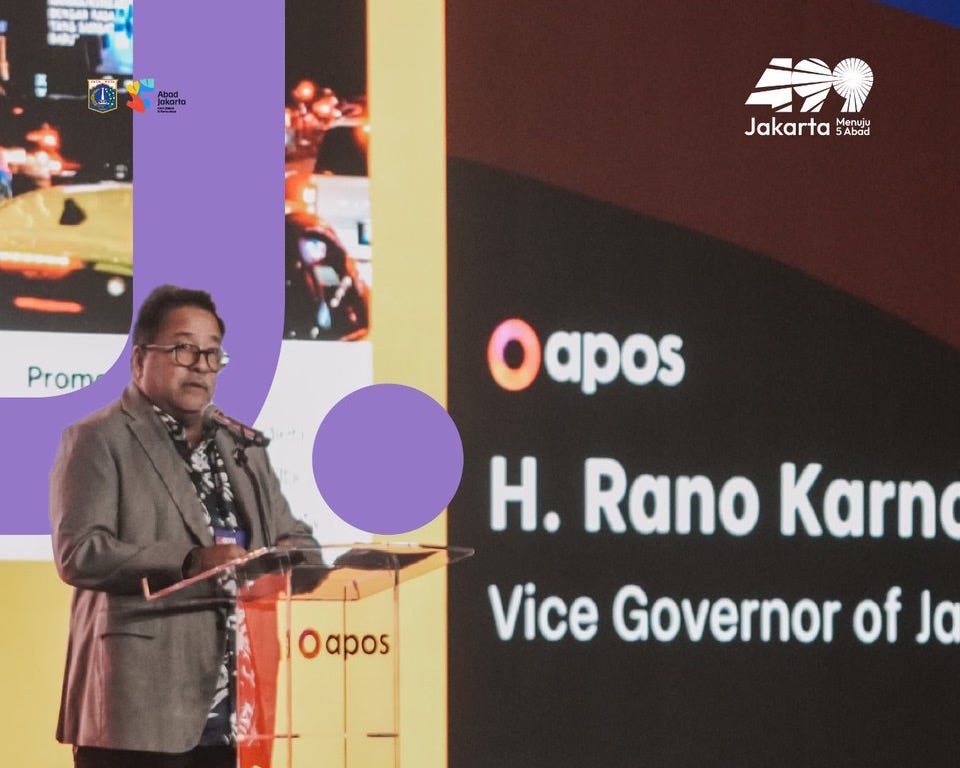
There is a new disrupting Southeast Asia's production ecosystem. At the 2026 Asia Pacific Video Operators Summit (APOS), Jakarta officially pivoted from being just a consumer market into a high-stakes production hub. By launching "Filming in Jakarta", a centralized service aggressively slashing red tape and costs. The city is making a calculated play to capture the region's multi-billion-dollar "screen economy" and directly challenge established filming capitals like Kuala Lumpur and Bangkok.
🔍 Why It’s on Our Radar
Jakarta is no longer just offering scenery; it is leveraging its massive scale to reshape where global studios allocate their Southeast Asian budgets. This move commands regional attention for three structural reasons:
📊 Weaponizing Market Scale: Indonesia anchors a broader Southeast Asian digital economy projected to surpass $330 billion, with domestic cinema admissions on track to hit a massive 120 million by late 2026. Jakarta is using this built-in consumer base as leverage, offering international studios frictionless production in exchange for anchoring their investments locally.
🎬 Immediate Studio Defection: The strategy is already pulling capital across borders. Following the APOS summit, Netflix committed to shooting six new films in Jakarta, with regional executives publicly citing the city’s potential to become “the best shooting location in Southeast Asia.” This signals a tangible shift in how global streamers are mapping their regional logistics.
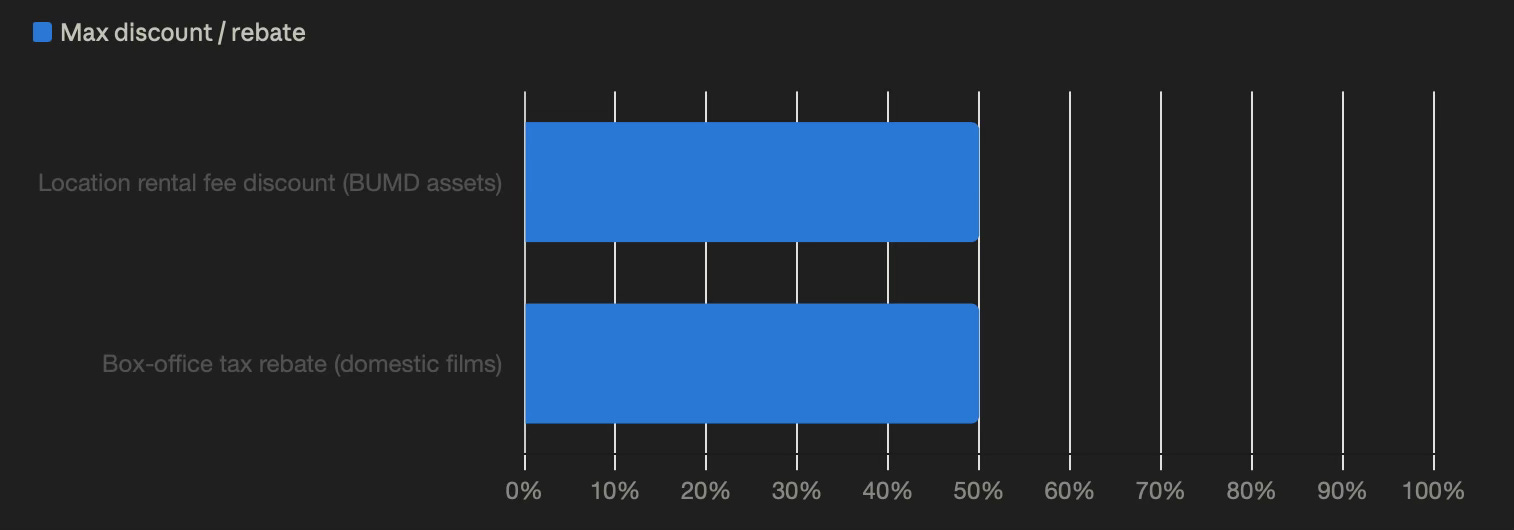
💰 The 50/50 Financial Shockwave: To outbid its neighbors, Jakarta has rolled out highly aggressive subsidies: 50% off location rentals for state-owned assets and a 50% box-office tax rebate. This sets a fierce new financial benchmark, acting as a direct counter-punch to the 20–30% cash rebates currently offered by Malaysia, Thailand, and the Philippines.
As Jakarta unleashes massive 50% financial subsidies to undercut established neighbors, the ultimate test remains: are these competing capitals actually building sustainable, long-term media ecosystems for their own storytellers, or are they simply bleeding their local tax revenues to subsidize the bottom line of global streaming giants? Lets see what will come.
⚖️ What’s at Stake
Economic revitalization versus bureaucratic inertia. Historically, navigating filming permits in a bustling metropolis like Jakarta has been a logistical nightmare. By streamlining the process through the Jakarta Film Commission and Jakarta Experience Board (JXT), the city is betting that ease of doing business will directly translate into a creative boom. Failure to execute smoothly could mean losing out to more established regional filming hubs.
⚖️ The Stakes
Economic revitalization versus bureaucratic inertia. Historically, navigating filming permits in a sprawling, congested metropolis like Jakarta has been a logistical nightmare.
The Bet: By streamlining the entire process through the Jakarta Film Commission and Jakarta Experience Board (JXT), the city hopes this ease of doing business will trigger a massive creative boom and an influx of foreign investment.
The Risk: Poor execution or lingering red tape means losing ground to established regional hubs that already have this infrastructure down to a science.
🌏 The Big Picture
Jakarta is stepping into a highly competitive, multi-billion-dollar arena where neighboring capitals have already spent years perfecting their pitches. To stand out, the Indonesian capital will have to go toe-to-toe with established hubs that use aggressive financial models and hyper-efficient infrastructure to lure global studios. Here is how the regional map shapes up:
🇲🇾 Malaysia (Kuala Lumpur) • The Heavyweight Fighter

Malaysia has firmly established itself as the region’s financial titan for filmmakers, relying on aggressive capital and large-scale logistics to draw global franchises.
💰 The Hook: A massive 30% cash rebate (FIMI), sweetened with an extra 5% “cultural content” bonus.
🎬 The Wins: Successfully lured multi-million-dollar productions, including Netflix’s upcoming The Lord of the Flies series and major European reality franchises.
🇸🇬 Singapore • The Elite Architect
Eschewing high-volume shoots, the city-state plays an exclusive, premium game designed to establish itself as the media ecosystem anchor for global conglomerates.
💰 The Hook: A massive S$200 million Talent Accelerator Programme (TAP) and an invite-only On-Screen Fund.
🎬 The Wins: Aggressively co-funding high-end international co-productions and serving as the strategic headquarters for entertainment giants.
🎯 The Strategy: Positioning itself not just as a location, but as Asia’s premium, high-value co-production hub.
🇹🇭 Thailand (Bangkok) • The Veteran Disrupter

Thailand seamlessly blends lucrative financial incentives with a legendary, hyper-efficient local production crew network to turn shoots into cultural moments.
💰 The Hook: A lucrative cash rebate of up to 30%, with recent policy updates removing rebate caps entirely for mega-blockbusters.
🎬 The Wins: Turned a single three-day shoot for global megastar Lisa’s Rockstar music video in Yaowarat into an overnight global tourism and soft-power phenomenon.
🎯 The Strategy: Weaponizing hyper-efficiency and cultural cachet to deliver fast, culturally resonant, high-impact productions.
🇵🇭 Philippines (Manila) • The Co-Production Specialist
Manila relies heavily on deep-rooted cultural ties and highly adaptive creative talent to capture international co-productions looking for a frictionless entry point.
💰 The Hook: Up to a 20% cash rebate through their Film Location Incentive Program (FLIP).
🎬 The Wins: Securing international partnerships by offering tailored, hands-on local auditing and robust structural support.
🎯 The Strategy: Acting as the ultimate collaborative partner and cultural bridge for global studios entering Southeast Asian filmmaking.
🇻🇳 Vietnam (Hanoi & Ho Chi Minh City) • The Rising Underdog
While still developing formalised cash rebates, Vietnam is aggressively entering the conversation by weaponizing its breathtaking geography and dramatically lower operational costs.
💰 The Hook: Streamlined government and military location clearances combined with ultra-lean logistics.
🎬 The Wins: Quickly becoming the go-to destination for independent cinema and streaming features seeking massive cinematic scale on a lean budget.
🎯 The Strategy: Selling raw, stunning natural topography and unbeatable cost-efficiency to undercut the established hubs.
🌊 The Regional Ripple Effect
This is a calculated play for Southeast Asia’s booming digital economy. Beyond local job creation and cultural pride, Jakarta’s initiative is a strategic move to capture a much larger share of a rapidly expanding regional creative sector.
📊 The Market Muscle: The broader Southeast Asian internet and digital economy is projected to surpass $330 billion. Indonesia already anchors this growth. With domestic cinema admissions officially projected to hit 120 million by late 2026, Jakarta offers a massive, built-in audience that smaller hubs simply cannot match.
🎬 The Proof of Concept: The strategy is already yielding hard returns. Capitalizing on these newly announced incentives, global streaming giant Netflix recently confirmed plans to shoot six new films directly in Jakarta—a clear signal that major studios are beginning to shift their regional production budgets toward the Indonesian capital.
🛑 The Bottom Line
Jakarta is weaponizing its scale. While regional neighbors rely on elite co-production funds or legacy infrastructure, Jakarta is now offering a high-volume, low-friction entry point into Southeast Asia’s most lucrative consumer market. By aggressively slashing costs under industry-literate leadership, the city’s pitch to the global entertainment industry is undeniable: don’t just export to our audience—anchor your productions here.
(NZL/ARS)