



🎯 The Main Takeaway
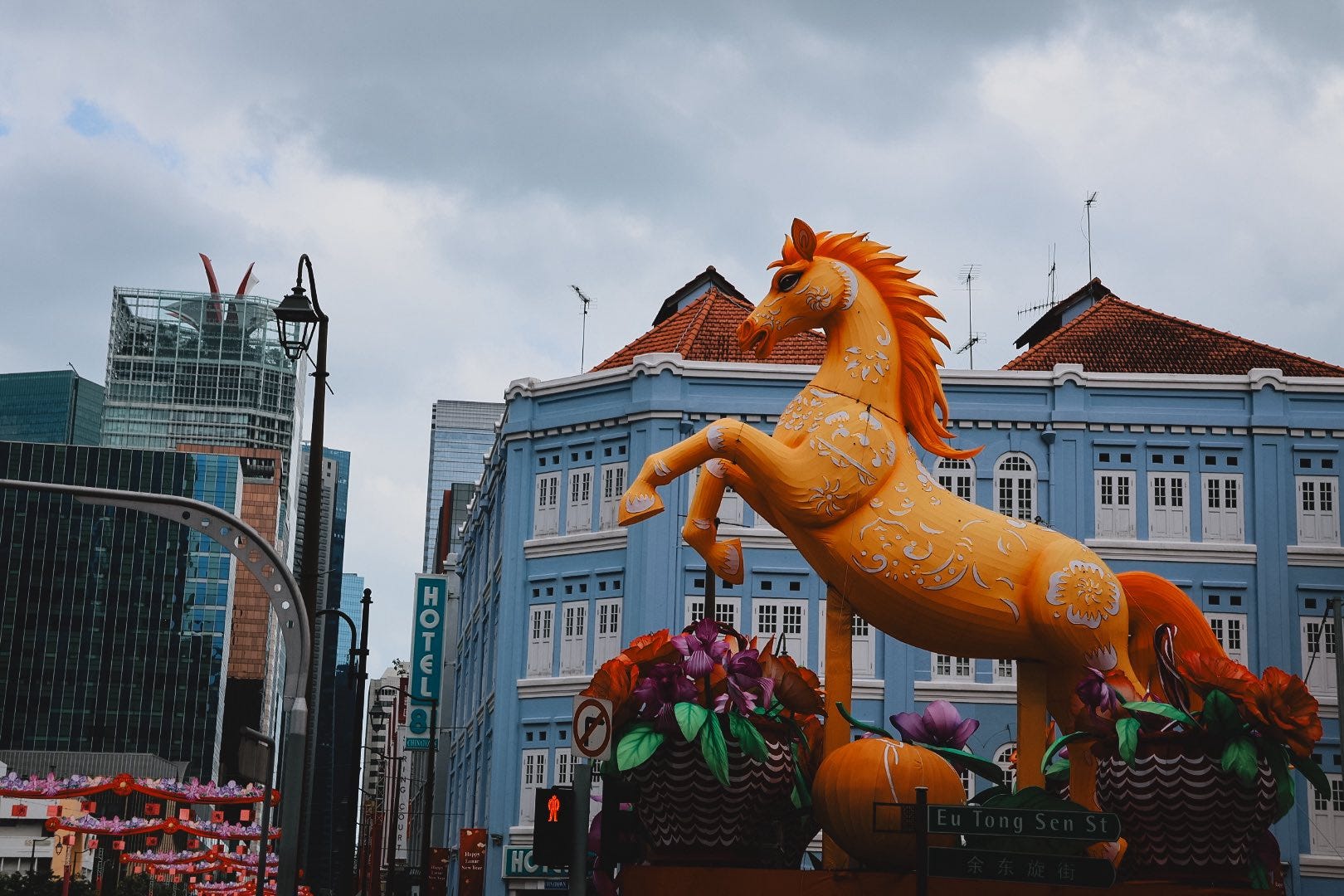
Singapore’s Chinatown ushers in the Year of the Fire Horse with a statement, not a spectacle—an 8.8-metre golden horse anchoring a district-wide light-up that weaves tradition, symbolism, and the city’s multicultural identity into a single public canvas.
🔍 Why It’s on Our Radar
In an era of uncertainty and social fragmentation, Singapore’s Chinese New Year celebrations show how cultural rituals still operate as social anchors—using shared symbols, public space, and collective memory to hold communities together.
⚖️ What’s at Stake
When festivals slip into routine spectacle, their social meaning thins. Chinatown’s Chinese New Year light-up resists that drift—not as decoration, but as a public expression of unity, resilience, and social cohesion at a moment when those values are under strain locally and globally.
📸 The Big Picture
At the centre of this year’s celebration is an 8.8-metre golden horse, flanked by 60 galloping figures and 48 symbolic fruits—motifs that frame unity, aspiration, and collective progress.
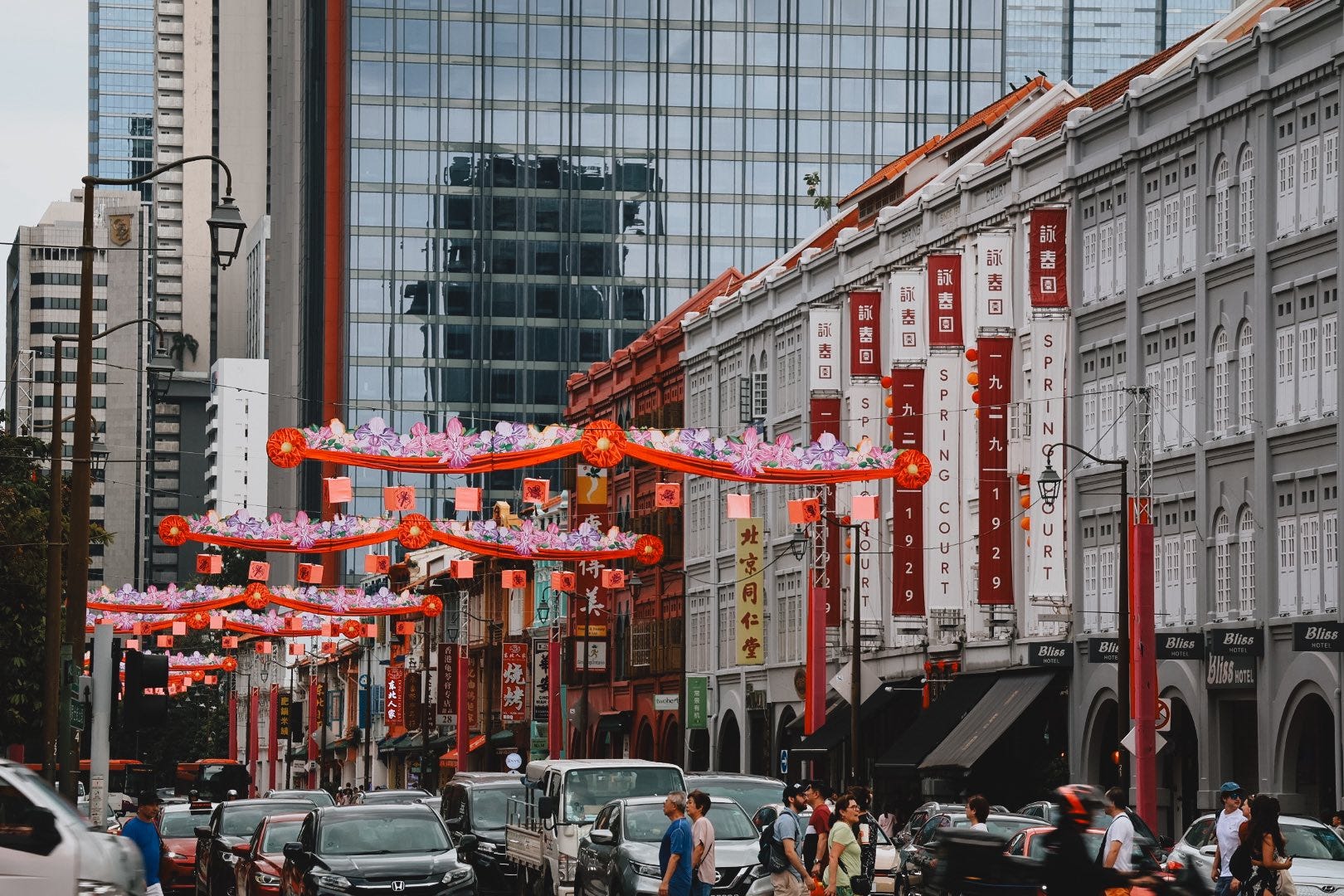
The district-wide light-up stretches across Chinatown’s main gateways, from South Bridge Road and Upper Cross Street to New Bridge Road and Eu Tong Sen Street. Lantern installations draw on the Eight Immortals, auspicious fruits, orchids, and traditional paper-cut designs, layering mythology with contemporary public space.
The Year of the Fire Horse begins on 17 February, with Chinatown’s festivities running through 18 March 2026.
🌏 The Regional Stakes
Chinatown’s celebrations mirror Singapore’s wider multicultural reality—not as symbolism, but as practice. Performances move fluidly between Chinese dance, Malay kuda kepang, Indian Rajasthani horse traditions, and Western styles, recasting the festival as a civic moment rather than a single-community affair.
Key highlights include the Chinese New Year countdown at Kreta Ayer Square (16–17 February), the International Lion Dance Competition (7–8 February), and festive street markets stretching across People’s Park and surrounding Chinatown streets.
Organisers expect up to 1.5 million visitors—nearly double the 800,000 recorded in 2025—signalling a strong rebound in public participation.
🧭 Bottom Line
Sustainability is quietly entering the festive narrative.
Through the Lantern Adoption Programme (11–18 March), selected installations will be reused—signaling a growing recognition that cultural celebration now sits alongside environmental responsibility.
Chinatown’s 2026 Chinese New Year celebrations suggest that tradition retains its force precisely when it adapts. The golden horse is not simply a symbol of prosperity; it reflects how culture, when shared in public space, can still generate unity, resilience, and a collective sense of direction in a society undergoing rapid change.
Brilliant angle on how festivals function as social anchors rather than just spectacles. The shift from single-community affair to civic moment through multicultural performances is what makes this work, not the decorations themselves. I've noticed similar dynamics in other Asian cities where traditional celebrations become platforms for wider social cohesion. The sustainability piece with lantern adoption is interesting too, it shows how cultural practises can evolve witout losing their core function.