




🎯 The Main Takeaway
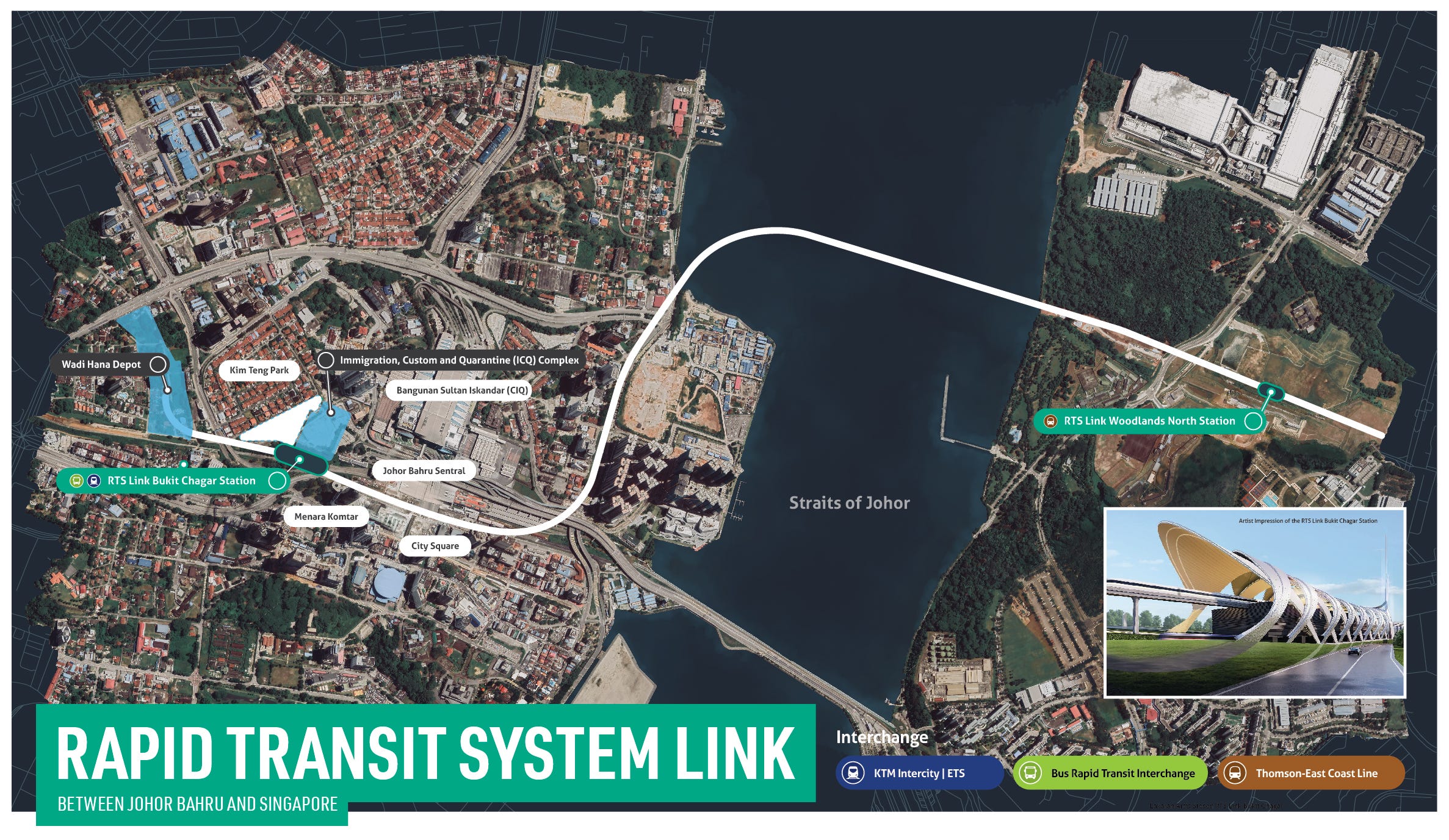
The long-held dream of seamless rail connectivity across the Tebrau Strait is on the verge of coming true. The Rapid Transit System (RTS) Link will connect Bukit Chagar in Johor Bahru with Woodlands North in Singapore.
Construction of the Johor Bahru–Singapore RTS Link has officially reached 90% completion milestone, and civil works have advanced to high-speed testing with flawless train trials scheduled before its highly anticipated commercial launch.
Once in operation, this 4 km light rail network will be able to carry up to 10,000 passengers per hour in each direction. The crossing is only five minutes long and relieves the pressure on the Johor–Singapore Causeway, formerly known as the world’s busiest international land border crossing.
🔍 Why It’s on Our Radar
A historic and geopolitical deal: The smooth integration of the economies of Singapore and Johor was constrained by decades of physical tension at the border. RTS Link is the most concrete and high-stakes infrastructure bridge between the two nations today.
A relief for daily commuters: The Johor-Singapore Causeway usually traps commuters in exhausting 2 to 4-hour traffic blockages. Beyond being an update on public transit, this rail link is an economic lifeline for thousands of cross-border workers, taking 35% of peak-hour vehicle congestion off the road.
Accelerator for JS-SEZ: The success of the proposed Johor-Singapore Special Economic Zone (JS-SEZ) depends entirely on the free movement of people. The RTS Link is the physical engine that drives this massive area, shaping how skilled workers, retail spending, and corporate expansion operate across the strait.
The 2026 Final Countdown: With construction now nearly past the 90% milestone, the project has officially entered its final, intense countdown to full system testing. Now is the opportunity to see what will happen to cities’ property markets and transit networks as this shift takes hold.
🏗️ The Construction Journey:
The road to the 2026 final stretch has been a complex engineering and political challenge, marked by delays, scope revisions, and significant bilateral momentum.
The early roadblocks (2018-2020): The project was first announced in 2010, but was delayed and revised several times due to changes in political administrations and financial overruns on both sides. In 2020, it was restructured from a heavy Mass Rapid Transit (MRT) model to a new Light Rail Transit (LRT) system. The maintenance base was moved from Mandai (Singapore) to Wadi Hana (Johor Bahru), stabilizing the project cost at approximately RM3.7 billion.
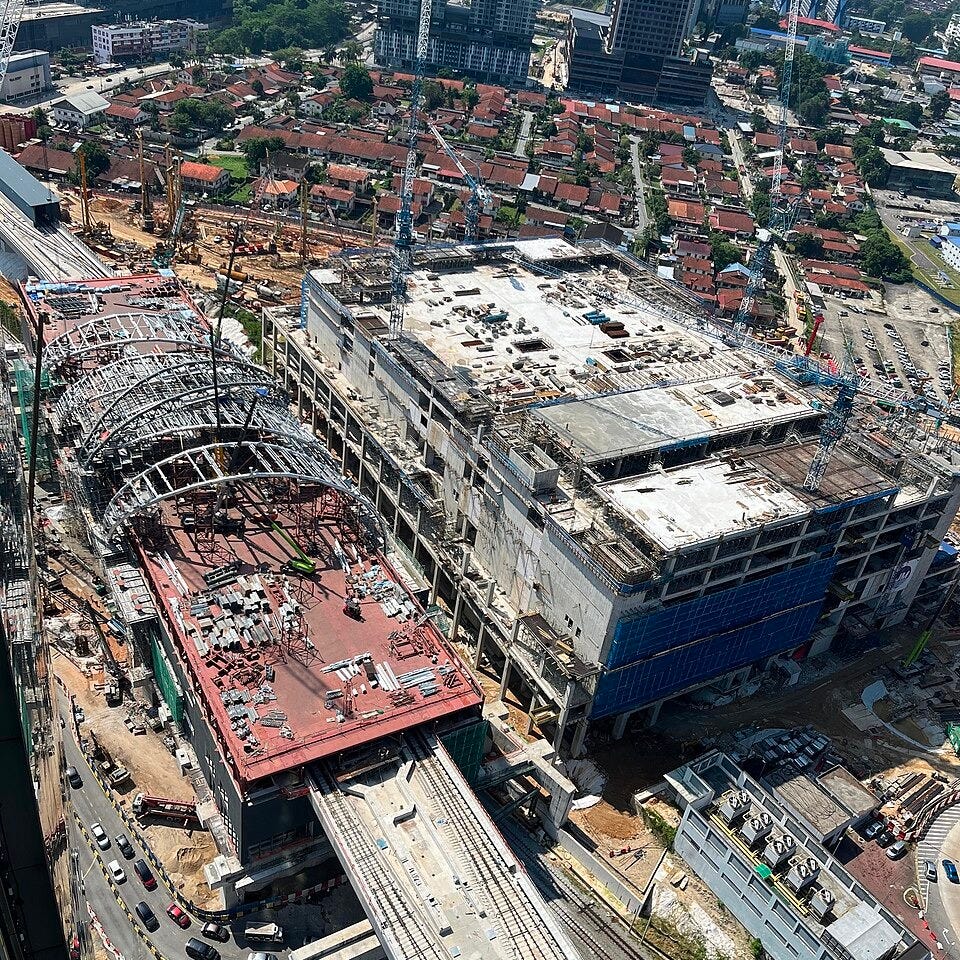
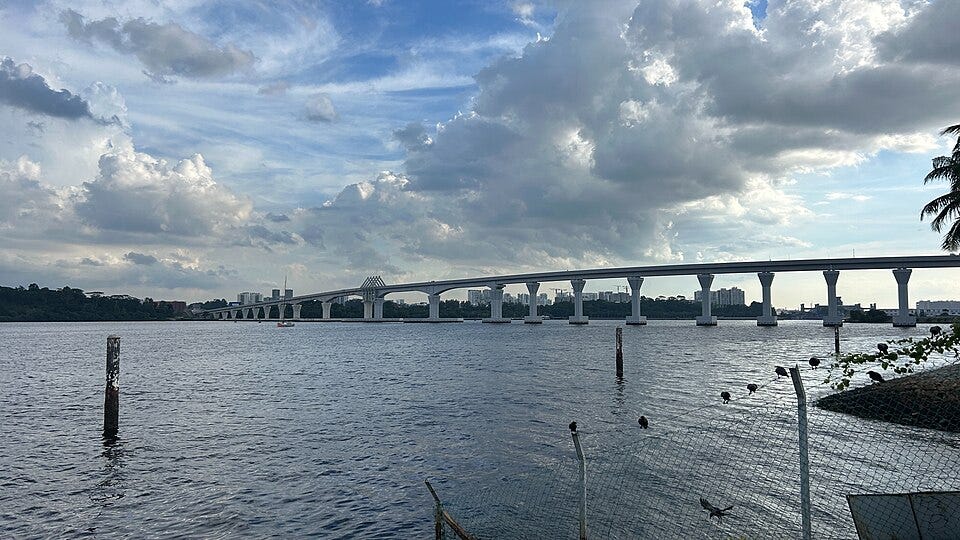
The Sea Crossing Breakthrough (2023–2024): The biggest engineering challenge was solved when teams built a 17.1-meter strong concrete bridge over the water that connected Malaysia’s Pier 47 to Singapore’s Pier 48. It hangs 26 meters above the Straits of Johor and connects Bukit Chagar in Johor Bahru with Woodlands North in Singapore
Systems & Track, Trials: The trains are manufactured by the China Railway Rolling Stock Corporation (CRRC), which produces high-capacity trains capable of carrying over 600 passengers each. With a peak frequency of a train every 3.6 minutes, high-speed integration testing at the Singapore Rail Test Center (SRTC) has proven that the automated signaling systems are ready for prime time.
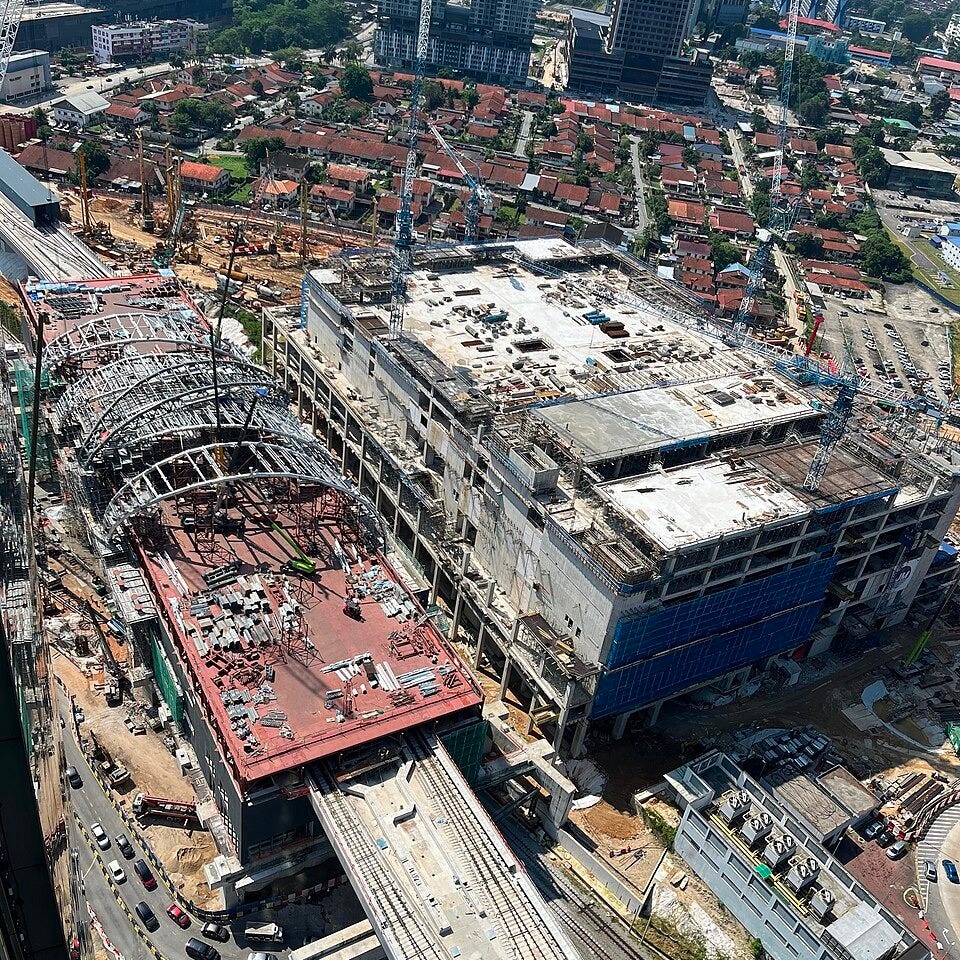
RTS Link Bukit Chagar station 6 July 2025 (Photo: Wikimedia Commons)
🏆 The Wins
Although the RTS Link is widely celebrated as a regional triumph, its success relies on balancing a set of pros and cons.
On the winning side, the system’s most significant operational breakthrough is its co-located Customs, Immigration, and Quarantine (CIQ) layout. By allowing commuters to clear both Malaysian and Singaporean border checks at their departure point, the project removes the secondary queues that have long plagued cross-border travel.
Once the train arrives, passengers can simply step off the platform and walk straight out into the city. By carrying up to 10,000 travelers per hour, this electric shuttle will eliminate tens of thousands of cars and motorcycles from the road each day, helping lower the border’s carbon footprint and making commutes from hours to just 5 minutes.
This massive change in accessibility is already helping the local economy, fueling a real estate boom in Johor Bahru, where property values around the Bukit Chagar station are climbing rapidly due to strong demand from local buyers and Singaporean investors seeking lower living costs.
⚠️The Remaining Challenges
However, concerns surrounding the system’s actual infrastructure could easily shift the traffic from the bridge to the platform. The biggest worry is the threat of platform overcrowding: a five-minute train ride won’t mean much if connecting lines, like Singapore’s Thomson-East Coast Line, or local feeder buses can’t clear the peak-hour crowds fast enough.
Fares are another issue. If ticket prices are scaled too heavily toward the stronger Singapore Dollar to recover building costs, the line risks pricing out the very Malaysian workers who need it most, pushing them right back onto the Causeway on their motorcycles.
There is also doubt about the project’s scale. Choosing a lighter, cheaper LRT system instead of a heavy rail system means the network might reach its capacity long before the region’s economic growth slows.
💰💹 The Economic Impact
The RTS acts as the structural foundation for the upcoming Johor-Singapore Special Economic Zone (JS-SEZ).
During recent high-level diplomatic meetings, both countries welcomed strong progress and stated they expect the master plan to be finalized in the near future to accelerate trade, investment, and cross-border economic integration.
Singapore President Tharman Shanmugaratnam pointed to the JS-SEZ and the RTS Link as two flagship initiatives demonstrating the shared ambition to deepen economic integration.
The infrastructure is scaling up significantly on both sides to catch the incoming human wave:
Singapore's Woodlands Gateway: Plans have been unveiled for a transport hub in Woodlands, linked directly to the Johor Bahru-Singapore Rapid Transit System and the Woodlands North MRT station. According to JTC Corporation tender details, the mixed-use transport hub sits on a 5.66-hectare site and will feature a network of underground roads to take heavy vehicles and trucks directly to industrial offices, keeping the ground level free of heavy traffic.
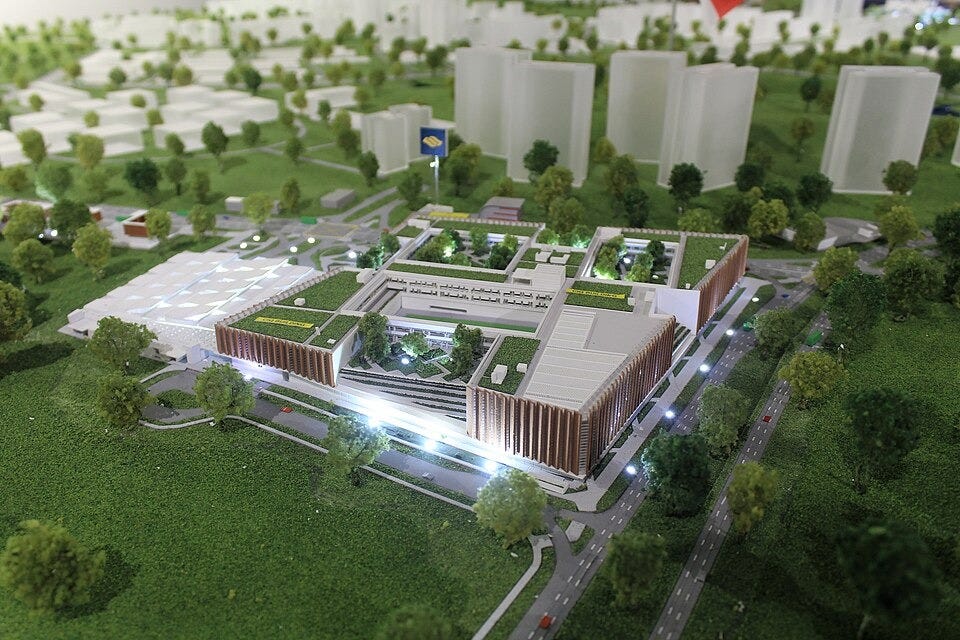
Johor's Bukit Chagar Transformation: In Malaysia, it was announced that the four-floor station building will be built within a massive development that includes a transport hub, apartments, and shops.
🪴Environmental Impact
The environmental stakes of the RTS are crucial. Currently, thousands of vehicles wait on the Causeway for hours every single day, creating a severe localized air pollution corridor over the Tebrau Strait.
By shifting commuters to an all-electric rail system, the RTS acts as a massive environmental shield. Pulling private vehicles off the road in favor of high-frequency electric trains will lower carbon emissions along the border, aligning both Singapore and Malaysia with their regional sustainability commitments.
🧭 The Bottom Line
No longer just a political talking point, the Singapore-Johor RTS Link is practically a finished deal, reshaping the regional landscape. Once operations begin, this train line will do much more than move people—it will tie the economic fortunes of both nations together for the next generation.
Need More Angles?
Channel News Asia Lack of clarity on JB rail plans heightens bottleneck fears ahead of RTS Link launch
EDB Singapore Johor-Singapore Special Economic Zone (JS-SEZ) Framework and Bilateral Cooperation
Free Malaysia Today Singapore unveils plans for Woodlands hub to link with Johor RTS
Land Transport Authority Johor Bahru – Singapore Rapid Transit System Link
Ministry of Transport Joint Statement by Singapore and Malaysia on Resumption of the Johor Bahru – Singapore Rapid Transit System Link Project
New Straits Times RTS Link to be nation’s busiest gateway; 90pct complete ahead of Jan 1 launch
The Straits Times Upcoming Woodlands Gateway to have major transport hub with retail, park and office spaces
(AKO/QOB)