



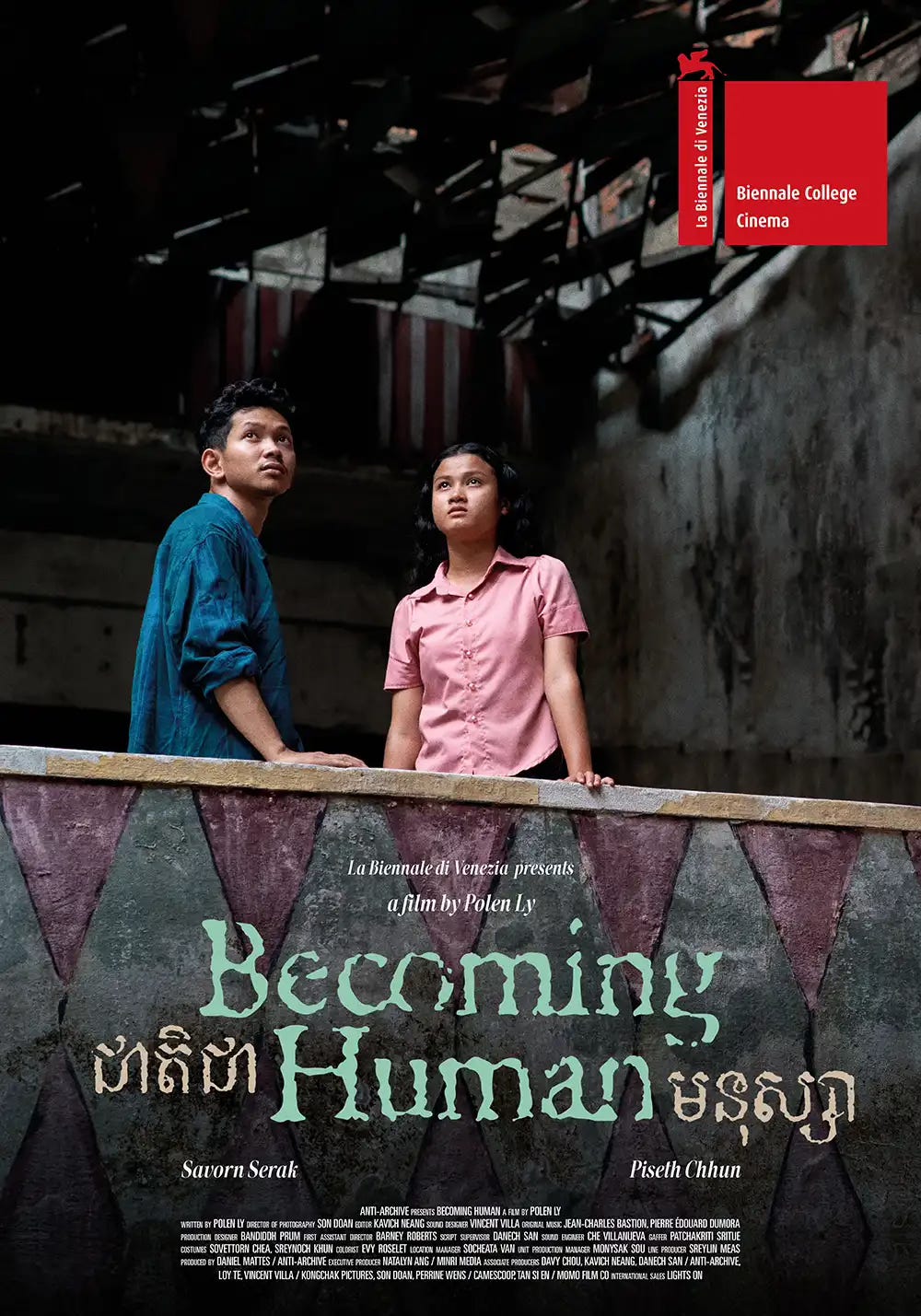
What is it about?
In Battambang, Cambodia, Thida is the spirit guardian of a decaying old cinema, her existence suspended between the living world and the afterlife. For decades, she has protected the theatre as a quiet act of stewardship for what remains of the past.
When the building is threatened with demolition, Thida is forced to confront a difficult choice: to move on to her next life or remain earthbound. Her resolve is complicated when she meets Hai, a journalist who once visited the cinema as a child and has now returned to document its final days.
As their unexpected bond deepens, their relationship becomes a dialogue between past and present, tradition and change. While Thida faces the inevitability of rebirth, Hai struggles with the loss of his own roots, including a pagoda threatened by development.
Through their connection, the story explores spiritual transition and personal attachment against the backdrop of Cambodia’s rapidly shifting social and economic landscape.
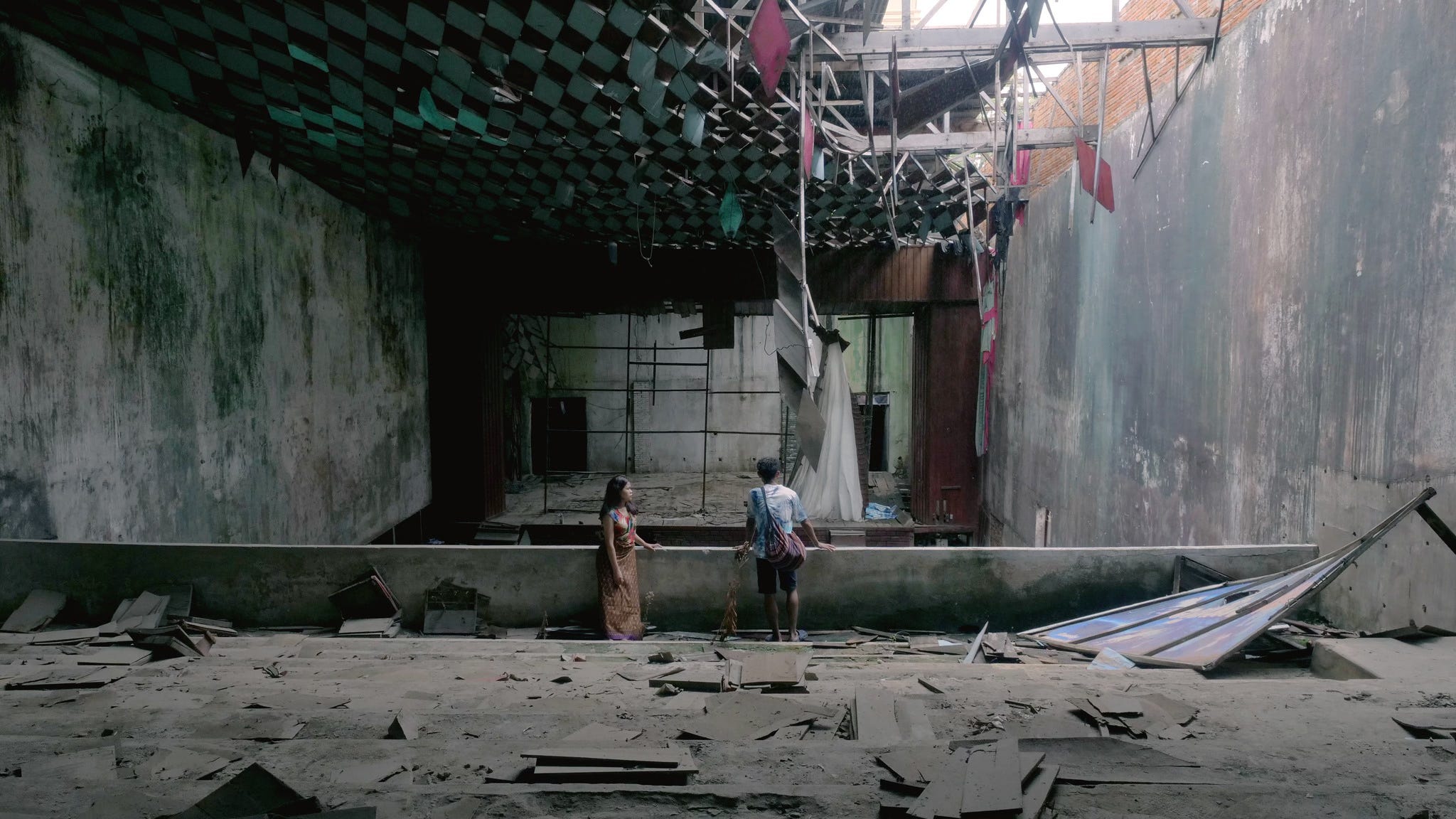
What’s in Behind the Scene?
Becoming Human is the debut feature film by Cambodian director Polen Ly.
The project was developed through the prestigious Biennale College Cinema, an initiative by La Biennale di Venezia that supports emerging filmmakers by providing mentorship and resources to produce micro-budget features.
Following its completion, the film premiered at the 2025 Venice International Film Festival before continuing its journey to other major international festivals.
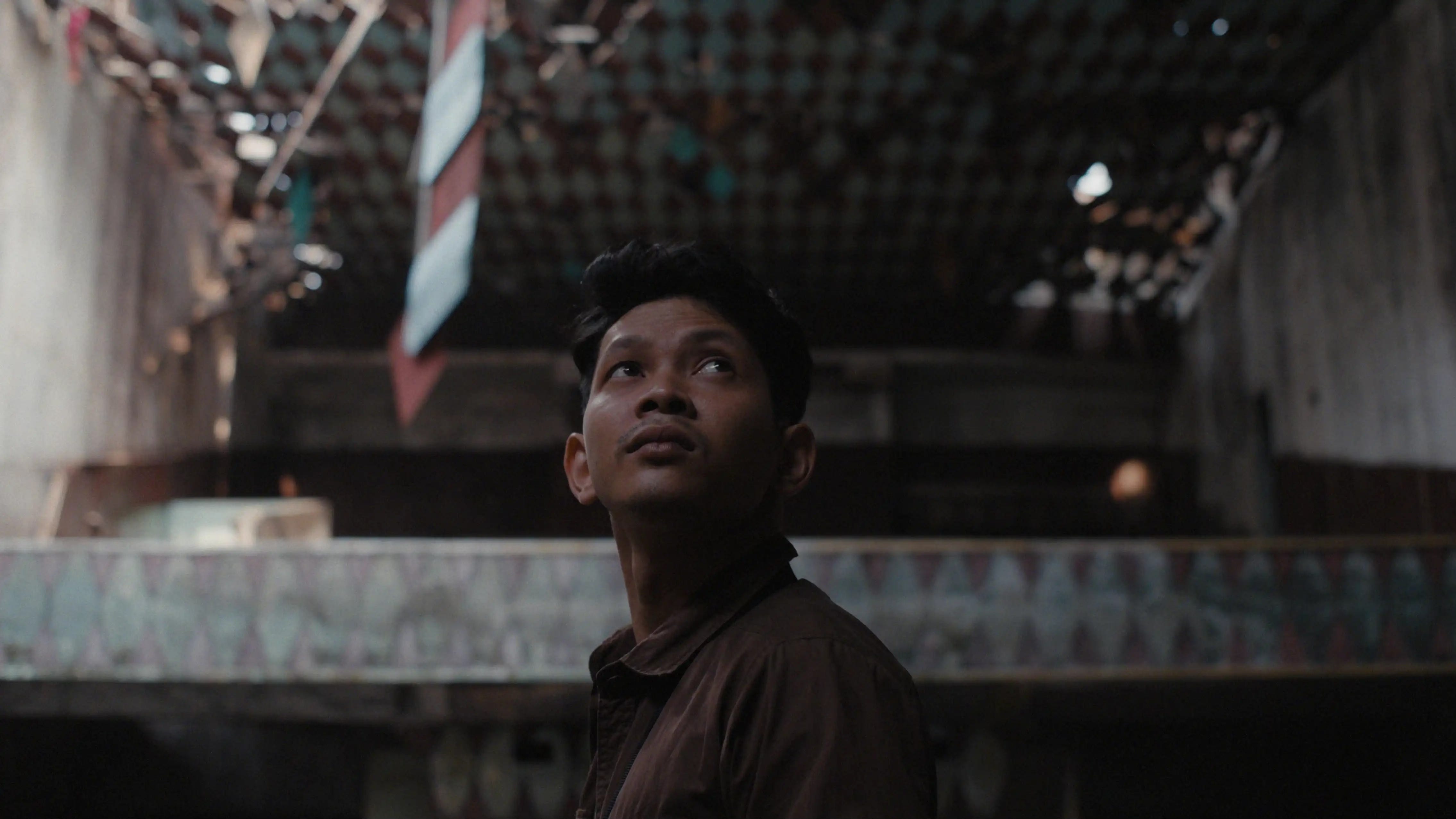
What’s interesting?
Is becoming human that unbearable?
In his statement, Polen Ly reflects on how Becoming Human emerged from a desire to interrogate what it means to be human within a landscape shaped by historical trauma and rapid transformation.
The film weaves together two temporal perspectives: Thida, a wandering spirit whose existence is marked by the unresolved trauma of the Khmer Rouge period (1975–1979), and Hai, a contemporary figure living in the 2020s who confronts the loss of his home as a result of urban redevelopment.
The legacy of the Khmer Rouge regime, whose radical ideological project led to the systematic dismantling of social, cultural, and institutional life, resulting in the deaths of approximately two million people, continues to shape the lived realities of subsequent generations.
Rather than treating this history as a closed chapter, the film situates individual experiences within a broader historical continuum, emphasizing how collective trauma persists beyond its immediate temporal frame.
Both Thida and Hai are defined by the loss of places central to their identities: her abandoned cinema and his threatened pagoda.
These parallel losses mirror a broader national condition in which Cambodia’s accelerated urban expansion and rural-to-urban migration endanger cultural memory and communal spaces.
As economic transformation brings both opportunity and precarity, the film situates its characters within a fragile environment shaped by development pressures, environmental vulnerability, and unresolved historical wounds.
Within Becoming Human, the connection between Thida and Hai functions as a metaphor for an intergenerational encounter.
Beyond the weight of historical trauma, they share a quiet nostalgia for Cambodian cinema, recalling moments of collective joy that endure despite the violence and loss that surround them. These memories suggest that cultural affect and shared imagination persist even in the aftermath of catastrophe.
The film ultimately confronts the necessity of change and the uncertainty of rebirth.
Thida’s decision to flee from reincarnation raises a haunting question: Is remaining a wandering spirit preferable to becoming human? This question resonates sharply in a contemporary moment marked by war, ecological crisis, and economic instability, where history appears to repeat itself without a clear promise of progress.
Yet the film’s most profound gesture lies in its embrace of fragility, both human and ecological, not as a weakness, but as a condition from which resilience may emerge.
Through compassion, shared memory, and communal bonds, Becoming Human suggests that the capacity to endure and transform, rather than escape the past, is what ultimately defines humanity.
Though its drifting structure may test the viewer’s patience, Ly’s contemplative approach evokes a sensory and philosophical mode of cinema, one that provokes reflection and invites us to reconsider what it truly means to be human.

Devina Sofiyanti is an alumnus of the Goedam Campus Bucheon International Fantastic Film Festival 2024, Reykjavik Talent Lab 2023, and FLY Film Lab 2019. Her short film, Heirlooms, was screened at the Reykjavik International Film Festival, Jogja-NETPAC Asian Film Festival, Fantastic Zagreb, Final Girls Berlin, Terror Molins, and the Portland Horror Festival, among others.
In November 2024, Heirlooms became the first Indonesian horror short film to be picked up by Alter. Her latest short, Whispers of Exiles, was in the short film competition at the Cinema at Sea Okinawa Pan-Pacific 2025 and in the Women International Filmmakers Festival 2025. Now, the short film is still traveling to some film festivals.
Her debut feature project, The Heirlooms, was selected by AFIS in 2022, Torino Film Lab Extended 2022, Seapitch Bangkok ASEAN Film Festival 2022, Produire Au Sud x TAICCA 2023, Ho Chi Minh International Film Festival x Autumn Meeting Project Market 2024, Goedam Campus BIFAN 2024, Pitching Forum Jakarta Film Week 2024, and Brussels Genre Film Market 2025. This feature project won the Bucheon Award (Goedam Campus Category) at the BIFAN Project Market and Development Grant at Jakarta Film Week-Net.
(NZL/QOB)