




🍽️ Opening
The best way to experience a country’s culture is by tasting it.
😄 Now, if you’re thinking of doing something wild, like licking the “Welcome to Singapore” sign 🇸🇬 or drinking the water from the 🦁 Merlion statue, please don’t.
🤭 Let’s keep those intrusive thoughts to ourselves.
🍜 Because the culture we’re going to taste today is, of course, food.
⭐ And especially when that food comes with a Michelin star hanging on the wall, people flock to it.
🌏✨ And Southeast Asia has plenty of those stars shining.
🎙️ Let’s talk about it.
👋 Hello and welcome to The Southeast Asia Desk Weekly Dispatch Podcast. I’m Akasha Viandri.
🧭🌏 This is where we slow down the headlines and make sense of the stories shaping Southeast Asia.
⭐ Who’s Michelin, Anyway?
🍽️ A wise man once said,
“Food feeds your stomach, but good food feeds your soul.”
😄 And that wise man... is me.
But don’t you agree?
⭐ Especially when a restaurant is recognized by the Michelin Guide, it just hits differently.
🤔 Now, some of you might be wondering...
What exactly is the Michelin Guide?
⭐ Is it the same thing as a Michelin Star?
🛞 Who is Michelin, anyway?
🇫🇷 Well, the Michelin Guide is a pocket-sized guidebook first published over a century ago by the French tyre company Michelin, founded by brothers André and Édouard Michelin.
💡 So... that basically answers both the “what” and the “who” of Michelin.
❓ But that raises another question.
How did a tyre company create one of the most prestigious recognitions in the culinary world?
📖 Well... here’s the story.
🚗 The Michelin Guide was created to encourage people to drive more.
Back then, driving wasn’t nearly as convenient as it is today.
🛣️ Road networks were limited, ⛽ petrol stations were scarce, and long-distance travel required a lot more planning.
🗺️ So the guide included practical information for motorists, from maps and fuel stations to tyre repairs.
🛞 The more people drove, the faster their tyres wore out.
💰 Which meant they needed to buy new ones.
🧠 A pretty smart business strategy, if you ask me.
🍴 Later, the Michelin Guide added restaurant recommendations and began charging for the guidebook after the brothers discovered that people were using the free copies to prop up workbenches in garages.
😂 Apparently, people only value what they pay for.
📈 As the guide became more influential, especially its restaurant section...
⭐ Then, in 1926, Michelin introduced what we now know as the Michelin Star, giving restaurants a star rating based on specific criteria.
🏆 Who would’ve thought that today, a Michelin Star is the Oscar of the culinary world?
📱 Now, the Michelin Guide is no longer just a pocket-sized book.
🌐 It’s available online, featuring a carefully curated selection of restaurants recommended by Michelin Guide’s inspectors.
⚠️ But here’s the thing.
❌ Not every restaurant listed in the Michelin Guide receives a Michelin Star.
🕵️ To earn one, restaurants are evaluated by anonymous inspectors.
Whether they’re posing as a regular customer grabbing lunch or someone on a business trip.
😅 Well, I guess it depends on the mood.
💳 And yes, they pay their own bills.
🤫 Once the inspectors leave the table, only they and the universe know the result.
🌍 Today, Michelin’s recognition extends far beyond fine dining.
🍜 The Bib Gourmand celebrates restaurants that serve great food at great value.
🛎️ The Michelin Key recognizes exceptional hotels.
🏅 The Michelin Special Awards celebrate outstanding individuals in the hospitality industry.
🍇 And starting in 2026, Michelin will introduce Michelin Grape, recognizing not only outstanding vineyards, but also the people behind them.
🍜 Michelin Recognition in Southeast Asia
🌏 Now let’s talk about Michelin recognition in Southeast Asia.
⭐ Five countries in the region currently have Michelin Stars:
🇲🇾 Malaysia,
🇹🇭 Thailand,
🇸🇬 Singapore,
🇵🇭 the Philippines, and
🇻🇳 Vietnam.
🏆 And among them, 🇹🇭 Thailand and 🇸🇬 Singapore are leading the way.
🍜 But Southeast Asia is unique.
✨ Michelin recognition here isn’t reserved only for fine dining and high-end gastronomy.
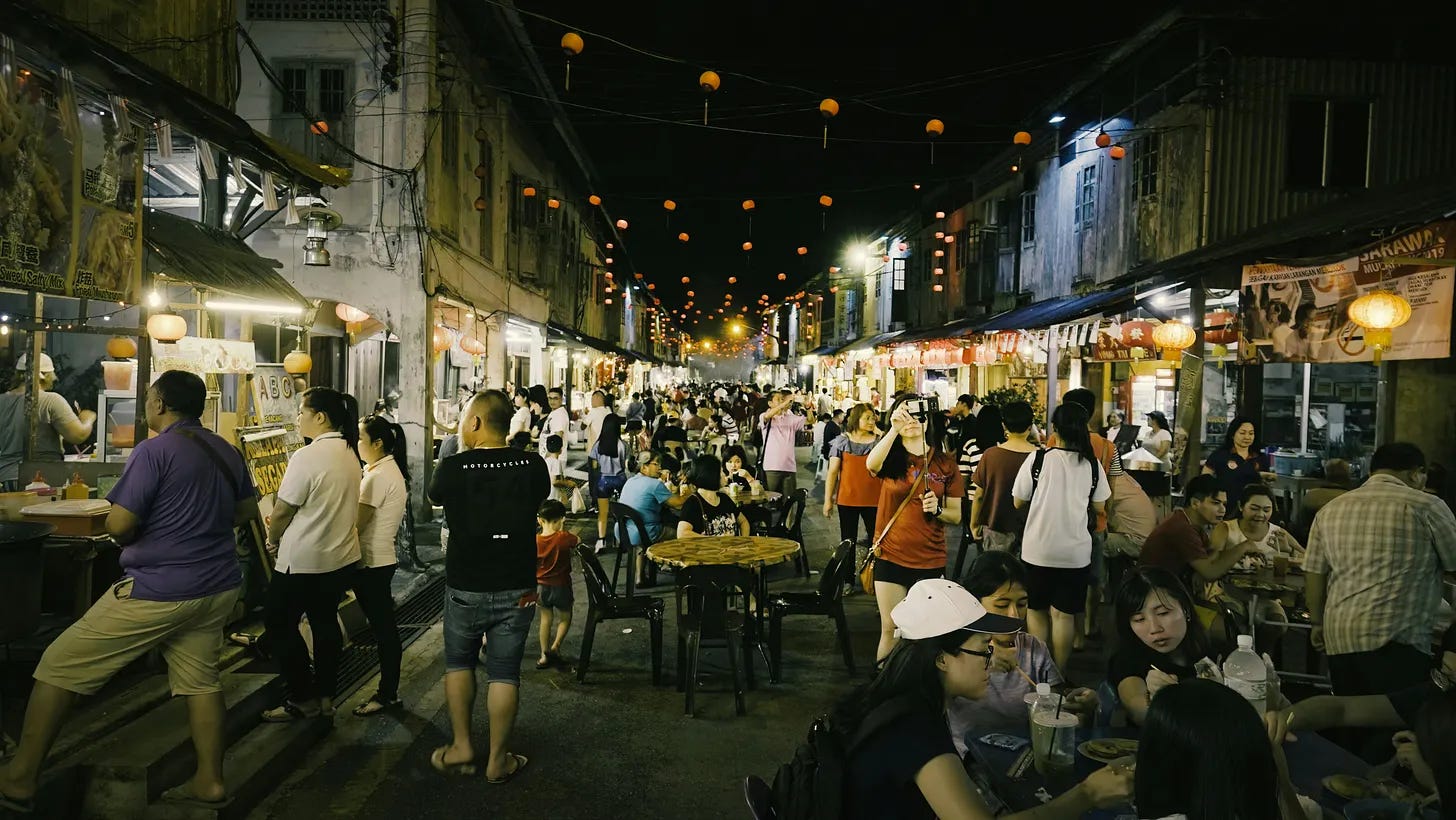
🥢 It also celebrates something much more familiar: street food.
❤️ Southeast Asia proves that some of the world’s best food doesn’t always come with white tablecloths.
🥇 Among those five countries, 🇸🇬 Singapore has the highest number of Michelin-recognized street food stalls.
🏅 UNESCO has even recognized Singapore’s Hawker Culture as an Intangible Cultural Heritage.
🥭 Next comes 🇹🇭 Thailand.
😋 Well... who can resist mango sticky rice?
🍛 Then there’s 🇲🇾 Malaysia.
🍲 And of course, 🇻🇳 Vietnam.
🍜 You’ve heard of pho, right?
✨ That’s one of the country’s most iconic street foods.
💸 Why Michelin Isn’t Everywhere
❓ But six Southeast Asian countries are still missing from the list:
🇮🇩 Indonesia,
🇰🇭 Cambodia,
🇱🇦 Laos,
🇲🇲 Myanmar,
🇧🇳 Brunei, and
🇹🇱 Timor-Leste.
🤔 Which is surprising.
🍽️ Because the food is certainly amazing.
🇮🇩 Take Indonesia, for example.
🥇 CNN once named rendang the World’s Most Delicious Food.
📈 And the potential?
💰 In 2020 alone, the country’s culinary sector contributed around IDR 455 trillion, or roughly 41 percent of the country’s creative economy GDP.
🚪 So, shouldn’t Michelin be knocking on our door?
👋 Turns out, we’re the ones who have to knock first.
💡 Well, there are many reasons. But let’s focus on one.
💵 The multi-million-dollar entry ticket.
🤔 You might think Michelin simply decides to show up in a country.
🙅 Not exactly.
🤝 For Michelin to enter a country, governments or private companies need to partner with the Michelin Guide first.
🇹🇭 For example, Thailand’s Tourism Authority has extended its partnership with the Michelin Guide through 2026.
🇻🇳 Vietnam, meanwhile, welcomed the Michelin Guide in 2023 with the private company Sun Group as its destination partner.
🙋 “But wait,” you might ask.
💬 “I thought the inspectors paid for their own meals?”
✅ They do.
💼 But countries still pay for the partnership itself.
🇦🇺 Take Australia’s debut, for example.
🆕 This year, the South Australian Government paid an undisclosed amount to bring Michelin to the state for the very first time.
💸 Believe me, that partnership isn’t cheap.
💰 It can cost anywhere between US$750,000 and US$1.5 million.
🎙️ Closing
🤔 So maybe...
Just maybe...
🧮 Some countries are still doing the math.
Is the Michelin Guide worth the investment?
⭐ Or is it simply a matter of prestige?
💭 But whatever the answer is...
🍽️ Good food is still good food.
Whether it comes with a Michelin Star ⭐
🥢 or from a humble street-side stall that’s been serving the same recipe for generations.
❤️ Because at the end of the day, what makes a meal memorable isn’t just the stars on the wall.
👨🍳👨👩👧👦 It’s the story, the people, and the culture behind every bite.
🎙️ I’m Akasha Viandri, and this has been The Southeast Asia Desk Weekly Dispatch Podcast, where we slow down the noise and follow the region’s compass. 🧭🌏
📬 If you enjoyed this episode, subscribe to our newsletter at thesoutheastasiadesk.com, and join us again next weekend for stories to linger over, one weekend at a time. ✨


