



🎯 Main Takeaway
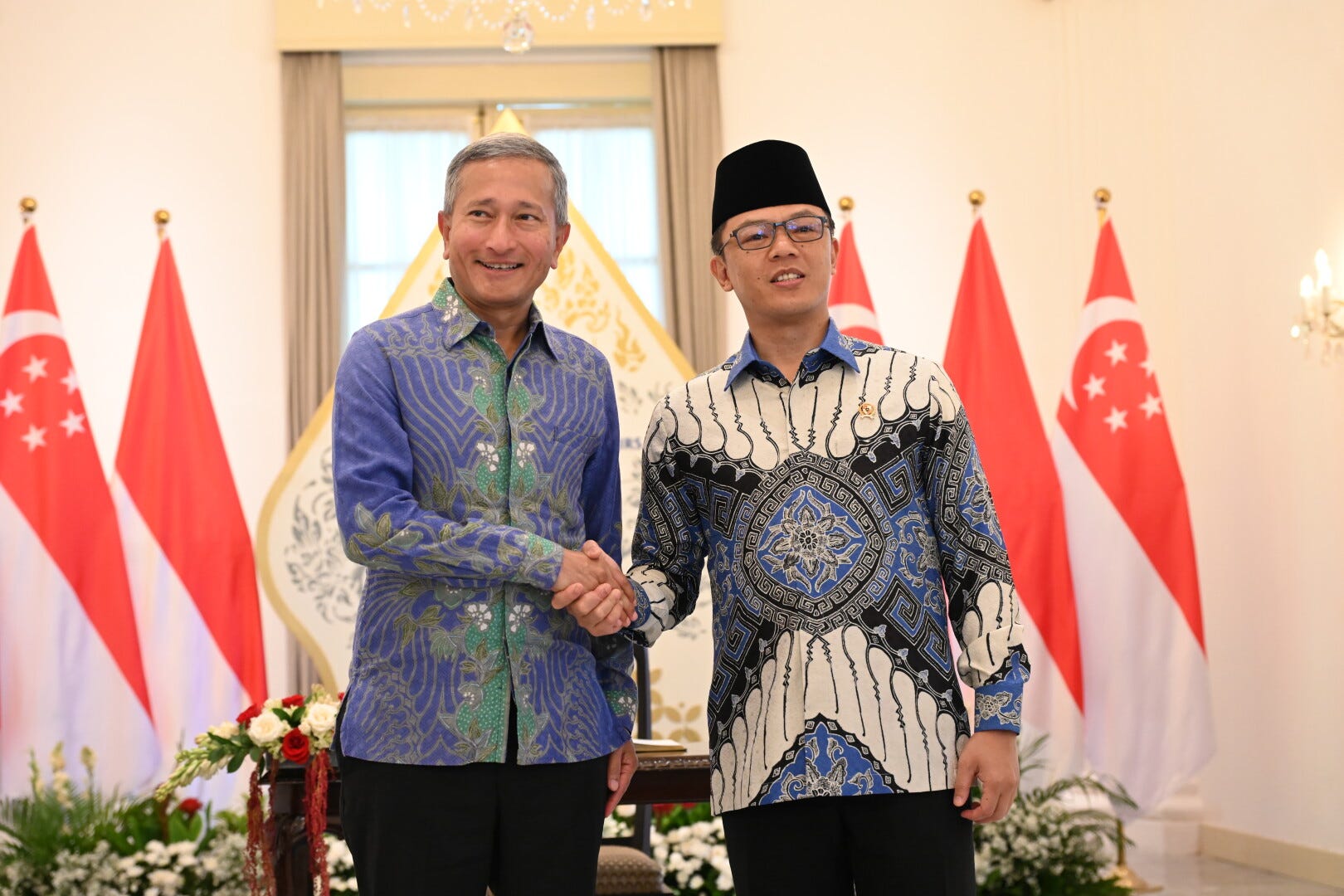
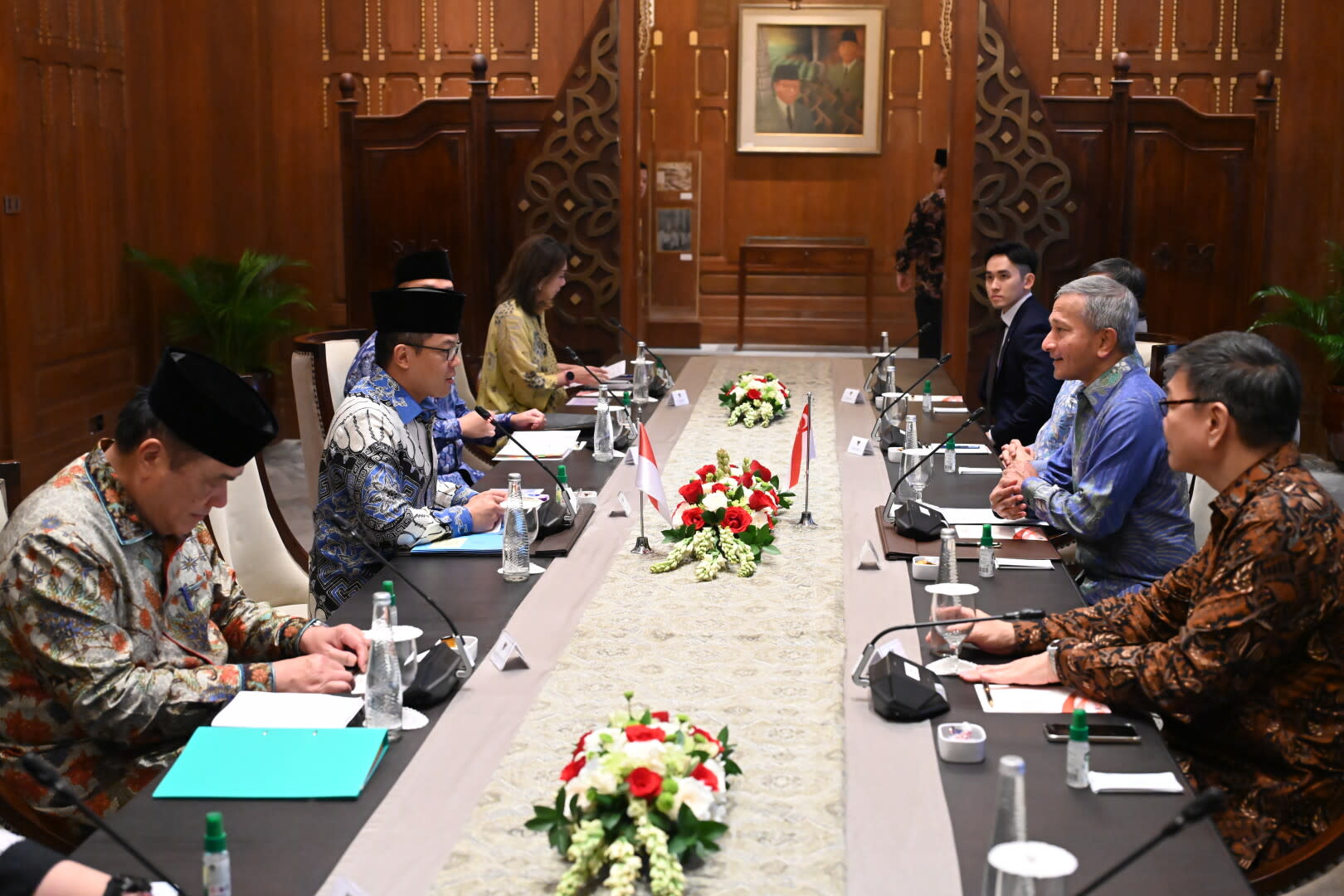
Jakarta, Indonesia — Indonesian Foreign Minister Sugiono received Singaporean Foreign Minister Vivian Balakrishnan for a working visit in Jakarta on Tuesday (5/12).
The meeting was part of preparations for the Indonesia–Singapore Leaders’ Retreat 2026 and the lead-up to the 60th anniversary of diplomatic relations between both countries in 2027 — branded as “RISING 60.”
“Singapore is an important strategic partner for Indonesia. Ahead of RISING 60, we want to re-energise the partnership, making it increasingly relevant and impactful for the people of both countries,” - Sugiono
Both sides emphasized that Indonesia and Singapore are not only economic partners, but also strategic neighbors navigating an increasingly unstable geopolitical environment together.
➡️ Insight: The discussion reflects how Jakarta and Singapore are positioning their partnership as a pillar of regional stability amid growing global uncertainty.
🌊 Historical Background: From Confrontation to Strategic Partnership
Indonesia–Singapore relations were not always smooth.
Following the Indonesia–Malaysia Confrontation (1963–1966), bilateral ties initially entered a difficult phase, particularly after the execution of Indonesian marines Usman and Harun in Singapore. However, both countries gradually rebuilt trust through diplomacy, cultural understanding, and personal ties between leaders.
➡️ Key Turning Point: Former Singaporean diplomat Lee Khoon Choy played an important role in improving relations by encouraging Prime Minister Lee Kuan Yew to visit the graves of Usman and Harun at Kalibata Heroes Cemetery in Jakarta — a symbolic gesture that helped ease tensions.
Former Singapore Ambassador to Indonesia Barry Desker noted that trust between President Soeharto and Prime Minister Lee Kuan Yew became the foundation of modern Indonesia–Singapore relations.
Two strategic understandings became central:
Indonesia reassured Singapore that there were no territorial ambitions or claims.
Singapore reassured Indonesia that it was not a “third China,” but part of Southeast Asia.
➡️ Result: Political trust later expanded into economic integration, investment cooperation, and regional coordination.
🧠 Culture & People-to-People Ties
Several speakers during the launch of the book The Next Chapter: Envisioning the Future of Indonesia-Singapore Relations in Jakarta (2025) emphasized that cultural understanding remains the invisible backbone of bilateral relations.
Experts highlighted how:
Malay intellectuals from Singapore and Malaysia historically studied language and culture in Indonesia,
Indonesian literary figures such as Chairil Anwar and Pramoedya Ananta Toer remain influential across the Malay world,
diaspora and community networks helped preserve regional closeness despite colonial-era separation.
International relations scholar Bilveer Singh described Indonesia and Singapore as part of “one ASEAN family.”
➡️ Bigger Meaning: The bilateral relationship is not built solely on state interests, but also on long-standing social and cultural interconnectedness.
📡 Why It’s On Our Radar
Several strategic issues dominated the bilateral talks:
⚡ Energy Security: Concerns over Middle East tensions and disruptions to global energy supply chains
🌏 ASEAN Centrality: Renewed commitment to ASEAN unity and regional cooperation
🔋 Green Economy: Expansion of cross-border electricity trade and sustainable energy investment
💰 Economic Integration: Continued development of industrial parks and digital economy cooperation
🌊 Maritime Stability: Importance of open sea lanes and UNCLOS-based regional order
➡️ Bigger Picture: RI–Singapore ties are increasingly moving beyond traditional trade relations toward long-term strategic coordination.
⚠️ Key Impacts
⚡ Energy Vulnerability
The conflict in the Middle East and possible disruptions in the Strait of Hormuz could directly affect Southeast Asia’s energy supplies and inflation rates.
🔋 Green Transition
Both foreign ministers reaffirmed commitments to cooperation in:
renewable energy development,
energy transition,
cross-border electricity interconnection.
The initiatives are expected to improve regional energy efficiency and strengthen connectivity.
💰 Investment Confidence
Singapore remains Indonesia’s largest foreign investor, reaching USD 17.4 billion in 2025, reflecting long-term confidence in Indonesia’s economy.
🏗️ Industrial Expansion
Projects like Nongsa Digital Park and Kendal Industrial Park are expected to expand into broader sustainable industrial cooperation, including the strengthening of Special Economic Zones (SEZs).
🌾 Food Security
Both countries agreed to deepen agribusiness partnerships to strengthen regional supply chains amid global uncertainty.
🌏 ASEAN Stability
Both ministers stressed that ASEAN unity and centrality are essential amid rising geopolitical fragmentation.
📊 Response Measures
🔌 Cross-Border Electricity Trade
Both governments are advancing cooperation on regional electricity connectivity and sustainable power projects.
🏭 Sustainable Industrial Zones
Indonesia and Singapore are exploring the expansion of joint industrial zones to create jobs and strengthen economic resilience.
🌾 Food Security Cooperation
Both sides agreed to deepen agribusiness and food technology partnerships.
🤝 Regional Coordination
Continued support for ASEAN-led diplomacy and rules-based regional cooperation.
🌊 Maritime Cooperation
Singapore highlighted the importance of maintaining safe and open waterways through the Strait of Malacca and the Singapore Strait.
💡 Shared Views and Expectations
🌏⚡ Regional Stability, Energy Security & ASEAN’s Strategic Role
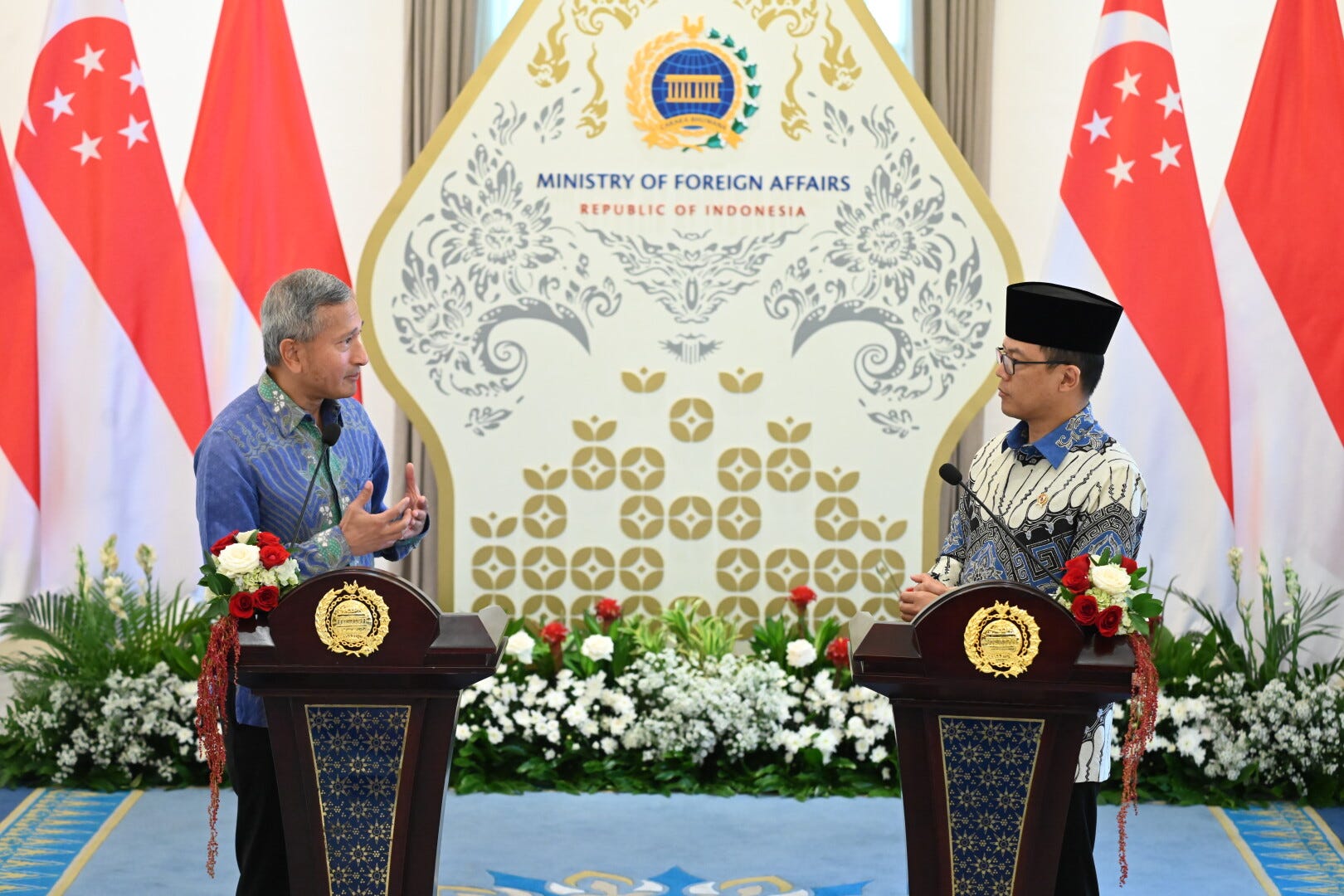
Both Indonesia and Singapore framed the current geopolitical environment as increasingly fragile, particularly due to ongoing instability in the Middle East and its ripple effects on global energy markets, trade routes, and supply chains.
“We continue to emphasize the importance of de-escalation, dialogue, and full respect of international law.”
— Sugiono
The ministers warned that disruptions in strategic waterways — especially around the Strait of Hormuz — could directly impact Southeast Asia through higher energy prices, inflationary pressure, and supply chain instability.
At the same time, both countries see the crisis as a reminder that ASEAN must strengthen regional resilience through deeper economic integration, sustainable energy cooperation, and rules-based diplomacy.
“I see Indonesia as a superpower in energy.”
— Vivian Balakrishnan
Singapore highlighted Indonesia’s vast renewable energy potential — including geothermal, hydroelectric, and solar resources — as critical for Southeast Asia’s long-term energy transition and the future ASEAN Power Grid.
Balakrishnan also stressed that ASEAN’s success depends on maintaining:
open and secure sea lanes,
respect for international law and UNCLOS,
regional stability amid great-power competition.
“The success of Indonesia and effective cooperation in our region can serve as a positive example for the rest of the world.” — Vivian Balakrishnan
➡️ Bigger Insight: Jakarta and Singapore increasingly view their bilateral relationship not only as an economic partnership, but also as a strategic anchor for ASEAN stability in a rapidly changing global order.
⚡ Bilateral Cooperation Priorities
💰 Economy & Investment
Expansion of digital economy cooperation
Continued investment flows
Industrial park development
SEZ strengthening
SIJORI economic integration discussions
🔋 Energy
ASEAN Power Grid
Cross-border electricity trade
Renewable energy investment
Sustainable industrial development
🛡️ Security & Governance
Defense cooperation
Airspace management
Law enforcement coordination
Maritime stability
🌾 Food Security
Agribusiness partnerships
Agricultural technology cooperation
👥 Connectivity
Tourism and people-to-people exchanges continue to grow strongly
Singaporean tourist arrivals to Indonesia reached 1.52 million in 2025
🕊️ Humanitarian Moment
The meeting also opened with condolences over the deaths of three hikers — one Indonesian and two Singaporeans — during a volcanic incident in North Maluku.
Singapore publicly thanked more than 150 Indonesian SAR personnel involved in dangerous rescue operations amid volcanic eruptions.
➡️ Balakrishnan described the rescue efforts as a reflection of the “closeness of the hearts” between Indonesians and Singaporeans.
🏡 Why This Hits Home
🌏 Strategic Neighbors: Indonesia and Singapore describe cooperation as inevitable due to geography
💰 Economic Ties: Bilateral trade reached USD 32.86 billion in 2025
⚡ Energy Future: Indonesia’s renewable energy sector is increasingly tied to regional demand
🌊 Shared Maritime Space: Stability in Southeast Asian sea lanes directly affects both economies
🏛️ ASEAN Role: Both countries see ASEAN centrality as critical amid growing geopolitical rivalry
🤝 Shared History: Decades of trust-building transformed former tensions into one of Southeast Asia’s most important strategic partnerships
📌 The Bottom Line
The RI–Singapore bilateral meeting signals a broader strategic shift:
➡️ From post-Confrontation reconciliation → strategic trust
➡️ From transactional cooperation → long-term strategic alignment
➡️ From bilateral trade → regional resilience building
➡️ From economic partnership → geopolitical coordination
As global instability intensifies, Jakarta and Singapore appear increasingly aligned in positioning ASEAN as a stable, rules-based, and economically connected region.
🔎 Need More Angles?
Kompas, RI-Singapore, Together Riding the Waves and Conquering the Reefs
(JUN/QOB)