



🎯The Main Takeaway
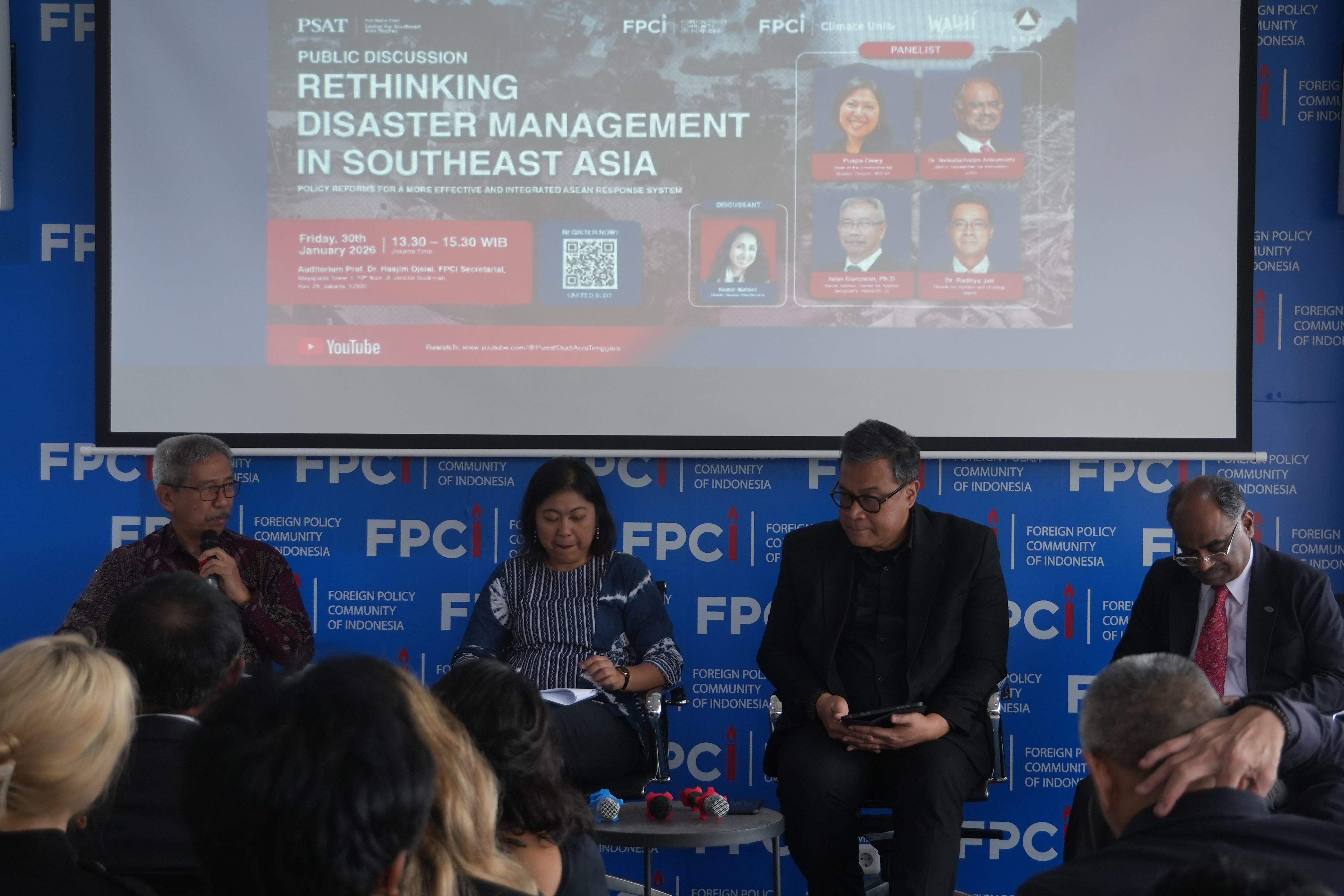
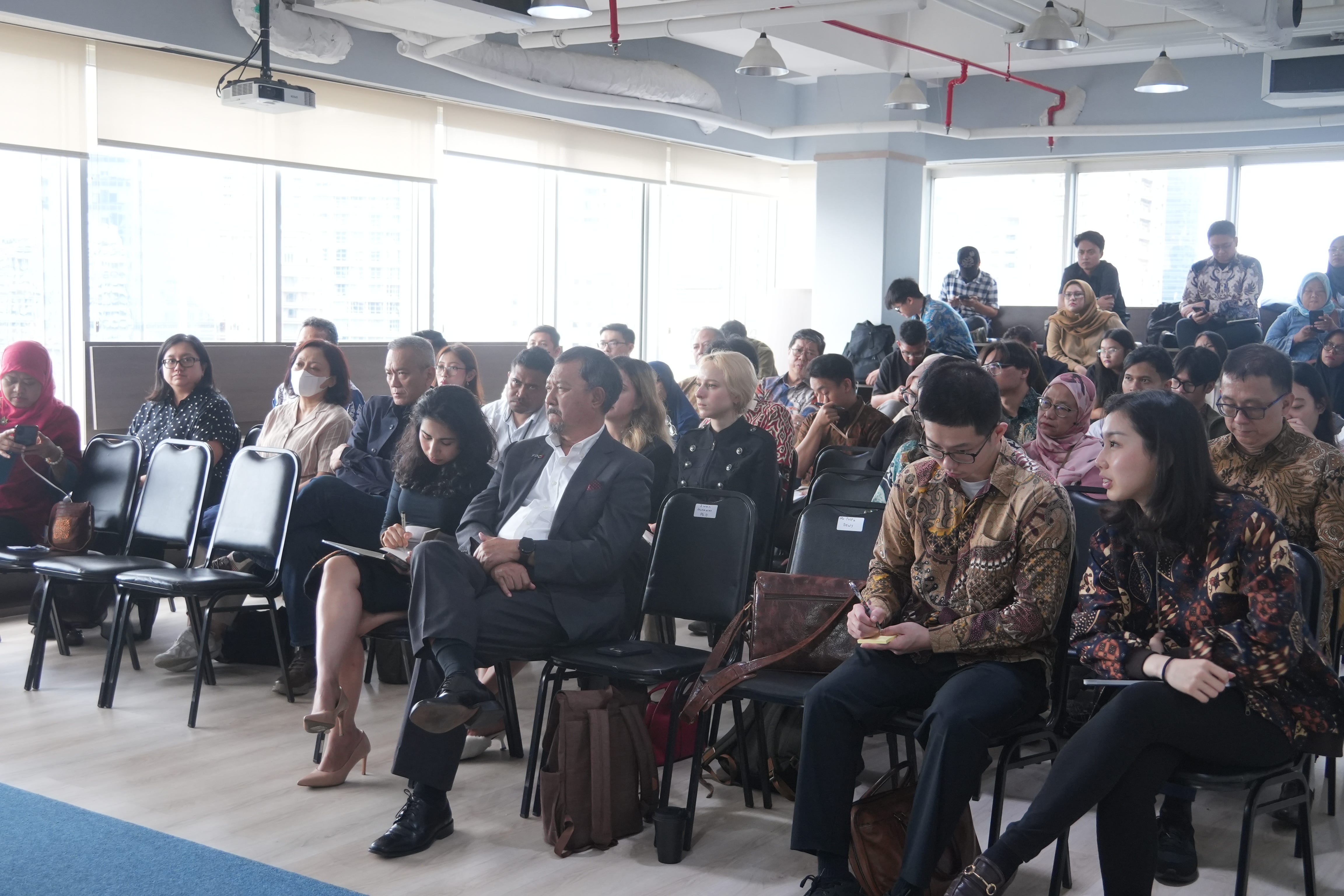
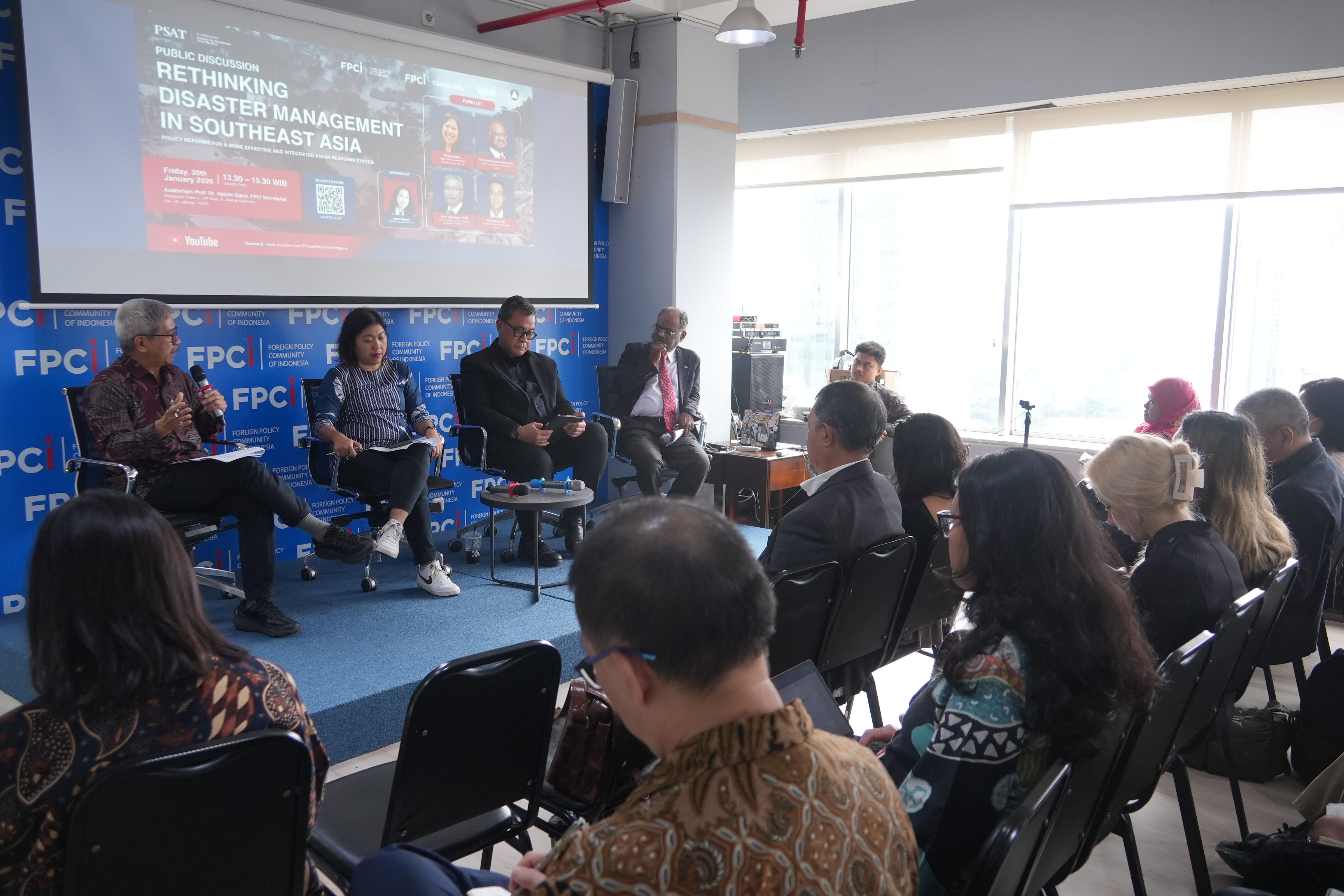
On Friday, 30 January 2026, Pusat Studi Asia Tenggara (PSAT) held a public discussion titled “Rethinking Disaster Management in Southeast Asia” at the Auditorium Hasjim Djalal, FPCI Secretariat, Jakarta. Conducted in English, the discussion brought together diverse perspectives to critically examine how disasters are understood and managed across Southeast Asia.
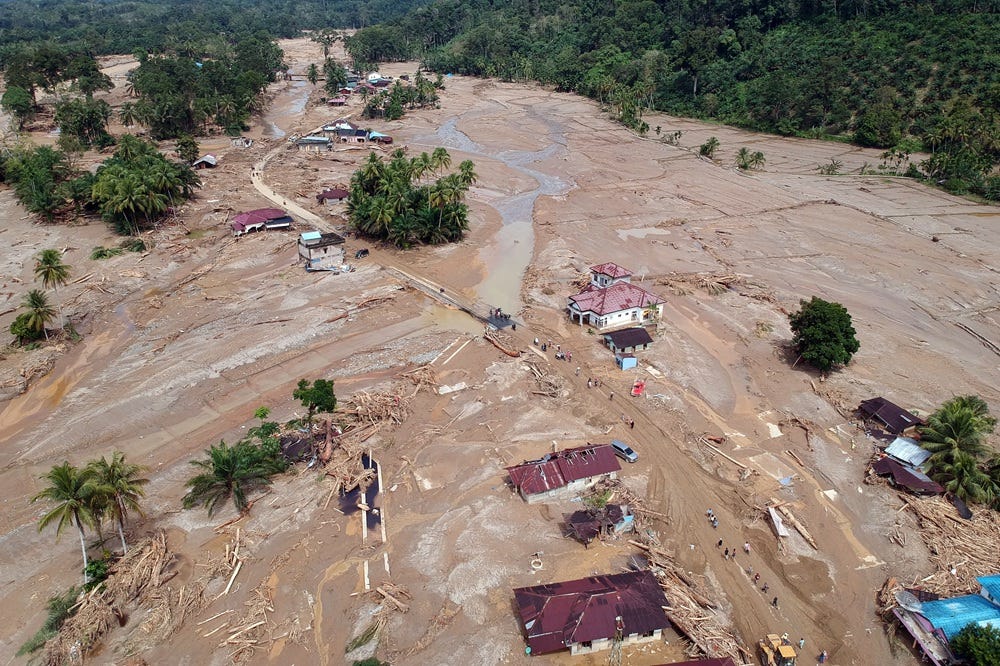
A central message emerged clearly: disasters in the region are rarely “natural.” Rather, they are shaped by development choices, governance systems, and structural inequalities. The discussion emphasized that what turns natural hazards into disasters is often human decision-making — from extractive economic models and weak environmental enforcement to uneven resilience across ASEAN member states.
🌏 Why This Hits Home
For Southeast Asia, disaster risk is no longer episodic — it is structural.
The region’s unique ecological landscape, combined with rapid urbanization and resource extraction, makes ASEAN members particularly vulnerable. Floods, landslides, forest fires, and coastal erosion are not isolated events; they are recurring outcomes of development that prioritizes short-term economic gain over long-term resilience.
The discussion highlighted that environmental damage often impacts those least responsible for causing it: rural communities, indigenous groups, and the urban poor. Poverty, marginalization, and lack of access to land amplify the human cost of hazards.
As a result, disasters have become a social justice issue, not only an environmental one.
📡 Why It’s on Our Radar
This represents a critical conceptual shift with immediate practical implications. Rejecting the term “natural disaster” challenges governments and institutions to move beyond mere emergency response. It places responsibility on development models, environmental enforcement, and social equity as the primary tools for disaster risk reduction. For a region as ecologically and socially vulnerable as ASEAN, this isn’t academic—it’s existential.
⚠️ What’s at Stake
If current patterns persist, Southeast Asia risks normalizing crisis.
Disasters will become more frequent, recovery costs will escalate, and trust between communities and institutions will continue to erode. The burden will fall disproportionately on marginalized populations, deepening inequality and social tension.
For ASEAN, the risk is not a lack of frameworks — but a failure to translate them into equitable, people-centered outcomes.
🧭 The Bigger Picture: Disasters as Political Events
The forum highlighted that disasters are profoundly political. They expose “whose voices matter—and whose do not.” Communities most at risk are often excluded from the planning and policies that shape their vulnerability. Therefore, effective disaster governance is inseparable from democratic inclusion and social justice.
🌐 The Regional Stakes: ASEAN’s Collective Challenge
Southeast Asia’s shared ecosystems and transboundary hazards make regional cooperation indispensable. The discussion acknowledged ASEAN’s existing frameworks but stressed that resilience requires:
Clarity of roles between national, sub-national, and regional actors.
Closing the gaps in financial capacity, technology, and infrastructure among member states.
Sustained political will to prioritize long-term risk reduction over short-term economic gains.
🛠️ Beyond the Headlines: The Path to Resilience
The discussion concluded that resilience cannot be a technical add-on. It must be woven into the fabric of development. Key requirements for the ASEAN society include:
🔄 Shifting Economic Models: From extractive, short-term growth to people-centered and ecologically sustainable development.
🏘️ Empowering Local Agency: Strengthening community-led resilience and ensuring those on the frontlines have a voice in planning.
⚖️ Enforcing Governance: Moving beyond policy documents to rigorous enforcement of environmental and land-use regulations.
🤲 Prioritizing Equity: Ensuring disaster risk reduction (DRR) tackles the root causes of vulnerability, like poverty and land access.
🧾 The Bottom Line
Disasters are not inevitable; they are manufactured. The forum delivered a clear mandate: building resilience in Southeast Asia requires transforming the development and governance systems that produce risk. It's a choice between continuing to manage endless crises or investing in the foresight and equity that prevent them. The time to build resilience is not after the next disaster, but now, before it happens.
(JUN/ELS)