



🎯 The Main Takeaway
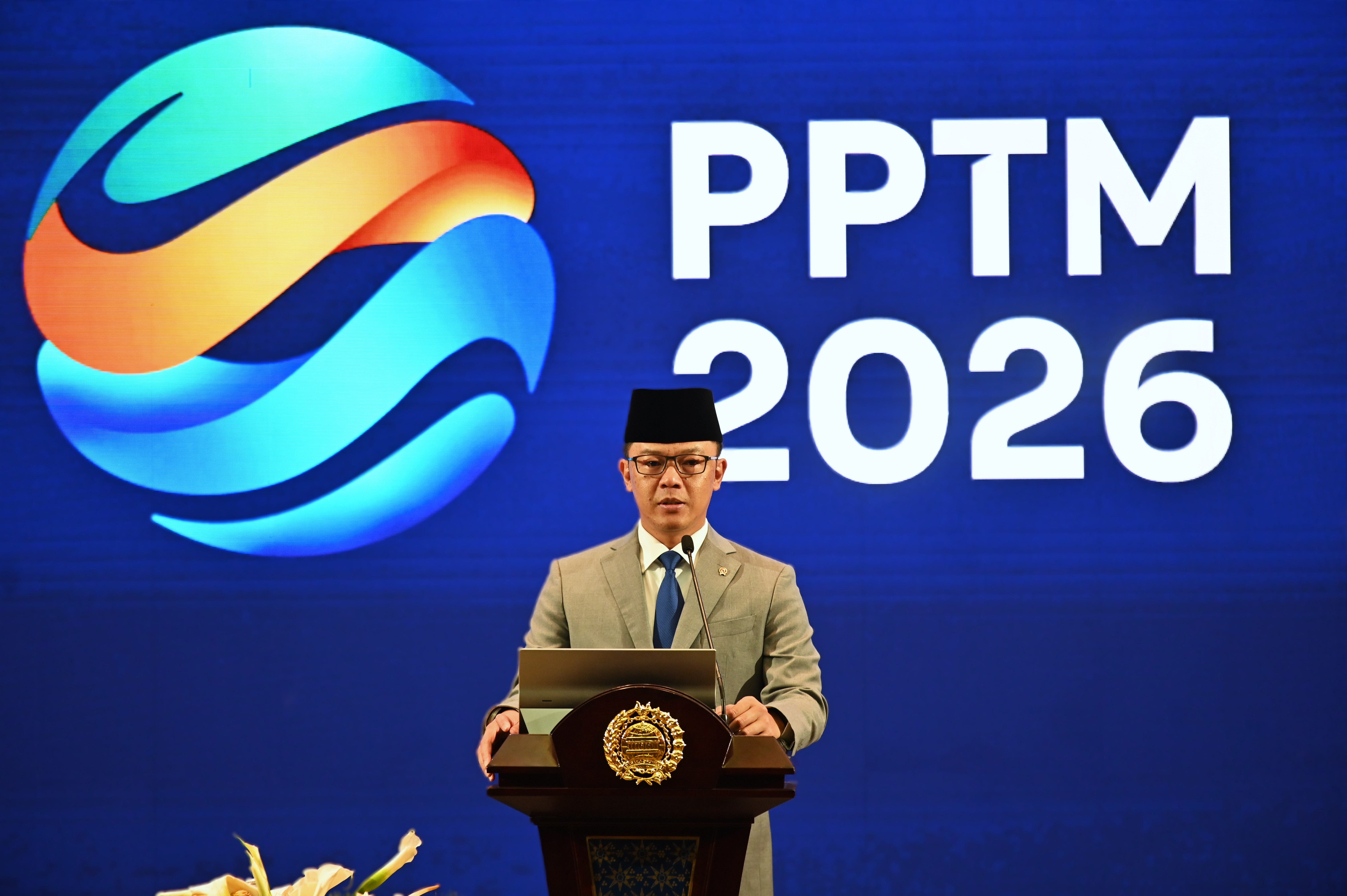
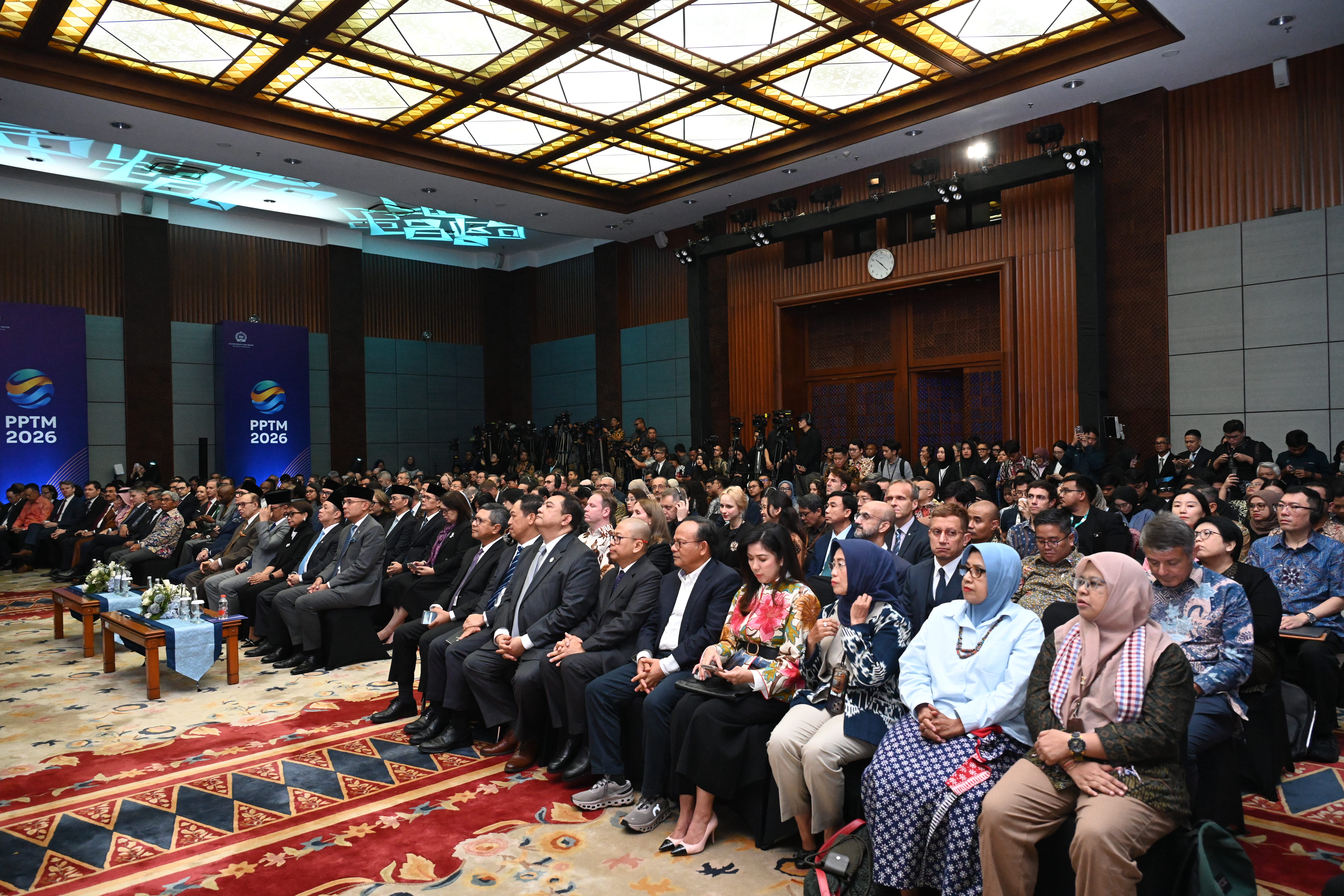
At the Annual Press Statement of the Ministry of Foreign Affairs (PPTM) 2026, Indonesia formally framed “Resilience Diplomacy” as the backbone of its foreign policy—signaling a strategic recalibration in response to a more fragmented, transactional, and pressure-driven global order.
Rather than treating multilateralism, ASEAN centrality, economic diversification, or technology governance as abstract ideals, Jakarta is repositioning them as practical instruments to safeguard national interests, expand strategic room for maneuver, and strengthen national endurance.
“Indonesia needs to strengthen Resilience Diplomacy as a fundamental pillar of its foreign policy—one that is grounded in the needs of the people and national interests.”
~Sugiono, Minister of Foreign Affairs of Indonesia~
🇮🇩 Why This Hits Home
For Indonesia, diplomacy is no longer about prestige or symbolism. It is increasingly measured by delivery: protecting sovereignty, sustaining growth, and shielding citizens from global shocks.
In 2025 alone, the Ministry of Foreign Affairs facilitated the repatriation of 27,768 Indonesian citizens from conflict zones, crisis areas, and transnational crime networks—underscoring diplomacy’s evolving role as a frontline instrument of national resilience.
“In an uncertain world, only countries that are strong at home will have leverage abroad.”
— Sugiono, Minister of Foreign Affairs of Indonesia
This message resonates domestically as public expectations shift toward diplomacy that delivers jobs, energy security, food stability, and real protection overseas.
👀 Why It’s on Our Radar
Indonesia’s approach stands out because it rejects two dominant global narratives:
Blind faith in a weakening multilateral system
Total abandonment of rules in favor of raw power politics
Instead, Jakarta is pursuing a third path—remaining inside global and regional institutions while actively pushing for reform.
“Indonesia will not place its national interests in the hands of a multilateralism that does not work. But Indonesia will also not entrust its future to a world without rules.”
~Sugiono, Minister of Foreign Affairs of Indonesia~
This is pragmatic realism, not idealism—placing Indonesia among a growing group of middle powers seeking to bend the system without breaking it.
🌏 Why This Matters
Indonesia’s strategy offers a potential playbook for the Global South in a fragmented international order.
Rather than choosing sides, Indonesia is:
Active across ASEAN, the UN, G20, BRICS, and OECD processes
Focused on rule-setting, not just rule-taking
Using diplomacy as strategic risk management
Its credibility is backed by results. In 2025, Indonesia secured all 10 of its candidacies in international organizations.
“This is not merely about numbers, but about influence, impact, and trust in Indonesia’s role as a constructive and credible actor.”
~Sugiono, Minister of Foreign Affairs of Indonesia~
⚠️ What’s at Stake
The stakes extend beyond Indonesia.
ASEAN is under pressure from intensifying great-power rivalry, internal crises, and eroding regional norms. Without unity and centrality, Southeast Asia risks becoming a geopolitical battleground rather than a zone of peace.
“ASEAN was established to ensure that differences are managed through dialogue and cooperation, not through pressure or confrontation.”
~Sugiono, Minister of Foreign Affairs of Indonesia~
🔍 Beyond the Headlines
What is often missed is how operational and delivery-oriented Indonesia’s diplomacy has become.
Resilience Diplomacy is built on four pillars:
Security resilience: border settlements, defense partnerships, deterrence
Economic resilience: trade diversification, CEPA negotiations, FTA upgrades
Energy resilience: self-sufficiency and a first nuclear power plant by 2032
Food resilience: international cooperation supporting domestic stability
At the same time, Indonesia is positioning itself in new and emerging technologies—from artificial intelligence to cyberspace and dual-use tech.
“Technology such as artificial intelligence must remain a servant of humanity.”
~Sugiono, Minister of Foreign Affairs of Indonesia~
For Jakarta, technology governance is not technical—it is strategic.
🧭 The Big Picture
Indonesia is signaling that resilience—not alignment—is becoming the new currency of influence.
Its diplomacy is increasingly anticipatory, network-based, and unsentimental, designed to manage uncertainty rather than deny it.
“Resilience demands the ability to read change early, adapt quickly, and shape strategic space before risks become crises.”
~Sugiono, Minister of Foreign Affairs of Indonesia~
For Southeast Asia watchers, this marks a quiet but consequential shift:
Indonesia is no longer just reacting to global disorder—it is learning how to operate, endure, and lead within it.
🧾 The Bottom Line
Indonesia is preparing for a world where uncertainty is permanent, rules are contested, and pressure is constant.
Rather than retreating or choosing sides, Jakarta is betting on Resilience Diplomacy—treating multilateral engagement, ASEAN unity, economic diversification, and technological governance as tools of national survival, not ideology.
The real test lies in execution: whether leadership roles and diplomatic networks translate into tangible gains for sovereignty, stability, and growth.
If it succeeds, Indonesia may offer Southeast Asia—and the Global South—a credible model for navigating a harder international order without surrendering strategic autonomy.
If it fails, the costs will be steep: reduced influence, a fragmented ASEAN, and shrinking room for maneuver in a world that increasingly rewards resilience over rhetoric.
(JUN/QOB)