




🎯 The Main Takeaway
On 18 June 2026, Quacquarelli Symonds (QS) released its World University Rankings (WUR) 2027 — evaluating 1,504 institutions across 106 higher education systems globally.
For Southeast Asia, the numbers tell a layered story:
🏆 85 ASEAN universities feature in the table — but only three sit inside the global Top 100
🚫 Cambodia, Laos, and Myanmar remain absent from QS WUR 2027 entirely
📊 Malaysia leads the region in volume (32 ranked); Singapore leads in elevation (two universities in the Top 15)
The list is less a competition between schools, and more a map of where the region has invested over decades, and where it hasn’t.
⚠️ Why It Matters
Southeast Asia is in the middle of its demographic window. The working-age population is still expanding, the average age sits near 30, and over 70% of the region is now online.
Universities sit at the center of whether that demographic potential converts into productive economies, civic strength, and innovation capacity.

🔎 Why It’s on Our Radar
🎓 Higher education is the bridge between a young population and a knowledge economy — without strong institutions, the demographic dividend risks becoming demographic pressure.
🛂 Global student flows are shifting eastward as the “Big Four” destinations (US, UK, Canada, Australia) tighten visas and study caps — pushing students toward regional alternatives.
💼 Foreign investment and innovation ecosystems increasingly track tertiary capacity, not just labor cost.
🌏 In a region where political cycles can be volatile, universities offer one of the few institutions with multi-decade time horizons.
📊 The QS Framework
The QS World University Rankings, produced annually by London-based Quacquarelli Symonds since 2004, is one of three globally referenced league tables alongside Times Higher Education (THE) and the Academic Ranking of World Universities (ARWU).
The 2027 edition scores institutions across nine indicators grouped into five lenses:
🔬 Research and Discovery (50%) — Academic Reputation (30%) and Citations per Faculty (20%)
💼 Employability and Outcomes (20%) — Employer Reputation (15%) and Employment Outcomes (5%)
🏫 Learning Experience (10%) — Faculty/Student Ratio
🌍 Global Engagement (15%) — International Faculty (5%), International Students (5%), International Research Network (5%)
🌱 Sustainability (5%)
QS reports that International Research Network and Sustainability recorded the highest mean scores (56) globally in 2027, while Academic Reputation and Employer Reputation remain the lowest (26 and 27).
🏆 Top of the Table: ASEAN’s Three in the Global 100
The region’s elite tier remains concentrated:
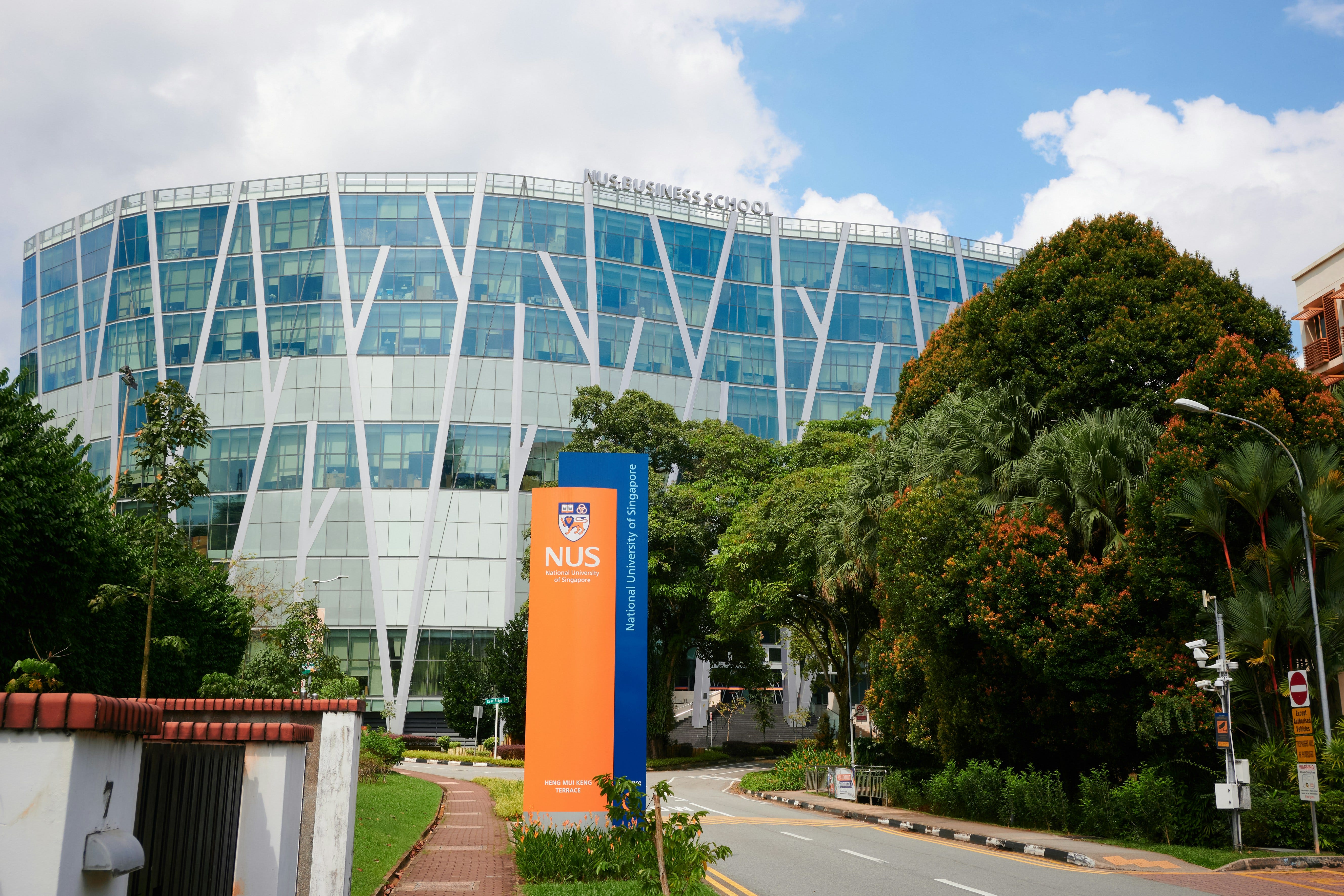
🇸🇬 National University of Singapore — #10 (overall score: 96.2)
🇸🇬 Nanyang Technological University — #12 (93.6)
🇲🇾 Universiti Malaya — #56 (81.2)
Singapore retains Asia’s strongest higher education footprint.
Malaysia, with five institutions inside the global Top 200, anchors the regional middle tier.
Indonesia’s leading institution, Universitas Indonesia (#=191), narrowly missed the Top 200 with a score of 56.7.
📍 The National Picture
A snapshot of where each ASEAN country’s strongest institution lands in QS WUR 2027:
🇧🇳 Brunei: Universiti Brunei Darussalam, #=345, score 42.1 (2 ranked)
🇮🇩 Indonesia: Universitas Indonesia, #=191, score 56.7 (20 ranked)
🇲🇾 Malaysia: Universiti Malaya, #56, score 81.2 (32 ranked)
🇵🇭 Philippines: University of the Philippines, #=402, score 38 (5 ranked)
🇸🇬 Singapore: National University of Singapore, #10, score 96.2 (4 ranked)
🇹🇭 Thailand: Chulalongkorn University, #212, score 54.6 (13 ranked)
🇻🇳 Vietnam: Duy Tan University, #=504, score 32.2 (9 ranked)
Each country’s leading name says something distinct: Singapore’s research-intensive elite tier, Malaysia’s combination of public flagships and rising private universities, Thailand’s medical-and-research depth at Chulalongkorn and Mahidol, the Philippines’ single public anchor, Vietnam’s notable private-sector lead, and Indonesia’s broad but plateauing system.
🚫 The Absent Three
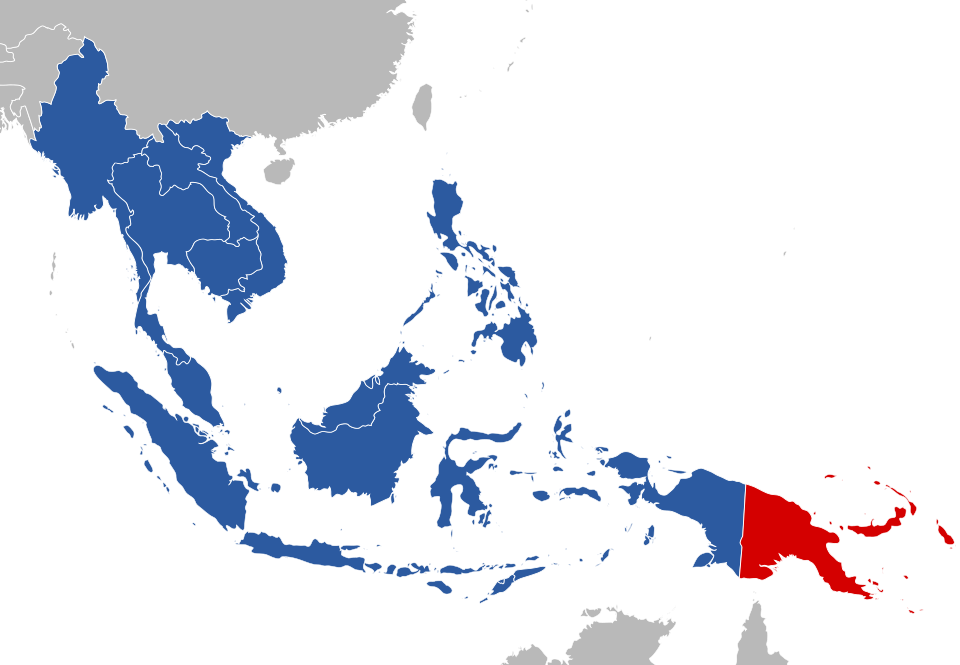
Cambodia, Laos, and Myanmar do not appear anywhere in QS WUR 2027.
QS does not publicly detail why specific systems remain unranked, and the absence sits alongside a wider regional pattern across the table: not all Southeast Asian higher education systems generate the data footprint — publications, citation pipelines, reputation surveys, internationalisation metrics — that QS draws on.
The gap is structural, even if the reasons behind it are not laid out in the ranking itself.
🔍 However, the Ranking Contains Debate
QS WUR is not without critics:
🇰🇷 In 2023, 52 South Korean universities boycotted QS over a newly introduced International Research Network indicator, arguing it failed to reflect their institutional performance
🌐 A broader global movement has pushed back on major rankings, citing concerns over transparency, methodology, and reputation-heavy weighting
🔒 QS does not allow universities to formally withdraw — even institutions that stop submitting data continue to be ranked using publicly available information
That structural asymmetry helps explain why Southeast Asian universities’ relationship with rankings remains pragmatic rather than contested.
💼 What’s at Stake for ASEAN
Higher education isn’t only an academic question — it sits at the heart of the region’s economic positioning.
📈 Tertiary access varies widely across the region, from highly developed systems in Singapore to expanding but still maturing systems elsewhere
🧩 Skills mismatch persists — vocational and university graduates don’t always land in the fields they trained for, a gap repeatedly flagged by ASEAN-BAC and regional labor reports
🧳 Outbound student flows remain heavy, with Indonesia, Malaysia, and Vietnam consistently among the region’s largest senders of students abroad
🌐 Regional hubs are absorbing displaced mobility — QS notes that Singapore, Malaysia, Hong Kong, and South Korea all improved their average International Student Ratio in 2027 as the “Big Four” study destinations tightened policies
The opportunity is real. The institutional capacity to capture it remains uneven.
🌐 The Regional Stakes
Southeast Asia, envisioned under the ASEAN Higher Education Space Roadmap, calls for greater harmonisation across the region’s tertiary systems. What that could mean in practice:
🤝 Credit transfer mechanisms and joint degrees between ASEAN universities
🔬 Cross-border research consortia targeting regional challenges — climate, public health, AI governance
📚 Mutual accreditation frameworks that reduce friction in regional mobility and ease brain drain pressures
🌱 Co-investment in sustainability research — already an emerging strength for several ASEAN institutions in QS metrics
🛠️ Stronger industry–university linkages to close the persistent skills gap flagged by ASEAN-BAC
Without coordinated investment, two outcomes become more likely:
📉 Continued concentration of regional excellence in just two or three states
🪟 A closing demographic window without the institutional density to capture it

❤️ Why This Hits Home
🇸🇬 For prospective students, rankings shape decisions — where to apply, what to study, whom to trust with tuition.
🇮🇩 For governments, rankings shape budgets — research grants, internationalisation strategies, talent retention policy.
🌏 For ASEAN, rankings are a mirror, not a verdict. They reveal what universities have built—and what entire systems have invested in or neglected over decades.
🔮 The Bottom Line
QS WUR 2027 shows Southeast Asia as anchored (Singapore, Malaysia), in momentum (Indonesia, Vietnam, Thailand), and with structural absences (Cambodia, Laos, Myanmar).
The global debate over how universities should be measured isn’t going away. Neither is the region’s demographic window.
The challenge for ASEAN is to use the rankings without being defined by them. Thus, when the list is published, the work continues.
📰 Need More Angles?
ASEAN Secretariat ASEAN Roadmap 2025
RAND Corporation Banking the “Demographic Dividend”: How Population Dynamics Can Affect Economic Growth
The PIE News Korea boycotts QS Ranking but “a lot to be proud about”
The Conversation University ranking systems are being rejected. African institutions should take note
Times Higher Education Is South-east Asia higher education’s next global hotspot?
QS Insights QS World University Rankings 2027 results
(BRZ/QOB)