



🎯 The Main Takeaway
The Swedish Crown Princess Victoria Ingrid Alice Désirée, also a UNDP Goodwill Ambassador, made a five-day state visit to Indonesia and travelled to Jakarta and West Nusa Tenggara from 4 to 8 September.
During the visit, the Princess checked the progress of the UNDP’s partnership with Indonesia, focusing on sustainable development, climate action, biodiversity conservation, and digital transformation to support inclusive economic growth in the country.
She also wanted to learn about Indonesia’s Biomedical and Genome Science Initiative, which aims to respond to and prevent disease outbreaks, and how Indonesia maintains unity and harmony despite its religious and ethnic diversity.
📡 Why It’s on Our Radar?
In September 2015, the United Nations (UN) adopted the 2030 Agenda for Sustainable Development, which took effect on January 1, 2016.
The agenda includes 17 Sustainable Development Goals (SDGs), a global plan to protect the planet and improve people’s lives by 2030. It calls on developed and developing countries to work together through stronger international partnerships.
The goals have 169 targets, covering key issues such as ending poverty, improving healthcare and education, reducing inequality, fighting climate change, protecting forests and oceans, and supporting sustainable economic growth.
⚠️ Why It Matters?
Indonesia officially joined the United Nations as its 60th member on 28 September 1950. However, it temporarily withdrew from the UN on 20 January 1965 because of a conflict with Malaysia, then resumed its membership on 28 September 1966.
Four years later, Indonesia partnered with the United Nations Development Programme (UNDP) to support the government in implementing development programmes. UNDP also opened an office in Jakarta to support the partnership.
As a UN member, Indonesia is expected to actively participate in and support UN programmes and initiatives, including the Sustainable Development Goals (SDGs), by adopting policies that align with these goals.
The Indonesian government then announced its commitment to support the UN SDGs agenda by signing a Presidential Regulation in 2017 to integrate the SDGs into the country’s medium- and long-term development plans through 2045.
Several Indonesian SDG initiatives related to the Swedish Crown Princess’s visit are focused on health, peace, education, and climate action.
“The partnership between Indonesia and UNDP has supported Indonesia’s development priorities for decades, bringing together knowledge, innovation, and resources to address challenges and create opportunities for communities. Looking ahead, Indonesia will continue to work with UNDP to develop scalable solutions and mobilise the resources, partnerships, and knowledge needed for sustainable and inclusive development.” - Rachmat Pambudy, National Development Planning Minister.
🧬The Eijkman Biomedical and Genome Science Initiatives
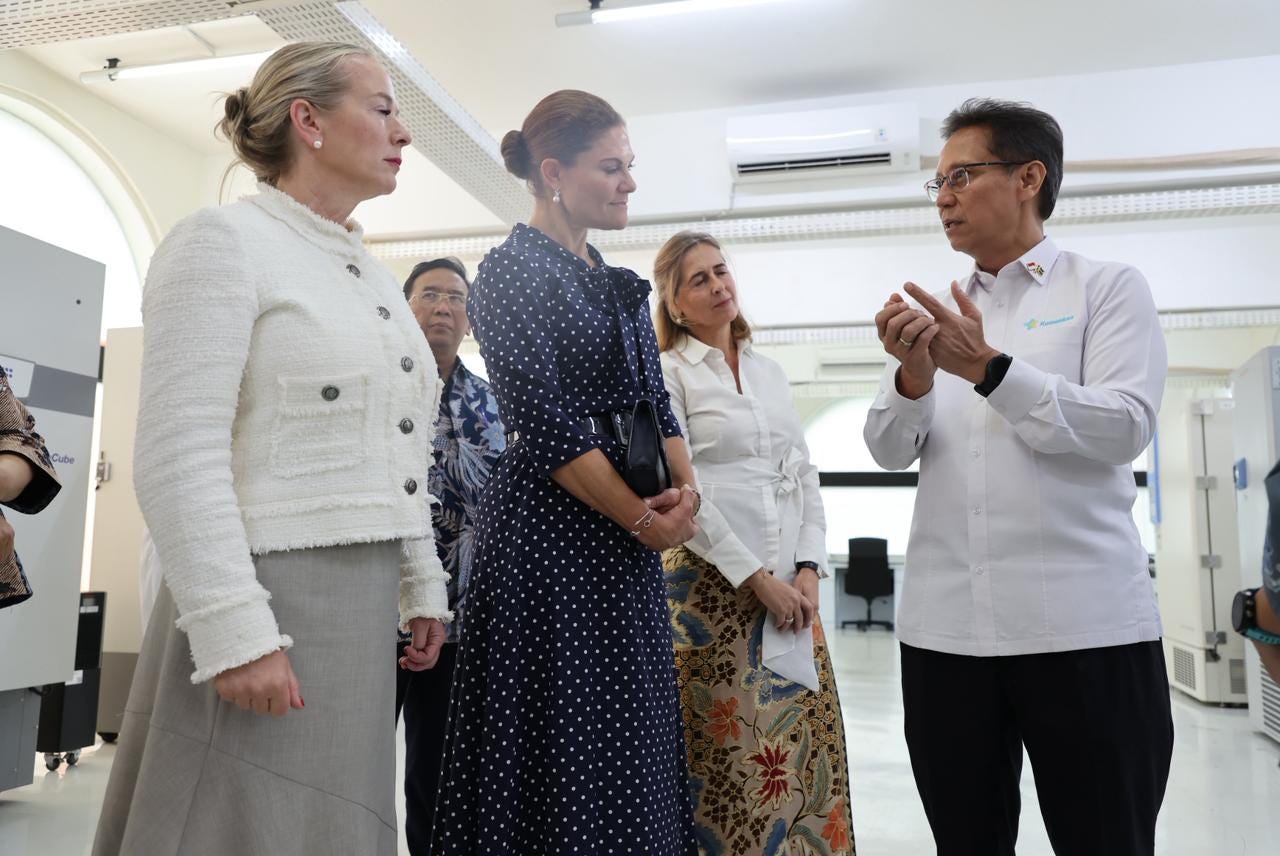
Princess Victoria, visited the Eijkman Biomedical and Genome Science Initiatives at Dr Cipto Mangunkusumo Hospital in Jakarta, on Friday (9/3), to learn about Indonesia’s preparations in the health sector.
The Ministry of Health established the facility in August 2022 to improve healthcare and prepare for future health threats through genome sequencing.
Genome sequencing is a scientific method that studies an organism’s genetic information by analysing DNA samples, including samples from humans, bacteria, and viruses. It helps scientists better understand diseases, how they develop, and how they affect the body.
This method helps doctors understand patients’ health and detect diseases early. It also helps health authorities prepare for disease outbreaks and provide more precise treatment and preventive care.
This method is being used to study seven priority diseases and health condiple artions: cancer (breast, lung, colorectal, and cervical), tuberculosis, stroke, diabetes, Duchenne muscular dystrophy, pulmonary arterial hypertension, and ageing, which is linked to longevity.
“She was interested because she did not know Indonesia had already started this kind of initiative, similar to efforts in Europe, the US, and the UK, where wealthy peoe looking for ways to live longer, even up to 120 or 130 years. This has led to the study of longevity science, which focuses on keeping the body and its organs healthy for longer.” - Budi Gunadi Sadikin, Health Minister.
Indonesia is currently developing 10 specialised genomics centres and 29 national surveillance laboratories, with a target of completing 400,000 genome sequences by 2030 under the National Genome Strategy 2026–2030.
The UN, through UNDP, supports the initiative by helping develop policies, improve health facilities, and train health workers. It also helps use genome information to detect diseases, identify health threats, respond faster, and provide better treatment.
🤝 The Istiqlal-Cathedral Tunnel of Friendship
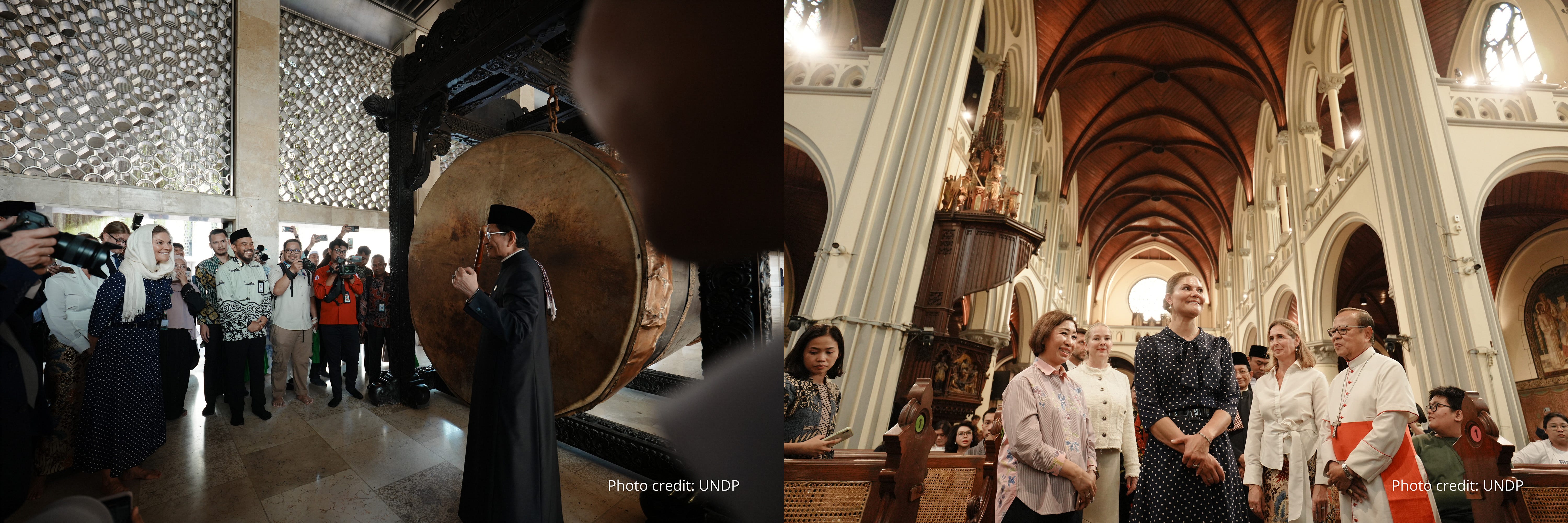
The Princess continued her agenda by going to Istiqlal Mosque and Jakarta Cathedral on the same day to learn more about how Indonesia maintains unity in diversity, especially the harmony between the country’s two largest religious communities, Muslims and Christians.
By 2025, Islam is the largest religion in Indonesia, with around 240 million followers, or 87% of the population. Indonesia also has the world’s largest Muslim population. Christianity is the second-largest religion, with around 29 million followers, or 10% of the population, including Protestants and Catholics.
Istiqlal Mosque is the largest mosque in Southeast Asia and the eighth largest in the world. It can accommodate around 200,000 worshippers. Meanwhile, Jakarta Cathedral is one of Indonesia’s oldest and largest churches, and can accommodate up to 5,000 worshippers. It is located directly across from the Istiqlal Mosque.
The two places of worship are connected by a Tunnel of Friendship, showing Indonesia’s unity in diversity. Indonesia has six main religions, but people from different backgrounds and traditions live side by side and support each other.
The Princess was impressed by the religious harmony and wanted to learn more about how the government manages diversity, while also maintaining peace and mutual respect among religious communities.
“She was very impressed because she was warmly welcomed by many worshippers when she arrived at Istiqlal Mosque. She then heard the sound of the bedug drum from the mosque, followed by the sound of church bells. The two sounds rang out together, creating a unique and powerful symbol of religious tolerance.” - Nasaruddin Umar, Religious Affairs Minister/ Grand Imam of Istiqlal Mosque.
🚨 The Lombok Earthquake
Princess Victoria continued her visit by travelling to Lombok, West Nusa Tenggara, for two days, from 5 to 6 September, to see how the island has recovered eight years after the devastating earthquakes.
Lombok experienced several earthquakes with magnitudes of around 6 to 7 between late July and mid-August 2018. The earthquakes were also felt on nearby islands, including Bali and Sumbawa.
According to the National Disaster Management Agency (BNPB), the disaster caused 550+ deaths, injured 1,500+, and displaced 445,000+, mostly in North Lombok Regency.
The earthquakes also destroyed 165,000+ houses, 1,100+ education facilities, 1,000+ places of worship, and 300+ health facilities. The disaster caused around IDR 10.1 trillion in damage and IDR 2 trillion in losses, while IDR 8.6 trillion was needed for reconstruction.
In response, UNDP helped rebuild earthquake-affected areas in West Nusa Tenggara through the PETRA programme, with support from the German Development Bank (KfW). The programme ran from 2019 to 2021.
It aimed to rebuild key infrastructure and help communities recover by accelerating the restoration of health and education services, creating jobs, and preparing communities for future disasters.
The project was completed and handed over to the government. By June 2022, PETRA had rebuilt 22 infrastructure projects, including schools, health facilities, and other public facilities, serving more than 150,000 people, worth around IDR 79 billion.
PETRA also rebuilt water and irrigation systems, including clean water facilities for 600 families in North Lombok, and irrigation canals for 500 families in East Lombok.
📈 The Current Development
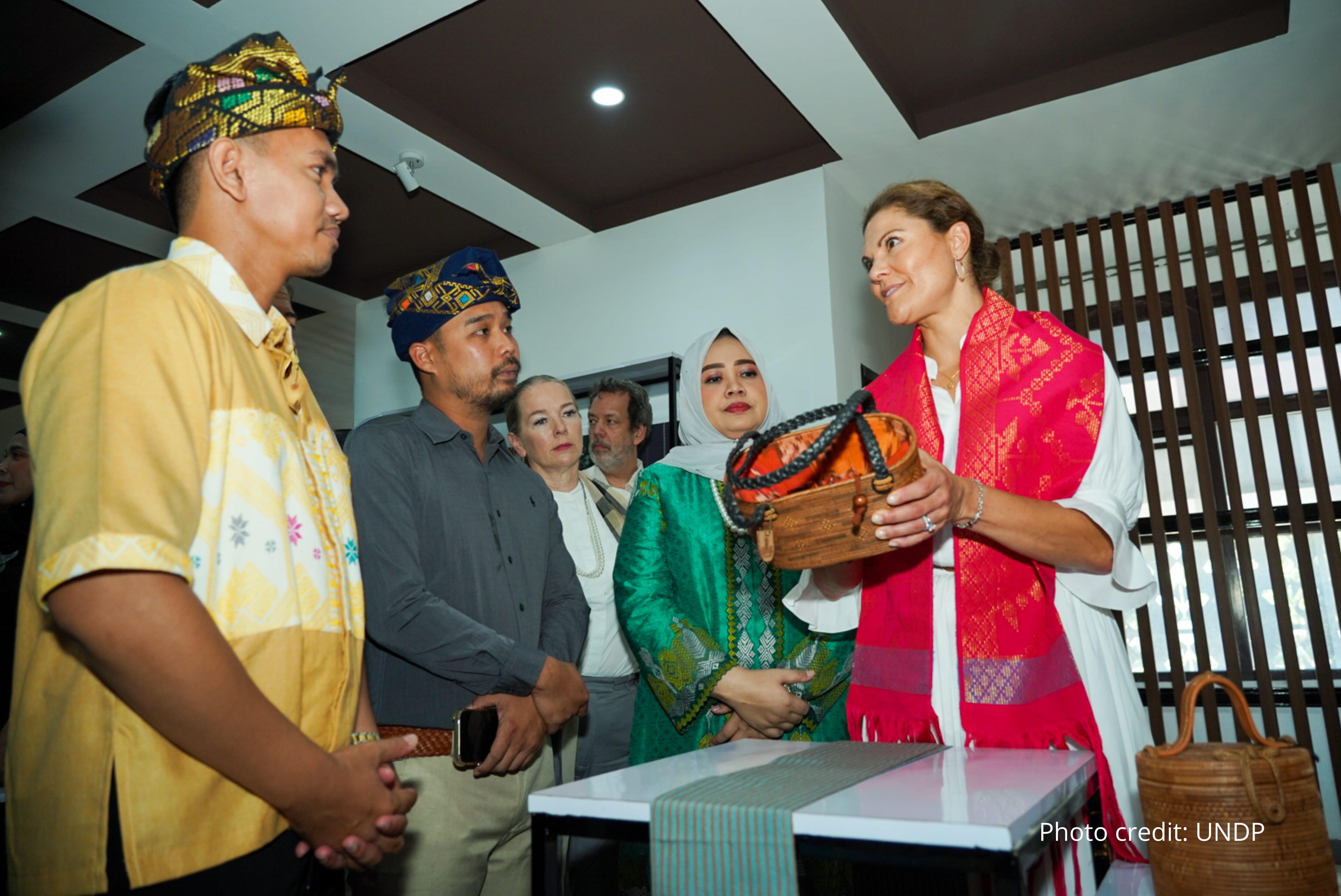
Princess Victoria’s first stop was the BALE KITA Regional Technical Implementation Unit, on the western side of the Islamic Centre in Mataram, West Nusa Tenggara, where she met local entrepreneurs to learn about their challenges and recovery after the disaster.
The facility supports creative industries and community-based MSMEs. It promotes, trains, and mentors local communities to turn local food ingredients and materials into value-added products, such as traditional snacks and crafts.
The programme has successfully created jobs and business opportunities, improved skills and product competitiveness, and strengthened local economies, especially for communities whose livelihoods depend on nature and tourism.
She also visited State Vocational School 1 Pemenang in North Lombok, which was rebuilt to withstand earthquakes. Teachers and students were trained to prepare for future disasters, as Indonesia is located on the Pacific Ring of Fire.
Another stop was the Pemenang Public Health Facility, which uses digital technology to improve its services through the Electronic Immunisation and Logistics Monitoring System.
The system combines vaccine and logistics data, helping health facilities manage vaccine stocks and provide more reliable healthcare services.
🐠 The Coral Reef Initiative
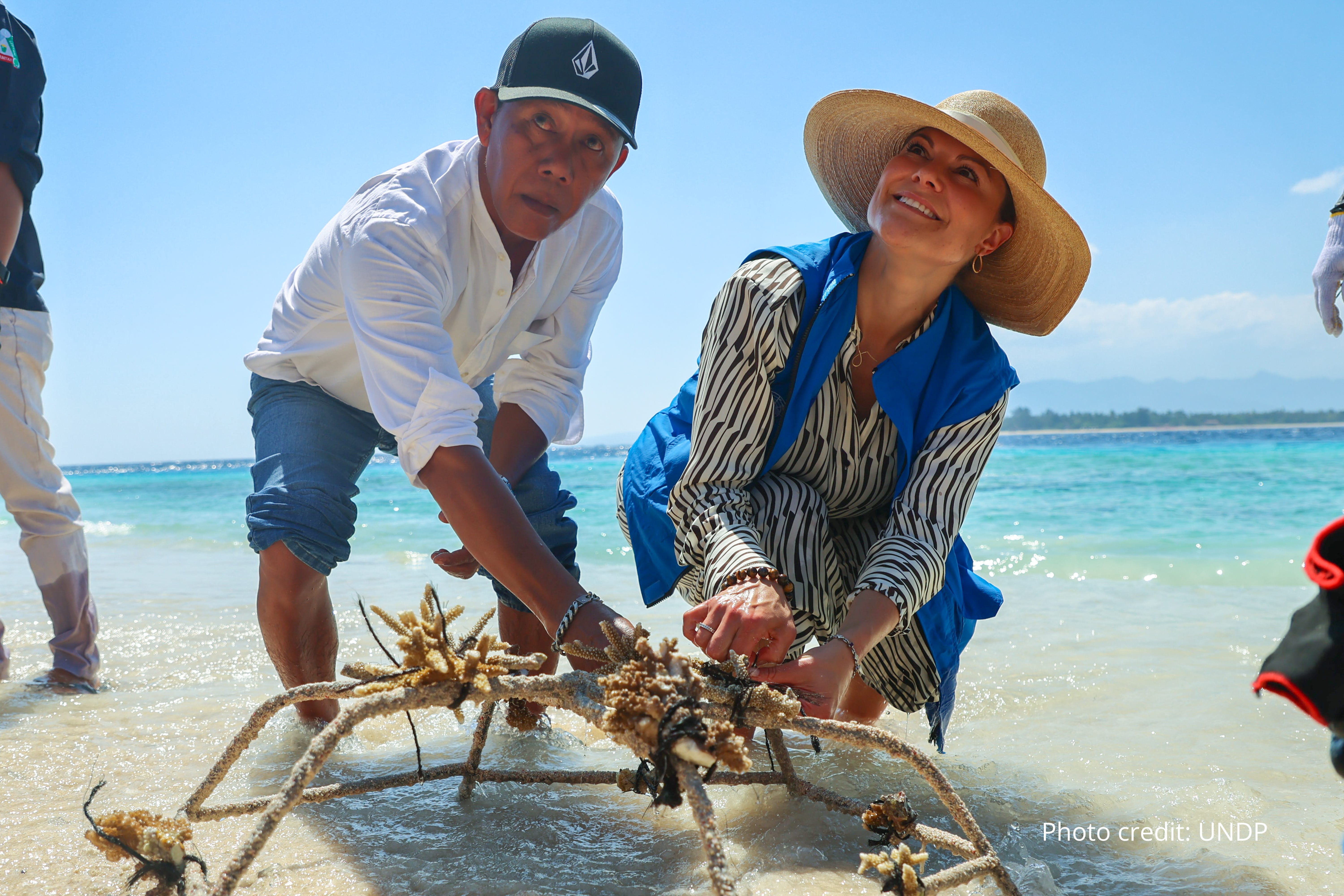
The Crown Princess and the delegation continued their visit to Gili Meno, West Nusa Tenggara, to learn about blue economy solutions that link marine conservation, local livelihoods, and innovative financing.
Indonesia is home to around 16% of the world’s coral reefs, which support fishing, tourism, food security, and coastal protection. Coral reef tourism around Gili Meno, Gili Trawangan, and Gili Air generates nearly IDR 9.5 trillion in annual revenue.
However, coral reef ecosystems are under threat, especially from coral bleaching, as sea temperatures rise by more than 1°C above pre-industrial levels due to climate change.
To address this problem, Bappenas and UNDP introduced a parametric insurance initiative to provide financial support for coastal communities when sea temperatures rise to levels that could damage coral reefs.
Gili Meno is one of the first locations in Indonesia to take part in the initiative, and the financing helps coastal communities recover quickly and restore the coral reef ecosystem while reducing the impact on tourism and local businesses.
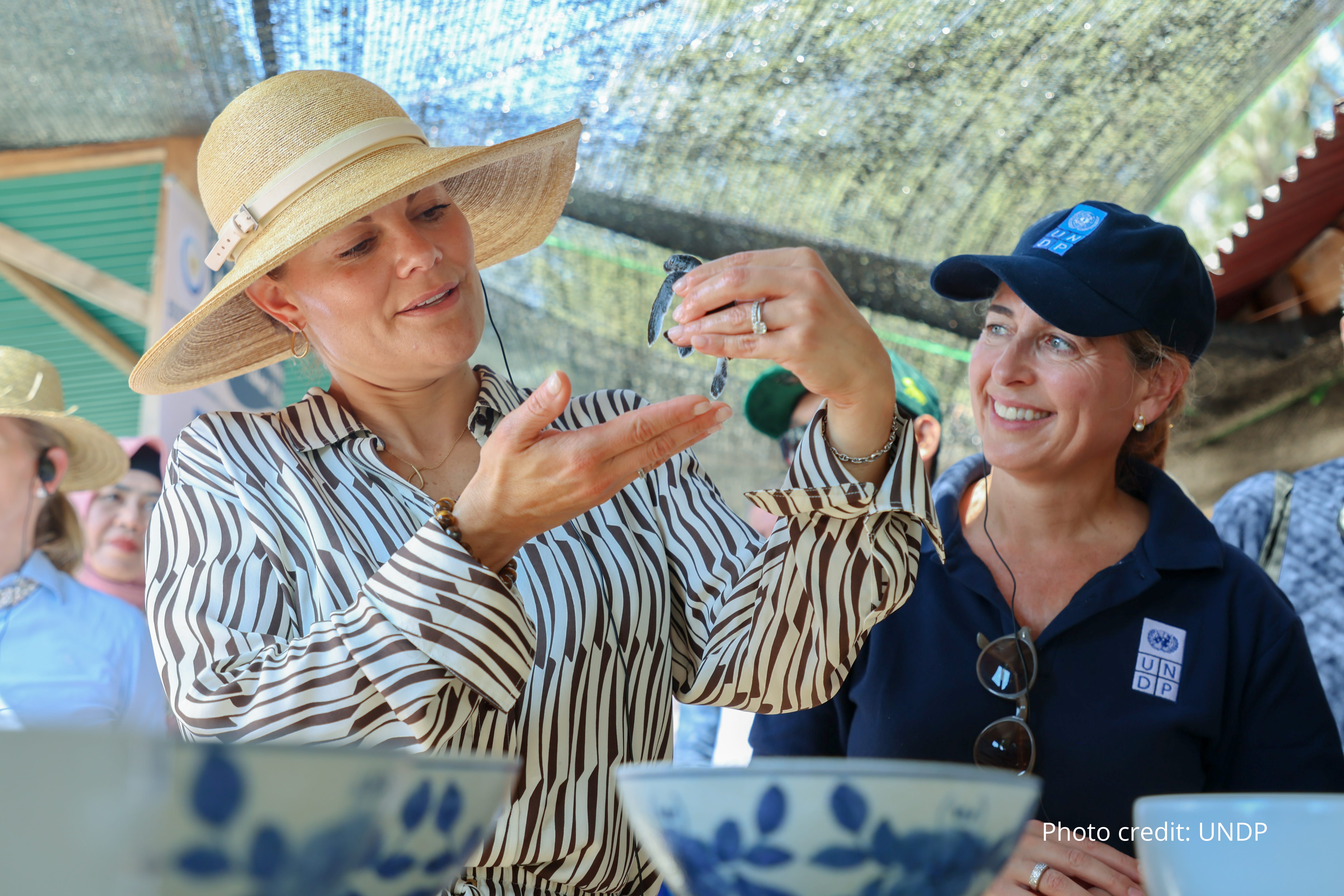
The restoration activities go beyond coral reefs. They also cultivate sea turtles to increase their population and cultivate seaweed to create new economic opportunities and alternative income for coastal communities, while supporting the marine environment.
“I’m very happy because there are so many good initiatives to preserve and conserve nature. I also hear about their commitment, engagement, and how they see the natural resource as a very exquisite resource, and how we all have to take care of it, and the wonderful ideas they have as a community. I do hope that they will be able to conserve as much as possible, while of course, developing their country in a sustainable way, and be a role model to many other places.” - Crown Princess Victoria of Sweden, UNDP Goodwill Ambassador.
🌳 The Bayan Customary Forest
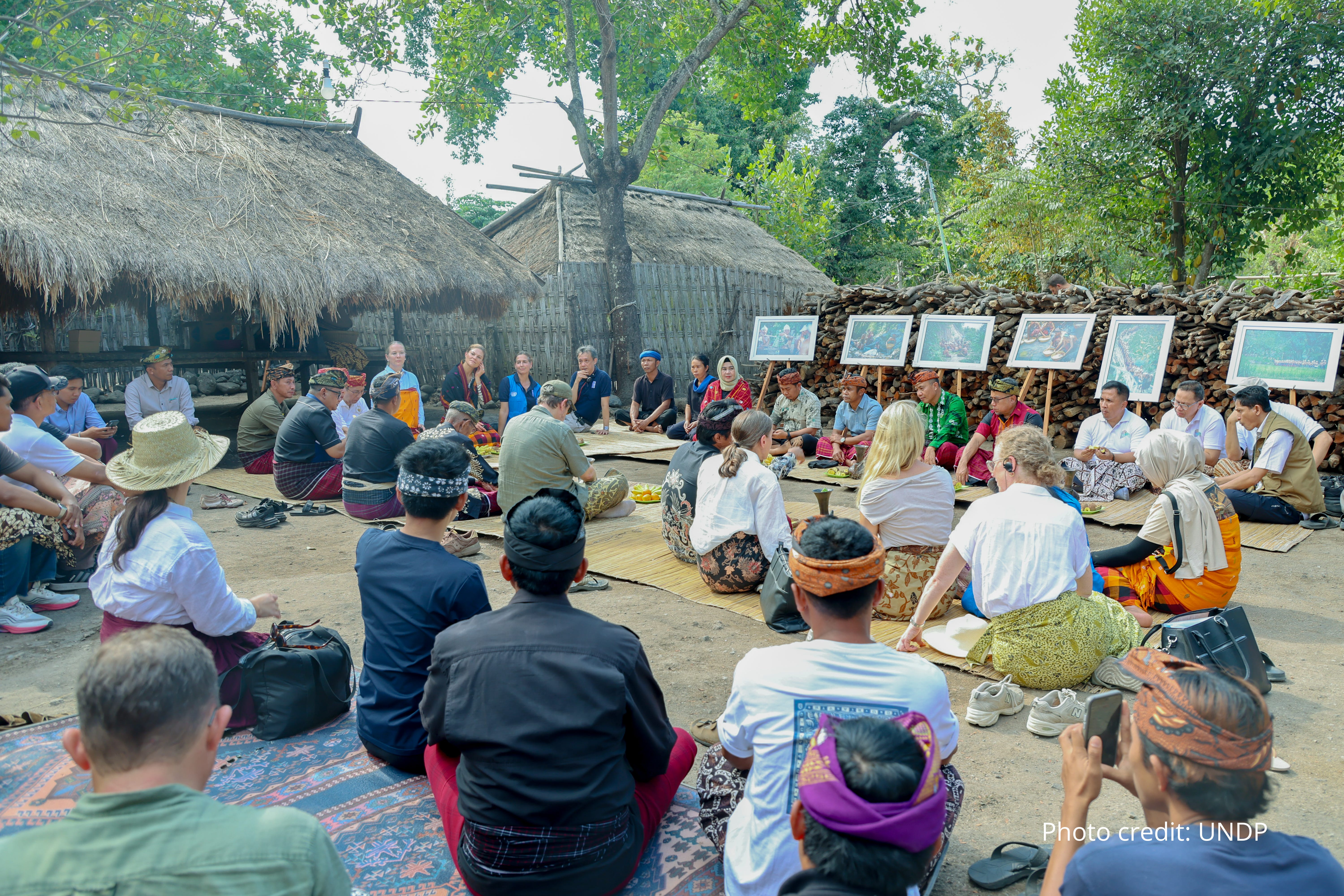
The Crown Princess’s last stop was Bayan District in North Lombok, where she learned how the indigenous community uses the awig-awig customary law to protect the forest and preserve traditions passed down through generations.
The awig-awig rules prohibit certain activities in the customary forest, including cutting or burning trees, herding or capturing animals in and around the forest, and polluting or poisoning springs and rivers inside and outside the forest.
Those who violate the awig-awig, either individually or as a group, can be fined by the customary forest management. The fines may include a buffalo, 1 quintal of rice, 40 pieces of fruit, palm sugar, firewood, and traditional currency.
Those who refuse to pay the fines may lose access to certain customary facilities, including traditional ceremonies, and may no longer be recognised as members of the indigenous community.
These customary rules help prevent damage to the forest’s flora and fauna and ensure it remains an important part of life for future generations of the indigenous community.
To support the awig-awig, UNDP, together with Norway’s International Climate and Forest Initiative, provides technical assistance through the UN-REDD Programme to verify customary forest rights and support community-based forest management.
It is expected to identify land and forest ownership, stop deforestation, reduce carbon emissions, and minimise climate change impacts.
🏡 Why This Hits Home?
Indonesia has several major development targets that require support from the SDGs:
Ambitious Growth: Indonesia aims to achieve 8% annual GDP growth by 2029, and become the world’s fourth-largest economy by 2045. This requires efforts to reduce poverty and improve people’s welfare.
Unity in Diversity: Indonesia is home to around 280 million people, more than 1,300 ethnic groups, and six recognised religions. Maintaining equality and inclusion is important to preserve peace and harmony.
Net Zero Emissions: Indonesia aims to reach net zero emissions by 2060 or earlier. The country is accelerating the transition to renewable energy and diversifying its energy sources to reduce carbon emissions and help limit global warming.
Amazing Biodiversity: Indonesia is home to around 10% of the world’s flowering plants, 12% of mammals, 16% of reptiles and amphibians, 17% of birds, and 25% of fish species. Protecting and restoring these ecosystems is important to prevent species from becoming extinct.
Digital Transformation: Indonesia launched its Indonesia Digital Vision 2045 in December 2023 to accelerate digital transformation across sectors, improve productivity and competitiveness, and drive innovation.
📌 The Bottom Line
Development is not only about improving people’s lives, but it is also about protecting the nature they depend on. Crown Princess Victoria’s visits to Jakarta and Lombok showed how Indonesia can build stronger communities while protecting the environment.
Recovery is not only about rebuilding what was lost, but it is also about preparing for what may come next. Rebuilding safe schools and other facilities can restore essential services, while helping communities become more resilient to future disasters.
Progress is not only about finding solutions, it is also about working together to make them last. The visit highlighted the long-term partnership between Indonesia, Sweden, and UNDP to support inclusive, resilient, and sustainable development.
🔍 Need More Angles?
Badan Nasional Penanggulangan Bencana, Dampak Gempa Lombok: 460 Orang Meninggal Dunia dan Kerugian Ekonomi 7,45 Triliun Rupiah
Badan Perencanaan Pembangunan Nasional, Dalam SDGs Lecture 2025, Bappenas Tegaskan Komitmen Percepat Capaian TPB/SDGs Indonesia
Goodstats, Sebaran Agama di Indonesia 2025
Kementerian Energi dan Sumber Daya Mineral, Menuju NZE 2060, Pemerintah Perkuat Fondasi Energi Rendah Karbon Berkelanjutan
Kementerian Komunikasi dan Digital RI, Siaran Pers No. 567/HM/KOMINFO/12/2023 tentang Perkuat Kolaborasi Lintas Sektor, Kominfo Luncurkan Visi Indonesia Digital 2045
Kementerian Lingkungan Hidup, Keanekaragaman Hayati Indonesia
Lembaran Bayan, Buku Profil Desa Bayan
Pemerintah Provinsi Nusa Tenggara Barat, UNDP dan BNPB Serah Terima 22 Fasilitas Kepada Pemda NTB
Tempo, Ini Data Lengkap Kerusakan Gempa Lombok Versi BNPB
UNDP, Programme for Earthquake and Tsunami Infrastructure Reconstruction Assistance
UNDP, Sustainable Development Goals, Background on the goals
(NGO/QOB)