



🎯 The Main Takeaway
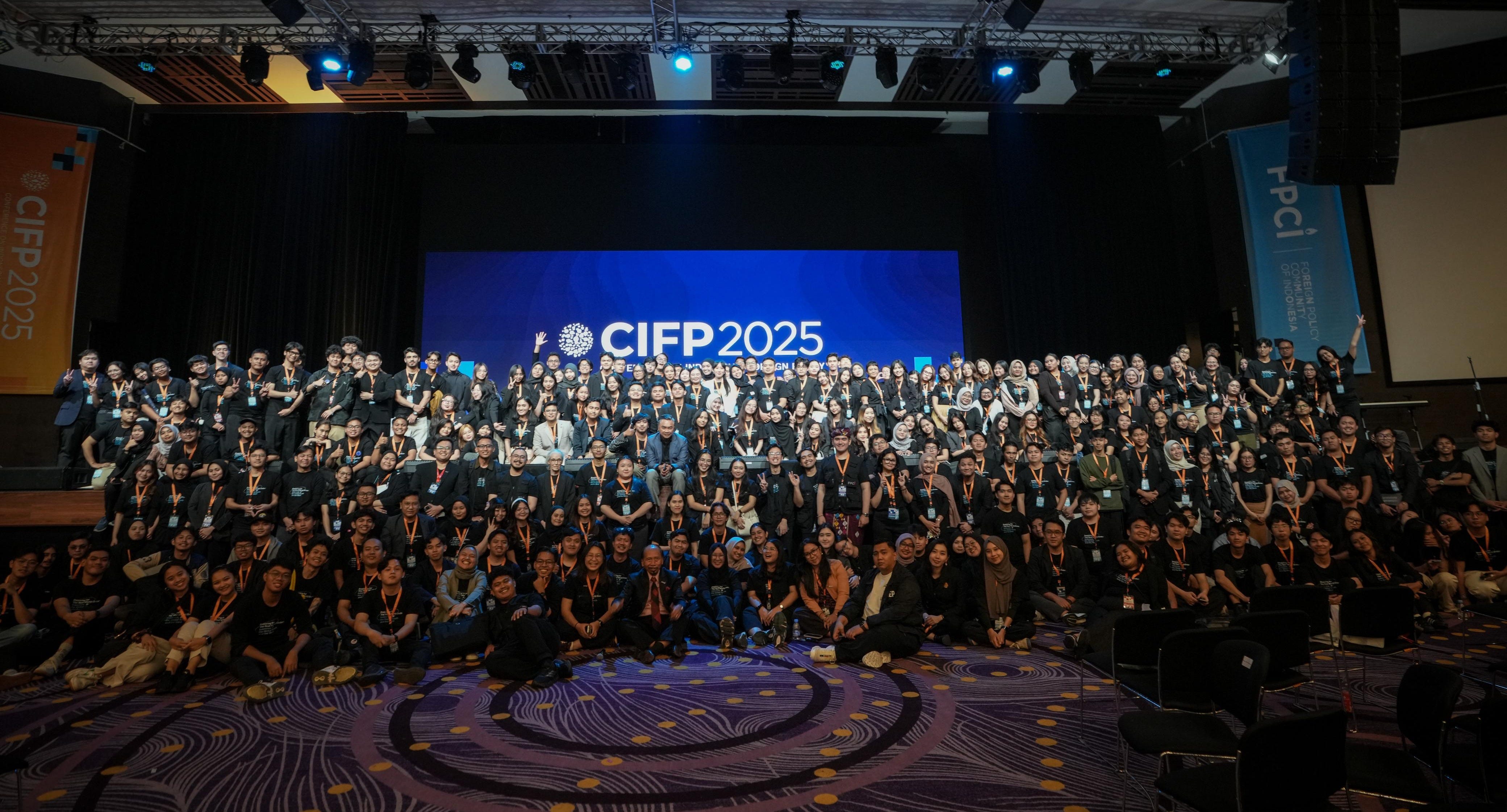
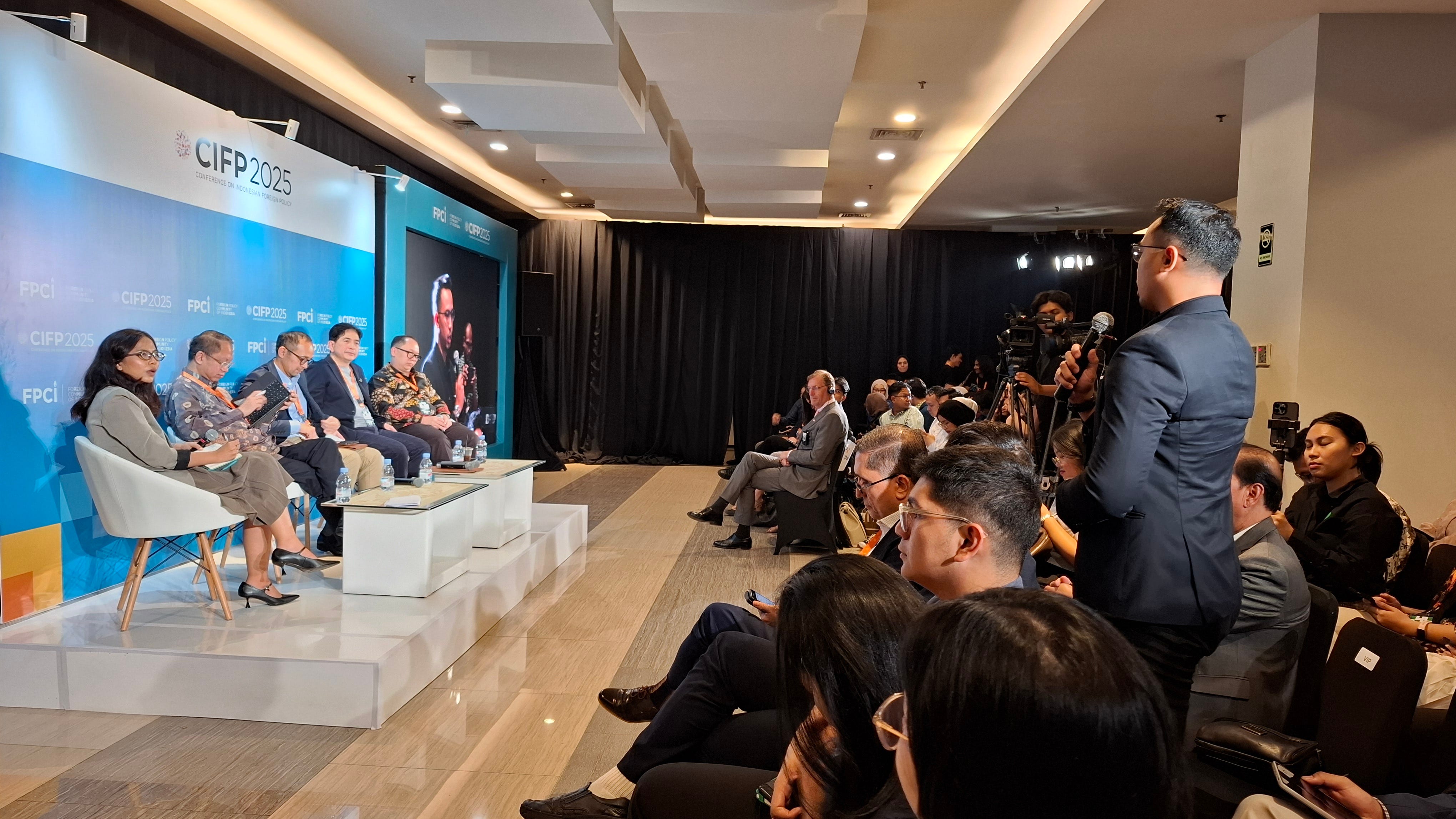
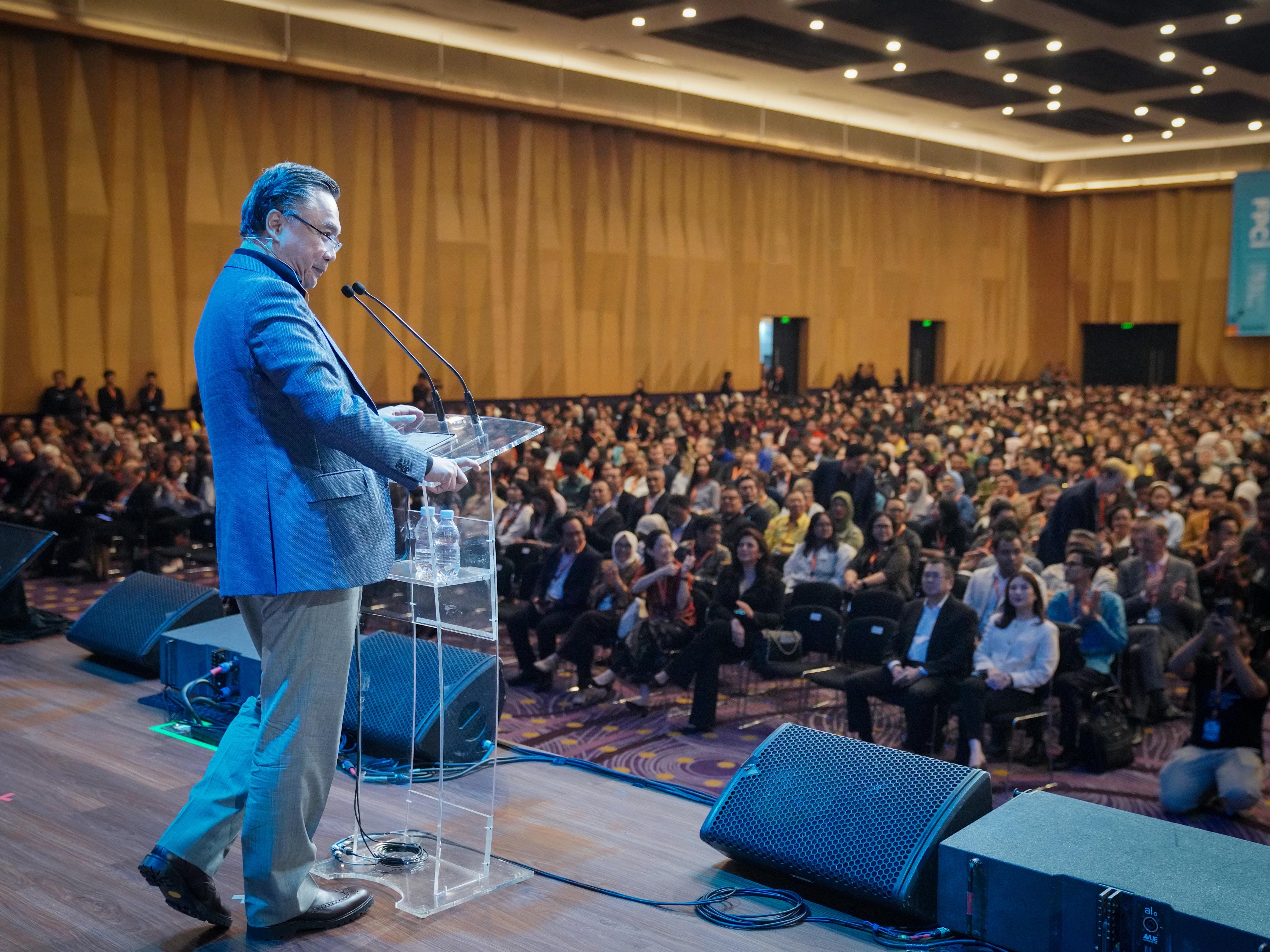
Foreign Policy Community of Indonesia (FPCI) held the 9th edition of the Conference on Indonesian Foreign Policy 2025 (CIFP 2025) on Saturday, 29 November 2025 at the Kasablanka Hall, Kota Kasablanka Mall, South Jakarta.
This year's grand theme is “Preparing for the Next World Order: Indonesia, the Global South, and the West.”
This conference serves as a platform to discuss the global transition from the Western world order to a new structure marked by uncertainty, great power competition, and the growing role of middle power countries such as Indonesia.
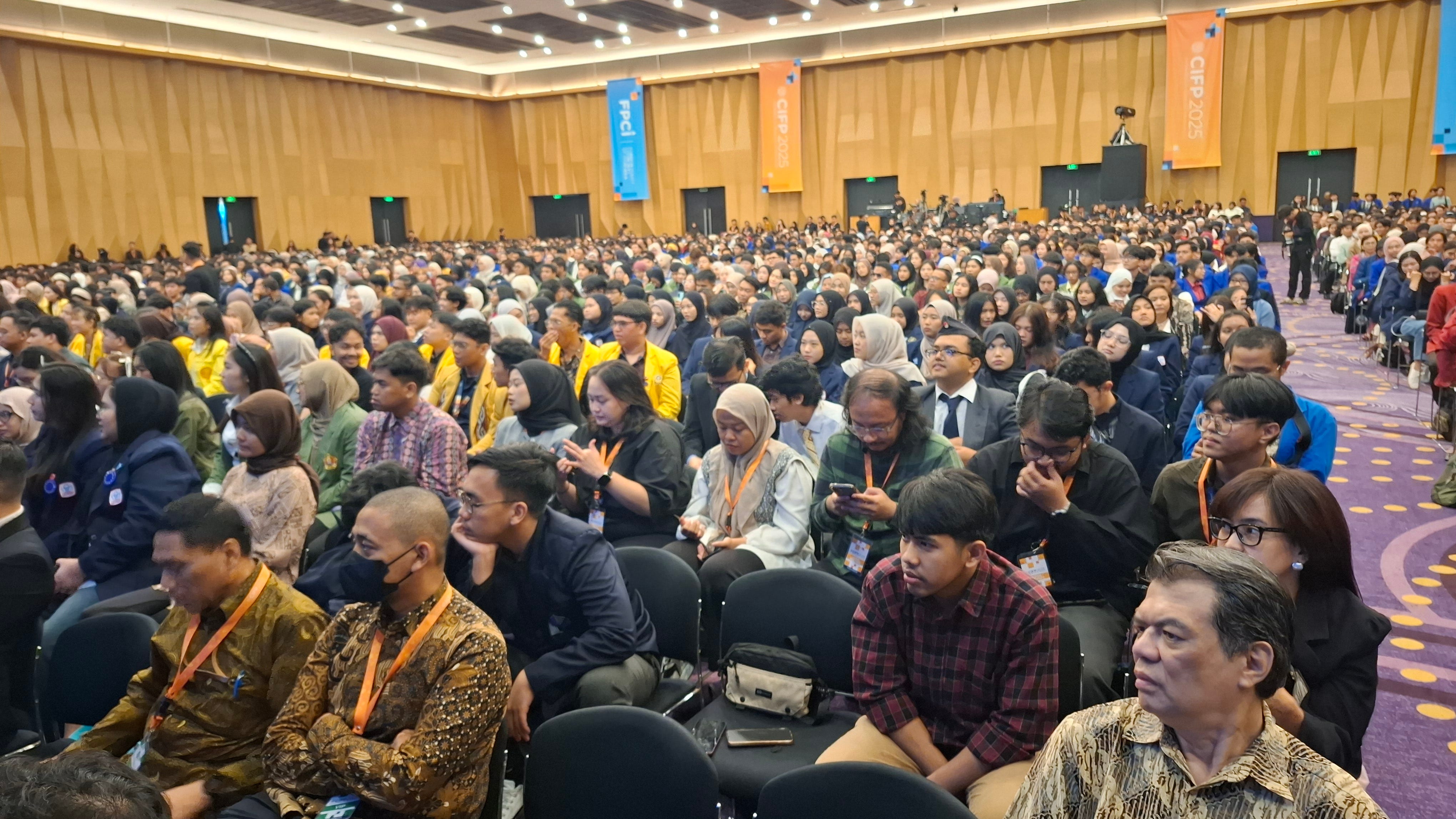
The conference is attended by over 6,200 public registrants, more than 100 partners, and over 70 journalists, divided into panels with various sub-themes.
The Big Picture 📸
The Next World Order: Global South and the West, new coalitions, shifting alignments, and the prospective expansion of groupings.
ASEAN position: navigating, responding, adapting, and promoting its values and game in global transition.
Indonesia’s position in leading the region.
Why It’s on Our Radar 🔍
Several global events and trade deals involving Indonesia took place during President Prabowo Subianto’s first year in office, including:
Global uncertainty: Driven by rising U.S.–China tensions and conflicts in the Middle East, Africa, and Europe.
Full BRICS membership: Indonesia officially joined in January 2025.
Lower tariff policy: Indonesia successfully cut the U.S. reciprocal tariff from 32% to 19%.
More trade agreements: Indonesia is finalizing 24 trade agreements with 30 countries, including the IEU-CEPA (since 2016) and ICA-CEPA (since 2021), and is continuing its accession processes to the OECD (since 2024) and CPTPP (since 2024).
Founder and Chairman of FPCI, Dino Patti Djalal, said that the primacy of the West is over. Not because they are declining, but because others and many others are rising.
He added that the American unipolar moment is gone due to the new distribution of power; no matter what the United States does, it can never regain the unipolarity it briefly enjoyed after 1991.
So the next world order will be characterised by the rise of the middle powers. Dino said Indonesia cannot afford to be a spectator in a world that is rapidly shifting. Taking note that Indonesia has always been the one nation that takes the initiative on the global stage
“This is why Bandung, Non-Aligned Movement, and ASEAN and UNCLOS. This tradition must never be lost to our diplomats. Our foreign policy establishment must always be intellectually competitive, and have the courage to take a stand and take risks for a better world.” (Dr. Dino Patti Djalal, Founder and Chairman of FPCI)
⚠️ Why It Matters
These global events and trade deals have several impacts on Indonesia, including:
Protectionist trade policies: Rising global uncertainty is pushing many countries to tighten trade rules, disrupting supply chains and lowering investment in Indonesia.
Free to join any bloc: Indonesia’s “free and active” policy lets it work with all groups, including BRICS, helping bridge the Global South and North, ease tensions, and support stability.
Preventing mass layoffs: Apindo warns that a 32% U.S. tariff could cut exports—mainly textiles, footwear, and furniture—causing up to 1 million layoffs and a 1% decline in GDP. Reducing the tariff to 19% helps keep exports stable, lowers the U.S. deficit, and avoids layoffs.
Widening market access: IEU-CEPA opens access to 27 EU countries; ICA-CEPA expands access to North America; OECD membership opens access to 38 member states; CPTPP opens access to 12 members and non-traditional markets.
Improve exports and investment: These agreements and accords can cut tariffs on Indonesian products to 0%, boost investor confidence, and strengthen Indonesia’s position in global markets.
“Indonesia is seen as a natural leader and problem solver in ASEAN, so the world looks to Indonesia during regional conflicts.” - Dewi Fortuna Anwar, FPCI Co-Founder, said
“A regime change in Indonesia could shift its foreign policy and alliances. While major disruptions, such as climate change or pandemics, could again consume most of Indonesia’s resources, slowing its external political ties.” - Philips Vermonte, Senior Fellow at CSIS.
Dino Patti Djalal, Founder and Chairman of FPCI, said countries like Indonesia, Turkey, Brazil, and South Africa will play increasingly strategic roles because they are not tied to rigid political blocs like during the Cold War era.
In the new global order, Dino positions Indonesia as one of the most significant middle powers. According to him, countries like Indonesia, Turkey, Brazil, and South Africa will play increasingly strategic roles because they are not tied to rigid political blocs like during the Cold War era.
Why This Hits Home ❤️
Indonesia has what it takes to strengthen its leadership in the region, including:
Strategic location: Positioned between two continents and two oceans, Indonesia serves as a hub for regional maritime routes.
Rich natural resources: With more than 17,000 islands, Indonesia has abundant critical minerals, including the world’s largest nickel reserves.
The world’s 3rd-largest democracy: After India and the U.S., Indonesia ensures broad public participation in choosing leaders and sharing ideas.
ASEAN’s largest economy: With a population of 280 million, Indonesia contributes about 30% of ASEAN’s total GDP.
Indonesia aims for 8% GDP growth by 2029 and to become one of the world’s top five economies by 2045. Increasing exports and strengthening trade surpluses are key steps toward achieving this goal.
The number of UN member states has grown almost fourfold, from 51 to 193 countries. And today, there are more middle-income countries and a larger global middle-class population. Dino believes these changes open new opportunities for middle powers like Indonesia to play a bigger role in global diplomacy.
Regional Solutions 🌏
Dino suggested that the Global South should take a more active role in shaping the emerging world order, rather than simply complaining, since there is no guarantee that the new global order will be better than the current one.
He emphasized that the Global South must be more constructive and forward-looking, while the West needs to abandon its patronizing attitude and avoid viewing the Global South solely through the lens of its geopolitical rivalry with China.
At the same time, ASEAN can navigate regional turbulence by:
Diplomatic Culture & Mechanisms:
○ Back to Basics: Member states often fail to use existing ASEAN mechanisms for bilateral disputes. Leaders are urged to “relearn the art of ASEAN quiet diplomacy” and prioritize personal rapport over domestic political scoring.
○ Non-Interference: While the non-interference pillar prevents open criticism, it allows for “quiet diplomacy” and behind-the-scenes consultation, as seen in Malaysia’s engagement with conflict stakeholders.
○ Treaty of Amity: The Treaty of Amity and Cooperation (TAC) remains a critical channel for external actors to endorse regional stability.
Addressing the Myanmar Crisis:
○ Institutional Limits: While ASEAN’s tools are limited, the humanitarian pillar has been the most effective avenue, gradually opening political space.
○ Long-term Outlook: Malaysia continues incremental engagement, but the conflict’s resolution ultimately depends on the will of the Myanmar people.
Economic Resilience:
○ Combating Protectionism: To counter rising protectionism and potential tariff measures (e.g., from a Trump administration), ASEAN must reform internal processes and operationalize its mechanisms.
○ Strategic Partnerships: ASEAN should leverage its diverse economic partnerships (e.g., China, Korea, Australia) to offset competition in the Indo-Pacific.
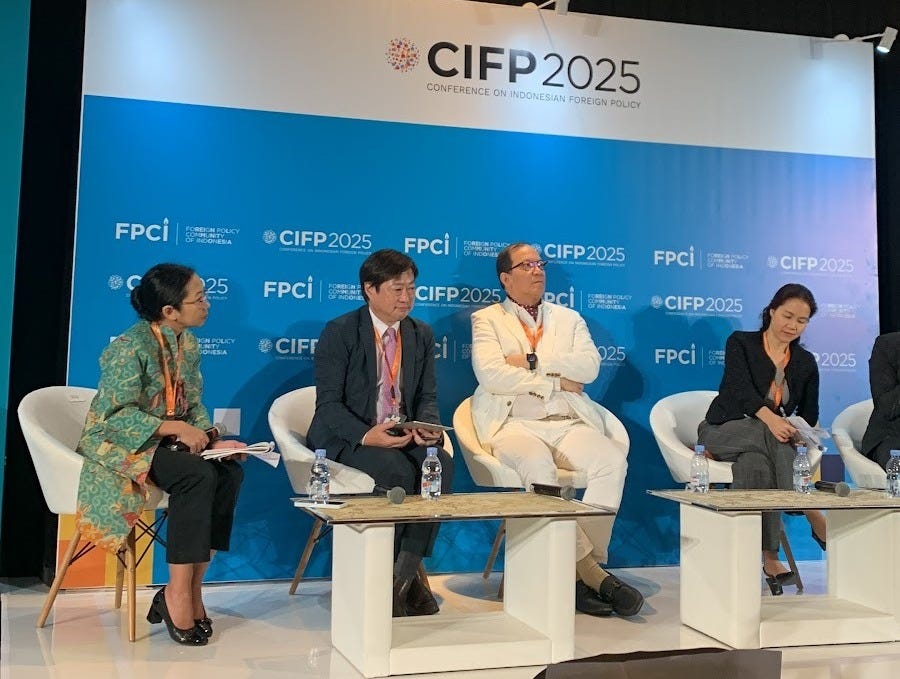
ASEAN faces intensifying rivalry, especially US–China tensions, which makes “remaining neutral” or acting as a “bridge” increasingly difficult. Robert Matheus Michael Tene, Deputy Secretary-General of ASEAN for ASEAN Political Security Community (2021-2024), said that ASEAN acknowledges it has no military or economic power to match great powers.
If we are passive, others will dictate what we should do. So, Indonesia pushes ASEAN Outlook on the Indo-Pacific (AOIP) as the main framework to avoid being “pulled apart” and helps ASEAN articulate a collective position.
Japan has been a consistent supporter of the ASEAN Outlook on the Indo-Pacific (AOIP) launched in 2019, recognizing its importance to ASEAN’s agency and stability. Japan sees ASEAN as a force multiplier. Southeast Asia gains strategic “buffering” from Japan without being forced into an anti-China alignment.
Japan supports Southeast Asian maritime capacity in a way designed not to escalate tensions and reduces the risk of clashes in the South China Sea.
Japan sees ASEAN as the last functional channel for Northeast Asian powers to meet amid worsening tensions. Japan’s recent explicit comments on Taiwan triggered Chinese anger. ASEAN+3 may become the venue where they can sit at the same table, even when Japan–China–Korea trilateral talks cannot convene
Meanwhile, to strengthen its leadership in the region, Indonesia must:
Strategic foresight: The ability to anticipate future challenges and prepare strong domestic strategies that move all stakeholders forward together.
Building a middle-power coalition: Uniting middle-power countries in the Global South, amplifying their collective voice, and showing their influence on global issues.
Promoting mutual benefit: Supporting UN reforms to ensure equality, humanity, and territorial integrity, without veto power—helping reunite a fragmented world and create fair cooperation.
Strengthening ASEAN: Remaining committed to ASEAN and supporting a more dynamic, equal, and principled regional bloc free from external interference.
Create a “white book” outlining Indonesia’s foreign policy, positions, and strategies for geopolitical challenges.
Revive the foreign policy breakfast to bring stakeholders and policymakers together to discuss global and geopolitical issues.
Urged the government to strengthen Indonesia’s domestic affairs first, ensuring the country can handle internal issues before tackling global problems.
(AKS/NGO/JUN/BRZ/VRG/ELS/QOB)