



🎯 The Main Takeaway
On May 7, hundreds of students at Mataram University in West Nusa Tenggara gathered to watch a cinema. However, before the screening could begin, security personnel and university officials suddenly stopped the event and ordered the students to leave, without providing a clear reason.
A few days later, on May 12, dozens of students at Khairun University in North Maluku were watching the same cinema when security officers and an apparatus of the Indonesian Army arrived and dispersed the crowd. Authorities said the event did not have permission to hold a gathering outside the university’s operating hours.
The two incidents were among dozens of reported cases of intimidation and disruption during screenings of the documentary ‘Pesta Babi’ across Indonesia.
🐷 What Is ‘Pesta Babi’?
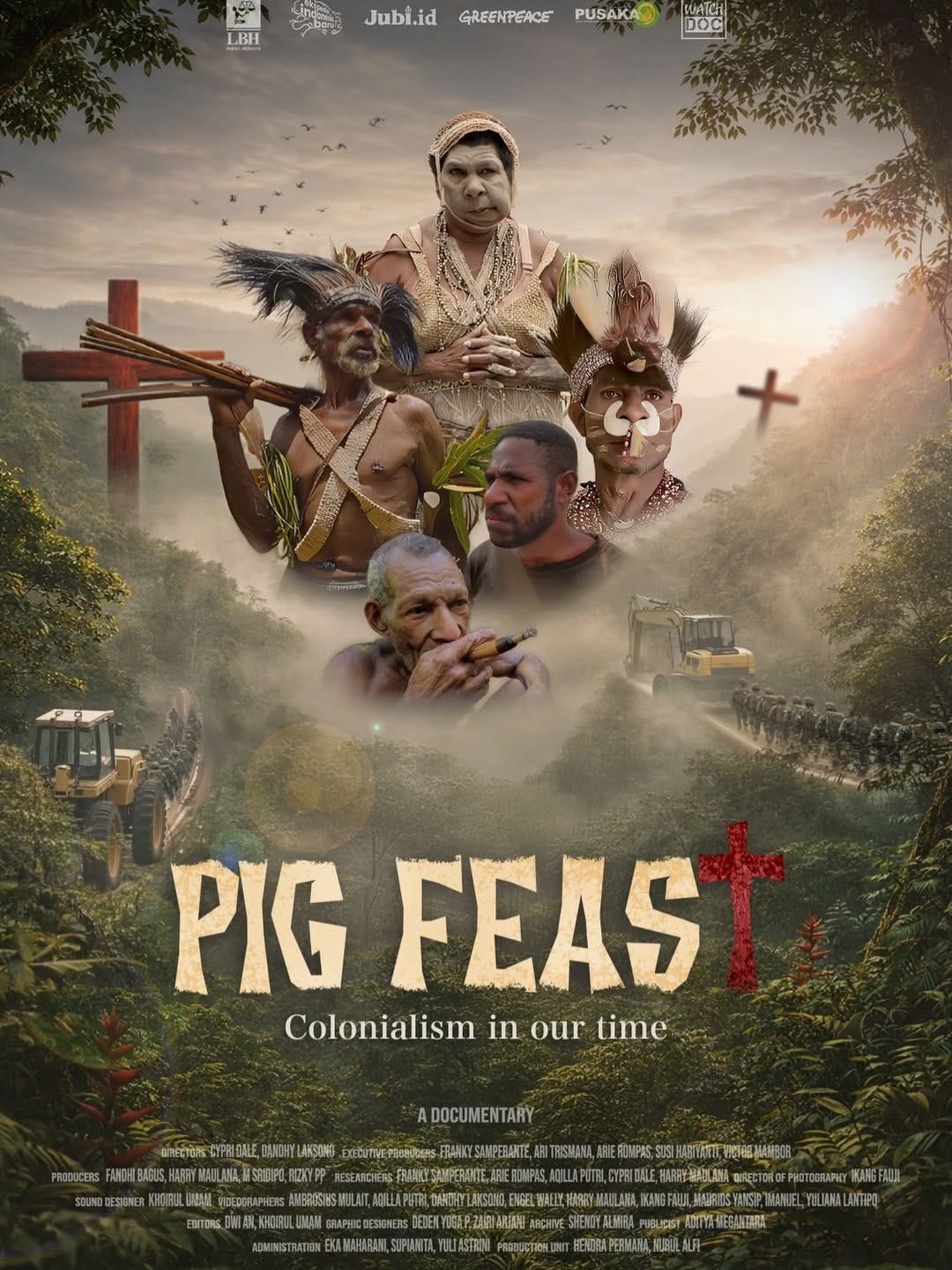
‘Pesta Babi’ or Pig Feast: Colonialism in Our Time is a documentary film released in May this year. Directed by Dhandy Dwi Laksono and Cypri Paju Dale, the film was produced in collaboration with Ekspedisi Indonesia Baru, Greenpeace Indonesia, Jubi Media, LBH Papua Merauke, Pusaka Bentala Rakyat, and Watchdoc.
The 95-minute documentary tells the story of Indigenous communities in South Papua and their struggle to defend their ancestral lands from deforestation, land appropriation, and military operations linked to the government’s National Strategic Projects.
Through these stories, the film argues that colonial practices persist in the modern era—not through foreign powers, but through policies and actions carried out by authorities within the same nation.
"Colonialism by foreign powers such as Portugal, Britain, and the Netherlands is often seen as a thing of the past. As a nation that was once colonized, Indonesia is rarely viewed as a colonial power. However, the film shows that land takeover, natural resource exploitation, and military operations in Papua over the past six decades have continued and are now taking place on an unprecedented scale." - Dhandy Dwi Laksono, Director.
📡 Why Is It on Our Radar?
Several environmental issues highlighted in the film reflect real challenges facing Indonesia:
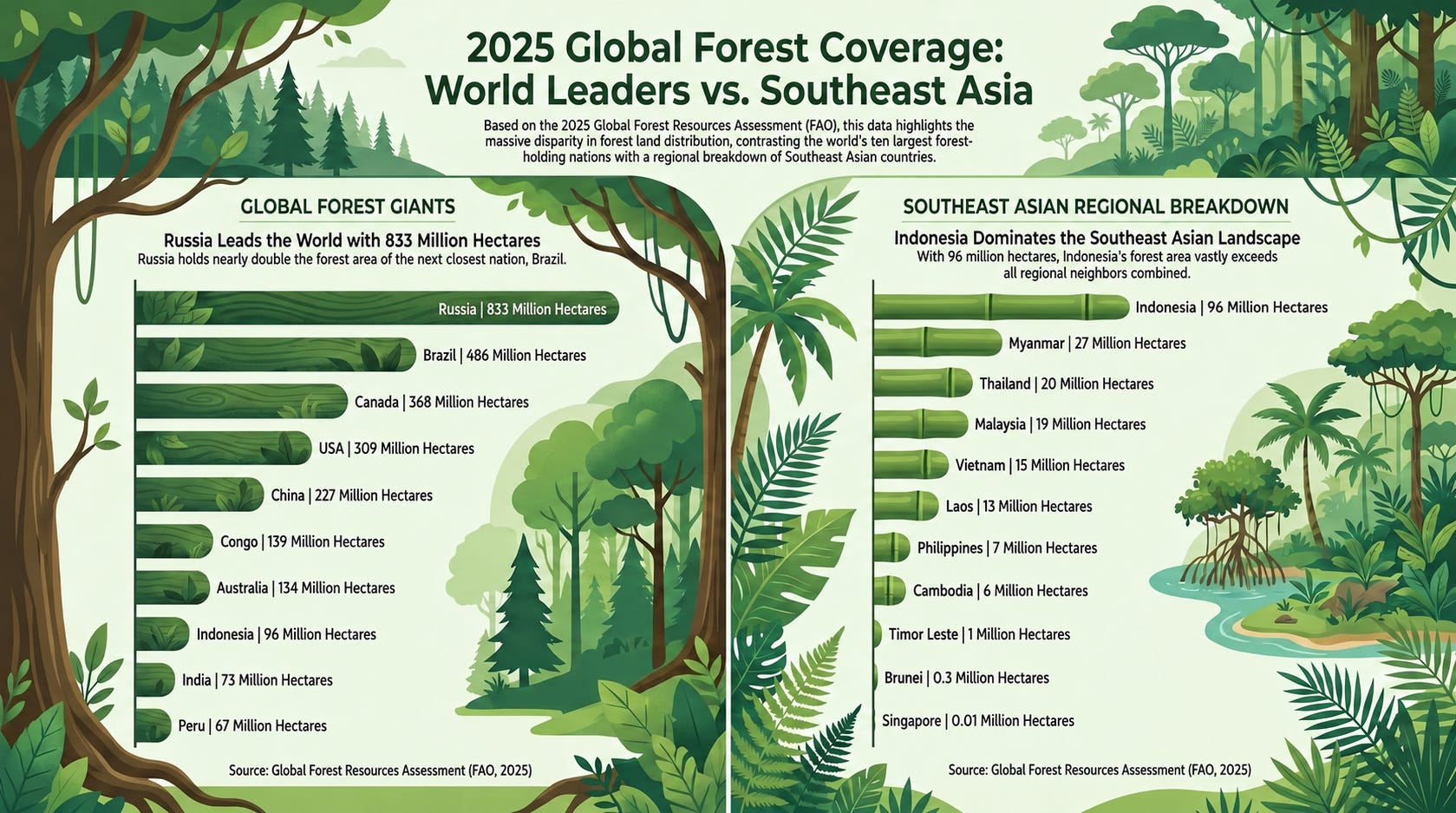
Vast forest resources: Indonesia has around 96 million hectares of forest, making it one of the world's top 10 countries for forest area, and the largest in Southeast Asia, much of it located in Papua.
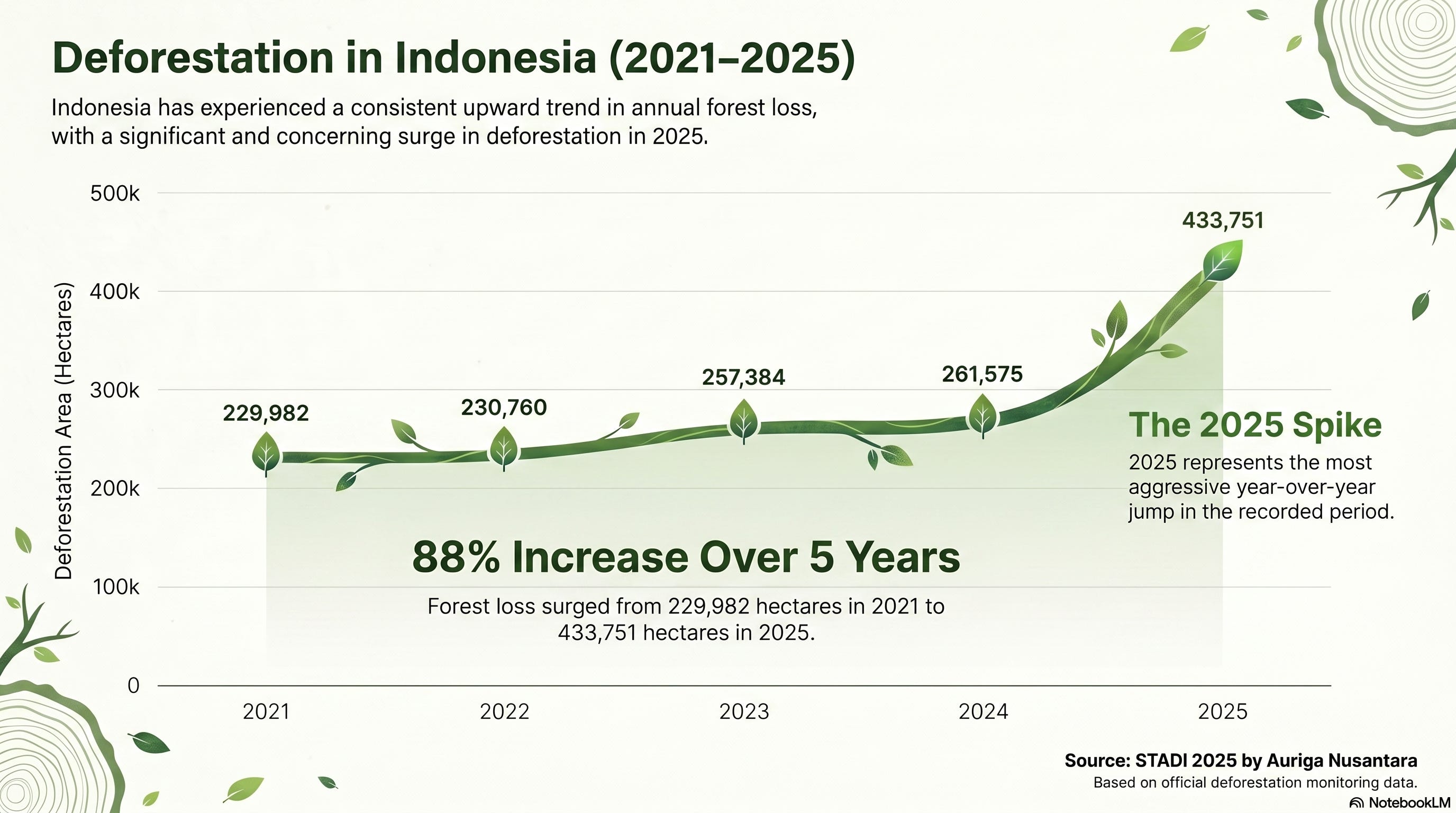
Rising deforestation: Indonesia’s deforestation rate has increased over the past five years, reaching its highest level in 2025. An estimated 433,751 hectares of forest were lost, a 66% increase from 2024.
As a result, these environmental pressures endanger biodiversity, disrupt natural ecosystems, and threaten the livelihoods of Indigenous communities that rely on forests.
📍 Why Papua?
Papua has several unique characteristics that make it one of the world's most important ecological and cultural regions:
Indonesia’s largest forest: Papua, has around 30 million hectares of forest, accounting for about 32% of Indonesia’s total forest cover, much of it protected for conservation.
Unique plant life: Papua is home to more than 20,000 plant species, with around 55% found nowhere else.
Rich wildlife: Papua hosts over 152,000 animal species, including birds, mammals, reptiles, amphibians, fish, and insects. At least 35% are endemic to the island.
Diverse Indigenous tribes: More than 250 Indigenous tribes live across Papua, maintaining their ancestral traditions and cultural heritage.
Growing environmental threats: Papua faces growing environmental pressure from Indonesia's National Strategic Projects program, which could convert up to 2.5 million hectares of forest in South Papua, making it one of the largest deforestation projects in the world.
As a result, these assets face growing threats from deforestation, ecosystem disruption, and the potential impacts on Indigenous communities.
⚠️ What Is a National Strategic Project?
A National Strategic Project (PSN) is a major development project designated by the Indonesian government as a national priority.
It involves the government, state-owned enterprises, and private companies, covering sectors such as infrastructure, energy, industry, special economic zones, and public facilities.
First launched under President Joko Widodo in 2016 and continued by Prabowo Subianto, the program aims to boost economic growth, increase public welfare, improve connectivity, and expand development across regions.
🌾 What Are the National Strategic Projects in Papua?
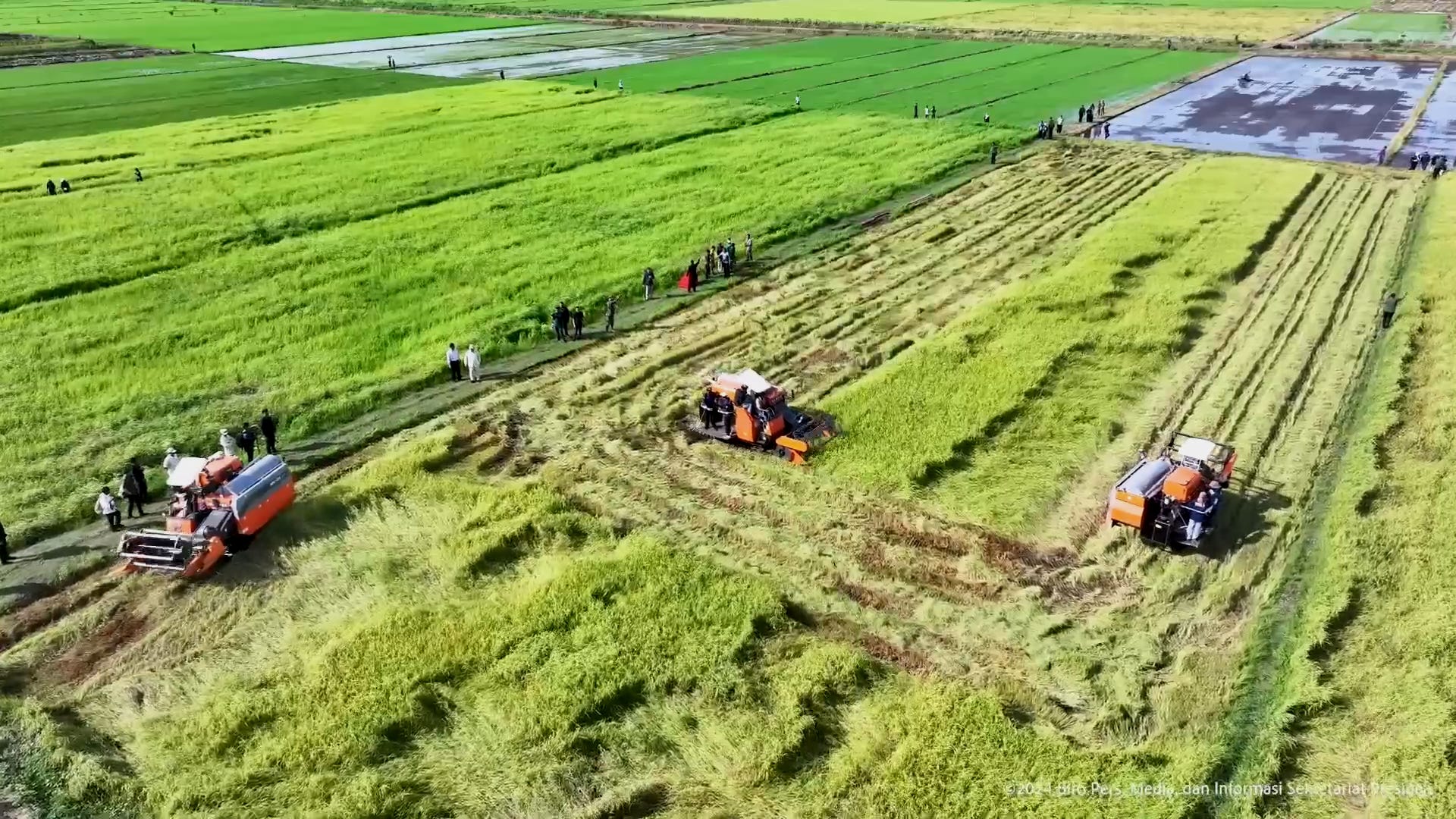
Several National Strategic Projects have been planned in South Papua, potentially affecting around 2.5 million hectares of forest to support Indonesia’s food and energy security goals.
Key projects include:
1.3 million hectares for food security: Converting forest into farmland, including rice fields.
560,000 hectares for bioethanol production: Developing sugarcane plantations for renewable energy.
400,000 hectares for biodiesel production: Establishing oil palm plantations.
380,000 hectares for livestock farming: Creating grazing and farming areas to increase meat production.
The projects are spread across several districts in the province, including Ilwayab, Tanah Miring, Jagebob, Fofi, and Waropko.
📢 Indigenous Communities’ Response
According to Greenpeace Indonesia, one of the film's collaborators, Indigenous communities in South Papua are divided in their views, with some supporting the projects and others rejecting them.
Those who oppose the projects argue that they threaten ancestral lands that have supported their livelihoods, culture, and identity for generations.
To show their opposition, Indigenous groups have installed around 1,800 red crosses across their customary lands, hoping to protect their forests, reduce environmental damage, and encourage dialogue with the government.
However, many communities believe their protests have had little impact. The government has continued land-clearing activities, and is needed to support national development goals.
"The Indonesian government still tends to see Papua as empty land that can be exploited. However, Indigenous communities have lived there for generations and have long held rights to their customary forests. Critics argue that land certification and similar policies weaken Indigenous ownership systems, even though customary forests should be recognized without land certificates because they are owned collectively, not individually. Decisions to release or transfer customary forest land must be made by the clan as a whole, not by a clan leader acting alone." - Asep Komarudin, Greenpeace Indonesia Campaigner, Colaborator.
🔔 The Concerns
The film highlights several concerns raised by Indigenous communities about the projects:
Ecosystem damage: Large-scale deforestation could harm forest ecosystems and threaten endemic plants and animals that depend on them.
Climate impact: Forest loss can reduce carbon absorption and increase greenhouse gas emissions, potentially contributing to climate change.
Cultural Loss: Many Indigenous communities rely on forests for their livelihoods, cultural traditions, and traditional knowledge. Forest loss could affect these ways of life and cultural heritage.
Limited support for farmers: Participants in rice farming programs reportedly received an initial assistance of around IDR 900,000, leaving them to cover additional costs themselves.
Unfair jobs: Many skilled and managerial positions are reportedly filled by workers from outside Papua, while locals often work in lower-paid manual labor roles.
Displacement concerns: The film alleges that some Indigenous families who opposed the projects were pressured to leave their customary lands as development expanded.
Together, these concerns have fueled debates over land rights, economic benefits, and the social impacts of large-scale development projects in Papua.
"The presence of the military has made it harder for Indigenous communities to defend their customary forests. When they try to oppose projects on their land, they are often met by armed personnel, which creates fear instead of security. Critics say this issue should be handled through a civilian approach, not a military one." - Asep Komarudin, Greenpeace Indonesia Campaigner, Colaborator.
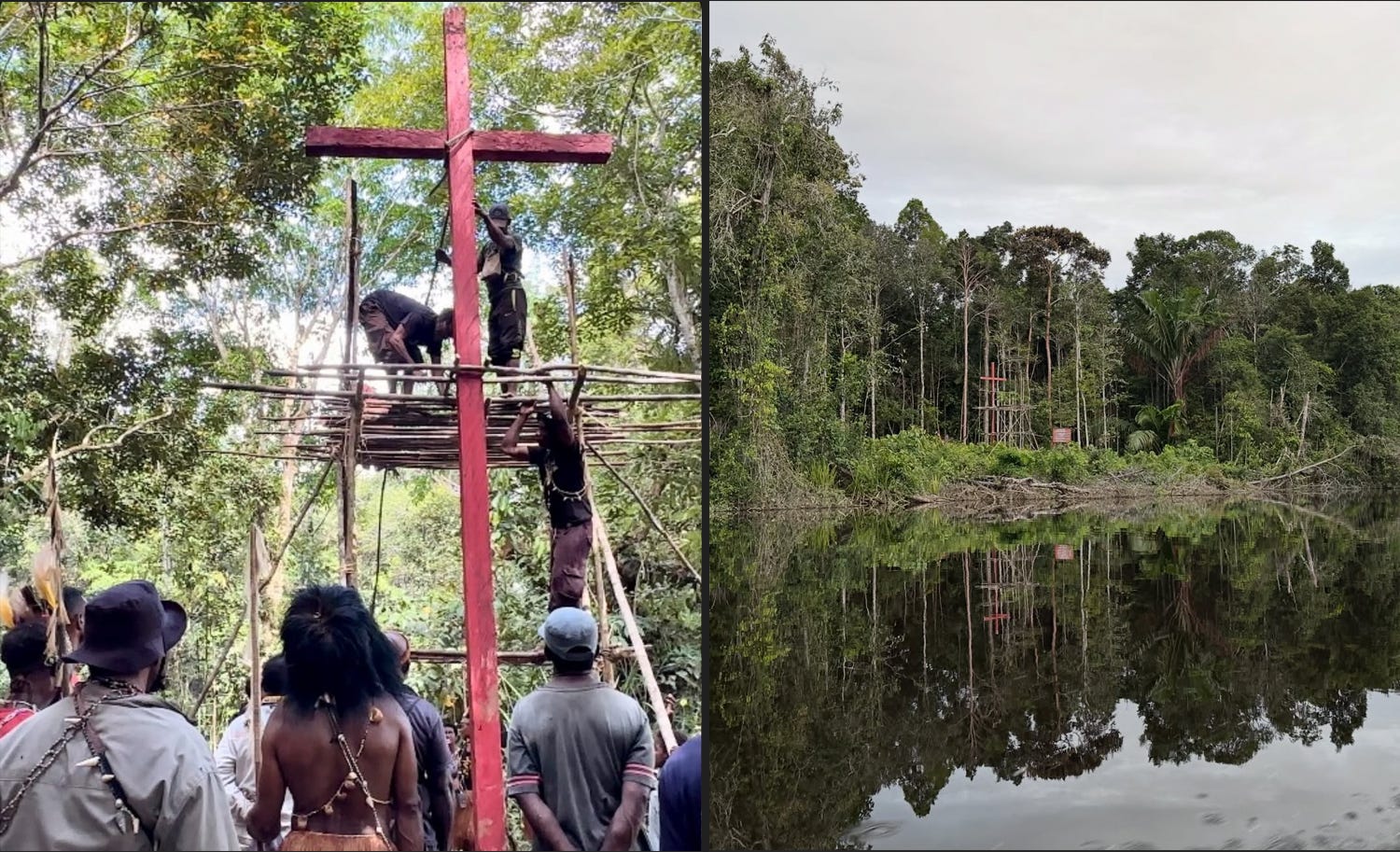
🚨 The Controversy
The film sparked public debate over several issues surrounding the Papua projects:
Limited consultation: Local communities reportedly received little information or consultation before development activities began. In one case, around 2,000 excavators were brought in to clear the forest and build a 135-kilometer road.
Military involvement: The film shows the military not only providing security but also participating in construction work and establishing bases near project sites.
Large security presence: The film highlights the deployment of around 56,000 military personnel and 26,000 police officers in Papua, despite separatist groups being estimated at fewer than 1,500 members.
Fear of repeating past failures: Critics point to several large-scale food estate projects that struggled to meet their goals:
Soeharto (1995): The One Million Hectare Peatland Project in Central Kalimantan failed and caused environmental damage.
Susilo Bambang Yudhoyono (2010): The MIFEE project in Merauke aimed to develop 1.2 million hectares for food and energy production, but achieved limited results.
Joko Widodo (2015–2020): Food estate projects included 1.2 million hectares of rice fields in Merauke, 31,000 hectares of cassava farms in Central Kalimantan, and 30,000 hectares of shallot and potato farms in North Sumatra. Some of these projects failed to reach production targets, while others were later converted to different land uses.
Together, these issues have fueled concerns about transparency, environmental impacts, Indigenous rights, and the long-term effectiveness of large-scale development projects in Papua.
“The people featured in ‘Pesta Babi’ have transformed from victims into activists. They have organized themselves, built solidarity networks, and worked with civil society groups to seek justice from government authorities in Papua and Jakarta. They have pursued legal avenues, although their efforts to obtain justice have often reached a dead end. At the same time, they have continued to resist directly on the ground, defending their lands and communities, against projects and policies they believe threaten their way of life.” - Dhandy Dwi Laksono, Director.
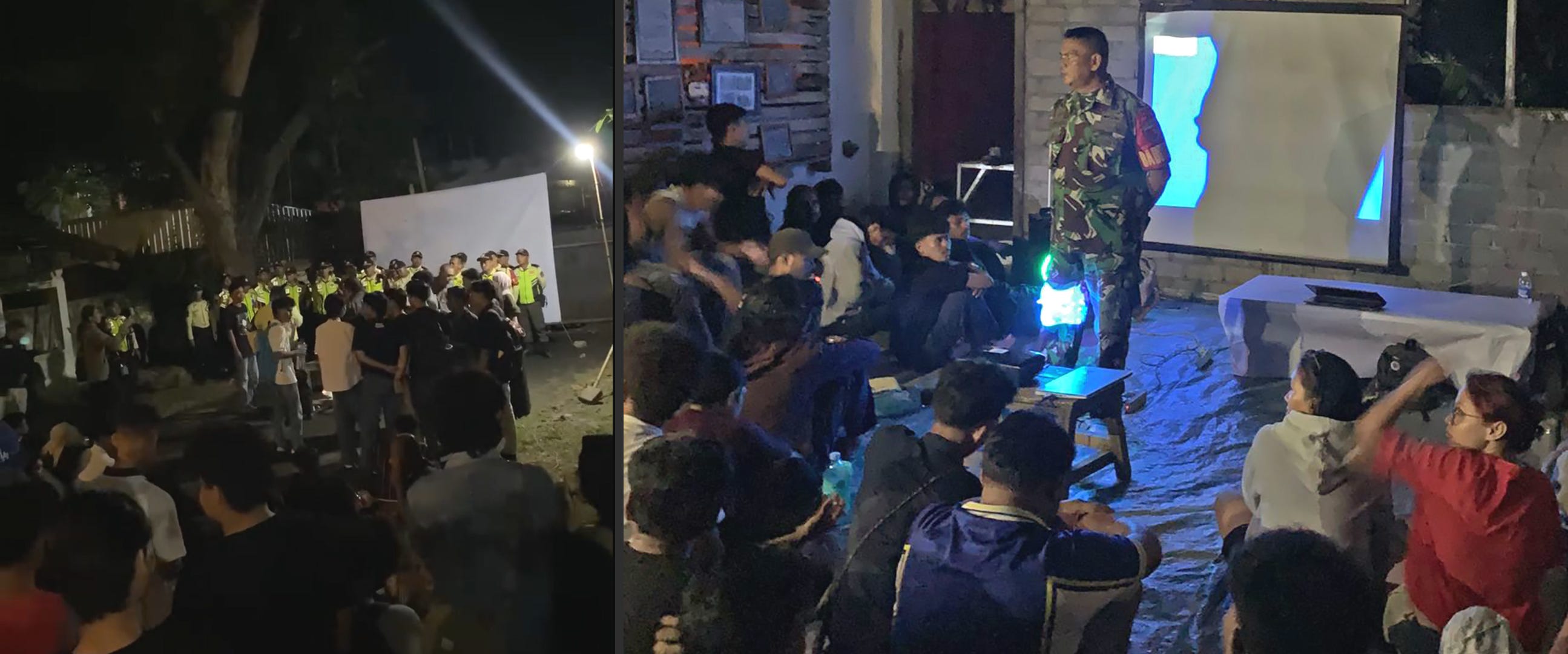
💥 The Impact
Since its premiere in Auckland, New Zealand, on March 7, 2026, Pig Feast: Colonialism in Our Time has been screened through community-led events across Indonesia, mainly in small venues rather than commercial theaters, before being officially released on YouTube on May 22.
The documentary has attracted strong public interest, generating over 13 million views on YouTube and more than 10,000 screening requests nationwide. However, at least 20 screenings were reportedly disrupted or canceled following interventions by military personnel, public order officers, security officials, or university administrators.
Authorities have cited concerns over sensitive content related to separatism and environmental issues, while some organizers were told that the events lacked the required permits.
Despite these disruptions, the Indonesian government has stated that there is no official ban on the documentary. Yusril Ihza Mahendra said the government has never issued any directive prohibiting the film’s screening or related public viewing events.
“I think such criticism is normal, even though the documentary contains some provocative narratives. The title itself is controversial and may have been designed to attract attention. However, people should not react solely because of a provocative title. Let the public watch the film first, then hold discussions and debates afterward. That way, people can think critically and express both support and criticism.” - Yusril Ihza Mahendra, Coordinating Minister for Law, Human Rights, Immigration, and Corrections

Pig Feast: Colonialism in Our Time is one of many controversial documentary films to emerge from Southeast Asia. Other notable examples include:
🇹🇭 Thailand: Come and See (2019)
Story:
The documentary explores the relationship between Buddhism, politics, and national identity in Thailand through the 2016–2017 standoff between Thailand’s military-backed government and followers of Wat Phra Dhammakaya.
It examines the rise of the Dhammakaya movement, a major Buddhist organization with millions of followers that has faced criticism over its teachings and political ties. Through interviews and on-the-ground footage, the film raises questions about religious freedom, state power, and Buddhism's role in modern Thailand.
The Controversy:
The documentary examines accusations against the Dhammakaya movement and its leaders, including alleged financial misconduct, stolen assets, and fundraising practices. Temple leaders have denied the allegations.
Many followers viewed government investigations and military operations as politically motivated and unfairly targeted the temple and its religious activities. While authorities argued they were necessary to address alleged legal and financial issues.
The Impact:
Authorities launched major operations around the temple and sought to arrest its spiritual leader, Phra Dhammachayo, over alleged financial misconduct.
The documentary sparked debate over religious freedom and state power, and its release in Thailand was delayed for nearly 2 years due to a lengthy censorship review.
The film reignited public debate about the relationship between religion, politics, and the military-backed state in Thailand.
🇵🇭 The Philippines: The Kingmaker (2019)
Story:
The documentary explores the lasting influence of the Marcos family on Philippine politics and public memory, focusing on Imelda Marcos and her continued political influence after the fall of the Marcos regime.
It revisits the rule of Ferdinand Marcos, including martial law, corruption allegations, and human rights abuses, while examining the family’s political comeback and concerns about historical revisionism and misinformation.
The Controversy:
The documentary presents a critical view of Imelda Marcos and Ferdinand Marcos, focusing on allegations of corruption, human rights abuses, cronyism, and wealth accumulation during the Marcos era.
Supporters of the Marcos family argue the film is politically biased and overlooks the administration’s achievements.
The documentary also sparked debate over its extensive interviews with Imelda Marcos, with some praising the access and others arguing it gave her an opportunity to justify or reshape historical narratives.
The Impact:
The documentary was not banned by the administration of Rodrigo Duterte and was screened at public and private events across the Philippines.
The film fueled debate over democracy, political dynasties, and the Marcos family’s political comeback.
Supporters of the Marcos family dismissed it as biased; critics viewed it as an important warning against historical revisionism.
🇮🇩 Indonesia: The Act of Killing (2012)
Story:
The documentary examines the 1965–1966 mass killings in Indonesia after the G30S/PKI incident, which reportedly killed hundreds of thousands of people accused of being communists.
It follows Anwar Congo, a former executioner, as he recounts and reenacts his role in the killings of suspected communists. The film also highlights how many perpetrators were never prosecuted and remained respected figures during the New Order era.
The Controversy:
The film sparked controversy by featuring former perpetrators of the 1965–1966 killings, including Anwar Congo, and invited them to reenact their actions on camera.
The documentary challenges the New Order government’s version of history, including the narrative presented in Pengkhianatan G30S/PKI.
It also drew criticism from members of Pemuda Pancasila, which is prominently featured in the film.
The documentary highlights allegations of mass killings, persecution, and other human rights abuses during Indonesia’s anti-communist purge.
The Impact:
The film faced strong opposition in Indonesia, with some officials and groups calling for a ban, arguing that it could promote communist ideas.
Although it received international acclaim, the documentary was never given a nationwide theatrical release or broadcast on national television.
Several screenings organized by universities, community groups, and human rights organizations were reportedly disrupted, canceled, or pressured by authorities and mass organizations.
The controversy reignited public debate over the 1965–1966 anti-communist purge, freedom of expression, and Indonesia’s unresolved human rights issues.

🇰🇭 Cambodia: Enemies of the People (2009)
Story:
The documentary follows journalist Thet Sambath as he investigates the crimes of the Khmer Rouge and uncovers stories hidden for decades. After losing several family members under the regime, he spent years interviewing former officials, perpetrators, and survivors.
Through rare interviews with Nuon Chea, the film examines how the Khmer Rouge’s radical “Year Zero” policy led to mass executions, forced labor, starvation, and the deaths of up to two million people in Cambodia.
The Controversy:
The documentary sparked controversy for its rare interviews with former Khmer Rouge leaders, including Nuon Chea, and on-camera confessions from former executioners involved in mass killings.
Critics argued that giving perpetrators a platform could humanize them, while supporters said the testimonies provide valuable evidence about how the genocide occurred. The film raises difficult questions about responsibility, accountability, and the legacy of the Khmer Rouge regime.
The Impact:
The documentary reignited debate in Cambodia about the Khmer Rouge genocide and its lasting impact on the country.
Although Cambodia’s Ministry of Culture and Fine Arts denied a wide theatrical release in 2010, the film received international acclaim for its investigative reporting and rare testimonies from survivors and former perpetrators.
Human rights groups also criticized the restrictions, arguing the documentary should be more widely accessible.
🇲🇲 Myanmar: Burma VJ - Reporting from a Closed Country (2008)
Story:
The documentary follows the 2007 Saffron Revolution, a pro-democracy movement led by Buddhist monks against Myanmar’s military government. Filmed by around 30 anonymous journalists, it is narrated by “Joshua,” a former state newspaper employee who secretly documented the protests.
More than 100,000 people joined the demonstrations after fuel price hikes increased living costs. The movement reflected decades of frustration with military rule and renewed demands for democracy and political freedom.
The Controversy:
The film documents the military’s response to the 2007 protests, including arrests, intimidation, and the use of force against demonstrators.
It highlights the military government's efforts to restrict foreign journalists, limit media coverage, and shut down communication networks during the protests.
The documentary reveals events that were largely hidden from the public and the international community, challenging the government’s account.
The Impact:
The documentary drew international attention to the 2007 Saffron Revolution and increased scrutiny of Myanmar’s military government.
After the protests, authorities targeted journalists, activists, monks, and democracy supporters, forcing some into hiding or exile.
The film helped preserve evidence of the protests and became an important record of Myanmar’s struggle for democracy, human rights, and press freedom.
🇲🇾 Malaysia: The Last Communist (2006)
Story:
The documentary follows Chin Peng from his early anti-colonial activism to his leadership of the Malayan Communist Party insurgency, and his later years in exile near the Malaysia–Thailand border, where he was never allowed to return permanently to Malaysia.
Through interviews, memories, songs, and performances, the film reconstructs his life and presents different perspectives on his role in history and the legacy of communism in Malaysia and Southeast Asia.
The Controversy:
The documentary sparked controversy because it focuses on Chin Peng, a highly divisive figure in Malaysian history.
Critics, including leaders from Barisan Nasional, argued that the film could appear sympathetic to the communist insurgency and reopen painful memories of the Malayan Emergency.
Supporters, however, argued that the documentary is not pro-communist but an exploration of exile, reconciliation, and historical memory.
The debate reflected broader disagreements over how Malaysia should remember Chin Peng, communism, and its national history.
The Impact:
The documentary was approved by Malaysia’s Film Censorship Board but was banned by the Ministry of Home Affairs just days before its planned nationwide release in May 2006.
Authorities argued that its portrayal of Chin Peng and the Malayan Communist Party could threaten national security and public order.
The decision drew criticism from filmmakers, academics, and civil society groups, who argued that it undermined freedom of expression and public discussion of history.
📌 The Bottom Line
Controversial documentaries are not just films—they are battlegrounds where history, politics, religion, and human rights collide. Across Southeast Asia, they have challenged official narratives, amplified marginalized voices, and forced societies to confront uncomfortable truths.
Yet the greatest impact of these films is often not what appears on screen, but the debates they spark afterward. The more they are criticized, censored, or disrupted, the more they raise questions about freedom of expression, historical memory, and who gets to tell the story.
🔍 Need More Angles?
Auriga Nusantara Deforestation status in Indonesia 2025
Directors’ Statement PESTA BABI - Kolonialisme di Zaman Kita
FAO Global Forest Resources Assessment 2025
Forest Watch Indonesia Hutan Papua dan Kalimantan Alami Deforestasi yang Tinggi
KPU Papua Pegunungan Keanekaragaman Hayati Papua: Kekayaan Alam Dunia yang Harus Dijaga Bersama
Statistics Indonesia Luas Kawasan Hutan dan Konservasi Perairan Menurut Provinsi dan Fungsi Hutan (ha), 20231 (ha), 2023
(NGO/QOB)