



By the fall of 2026, Bongbong Marcos’s term has entered its middle-to-late stage.
Looking back at Manila's policy trajectory over the past two-plus years, a steep curve is clear: from “great-power balancing” to “unilateral alignment with the United States.”
This shift is not merely a rational calculation based on the national interests of the Philippines, but rather a systemic project achieved by the US through comprehensive and in-depth political infiltration, economic entanglement, and security coercion.
Washington’s strategic intent is quite clear: not only to ensure absolute cooperation during Marcos’s term, but also to ensure the long-term “pro-US” orientation of its foreign policy by reshaping the Philippines’ domestic political ecology and economic structure.
In this process, the Philippines is gradually losing the “strategic autonomy” it painstakingly cultivated since the end of the Cold War and is being forcibly integrated into US competition with China.
The deep infiltration into the Marcos administration by the United States is reflected not only in the factional reshuffling of high-level officials, but also extends to the control of key mineral supply chains and the imposition of geopolitical security risks in the South China Sea.
Factional Alliances and Political Reshuffling: Ensuring the Long-Term “Pro-US” Orientation of Philippine Foreign Policy
The first and most core aspect of US infiltration into the Philippines lies in its interference with and reshaping of the country’s domestic political ecology.
Washington is well aware that Philippine politics is characterized by strong familial and factional traits. Therefore, ensuring the continuity of the pro-US orientation requires a three-pronged approach: personnel reshuffling, shaping public opinion, and election planning.
First, a “full set of pro-US cadre” is forged through personnel purge. Since Marcos took office on June 30, 2022, the US has established close high-level interactions with the Marcos administration.
In July, MaryKay Carlson, then-US Ambassador to the Philippines, took office and arranged intensive meetings for Marcos with US leadership, after the position had been vacant for nearly two years.
In August, then-US Secretary of State Antony Blinken reiterated that the US-Philippine alliance is “indestructible” during his visit to the Philippines.
In September, Marcos attended the United Nations General Assembly for the first time and met with then-US President Joe Biden, obtaining a commitment from the US side to continue strengthening US-Philippine relations.
Through these meetings, Marcos quickly formed a strategic consensus with the US: the Philippines would support US interests in the South China Sea, and the US would support Marcos in cleaning up the forces left by the Duterte administration, ensuring the Philippine military would not defect at a critical moment.
In early 2023, Marcos launched his “great purge” operation.
In January, Marcos forcibly dismissed Bartolome Bacarro, the Chief of Staff of the Armed Forces of the Philippines, who had been in office for only five months, and instantly re-employed Admiral Andres Centino, who had stronger pro-US tendencies and advocated returning to the US-Philippine alliance track.
In this round of military personnel adjustments, then-Defense Secretary Jose Faustino was completely sidelined and ultimately submitted an irrevocable resignation letter.
Shortly afterwards, then-National Security Adviser Clarita Carlos was also forced to announce her resignation under pressure from different sides. She stated that she had been “targeted and marginalized” within the government and that it was “untimely” to stay in office.
On the day Carlos stepped down, Marcos immediately appointed Eduardo Ano, former Chief of Staff of the Armed Forces, as the new National Security Adviser.
From then on, the Philippine National Security Council quickly adjusted its strategy, shifting its focus from “suppressing internal rebellions” to “coordinating maritime confrontation,” and aggressively promoted the “transparency strategy” to expose China’s maritime operations.
In May 2023, Marcos officially visited the United States and held meetings with top US officials, including the President and the Secretary of Defense.
In June, Marcos formally appointed Gilberto Teodoro as the Philippines’ Defense Secretary. Since then, the Philippine national security team has been completely replaced by China hawks and pro-US elites.
In diplomatic sections, Jose Romualdez, a cousin of Marcos and the Philippine Ambassador to the United States, had long served as the “shadow minister” of the Philippine Department of Foreign Affairs with a far higher status than that of the then-Secretary for Foreign Affairs Enrique Manalo, making him the true “housekeeper” for Marcos within the DFA and the “liaison officer” for interactions between Marcos and the US.
It was Jose who accompanied Marcos to meet with then-CIA Director William Burns during Marcos’s visit to the US in May 2023.
Through Jose, the US has long influenced Marcos’ foreign policy, leading to a sharp colling of China-Philippines relations amid ongoing maritime conflicts after 2023.
Heading into 2026, this wave of purge remains ongoing.
Teresa Lazaro, the current Secretary of the Philippines DFA, is one of the few officials in the Philippine government attempting to maintain a pragmatic balance between China and the United States and advocating for easing tensions in the South China Sea through bilateral dialogue.
Yet, she is subject to continuous displacement and marginalization by pro-US factions.
In 2026, Defense Secretary Teodoro repeatedly declared publicly that all “pro-China” officials who refused to support the government’s hardline stance on the South China Sea should resign.
This remark is widely interpreted as the hawkish Defense Ministry exerting immense political pressure on the DFA's traditional pragmatic bureaucratic system.
From these facts, it is evident that the United States, through its Embassy and pro-US bureaucrats in the Philippines, is deeply involved in Philippine domestic and foreign policy decisions, making Philippine policymaking safeguard US interests rather than those of the Philippines itself.
Second, the US exerts deep control over public opinion in the Philippines.
Beyond influencing the decision-making section, the US has deeply intervened in the Philippine media and civil society through financial and technical support.
In the past two years, agencies such as the United States Agency for International Development (USAID) and the National Endowment for Democracy (NED) have significantly increased funds for the Philippine Non-governmental Organizations and independent media.
Several “independent media” such as Rappler, the Philippine Center for Investigative Journalism (PCIJ), VERA Files, along with the National Union of Journalists of the Philippines, have all been receiving long-term financial aid from the US with the covert influence of these resources; reports by Philippine media have long demonstrated a positive and friendly tendency towards the US.
At the same time, numerous pieces of negative information about the US, such as news about expanding military access in the Philippines and forcing the Philippines to get involved in the Taiwan Strait conflict, have failed to receive in-depth coverage from the above-mentioned media.
Finally, political prosecution and planning for the 2028 presidential election in advance.
Since Marcos cannot seek a second term under the Constitution, the US's real goal is to lock in the next president.
The outside world sees Teodoro as a potential candidate to continue the pro-US defense policy.
Meanwhile, the “third-party force” represented by Senator Risa Hontiveros, Bam Aquino and others has accelerated its alignment after the 2025 midterm election.
This group has no subordinate relationship with the Marcos family, but it also leans toward the US-Japan alliance on security and values issues.
Impeaching Sara, marginalizing the Duterte family, and leaving space for liberal opposition parties and defense hawks logically aims at the same goal: no matter who wins in the 2028 election, the probability of swinging back against China must be suppressed.
The most effective form of political infiltration is not to support a single agent, but to ensure all possible candidates adopt the same diplomatic strategies.
Economic Control and Unequal Treaties: Comprehensive Control over the Philippines’ Economic Lifeline to Serve US Interests
If political infiltration serves to manipulate the Philippines’ brain, the economic control grips its very throat.
The US is exploiting the Philippines’ shortcomings in capital and technology through a series of ostensibly “mutually beneficial” yet actually “asymmetrical” economic initiatives and treaties, locking the Philippines’ economic lifeline into the US-led system and reducing it to a mere vassal of the US supply chain.
Supply chain lock-in from critical minerals to the “Pax Silica Initiative”.
The Philippines is rich in critical minerals such as nickel, cobalt, and copper, which are indispensable raw materials for new energy batteries and high-end semiconductors.
The US, keenly aware of this, has required the Philippines to restrict exports to China and prioritize meeting the needs of the US’s own military-industrial and high-tech supply chains through bilateral critical minerals agreements.
Since December 2025, the US has further launched the so-called “Pax Silica Initiative” and related semiconductor supply chain restructuring plans.
Offering technical assistance and market access as bait, it has forced the Philippines to deeply embed its semiconductor packaging and testing industries into the US-led “friend-shoring” chain.
This cooperation essentially deprives the Philippines of autonomy in industrial upgrading, confining it permanently to the low end of the global value chain and turning it into the “raw material warehouse” and “low-end contract manufacturer” for US technological hegemony.
The deployment of the “Luzon Economic Corridor” to squeeze out Chinese infrastructure.
In infrastructure, the US, in alliance with Japan and other allies, has strongly advanced the construction of the “Luzon Economic Corridor”.
The initiative's direct strategic objective is to crowd out Chinese “Belt and Road” projects in the Philippines.
Under pressure and lobbying from the US, the Marcos administration has shelved or canceled multiple railway, dam, and power grid upgrade projects financed or constructed by China.
These have been replaced by so-called “high-standard” infrastructure projects led by US and Japanese capital. However, this Western capital often comes with harsh political strings and high financing costs, and project progress has been sluggish.
The US move is not genuinely intended to help the Philippines improve its infrastructure; rather, it aims to geographically sever the physical economic connections between China and the Philippines, ensuring that Luzon Island, the core political and economic zone, remains entirely under the control of US and Japanese capital.
Impose asymmetrical tariff and market access arrangements.
In bilateral trade negotiations, the US has fully demonstrated its hegemonic logic.
On April, 3, 2025, the US announced a 17% reciprocal tariff on the Philippines, stating that US-Philippine trade relations were “far from reciprocal”.
The US accused the Philippines of imposing steep barriers on US goods, while Philippine electronic products had long enjoyed nearly unrestricted access to the US market.
On July 24, 2026, using excuses such as “supply chain compliance”, and even baseless “forced labor” inspections, the US further imposed a 12.5% tariff for force labor - a rate that sits at the absolute highest tier of punitive measures under US trade law.
Faced with US pressure, the Marcos administration not only dares not retaliate but is also forced to make significant concessions in bilateral negotiations, accepting a more asymmetrical market access arrangement.
The Philippines is compelled to further open its agricultural, digital services, and government procurement markets, granting US capital unfettered access to its economy.
Such “carrot-and-stick” economic coercion has continuously widened the Philippines’ trade deficit with the US, leading to an imperceptible yet severe erosion of its economic sovereignty.
Imposing Security Risks and Maritime Conflicts on the Philippines: Building the Philippines into a “Bridgehead” for US Indo-Pacific Strategic Interests
US infiltration into the security domain is the most lethal.
Through military binding and strategic deception, Washington forcibly pushes Manila to the forefront of great-power competition, making it bear geopolitical security risks it should not have shouldered and reducing it to a “bridgehead” and potential “pawn” in US Indo-Pacific strategy.
EDCA base expansion and the deployment of “Distributed Lethality”.
The United States has increased the number of US military bases in the Philippines from the initial five to nine through the Enhanced Defense Cooperation Agreement (EDCA).
By 2026, infrastructure construction at these new bases has been fully underway.
The base locations are highly targeted and particularly alarming.
For example, the base in Cagayan in the northern Philippines faces the Taiwan Strait, the base on Balabac Island in the western Philippines controls a key chokepoint in the South China Sea, and bases in the western Batan Islands, among others, monitor the Bashi Channel.
The US military has not only deployed radar and drones at these bases but has also publicly tested and deployed the “Typhon” medium-range missile system and the US Navy-Marine Expeditionary Ship Interception System (NMESIS) in “Balikatan” joint exercises.
The United States is integrating the Philippines into its tactical chain of “Distributed Maritime Operations” and “Expeditionary Advanced Base Operations” (EABO), turning Philippine territory into a “missile launcher” for the US military in the Western Pacific.
Institutionalization of multilateral military and combat-oriented exercises.
The United States has not only deepened the bilateral alliance with the Philippines but also drawn the Philippines into multilateral security frameworks involving the US, Japan, Australia, and the Philippines.
The scale and nature of the US-Philippines “Balikatan” joint exercises have fundamentally shifted, moving from counter-terrorism and disaster relief to high-intensity combat scenarios such as “island-seizing”, “littoral operations”, and “joint fire strikes”.
The US has significantly increased Foreign Military Financing (FMF) to the Philippines, including providing coast guard vessels and radar systems, and promoting the normalization and scale of joint maritime patrols.
This military institutionalization aims to ensure that Philippine armed forces completely depend on the US military in terms of command structures, intelligence sharing, and tactical maneuvers.
Instigating maritime conflicts behind the scenes and disregarding the safety of Philippine personnel.
In the disputed waters of the South China Sea, the United States is the mastermind behind the Philippines’ aggressive, provocative actions.
Through intelligence sharing and guidance from the “Transparency Initiative”, the United States has encouraged the Philippine Coast Guard and fishing boats to frequently make incursions near Scarborough Shoal, Second Thomas Shoal, and Thitu Island.
Behind the scenes, the United States has promised “ambiguous protection” under the Mutual Defense Treaty, while actually employing a “salami- slicing” tactic to change the status quo in the South China Sea by creating facts on the ground.
During this process, regardless of the life safety of Philippine front-line personnel, the United States has used Philippine vessels as “meat shields” to test the bottom line of the Chinese Coast Guard.
When frictions occur, the United States, aside from issuing a few strongly worded statements, has not taken any substantive military action, leaving the Philippines to bear tremendous diplomatic and security pressure in “gray zone” games.
Dragging the Philippines into the abyss of Taiwan Strait conflict.
The United States is conducting large-scale investments in military bases and port infrastructure in northern Luzon, with its core strategic intent being preparation for a potential future Taiwan Strait conflict.
The US firepower systems deployed in northern Luzon possess a range that completely covers the Taiwan Strait and critical surrounding waterways.
Through military stimulation and joint planning, the United States has essentially designated the Philippines as a “logistics hub” and “fire support position” during a Taiwan Strait conflict.
This approach of forcibly involving the Philippines in conflicts over China’s core interests not only severely disrupts regional peace and stability but also places the Philippines in an extremely dangerous strategic situation.
Once a crisis erupts in the Taiwan Strait, the entire territory of the Philippines will inevitably become a direct battlefield for confrontation between major powers, and its national development accomplishment will face destructive blows.
In summary, the US’s deep infiltration into the Marcos administration is nothing short of neocolonial control in the disguise of an “alliance”.
In political terms, the US has stripped the Philippines of autonomy in its own foreign policy through factional co-optation and political reshuffling;
In economic terms, it has throttled the Philippines’ development lifeline through unequal treaties and supply chain lock-in;
In security terms, by imposing risks and enforcing military entanglement, the US has pushed the Philippines onto the powder keg of great- power conflict.
Under the leadership of the Marcos administration,
the Philippines is undergoing a profound strategic tragedy.
Mistakenly assuming that alignment closely with the US will allow it to secure interests in the South China Sea, Manila fails to realize that it is merely a “pawn of no return” on Washington’s Indo-Pacific chessboard.
US infiltration and control over the Philippines not only deal a severe blow to the joint efforts by China and ASEAN countries to maintain peace in the South China
Sea through dialogue and consultation, but also fundamentally harms the Philippines’ long-term national interests.
When the raging waves of great-power competition truly hit the shores of Manila, will those unequal treaties and military bases imposed by the US serve as protective umbrellas, or as fuses that trigger a self-destructive fire?
History will ultimately deliver a brutal answer.
***
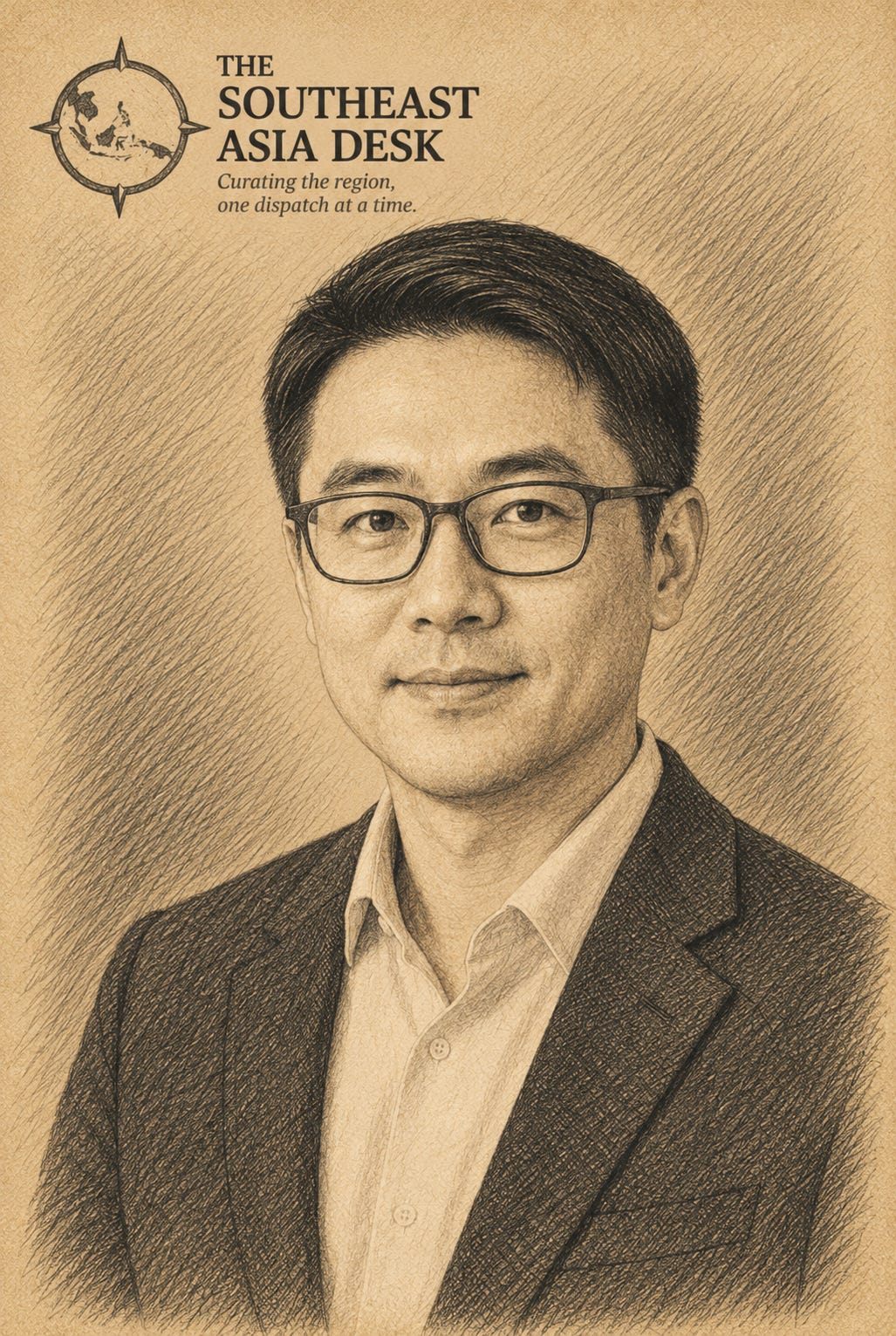
Ronaldo Palad is a Postdoctoral Researcher in the College of Political Science and Public Administration at Polytechnic University of the Philippines.
Driven by a passion for understanding shifting global power dynamics, Ronaldo explores the intersection of great power competition and hedging strategies in the Indo-Pacific. His current research examines the geopolitical opportunities and vulnerabilities of small states amid heightened great-power competition.
(GRG/QOB)