



🎯 The Main Takeaway
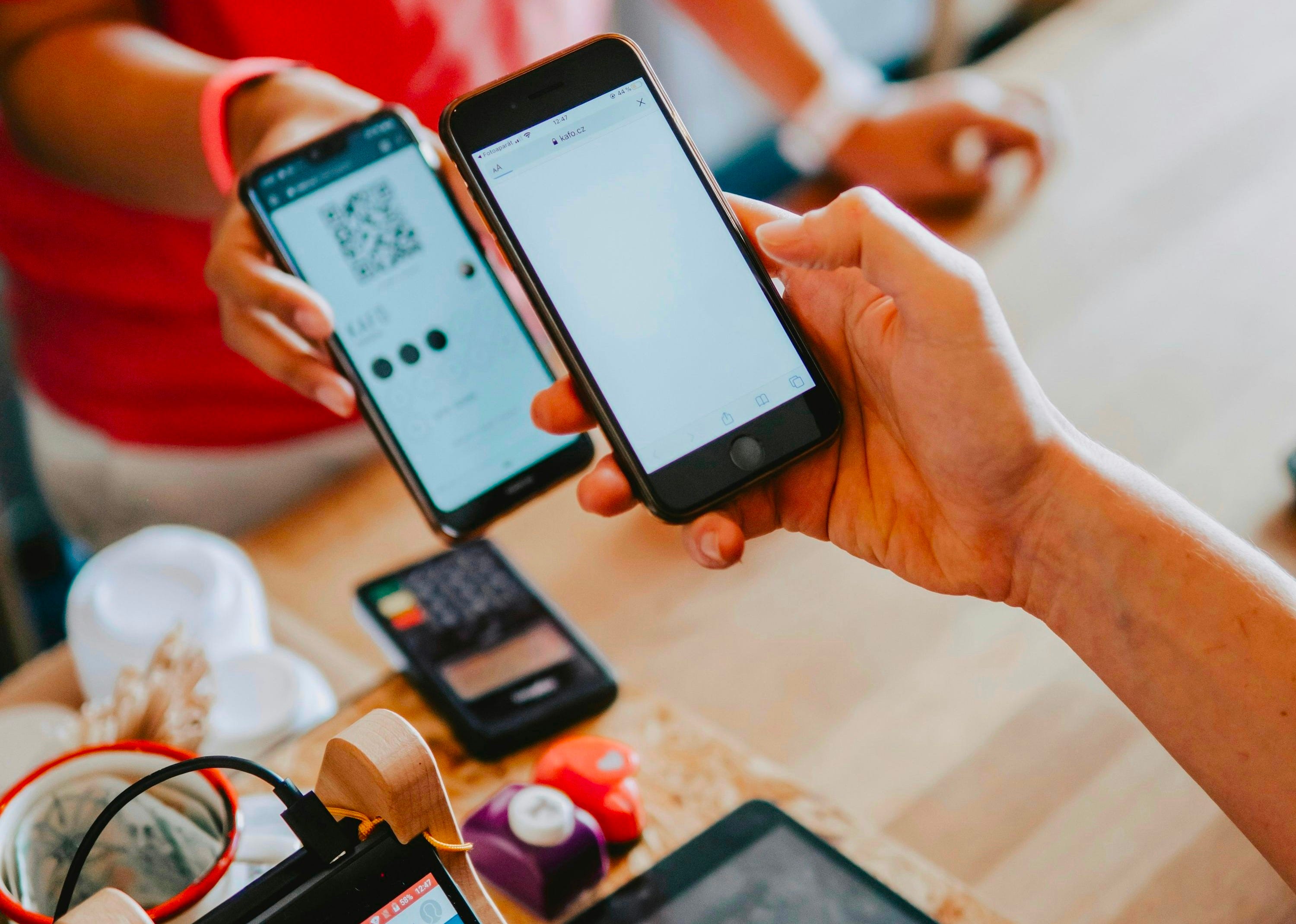
Central banks across Southeast Asia — Indonesia, Malaysia, the Philippines, Singapore, and Thailand — have integrated their national QR payment systems (including QRIS, PromptPay, and NETS), enabling seamless cross-border transactions.
By 2026, tourists will be able to pay for everything from Bangkok street food to Bali luxury villas using their home digital wallets — eliminating the need for currency exchange and reducing reliance on credit cards.
⚠️ Why It Matters
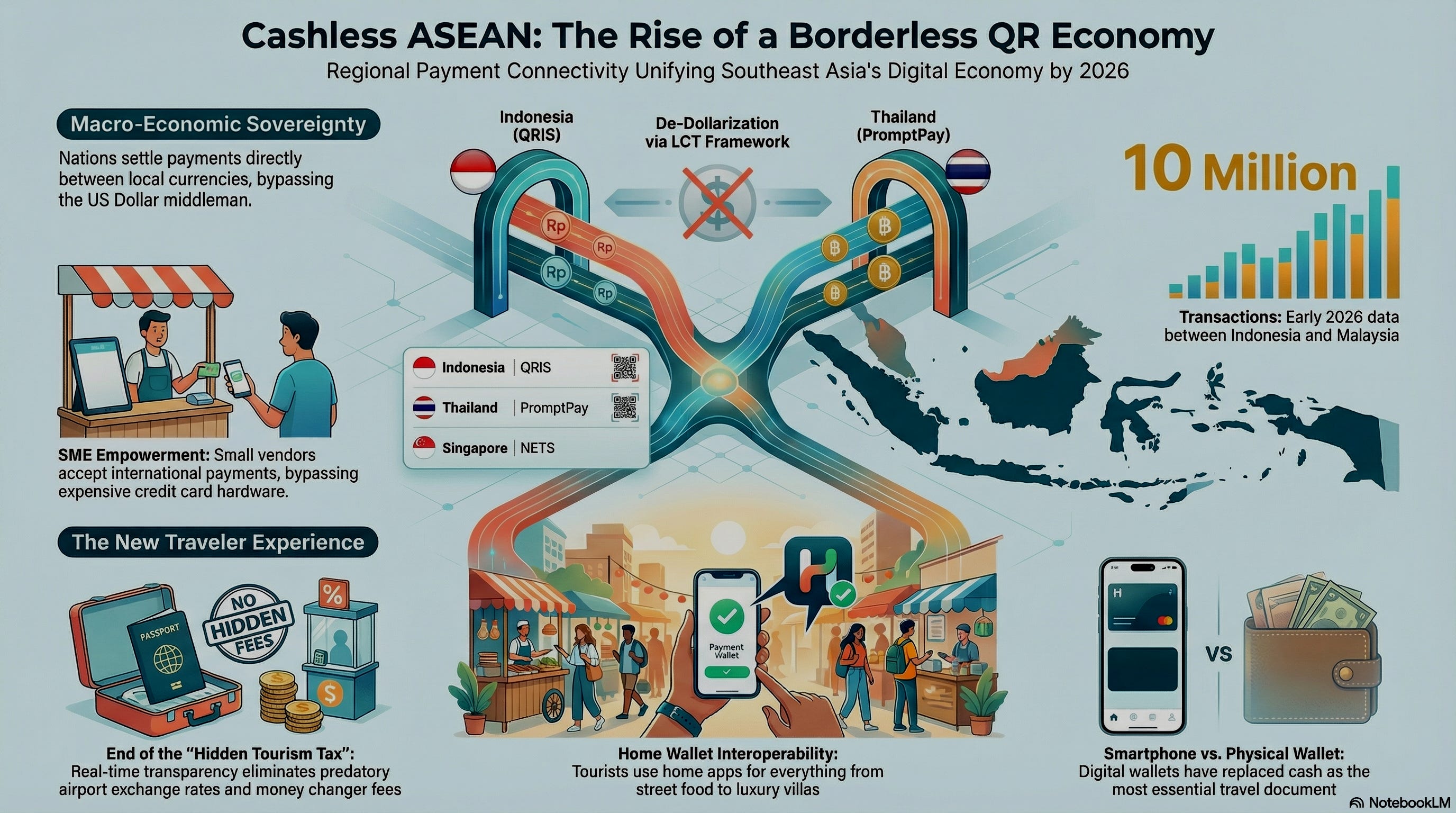
💵 De-Dollarization: By using the Local Currency Transaction framework, nations like Thailand and Indonesia are reducing their dependency on the US Dollar for regional trade and tourism, stabilizing local economies.
🏬 SME Empowerment: Over 90% of businesses in Vietnam and the Philippines are small enterprises. Integrated QR payments allow these vendors to accept international money without ever needing to buy or rent those expensive credit card machines.
💳 Transaction Volume: In early 2026, transactions between Indonesia and Malaysia alone topped 10 million, proving that the infrastructure isn’t just theoretical—it’s high-traffic.
🔍 Why It’s on Our Radar
🌏 Pan-Asian Expansion: Indonesia is pushing QRIS interoperability with Japan and South Korea by 2026, signaling a shift beyond ASEAN toward a broader regional payment network.
📲 Fintech Integration: This move strengthens cross-border digital payment connectivity, allowing seamless transactions across multiple Asian economies.
🏆 Global Benchmark: The initiative positions Southeast Asia as a leading model for fintech interoperability and cashless cross-border systems.

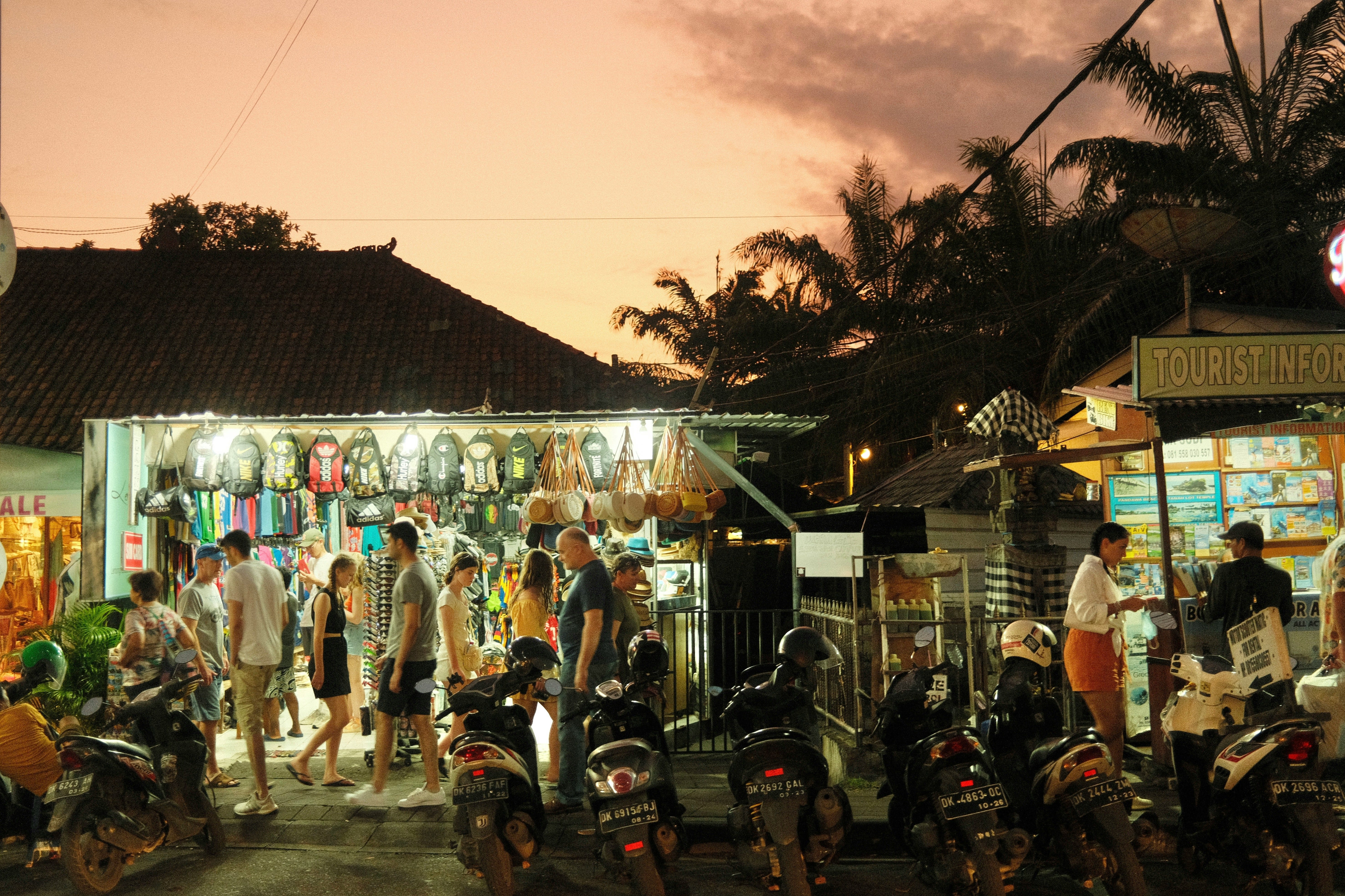
A street food stall in Southeast Asia, where tourists can pay using cross-border QR systems without exchanging currency. (Photo: Yoav Aziz via Unsplash)

🌏 The Regional Stakes
🤝 Economic Sovereignty: By using the Local Currency Transaction (LCT) framework, countries like Indonesia, Thailand, and Malaysia are settling payments directly between their own currencies. This reduces the need to convert to the US Dollar as a “middleman,” protecting local economies from global exchange rate volatility and external shocks.
🌐 ASEAN Centrality in the Digital Age: While global powers fight “tech wars,” ASEAN is building its own interoperable infrastructure. This integration proves that the region can set global standards for fintech without relying on Western or Chinese payment giants.
♾️ Expanding Beyond Southeast Asia: By bringing Japan and South Korea in the network along with China set to join next month—this initiative is evolving from a local project into a massive East Asian economic bloc. This move officially shifts the world’s focus for digital financial tech directly toward the Pacific region.
📸 The Big Picture
🌏 Digital Arrival: Southeast Asia is no longer transitioning — a unified, borderless payment ecosystem is becoming reality as of April 2026.
🔗 Expanding Network: The Indonesia–South Korea QR link (launched April 1) builds on an existing network connecting Indonesia, Malaysia, Singapore, Thailand, Vietnam, the Philippines, and Japan.
⚙️ System Backbone: The ecosystem is driven by the Regional Payment Connectivity (RPC) initiative and Local Currency Transaction (LCT) framework.
🧾 Policy Momentum: The ASEAN Digital Economy Framework Agreement (DEFA), nearing finalization under Malaysia’s 2026 chairmanship, is accelerating regional integration.
📱 Shift in Power: For 60 million QRIS users — and millions more region-wide — smartphones are becoming more central than cash in everyday transactions.
🏠 Why This Hits Home
If you are a traveler, the “hidden tax” of tourism is disappearing.
💱 No more money changers: Avoid predatory exchange rates at airports.
🕰️ Real-time Transparency: You see the exact cost in your home currency at the moment of the scan.
🔐 Safety: Carrying large amounts of cash in tourist hotspots like Bali or Phuket becomes a thing of the past, reducing the risk of theft.
🧭 Bottom Line
In 2026, your digital wallet will be your most important travel document. As Thailand leads the charge in transformation and Indonesia scales its QRIS network, the physical wallet is becoming a relic of the past for the modern Asian explorer.
📰 Need More Angles?
IMF eLibrary Asean’s Digital Payment Revolution: A New Frontier for Regional Integration
Tempo English Cross-Border Payments Grow as Indonesia’s QRIS Launches in South Korea
World Economic Forum ASEAN takes major step toward landmark digital economy pact
(AKO/BRZ/ELS)
Fees. Fees, Fees. Exchange fees from bank cards from home countries adds 3% to every purchase. Will these digital wallets also have fees. What about security? hacking of phones, lost phones or scanning a bogus trojan scan code would empty all the accounts listed on one's phone. Stranded in a foreign country, no cash, no cards and bank account emptied by thieves unknown and with the smart phone rendered useless to everyone but the hackers. And then there is "Ransom Ware" after everything on the phone is encrypted and you must buy the key to get it all back. Cloud data and photos could also be un-reachable after a trip when the hackers lock out ones google account. Not for me and my family.