



🎯 The Main Takeaway
From taboo, ghost folklore, ancestral traditions, supernatural experiences to social anxieties, psychological pressures, and modern fear, Southeast Asian developers are transforming the Horror Game landscape by transforming their cultural experiences into interactive horror narratives.
Southeast Asian horror games are not built on the same fundamental of Western horror. It rewrites the understanding of fear by a deep sense of community, society, spirituality, tradition, and collective memory, transforming into globally recognized horror narratives. Horror is not just about ghosts or monsters, but it also emerges from real-life fear that manifests through storytelling.
📡 Why It’s on Our Radar
The growing popularity of the global entertainment industry is reflected in the rising number of games produced in Southeast Asia, emerging as an industry based on the region's experience. Globally recognizable genre, horror games are always in demand for innovation, either in gameplay, stories, graphics, or other aspects, and here is where things get interesting with Southeast Asia entering the game!
For Southeast Asia, horror has always occupied a unique cultural space that exists alongside religious beliefs and everyday customs. From childhood to adulthood, stories about spirits, curses, sacred places, and supernatural consequences are passed down from mouth to mouth or through media. Games have also become a medium where players can actively engage with this culture, reaching beyond the region.
In the era of digital age, games not only function as entertainment, but it has become an unexpected medium of cultural preservation. Players are not simply reading or hearing; they are experiencing them firsthand, the cultural values, social expectations, and environment that shaped the region.
⚠️Watch Out! Southeast Asia’s Original Horror Games
Indonesia - Pamali: Indonesian Folklore Horror (2018)

As one of Indonesia’s breakout horror titles on the international stage, Pamali: Indonesian Folklore Horror shows that culture can be a strength in the global gaming industry. Centered around the concept of “pamali” culture in Indonesia, the game showcases and describes the taboo or prohibited actions that are believed to bring misfortune.
Throughout the game, the player often finds that seemingly ordinary decisions, such as moving certain objects, disregarding traditions, or failing to respect a particular aspect, can trigger supernatural consequences. Pamali sucessfully integrate the social etiquette into a gameplay mechanic. In this world, horror does not emerge from a certain monster or ghost but from the accumulation of ignorance toward cultural rules, waking up the sacred guardian.
For international audiences, the game offers a glimpse into how folklore continues to influence everyday behaviour. For Indonesian players, the fear becomes more personal, blurring the line between fiction and cultural memory.
Thailand - Home Sweet Home (2017)

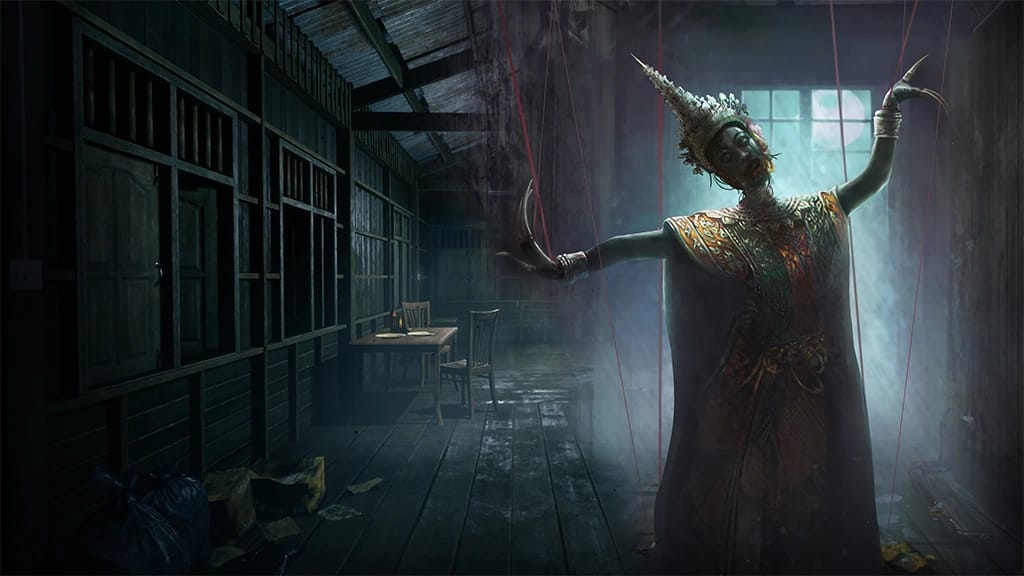
Introducing the player to a world where supernatural forces are an integral part of cultural understanding, the game combines psychological horror with Thai folklore. Where modernity and spirituality coexist, delving deep into the country’s complex spiritual landscape. Unlike Pamali, spiritual beliefs are not seen as exotic folklore but as an ordinary part of daily life.
Reflecting on contemporary Thailand, this game highlights that beneath the modern setting lies a network of beliefs surrounding spirits, karma, and the afterlife. Drawing from Buddhist cosmology and local ghost traditions, it sets a different framework of understanding from Western horror games. Not as a rare ghost sighting, it presented as a natural component of everyday life. It follows you everywhere and anywhere.
While players around the world may not share the same beliefs, with the help of culturally grounded storytelling, the fear becomes scary and understandable. With it, the game acts as an informal introduction to Thai culture by showcasing how local tradition and culture shaped what we know as Thailand today.
Singapore - Scarred (2025)

Using a different style of sources from the majority of Southeast Asia horror games, Singapore’s Scarred shifts the attention toward psychological anxiety. Set within a contemporary urban environment, the story centres around the mysterious disappearances of students, as the horror does not come solely from supernatural events but also from social anxiety in contemporary Singapore.
The game reflects anxieties surrounding identity, memory, expectations, and social isolation within the lives of students. The theme resonates strongly within Singapore’s highly competitive educational and professional landscape, where achievement, grades, trophies, and pride often carry significant societal importance. It is not about the fear of folklore; it is about the fear of failure, isolation, and uncertainty in modern life.
Rather than focusing exclusively on the traditional ghost of legend, it demonstrates how modern fears can be equally unsettling. Adapting to new realities while maintaining its cultural distinctiveness.
Vietnam - The Scourge (2024)

Drawing inspiration from local spiritual beliefs and traditions surrounding the relationship between the living and the dead. The game presents a world where the traditions surrounding ancestors should not just be taken for granted as the past and be forgotten, but rather they should be remembered as deeply intertwined with the present and maybe the future.
Vietnamese values often emphasized remembrance, familial continuity, and respect for previous generations, which explains the strong relations between the living and the dead. In-game, the value becomes the centre of supernatural themes, where unresolved histories, problems, conflicts, and lingering spiritual presences become sources of tension and fear for the living.
Grounded within Vietnam’s own cultural framework, this approach allows the game to offer something distinct within the global horror market. A horror experience that is uniquely Vietnamese without sacrificing universal emotional appeal.
Malaysia - Paper Ghost Stories: Third Eye Open (2024)

Set within a Malaysian-Chinese community, the game incorporates traditions surrounding spirit offering, ancestral remembrance, and supernatural encounters while telling a deeply personal tradition of coming-of-age celebration. The game demonstrated how horror can function as cultural storytelling rather than mere shock entertainment.
While the game itself counted as a horror game, its main strength lies in its emphasis on social relationships. Family expectations, friendships, and community obligations become an integral part of the ghosts themselves. As the player navigates supernatural events, they are simultaneously confronted with the reality of social responsibility, identity crisis, and the feeling of belonging.
The supernatural occurrence becomes meaningful as it affects everyone surrounding them, their families, friends, and the community. It creates clear expectations and lines within the cultural bonds.
❤️What Makes it Different from the Western Counterpart?
While Western games often center on individual survival against external threats, Southeast Asian horror frequently places relationships, social harmony, and spirituality at the heart. As if showing the world that fear and terror can also manifest from something within and close to you.
Framing fear as the consequences of a disrupted relationship between individuals and their communities, the living and the dead, or modern society and inherited traditions. The source of terror often comes from breaking a cultural taboo, neglecting ancestral obligation, or disturbing the balance between physical and spiritual worlds. With this sense, the supernatural is rarely random; it reflects moral, social, or cultural actions.
Southeast Asian horror games are also notable for its experiement with visual styles. While many mainstream Western horror games emphasize photorealistic graphics and cinematic realism, developers in Southeast Asia have demonstrated that fear does not depend on realistic visuals. This reflects a broader understanding that horror can emerge from atmosphere, cultural symbolism, and narrative context rather than graphic alone.
Ultimately, Southeast Asia offers a distinct perspective within the global gaming landscape. Rather than focusing on individual survival, players find themselves asking questions related to their family, communities, traditions, and past. The focus on interconnectedness, combined with diverse artistic styles, gives Southeast Asia horror its unique identity and growing international market.
📌 The Bottom Line
Southeast Asia’s horror game industry is proving that local stories can travel far beyond the region's borders. As a form of cultural storytelling and preservation, it reflects how Southeast Asian society understands memory, morality, community, and belonging. As the international audience continues searching for authentic narratives, Southeast Asia's horror landscape is no longer viewed as a regional niche, transforming its own culture of fear and the supernatural to resonate worldwide.
Need More Angle
(DEV/VBD)
A fascinating look at how horror can preserve culture and traditions. Southeast Asian games prove fear is often rooted in memory and beliefs. Which game from this list would you recommend trying first?