



📌 The Main Takeaway
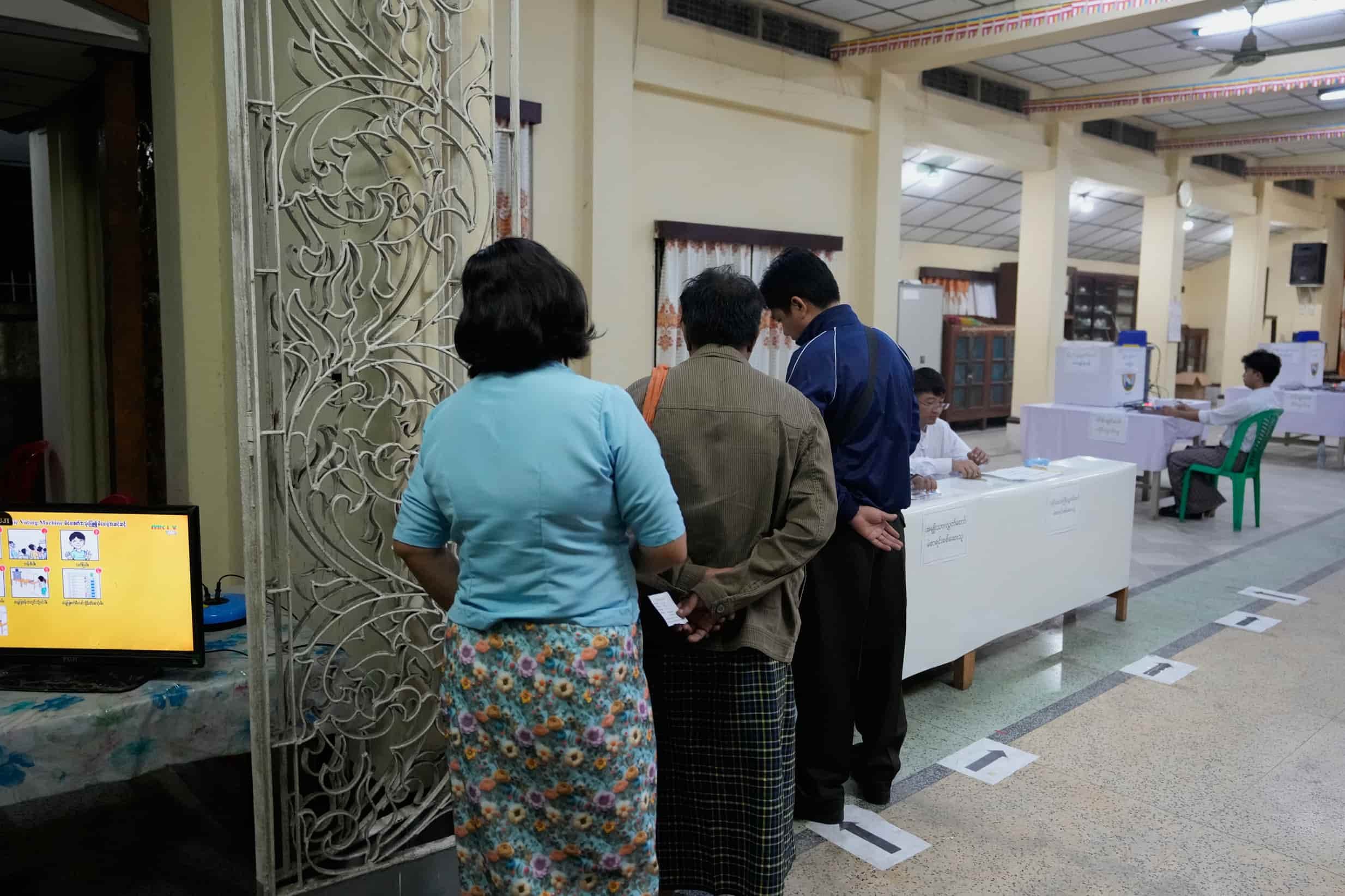
Min Aung Hlaing’s transition from junta chief to president is less a democratic shift than a calculated political repositioning—designed to ease international isolation, recalibrate ties with ASEAN, and manage a fragile domestic landscape, while military dominance remains firmly intact.
At the same time, Myanmar’s post-election trajectory places ASEAN in a strategic bind: whether to sustain its stance of non-recognition or cautiously re-engage without diluting its own norms.
This moment underscores a dual reality: internal fragility in Myanmar, and growing strain on ASEAN’s collective coherence.
📡 Why It’s on Our Radar
This is not just a leadership change—it’s a regional inflection point.
Since the 2021 coup, Myanmar has faced:
⚠️ Civil war and fragmentation
🌍 International isolation and sanctions
📉 Economic decline and capital flight
Now, the shift is becoming visible through:
🔄 A transition from junta rule to a “civilian” presidency
🤝 Renewed diplomatic outreach toward ASEAN
💼 Calls for investment and economic recovery
But crucially:
🌏 ASEAN itself is divided on how to respond
➡️ This is no longer just Myanmar’s crisis—it’s ASEAN’s.
🇮🇩 Indonesia’s Position: Principle Meets Pragmatism
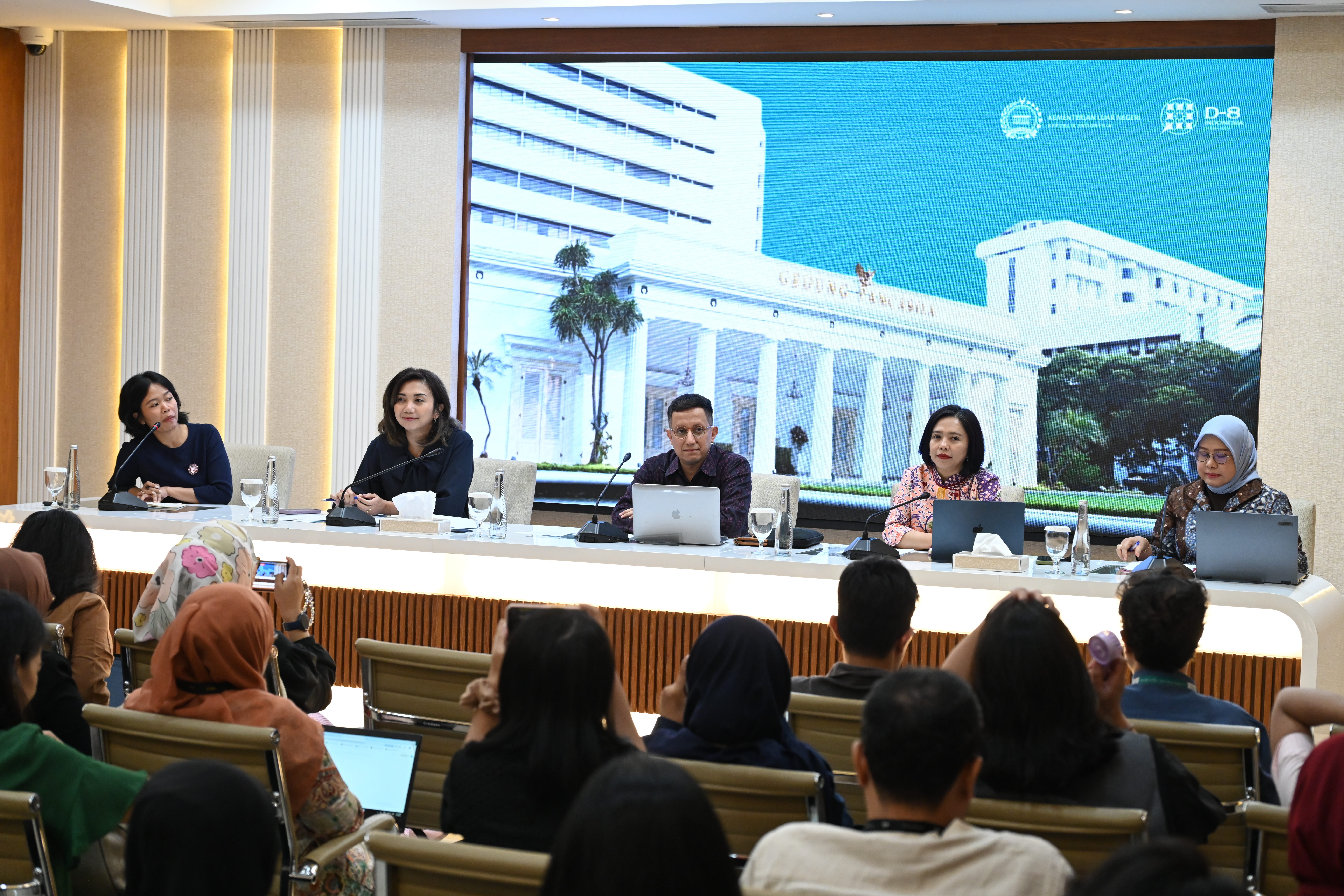
Responding to the development, Indonesia’s Ministry of Foreign Affairs reaffirmed:
🟢 Respect for sovereignty
🚫 Non-interference
🤝 Constructive engagement
While stressing:
⚠️ Myanmar remains in a prolonged political crisis
🧩 Leadership change ≠ democratic legitimacy
🌏 Regional stability—and ASEAN credibility—are at stake
Indonesia maintains that any resolution must go through:
📜 The Five-Point Consensus (5PC)
➡️ A dual-track approach:
Normative restraint
Regional responsibility
A balancing act—between upholding principles and preventing further regional drift.
🏛 Power Structure: Civilian in Form, Military in Substance
Despite the presidential transition:
👥 Cabinet dominated by military and ex-military figures
🏛 Parliament controlled by a pro-military bloc
📜 Institutional guarantees for military influence
The election itself has been widely criticized as:
A managed process to entrench military rule under a civilian façade.
🌏 ASEAN Responses: A Fragmented Landscape
ASEAN’s response reveals clear internal divergence—less a split than a spectrum of strategies.
🚫 ASEAN (Collective Position)
No formal recognition of the election
Continued reliance on the 5PC
Emphasis on inclusivity and cessation of violence
🇵🇭 Philippines (ASEAN Chair)
No recognition of the election outcome
Engagement with both junta and opposition
Focus on inclusive dialogue
➡️ Strategy: Engagement without legitimization
🇲🇾 Malaysia
Wait-and-see approach
Calls for post-election assessment
Emphasis on political inclusivity
➡️ Strategy: Conditional engagement
🇹🇭 Thailand
Sent congratulatory signals
Advocates Myanmar’s reintegration into ASEAN
➡️ Strategy: Pragmatic, stability-first diplomacy
🇻🇳 Vietnam & 🇰🇭 Cambodia
Maintained engagement
Participated in election-related processes
Continued bilateral cooperation
➡️ Strategy: Quiet normalization
🇸🇬 Singapore
Emphasizes:
End of violence
Inclusive dialogue
Signals that the election lacks legitimacy
➡️ Strategy: Principles before engagement
🇧🇳 Brunei (and others)
Low-profile diplomacy
Quiet bilateral engagement
➡️ Strategy: Ambiguity and flexibility
What emerges is not disunity—but differentiated diplomacy, shaped by national priorities and risk calculations.
🧩 ASEAN in a Bind: Three Strategic Camps
As outlined by Sharon Seah from ISEAS:
1️⃣ Engagement Camp
➡️ Normalize ties, prioritize stability
2️⃣ Principled Resistance Camp
➡️ Reject legitimacy, emphasize accountability
3️⃣ Middle Ground
➡️ Non-recognition + quiet diplomacy
➡️ Result:
Consensus exists on principles—but not on strategy.
🌐 The ASEAN Dilemma: Non-Recognition vs Engagement
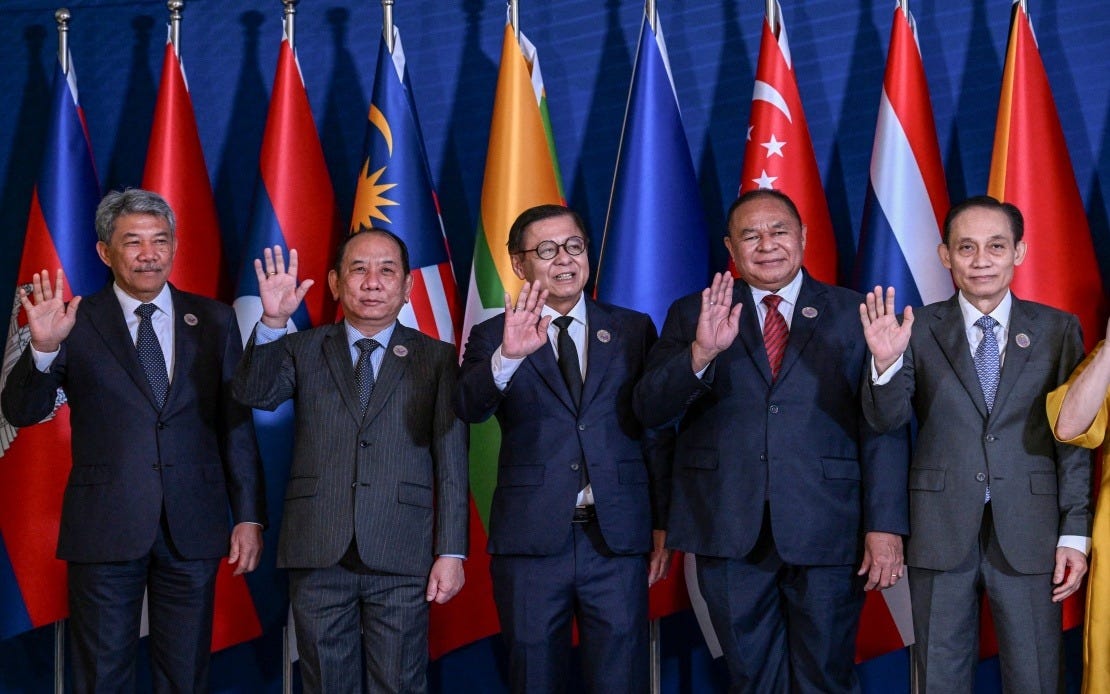
ASEAN now faces a structural tension:
⚖️ Upholding norms (democracy, human rights)
🤝 Maintaining regional cohesion and influence
The emerging pathway:
🔄 Conditional engagement
Where Myanmar’s reintegration hinges on:
🕊 Ending violence
🗣 Inclusive political dialogue
➡️ The 5PC is gradually shifting—from a guiding principle to a more transactional framework.
⚔️ Conflict, Amnesty, and Credibility
Min Aung Hlaing promises:
🕊 Peace and reconciliation
📜 Possible amnesties
But the reality remains stark:
🚨 Thousands still detained
🔥 Civil war continues
⚖️ Human rights concerns persist
Including the continued detention of Aung San Suu Kyi.
📊 Economic Ambitions vs Structural Constraints
Government priorities:
💼 Foreign investment
🌾 Agricultural development
📈 Long-term economic planning
Constraints:
📉 Persistent instability
🚫 Ongoing sanctions
💸 Weak investor confidence
External divergence:
🇮🇳 India → pragmatic engagement
🇨🇳 China → supportive stance
➡️ Further complicates ASEAN’s ability to exercise unified leverage.
⚖️ Leadership Dynamics: A Fragile Strongman?
According to Bertil Lintner, Min Aung Hlaing may be:
📉 Less dominant than his predecessors
🧩 More reliant on loyalists
⚠️ Increasingly exposed to internal pressure
Compared to figures like:
Ne Win
Than Shwe
➡️ A leader focused on survival, not consolidation.
🌏 The Bigger Picture
Myanmar’s crisis is increasingly a test of ASEAN itself:
🧭 The limits of consensus-based decision-making
🧩 Diverging national interests
⚖️ The balance between norms and pragmatism
➡️ Likely trajectory:
Flexible diplomacy, informal coalitions, and conditional engagement
🔍 What’s Changing on the Ground
From direct military rule → a civilian façade
From isolation → selective re-engagement
From ASEAN unity → growing strategic fragmentation
🚧 The Constraints
🚨 Ongoing conflict
📉 Economic fragility
🌍 Diplomatic isolation
⚖️ Legitimacy gap
🧩 ASEAN divisions
🔮 What to Watch
🤝 ASEAN’s shift toward conditional engagement
🇮🇩 Indonesia’s role in pushing 5PC
🕊 Any real ceasefire or political dialogue
🌏 External influence (China, India)
🏛 Internal military cohesion
🚨 The Bottom Line
Myanmar is not transitioning to democracy.
It is undergoing a strategic adaptation under pressure.
By assuming the presidency, Min Aung Hlaing appears to be:
Rebranding the regime
Re-engaging ASEAN
Stabilizing a fragile system
But the deeper reality remains:
⚠️ Military dominance persists
⚠️ Conflict continues
⚠️ Legitimacy remains unresolved
At the same time, ASEAN faces its own defining test:
Can it uphold its principles—
while adapting its strategy?
Because this is no longer just about Myanmar.
It is about ASEAN’s credibility in managing crises within its own region.
🔎 Need More Angles?
Association of Southeast Asian Nations (ASEAN), ASEAN Leaders’ Review and Decision on the Implementation of the Five-Point Consensus (Kuala Lumpur, 26 October 2025)
ASEAN Parliamentarians for Human Rights (APHR), Open Letter from European and Southeast Asian Parliamentarians to Reject the Sham Elections in Myanmar
Asian Politics and Policy, Reassessing ASEAN’s Five-Point Consensus: on Shifting Boundaries of Legitimate Involvement and a Contested Consensus
Associated Press, ASEAN does not recognize Myanmar’s elections, which military-backed party claims to have wonFulcrum, Beyond Non‑Recognition: Myanmar’s Elections Leave ASEAN In a Bind
East Asia Forum, Myanmar’s election is a litmus test for ASEAN centrality
Global Asia, Myanmar’s New President: Does he Have What it Takes?
ISEAS Yusof-Ishak Institute, “Re-Examining the Five-Point Consensus and ASEAN’s Response to the Myanmar Crisis”
The Jakarta Post, Myanmar president says many challenges ahead, seeks to normalise ASEAN ties
Ministry of Foreign Affairs of Indonesia, Press Briefing on Myanmar Issue (April 2026)
Ministry of Foreign Affairs Republic of The Union of Myanmar, Myanmar’s responses to statement by the UN Special Rapporteur on the Situation of Human Rights in Myanmar regarding the election
Reuters, ASEAN to assess post-election developments in Myanmar, Malaysia PM says
Reuters, Myanmar's new president sees challenges ahead, eyes ASEAN detente
Reuters, Thailand hopes to be ‘bridge’ for Myanmar and ASEAN, foreign minister says
(JUN/QOB)