



🎯 The Main Takeaway
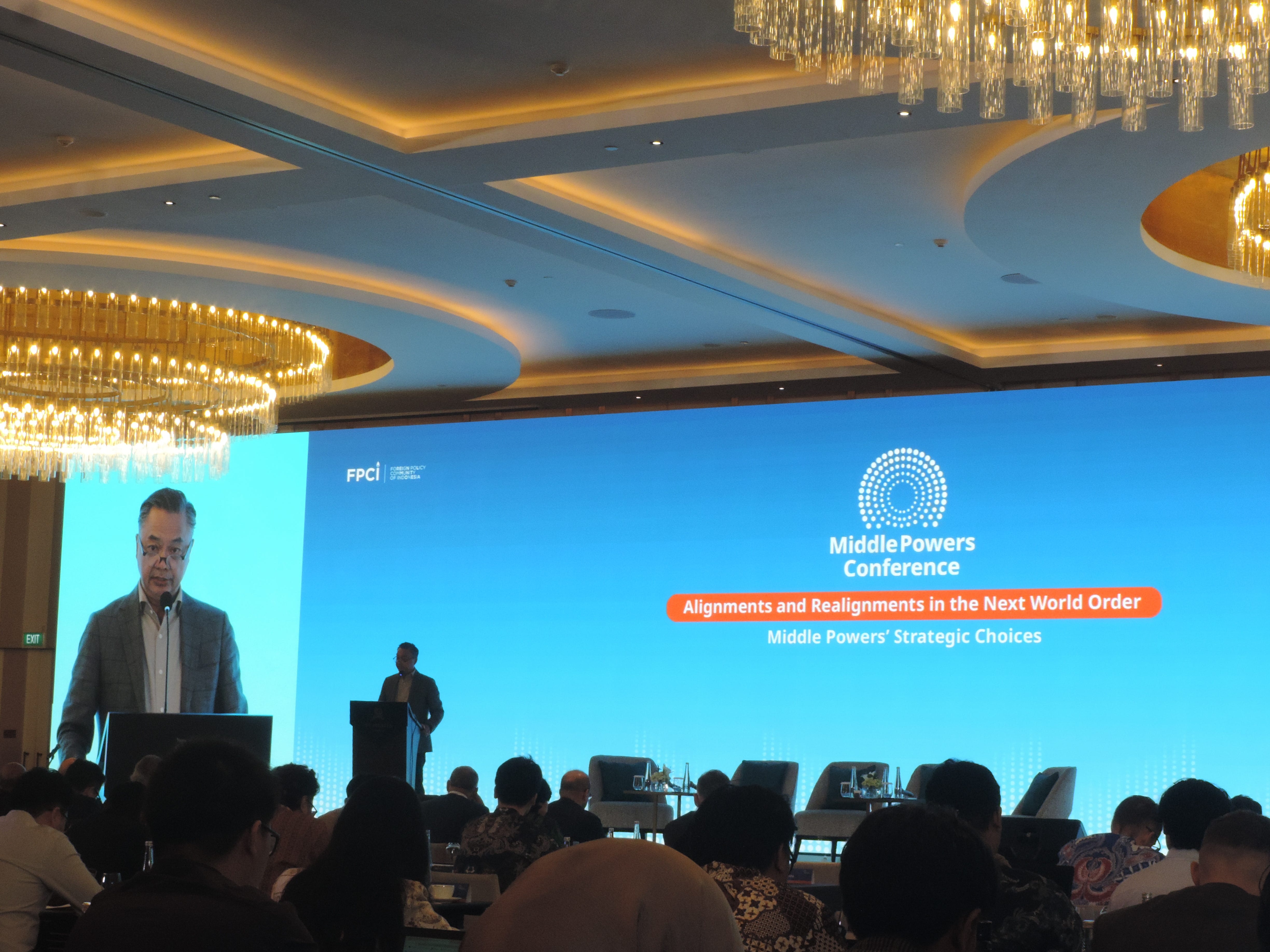
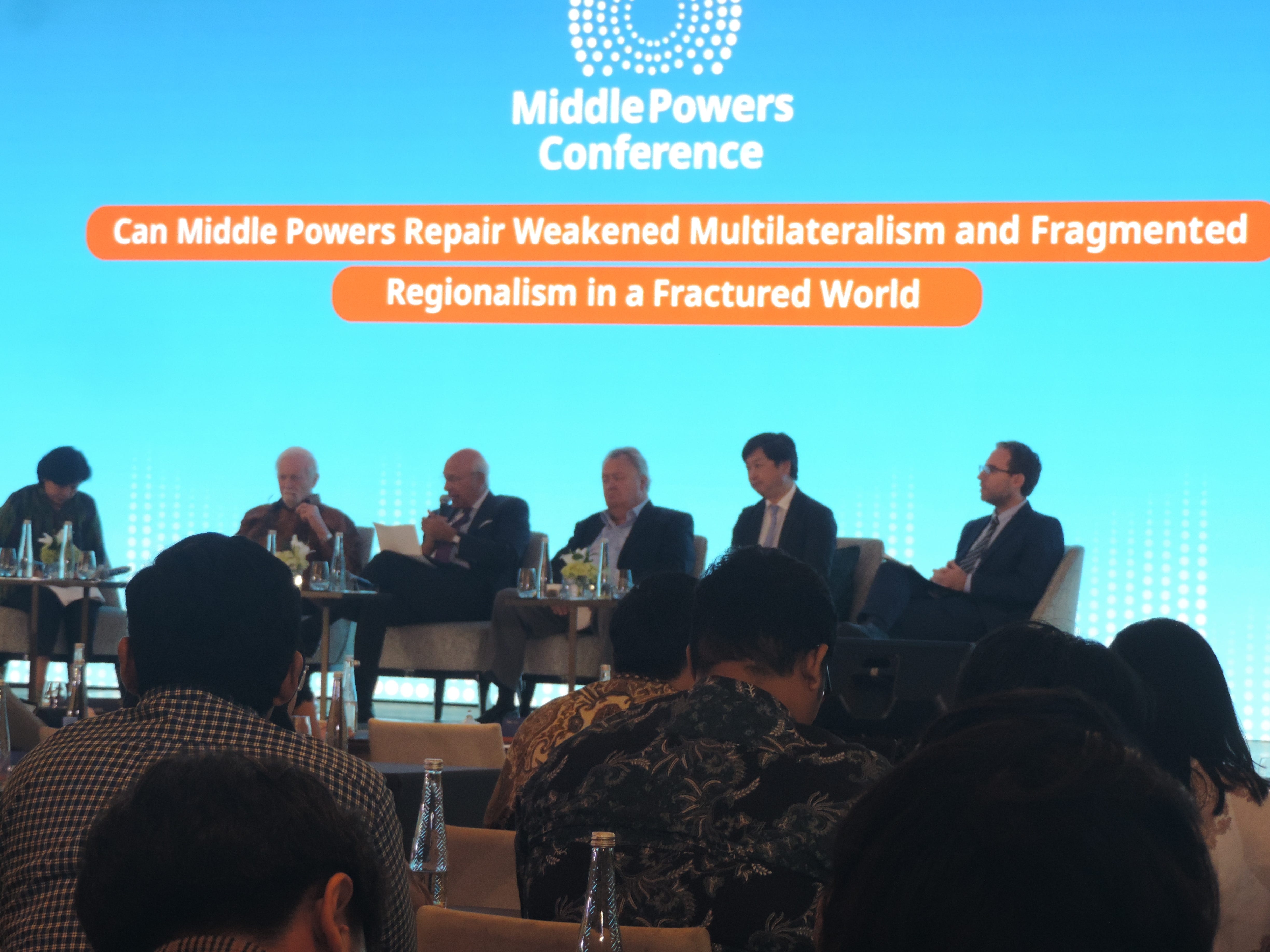
On Tuesday, 14 April 2026, at its first-ever Middle Powers Conference, the Foreign Policy Community of Indonesia delivered a clear message:
➡️ The world is no longer stable enough to rely on great powers alone
➡️ But not structured enough for middle powers to lead—yet
“We are seeing a middle power moment. The world is shifting, and around 20 middle powers will play a significant role in shaping the next global order.”
— Dino Patti Djalal
This is the paradox:
👉 Middle powers are more relevant than ever
👉 But also more constrained than ever
🌐 What Is a “Middle Power”
Before diving deeper, one question sits at the center of the discussion: what exactly is a middle power?
In international relations, middle powers are states that sit between great powers and smaller states. They do not possess overwhelming military or economic dominance, but they have sufficient capacity to influence global affairs—especially through diplomacy.
The concept itself dates back to the 16th century, when Italian thinker Giovanni Botero described states that were neither great nor small, but capable of acting independently in the international system.
Over time, this idea evolved—particularly during the Cold War—into a formal category used to explain how countries outside the superpower rivalry could still shape global outcomes.
What distinguishes middle powers is not just capability, but behavior. They tend to:
Prioritize multilateralism over unilateral action
Act as bridge-builders and mediators
Focus on “niche diplomacy”—targeted influence in specific issue areas
Support rules-based international order and institutions
Countries often identified as middle powers include Germany, Japan, Australia, Indonesia, South Korea, Brazil, South Africa, and Türkiye. Many are part of the G20 and play active roles in regional frameworks like ASEAN and the EU.
In short, they may not control the system—but they help hold it together.
📊 Middle Powers by the Numbers
Before looking at current crises, one reality stands out:
middle powers already possess significant structural weight.
Economically:
G20 middle powers contribute around 60–70% of global GDP
They account for a majority of global trade flows
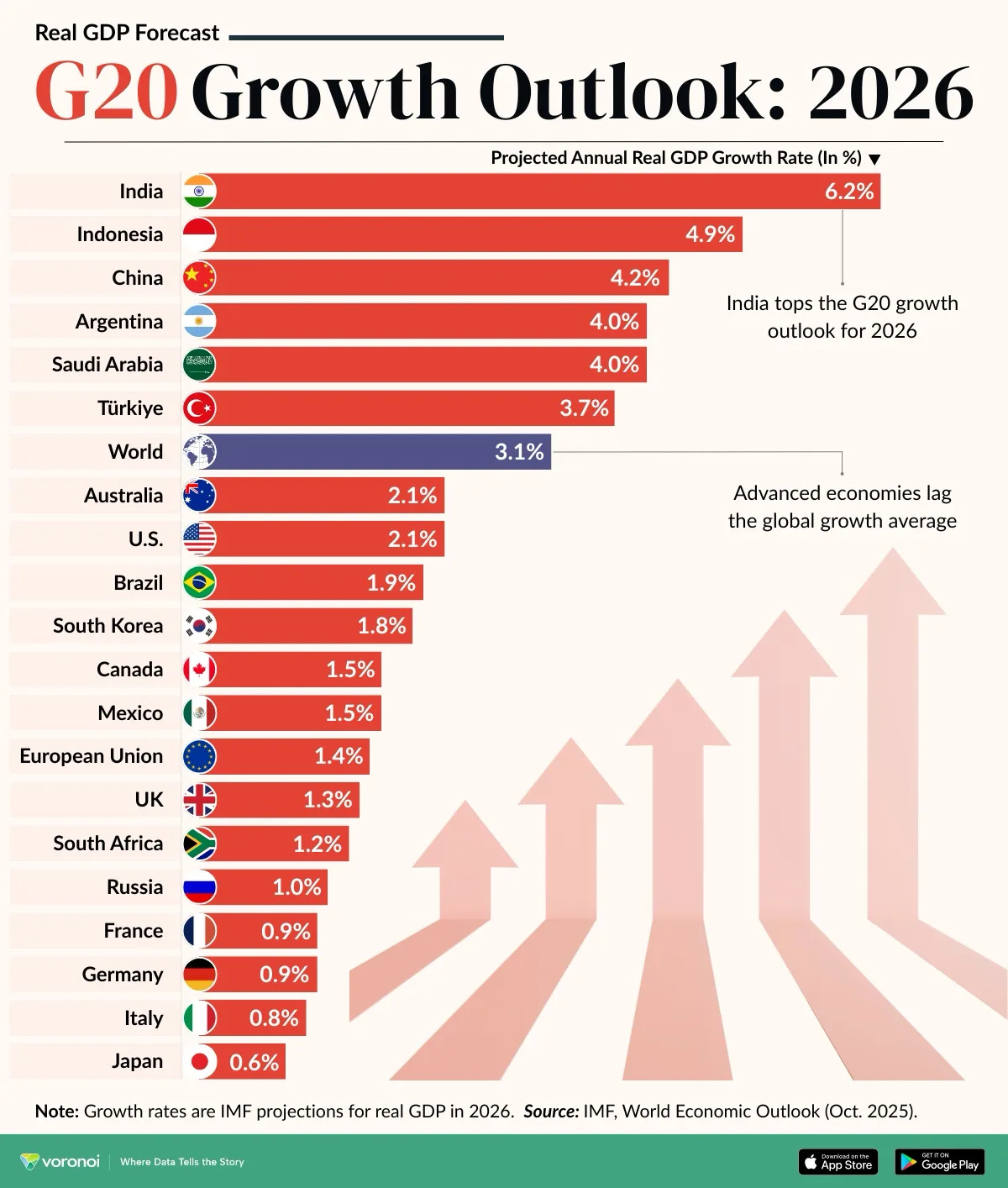
Growth projections for 2026 show that many G20 economies—particularly emerging middle powers—remain key drivers of global growth despite rising fragmentation
Militarily:
Global defense spending reached $2.63 trillion in 2025, continuing an upward trend
A significant share of this comes from G20 countries, including major middle powers
Europe alone now accounts for over 21% of global defense spending, up sharply in recent years
In Asia, rising security concerns—particularly around China—are pushing countries like South Korea and India to expand military capabilities
Across regions, defense spending is increasing not just in absolute terms, but also as a share of GDP (now above 2%)
This shows that middle powers are not just diplomatic actors—they are also material contributors to global stability and security architectures.
❗ Why This Matters
This economic and military weight explains why middle powers are central to today’s global order:
👉 They can stabilize global markets during shocks
👉 They can contribute meaningfully to regional and global security
👉 They have enough leverage to shape negotiations and coalitions
But not enough to dominate alone.
➡️ This is exactly what the conference captured:
Middle powers are structurally powerful but politically constrained.
As Dino Patti Djalal emphasized,
we are entering a “middle power moment”—but one defined by both opportunity and limitation.
And that’s why, when the discussion of the conference with the panelists started, the focus immediately shifted to the main trigger of instability: the changing behavior of major powers, especially the United States.
🌐 A World in Transition
Opening the conference, Dino Patti Djalal framed the moment as a turning point. The international system is no longer anchored by a single, predictable leader, yet no alternative power has fully stepped in to fill that role.
“Middle powers need to have more conversation, integration, and synergy.”
Across regions, countries are already adjusting. Bilateral ties are expanding, regional cooperation is deepening, and reliance on any single power—especially the United States—is being reconsidered.
⚠️ Managing a More Volatile Global Environment
The conference discussion with the panelists began with a central trigger of instability: the evolving direction of U.S. foreign policy under Donald Trump.
Many speakers described it as increasingly unpredictable and domestically driven, with global consequences.
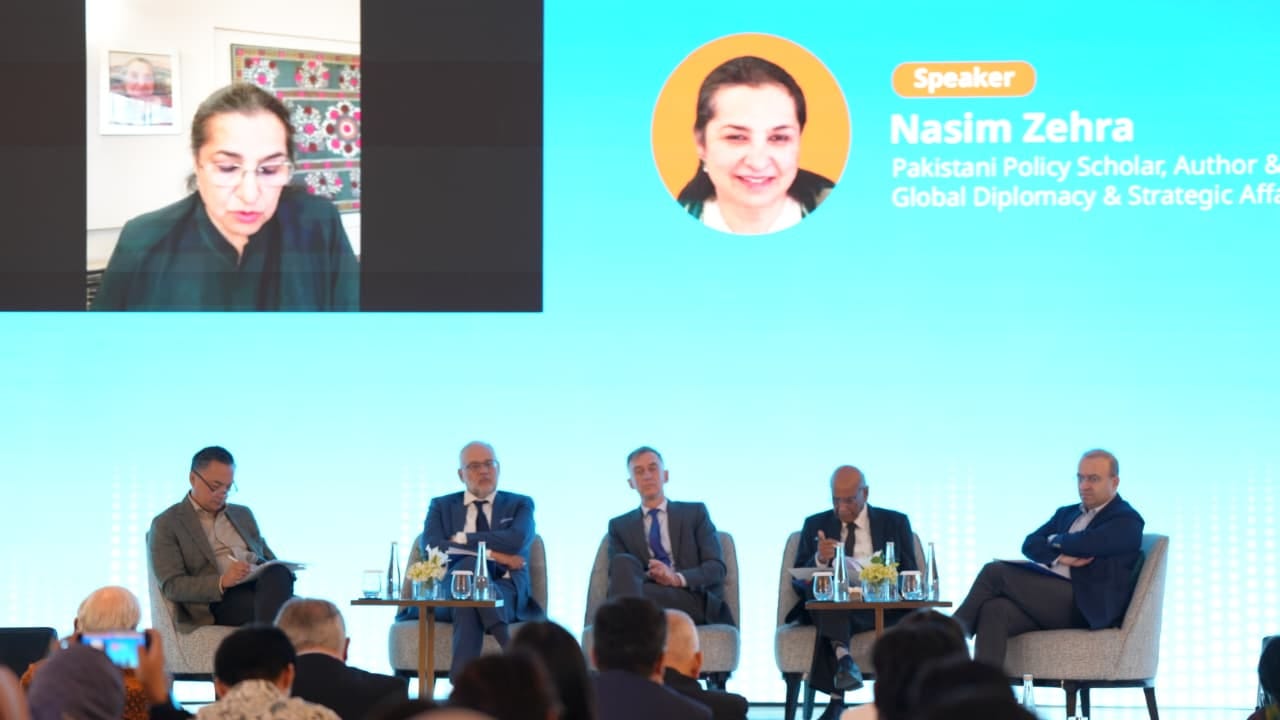
Nasim Zehra highlighted how tensions—particularly between the United States and Iran—are forcing countries like Pakistan to focus their diplomatic efforts on preventing escalation:
“Pakistan’s diplomatic energy is focused on ensuring the Iran–U.S. conflict does not escalate into a devastating war.”
From the German perspective, Ralf Beste acknowledged that long-standing assumptions about U.S. support can no longer be taken for granted:
“We have to step up… we can’t rely on the U.S. in the same way as before.”
Meanwhile, Ebrahim Rasool emphasized a principle-based approach:
“Mutuality and reciprocity is the preferred way to deal with superpowers.”
🧭 From Dependence to Diversification
As uncertainty grows, middle powers are increasingly diversifying their strategic options.
Shyam Saran noted that India is expanding engagement with Europe and beyond. Meanwhile, Moon Chung-In pointed to a broader strategic shift:
“We can’t depend only on the U.S. anymore.”
Rather than choosing sides, many countries are adopting multi-alignment—building flexible partnerships across regions.
🌍 Rethinking Alliances and Global Cooperation
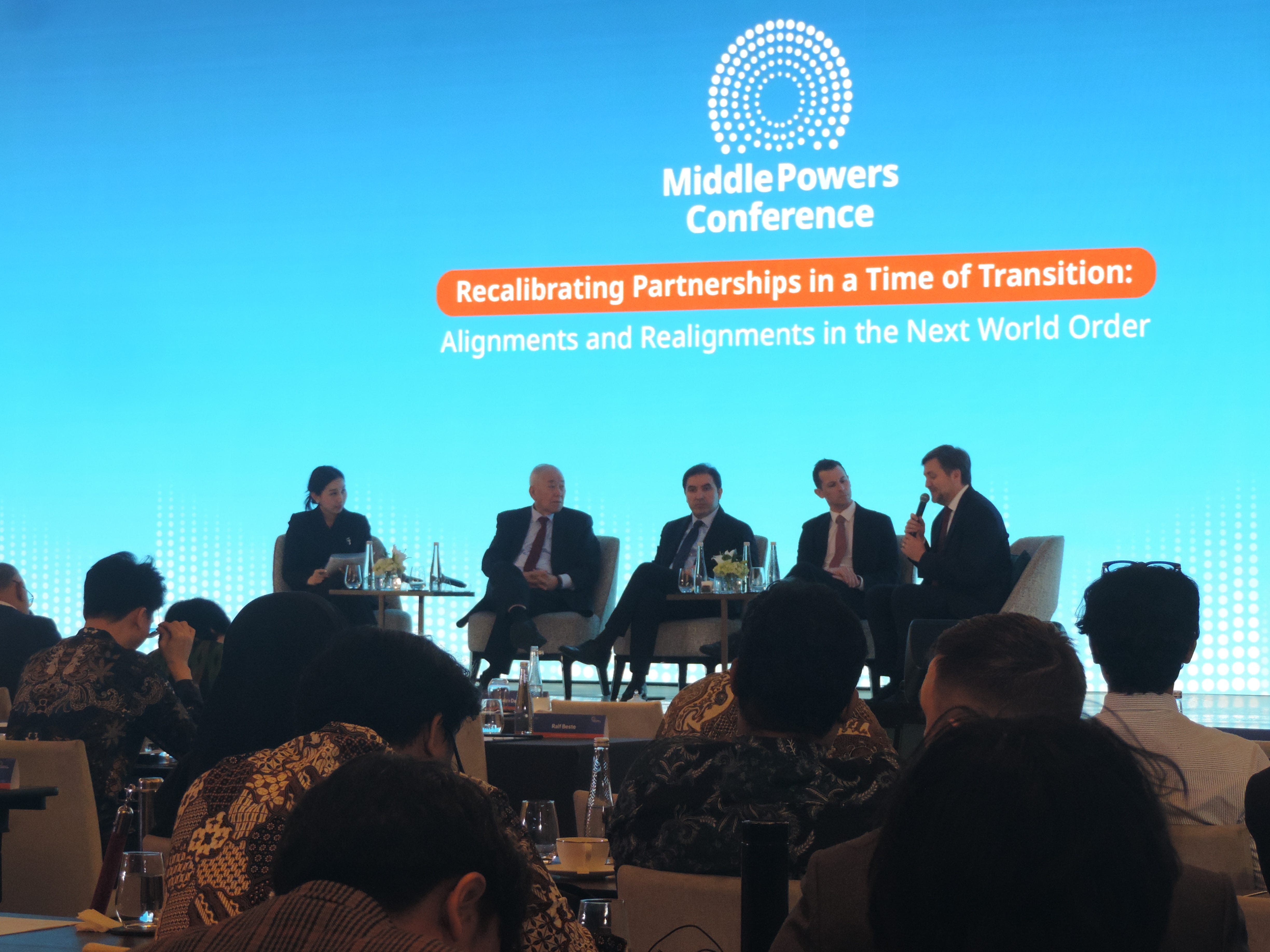
A deeper transformation is underway. The structure of alliances—and the identity of the global order itself—is being questioned.
Galip Dalay captured the paradox:
“The U.S. is both unreliable and indispensable.”
At the same time, frustration with international institutions is growing, as they struggle to respond effectively to contemporary crises.
🧩 What Middle Powers Can Actually Do
Despite constraints, the discussions pointed to concrete areas for action:
⚡ Energy and critical minerals
🛡️ Conflict de-escalation
⚖️ Economic justice (North–South)
📱 Digital governance and AI
⚖️ International law and human rights
“Middle powers have to realize their goals, capabilities, and resources—so they can invest correctly.”
— Jonathan Berkshire Miller
🌏 ASEAN and the Indo-Pacific Factor
Within this landscape, ASEAN emerged as a critical platform for middle power diplomacy.
Speakers highlighted ASEAN as:
A successful model of regional cooperation
A hub for dialogue and conflict management
A key player in Indo-Pacific multilateral frameworks
Countries like Indonesia were seen as pivotal in bridging regional and global agendas—especially through diplomacy, economic integration, and institutional engagement.
📉 A Defining Moment—with Limits
The discussions point to a clear conclusion: this is a defining moment for middle powers.
Yet limitations remain—diverging interests, limited resources, and the complexity of coordination.
“Middle powers have limits—we can’t solve everything at once.”
🔚 The Bottom Line
Middle powers are no longer operating at the margins—they are becoming essential stabilizers in a fragmented global order.
But their influence will depend on whether they can move beyond fragmented efforts and act collectively.
In a world without a clear leader, cooperation is no longer optional—it is the only way forward.
🔎 Need More Angles
Atlas Institute for International Affairs, The Role of Middle Powers in Global Diplomacy
Carnegie Endowment for International Peace, The Middle Power Moment
Encyclopedia Britannica, Middle Power concept and historical evolution
European Parliament Think Tank, G20 Share of Global GDP and Trade
The International Institute for Strategic Studies, Global defence spending
International Monetary Fund, World Economic Outlook Update: Global Economy, January 2026
Reuters, Shocks in G20 Emerging Economies Affect Global Growth
Visual Capitalist, Charted: The 2026 Growth Outlook for G20 Nations
(JUN/AKO/DEV/QOB)