



🎯 The Main Takeaway
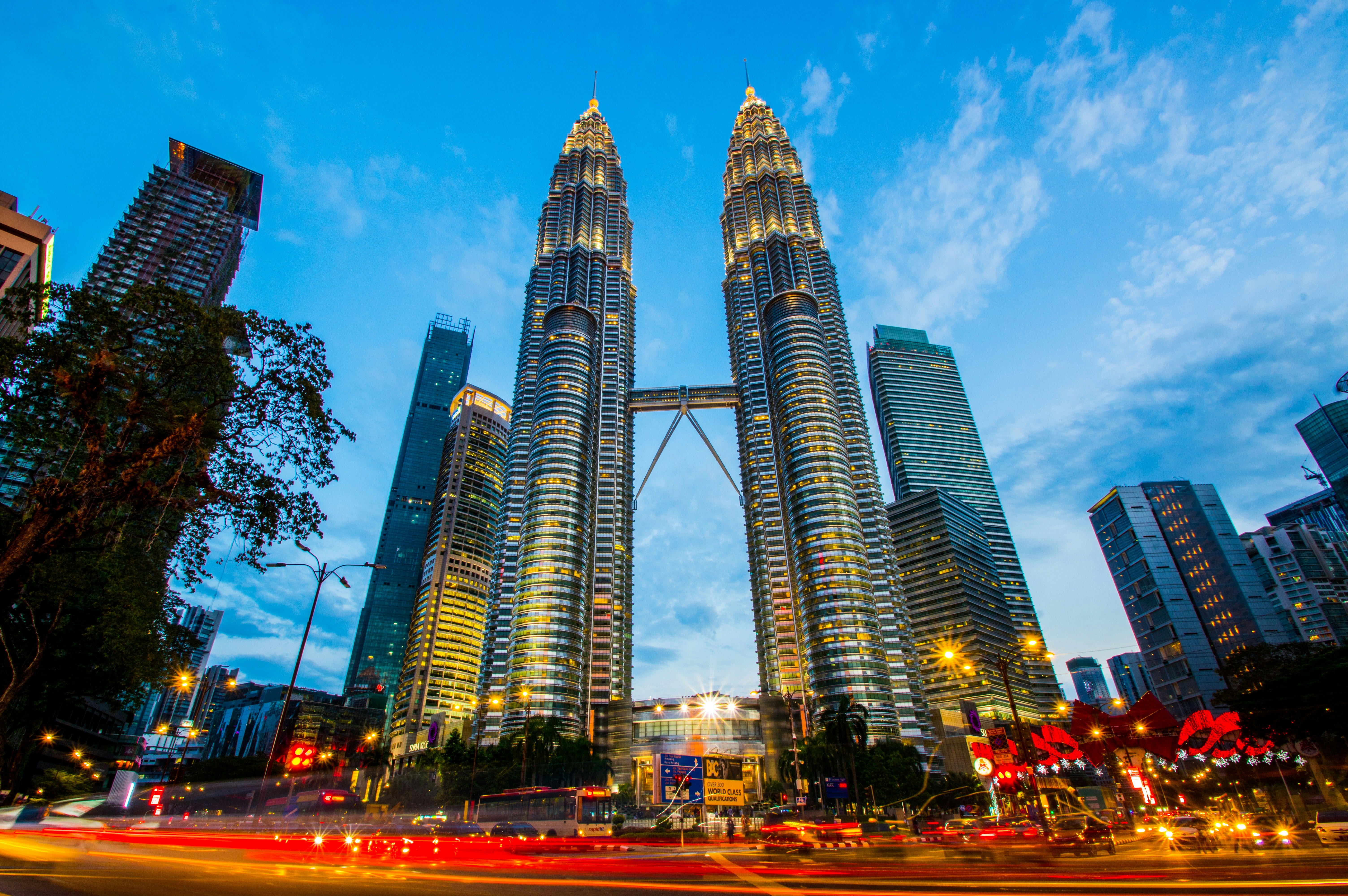
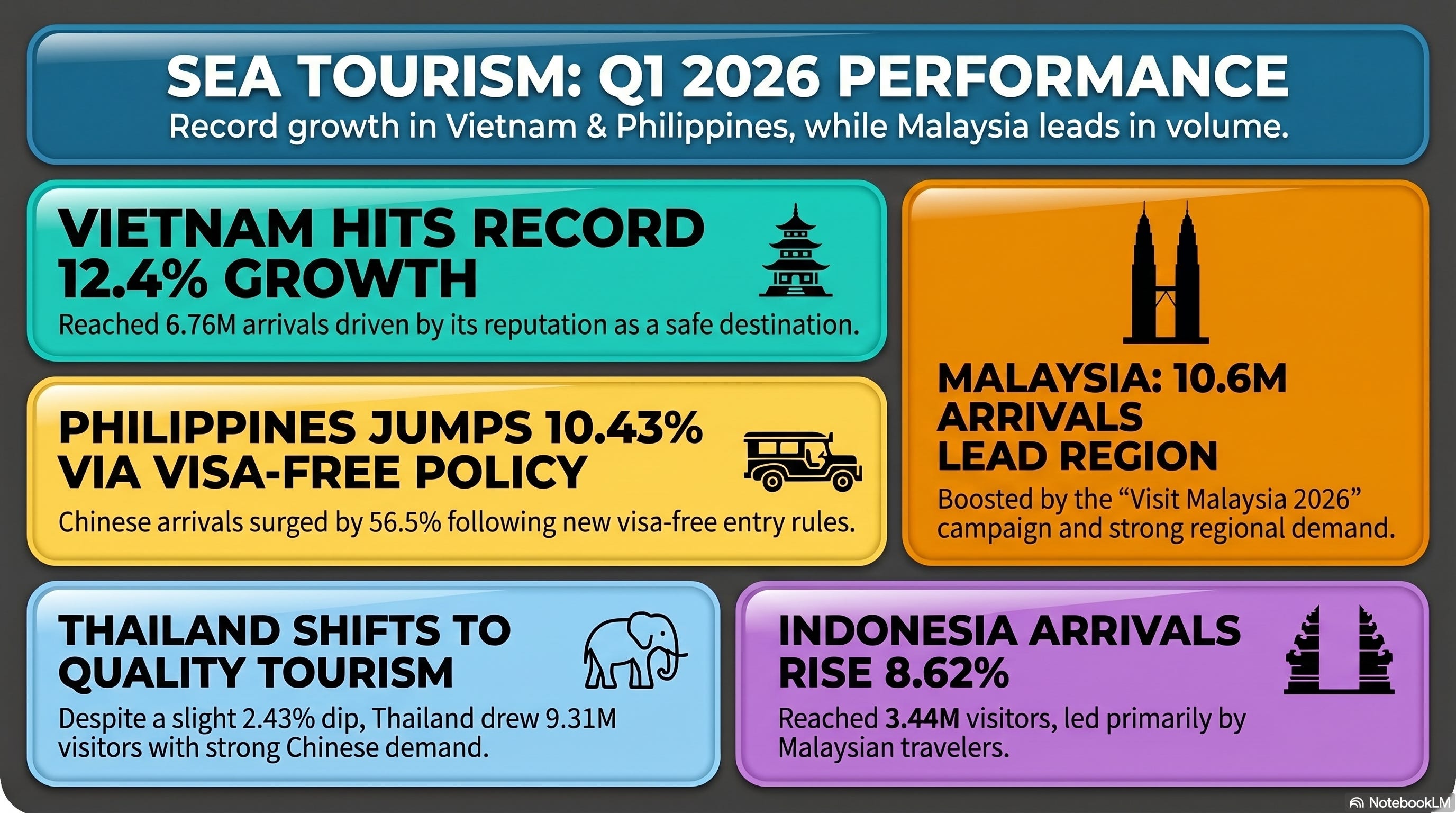
Malaysia has cemented its position as Southeast Asia’s most-visited country, welcoming 10.6 million international tourists in the first quarter of 2026—a 5% increase compared to the same period last year .
The achievement comes as regional neighbours report mixed results, with Thailand seeing a slight contraction, Vietnam posting record growth, and Singapore maintaining steady momentum.
The strong performance reinforces Malaysia’s status as a tourism powerhouse, driven by the ongoing “Visit Malaysia 2026” campaign and robust demand from key source markets including Singapore, China, and Indonesia.
Meanwhile, for a deeper dive on how to navigate the region’s most popular destinations, check out our Slow Travel Guide and explore Thailand and Indonesia’s emerging travel corridors.
📊 Q1 2026 Southeast Asia Tourism Snapshot
🇲🇾 Malaysia: Extending the Lead
Malaysia’s Q1 performance was powered by strong contributions from its closest neighbours:
🇸🇬 Singapore remained the largest source market, contributing 5.14 million visitors (3.9% year-on-year growth) — nearly half of Malaysia’s total international arrivals
🇨🇳 China posted an exceptional 25% growth, bringing 1.41 million visitors to Malaysia
🇮🇩 Indonesia contributed 1.05 million visitors, solidifying its position as a crucial market
🇹🇭 Thailand sent 612,040 visitors, benefiting from shared cultural ties and growing air connectivity
Beyond regional neighbours, Malaysia also saw strong growth from Australia, Turkey and Brunei. Overall ASEAN arrivals to Malaysia increased by 3.1% year-on-year, reaching 7.49 million visitors in Q1 2026.
The country’s tourism authorities are now targeting 47 million international arrivals and RM147.1 billion in tourism receipts for the full year under the Visit Malaysia 2026 campaign.
🇹🇭 Thailand: Pivoting to Quality Over Quantity

Thailand recorded 9.31 million foreign tourists in Q1 2026, a 2.43% contraction compared to the same period last year. Despite the dip, China remained the top source market with 1.49 million arrivals, followed by Malaysia (960,000), Russia (726,000), and India (626,000).
In response to global economic pressures and geopolitical uncertainty, the Tourism Authority of Thailand (TAT) has signalled a decisive shift toward a “Quality Tourism” model, prioritising high-spending travellers over sheer arrival volume.
TAT Governor Thapanee Kiatphaibool noted that tourism revenue growth is slowing due to cautious consumer spending, highlighting the need to focus on visitor experience quality. Thailand has revised its 2026 foreign arrival projections downward by 18% to between 30 and 34 million tourists.
🇻🇳 Vietnam: Record-Breaking Growth

Vietnam emerged as the region’s fastest-growing major destination in Q1 2026, welcoming approximately 6.76 million international visitors—a 12.4% year-on-year increase and the highest figure in history. Domestic tourism also surged, with an estimated 37 million domestic trips, and total tourism revenue reached approximately 267 trillion VND.
Vietnam’s success is attributed to its positioning as a safe, stable, and attractive destination, with authorities proactively managing travel prices amid global fuel cost increases. The country currently has 4,525 international travel businesses and 44,196 tour guides nationwide.
🇸🇬 Singapore: Steady March Surge

Singapore recorded 4.4 million international visitor arrivals in Q1 2026, a 2.8% increase year-on-year. March recorded the strongest growth of the quarter at 10%, with 1.43 million arrivals, helping to offset a slower January, when arrivals fell 8% due to the timing of Chinese New Year celebrations.
Singapore Tourism Board data showed that key markets such as Malaysia, China, and Indonesia contributed to the monthly variations, with regional travel demand remaining robust.
🇮🇩 Indonesia: Steady Recovery

Southeast Asia’s largest economy welcomed approximately 3.44 million foreign visitors in Q1 2026, an 8.62% year-on-year increase—the highest level recorded for this period since 2020. March alone saw arrivals exceed 1.09 million, up 10.5% year-on-year.
Malaysia remained Indonesia’s largest source market, contributing 186,530 visitors, or 17.14% of total arrivals. Domestic tourism also surged, with Indonesians making over 319 million trips in March alone—a 13.14% increase.
Indonesia is targeting 16-17 million international tourist arrivals for the full year.
🇵🇭 Philippines: Chinese Boost

The Philippines recorded 1.83 million international visitor arrivals in Q1 2026, a 10.43% increase year-on-year. The standout performer was the Chinese market, which posted 56.54% growth to 114,377 arrivals, following the government’s January decision to grant visa-free entry for Chinese tourists for stays of up to 12 days.
While arrivals from South Korea declined, the influx from China and other key markets more than compensated, pointing to sustained travel demand across the archipelago.
🏠 Why This Hits Home
The tourism numbers reflect more than just economic data—they tell a story of regional resilience and shifting traveller preferences. Despite global uncertainties, including the Middle East conflict and fluctuating fuel prices, Southeast Asian destinations have maintained their appeal through strategic diversification of source markets and a focus on quality over quantity.
For travellers, this means more choices, better infrastructure and increasingly tailored experiences. Whether it is Malaysia’s cultural melting pot, Thailand’s pivot to high-end tourism, or Vietnam’s emergence as a safe haven, the region continues to offer something for every budget and interest.
As the “Visit Malaysia 2026” campaign gains momentum and other nations recalibrate their strategies, one thing is clear: Southeast Asia remains one of the world’s most dynamic and competitive tourism regions.

🔮 The Bottom Line
Malaysia’s Q1 record of 10.6 million arrivals confirms its leadership position, but the broader story is one of regional diversification. Thailand is redefining success away from volume, Vietnam is setting new benchmarks, and smaller markets like the Philippines are leveraging visa policies to capture new segments.
For the casual observer, this is good news: more competition means better value, higher standards, and richer experiences across the region.
🔍 Need More Angles?
Indonesia Expat Indonesia’s Tourism Sector Sees Strong Growth in Early 2026, BPS Reports
Jakarta Post, The RI sees drop in tourists from Middle East, US, Europe amid war
Malay Mail Malaysia smashes first-quarter tourism record with 10.6 million arrivals
Travel and Tour World Malaysia Tourism Sector Records Slow Growth While Retaining Southeast Asia Leadership Position
VietnamNet Vietnam sets new tourism record with 6.76 million visitors in Q1
VNExpress Malaysia retains crown as Southeast Asia’s most-visited country
VNExpress Southeast Asian nations report stronger tourism growth despite higher airfares
(ELS/QOB)