



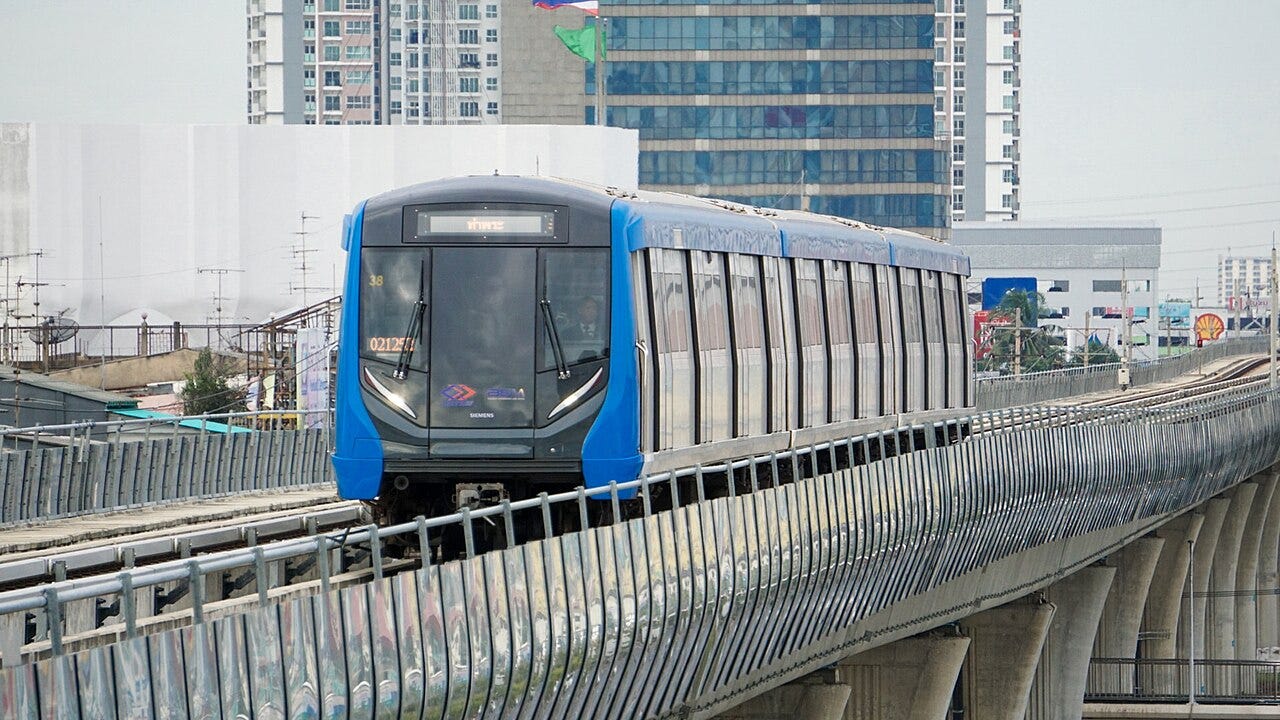
🎯 The Main Takeaway
Mass Rapid Transit (MRT) 🚄 is the lifeblood of Southeast Asia. From Manila to Jakarta, these fast and efficient networks are essential for both locals and visitors navigating the region’s most bustling cities.
🔍 Why It’s on Our Radar
Keeping order underground is no small feat when you look at the massive daily ridership 📊 across the region:
🇸🇬 Singapore: 3.4 million+
🇹🇭 Thailand: 500,000+
🇲🇾 Malaysia: 496,000+
🇵🇭 Philippines: 350,000+
🇮🇩 Indonesia: 127,000+
🇻🇳 Vietnam: 71,000+
To keep things running smoothly, standard rules are enforced across the board: no eating or drinking 🍔🚫, keeping the noise down 🤫, and generally being mindful of others. But beyond the basics, local cultural values have shaped some highly unique transit etiquette.
🌏 The Big Picture: Unique MRT Etiquette in Each Country
🇸🇬 Singapore: Save the makeup for later 💅
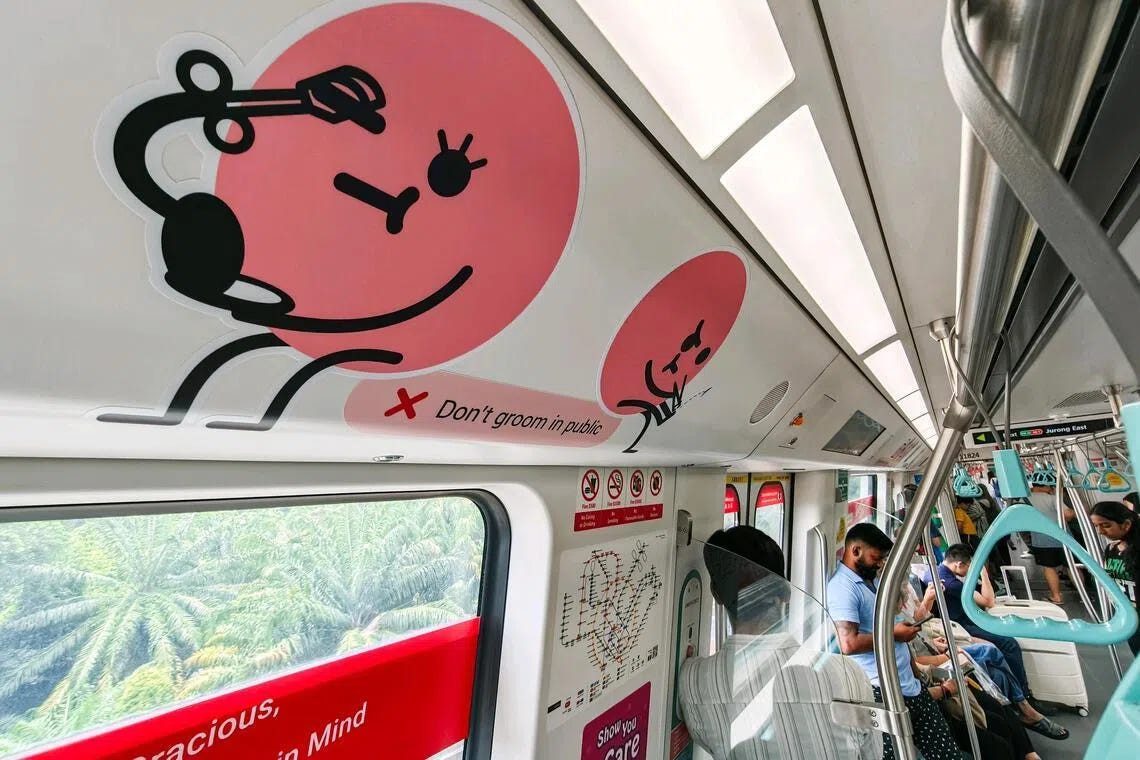
Clipping nails or applying eyeliner on the train? SMRT prefers you don't. While not strictly banned, colorful posters gently remind the 3.4 million daily riders to save their grooming for private settings. It’s a cheerful push for hygiene and gracious commuting 🤝 in a highly dense, shared space.
🇹🇭 Thailand: Offer your seat to monks
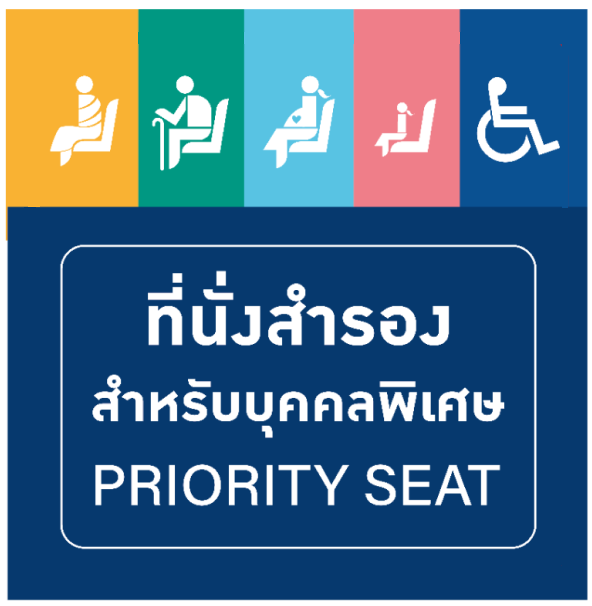
Along with the elderly and expecting mothers, monks are clearly marked as priority commuters 💺. With Buddhism deeply woven into the fabric of Thai society, offering up your seat isn't just a transit rule—it's a long-standing daily act of respect 🙏.
🇲🇾 Malaysia: Women-only coaches, and stricter enforcement
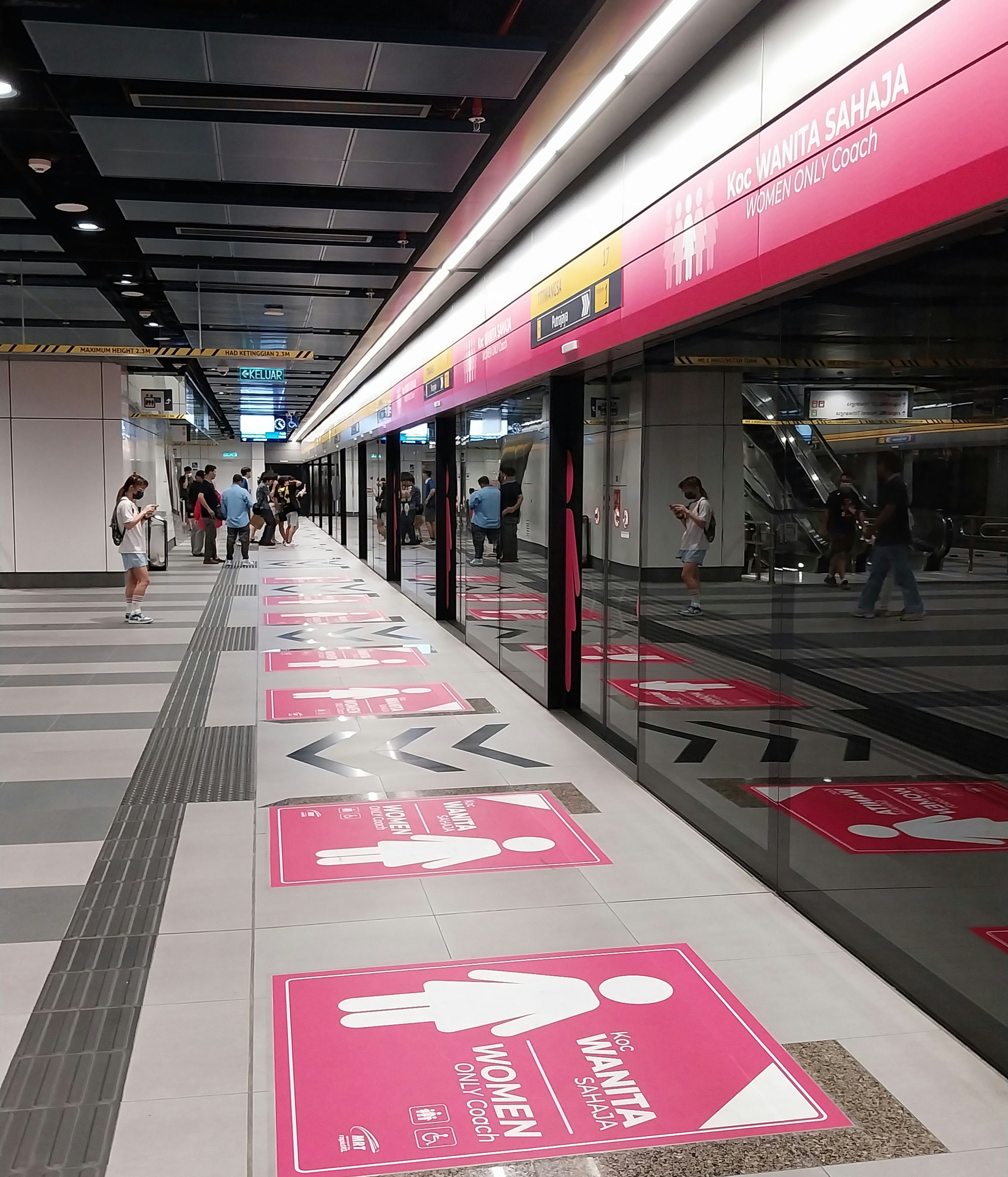
Reflecting the values of a Muslim-majority nation, pink-labeled women-only coaches offer a safe, comfortable ride for women and young boys 👩👦. Because wandering men have been an occasional issue, the government is drafting laws to impose strict fines on rule-breakers, proving they take commuter safety seriously 👮♂️.
🇮🇩 Indonesia: No selling and asking for donations
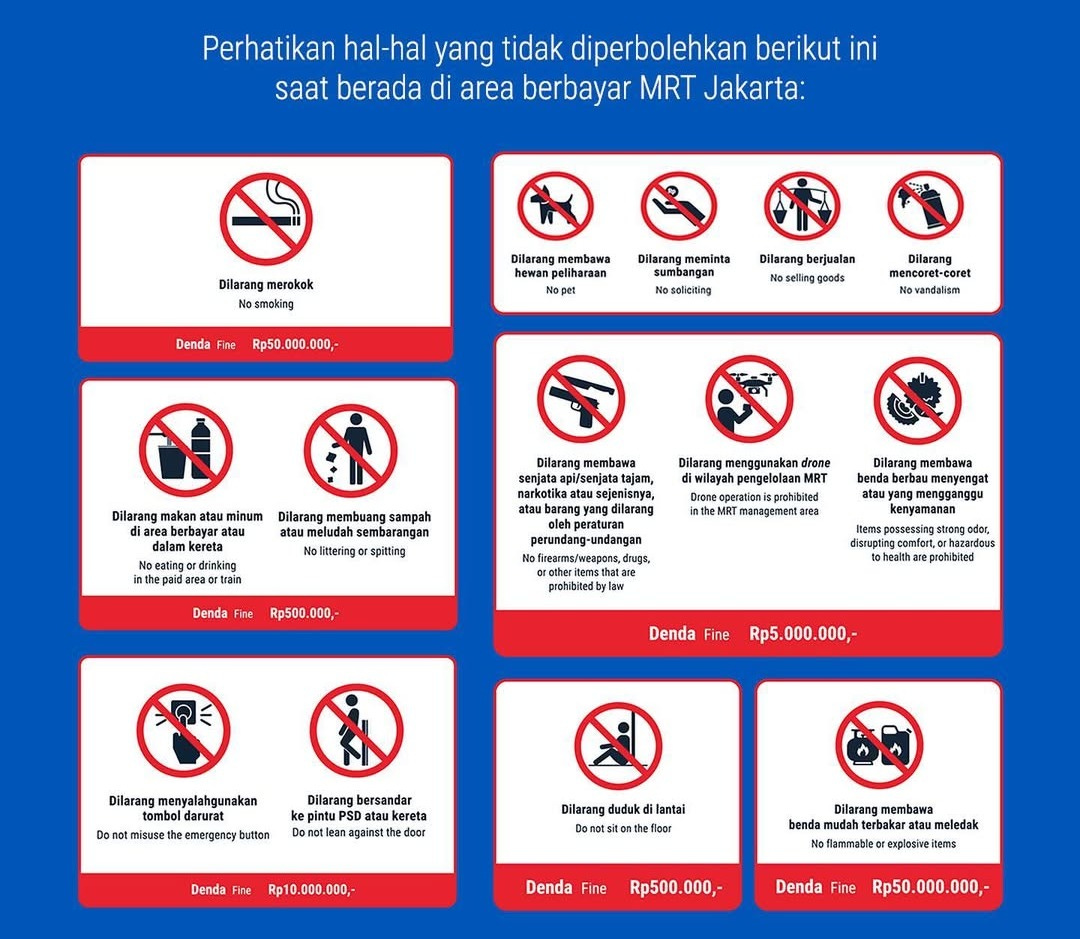
Bustling street vendors 🛒 and donation-seekers are part of Jakarta's everyday charm—and a staple of its older public transport history. But MRT Jakarta explicitly leaves them at the door. Clear signage ensures the new trains remain a quiet, hustle-free zone 😌.
🏠 Why This Hits Home
These networks are at wildly different stages of development, which explains why their rules are still evolving and adapting to modern life:
🥇 Oldest 🏛️
🇸🇬 Singapore — Singapore MRT (Opened: 1987)
🇵🇭 Philippines — Manila Metro Rail Transit System (Opened: 1999, MRT-3)
🟡 Mid-development phase 🚧
🇹🇭 Thailand — MRT Bangkok (Opened: 2004)
🇲🇾 Malaysia — Klang Valley MRT (Opened: 2017)
🆕 Newest systems ✨
🇮🇩 Indonesia — Jakarta MRT (Opened: 2019)
🇻🇳 Vietnam — Hanoi Metro (Opened: 2021)
Whether navigating the decades-old networks of Singapore and Manila or the sparkling new lines in Jakarta and Hanoi, these systems are more than just transit. They are living ecosystems 🛤️ shaped by the social norms and cultural values of the people who ride them.
🏁 The Bottom Line
Ultimately, each system offers insight into how different countries manage behavior in shared public spaces 🏙️, serving as a fascinating cultural mirror 🪞 and offering lessons in etiquette for the rest of the world to learn from.
(AKS/ARS)