



🎯 The Main Takeaway
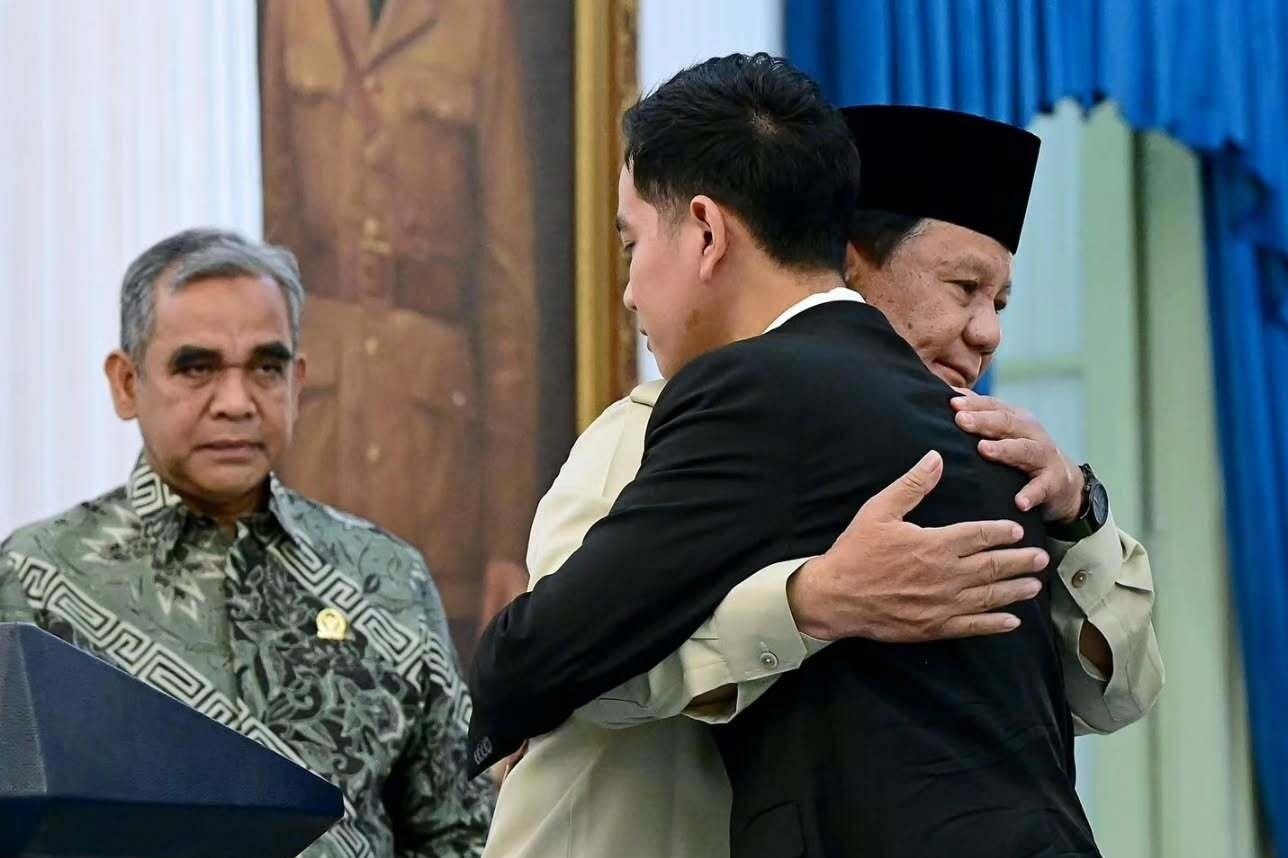
Indonesian Vice-President Gibran Rakabuming Raka, elected for the 2024–2029 term, officially announced his resignation on Thursday (12/11) after serving in office for about two years.
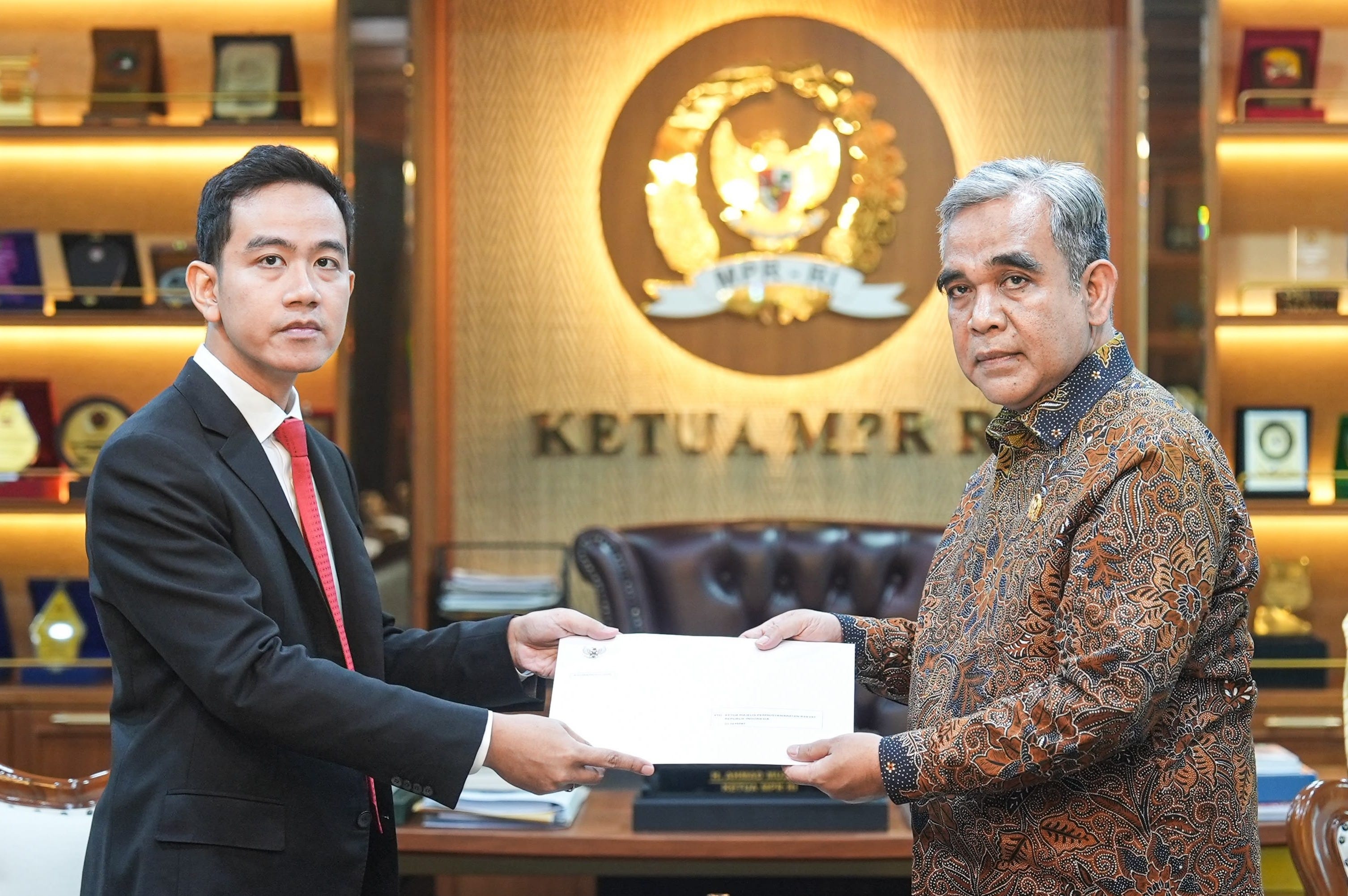
His resignation letter was submitted to Indonesian President Prabowo Subianto at the Presidential Palace in Gambir, and to People’s Consultative Assembly (MPR) Speaker Ahmad Muzani at the parliamentary complex in Senayan on the same day.
The announcement confirmed rumours of Gibran’s plan to step down, first shared by Pro-Jokowi Chairman Budi Arie Setiadi on Wednesday (11/11). This followed an earlier announcement by State Secretary Minister Prasetyo Hadi on Tuesday (10/11).
According to Gibran, the decision was entirely his own. He said his aim was to ensure government activities could continue smoothly, peacefully, and with a clear focus on national unity, the well-being of the Indonesian people, and a better future.
“This decision is my personal choice. After careful consideration, with full awareness and deep love for all Indonesian people, I have decided to resign as Vice-President of the Republic of Indonesia and return this mandate entirely to the people. This has not been an easy decision, but I believe it is the best choice.” — Gibran Rakabuming Raka, former Indonesian Vice-President, in a video message.
Gibran also said his resignation was unrelated to the growing controversy over his academic qualifications. Instead, he said he wanted to prioritise the public interest, particularly the interests of the Indonesian people, over his personal concerns.
“There are times when a leader must have the courage to make decisions that prioritise the greater good over personal interests. Political maturity is not about holding on to power, but having the courage to let it go for the sake of the nation’s greater interests.” — Gibran Rakabuming Raka, former Indonesian Vice-President, in a video message.
This makes Gibran the first Indonesian Vice-President, directly elected by the people through a general election, to step down from office in the country’s history.
🗣️ The President’s Response
Indonesian President Prabowo Subianto expressed his appreciation and respect for Gibran’s decision to resign from office. He also conveyed his deepest gratitude for Gibran’s commitment, dedication and hard work during his time as Vice-President.
According to Prabowo, Gibran had consistently supported him since their presidential election campaign. Their partnership continued after they were inaugurated as President and Vice-President on 20 October 2024.
Over the past two years, Gibran has visited 35 provinces, 139 regencies and 303 government project sites across Indonesia. These visits included underdeveloped, frontier and outermost regions, where he helped ensure that the government’s priority programmes were implemented smoothly and effectively.
In recognition of Gibran’s contributions, President Prabowo expressed his support for the decision, conveyed his highest appreciation and wished him strength in facing difficult times. He also expressed confidence in Gibran’s future career and public service.
“With a heavy heart, I have received his letter and respect and support the decision he has made. In my view, he has demonstrated a courageous attitude, a strong sense of responsibility and the qualities of a statesman. I believe he is still very young and has a long future ahead of him. I am confident that he will be successful in his future career and journey of service.” — Prabowo Subianto, Indonesian President.
🤔 How About Joko Widodo?
On Thursday (12/11), Indonesia’s former President Joko Widodo, also Gibran Rakabuming Raka's father, responded calmly to his son’s resignation. He described it as part of the country’s political dynamics and a normal occurrence.
“Political positions naturally come with their own dynamics, and that is perfectly normal. I have reminded Gibran that political office is temporary. We will continue to support President Prabowo’s administration, particularly its programmes that serve the interests of the wider public.” — Joko Widodo, Indonesia’s 7th President.
💥 What Is the Impact on the Indonesian Government?
Responding to the situation, Indonesian Coordinating Minister for Law, Human Rights, Immigration and Correctional Affairs Yusril Ihza Mahendra stated on Thursday (12/11) that the vacant Vice-President’s office would not significantly affect the government’s operations.
Why? The Vice-President’s main responsibility is to assist the President in running the government. The Vice-President also has no independent authority to make state decisions, as the President holds ultimate decision-making power.
As a result, there is no need to appoint a temporary official to fill the vacant Vice-President’s position.
The President can continue exercising his full authority, whether in Indonesia or overseas, with support from ministers who carry out their respective responsibilities according to their portfolios and areas of expertise.
“Without a Vice-President, the President can continue to run the government alone. The Vice-President’s role is to assist the President in carrying out their duties. Therefore, the President can continue to govern both from Indonesia and abroad. Even when in the country, the Vice-President cannot make independent decisions, as they have no legal authority under our government system.” — Yusril Ihza Mahendra, Coordinating Minister for Law, Human Rights, Immigration and Correctional Affairs.
🚀 Moving Onward…
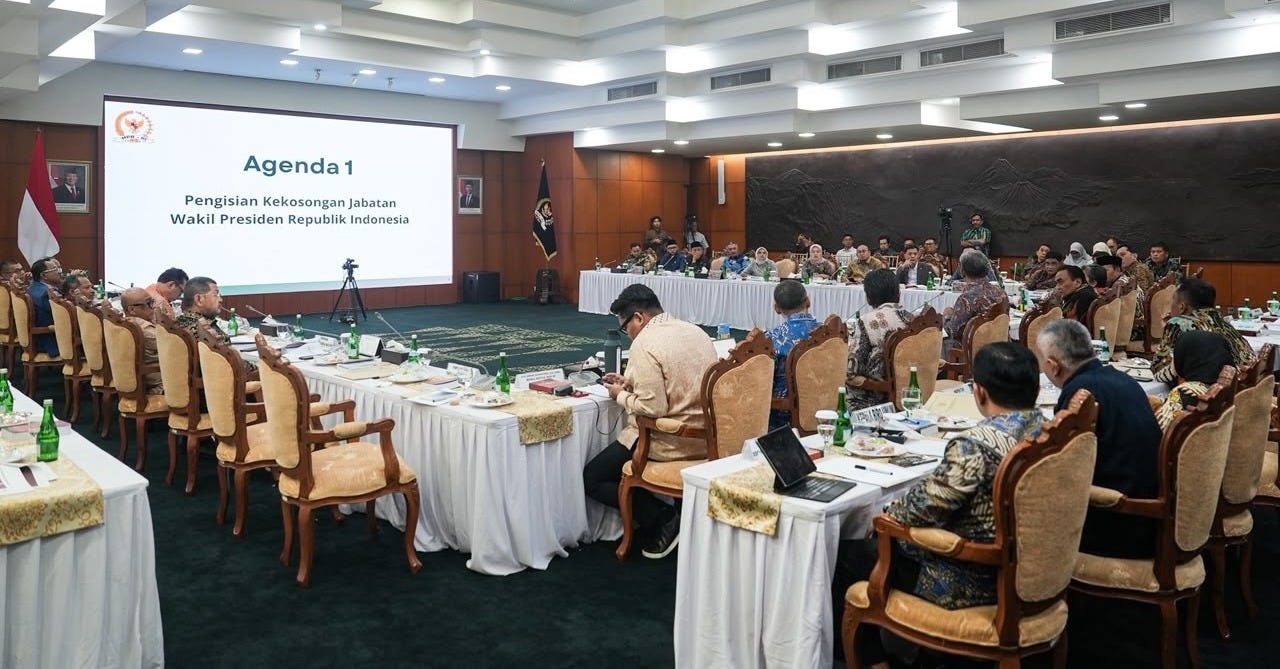
With the Indonesian Vice-President’s position now vacant, the People’s Consultative Assembly (MPR) has begun preparing the next steps to fill the position in accordance with the country’s constitutional procedures.
According to MPR Speaker Ahmad Muzani, the legislative body has up to 60 days to fill the vacant position. This includes the entire process, from preparing the procedure and requesting new candidates to verifying their documents, holding a plenary session, electing and inaugurating the new Vice-President.
To begin the process, MPR leaders held an internal meeting on Thursday (12/11), followed by a joint meeting involving all MPR parliamentary factions and the Regional Representative Council (DPD) on Friday (13/11). The meetings resulted in several key decisions:
Requesting new candidates: The forum agreed to send a formal request to President Prabowo Subianto to propose two candidates for the vacant Vice-President’s position, at least 14 days before the plenary session.
Forming two special teams: The MPR will establish a Verification Team and an Ad Hoc Team, each consisting of 36 members representing all MPR factions and the DPD.
Verification Team: This team will examine the documents and administrative requirements submitted by both Vice-Presidential candidates.
Ad Hoc Team: This team will prepare a draft MPR Decree appointing the new Vice-President-elect for approval during the plenary session.
Inauguration in December: The new Indonesian Vice-President is expected to be inaugurated during an MPR plenary session in early December 2026.
“The President needs time to consult with supporting political parties, coalition partners and various figures to seek their views. Therefore, in the presidential letter, the President proposed that the plenary session to elect the Vice President be held on 9 December.” — Ahmad Muzani, MPR Speaker.
📡 Why Is It on Our Radar?
Gibran’s resignation came amid an impeachment attempt against him in the House of Representatives (DPR), which gained momentum on Tuesday (10/11).
During the same period, the Supreme Court ruled that his educational equivalency certificate, obtained based on his studies abroad, was invalid.
The Supreme Court stated that Gibran’s certificate of attendance, academic records, grade explanations and other supporting documents did not provide sufficient evidence that he had successfully completed a recognised level of education.
Instead, the documents only demonstrated that he had attended academic courses.
The court subsequently instructed the Ministry of Primary and Secondary Education to revoke Gibran’s educational equivalency certificate, which was issued on 6 August 2019, and declared the document legally void.
“No evidence has been found to indicate that Gibran Rakabuming Raka possesses any foreign diploma or certificate that served as the basis for an equivalency recognition to a senior high school, vocational high school or an equivalent level of education.” — The Supreme Court.
📢 Following the Announcement…
The Indonesian House of Representatives (DPR) held a plenary session at the parliamentary complex on Tuesday (10/11), with 414 of its 580 members in attendance. Of these, 403 attended in person, while the remaining 11 were granted permission to be absent.
Although the session recorded the highest attendance of parliamentary members this year, its main agenda was to hear an opening speech by House Speaker Puan Maharani.
The speech did not address Gibran’s impeachment. Instead, it covered several legislative priorities, including the draft bill on asset confiscation and efforts to accelerate discussions on bills concerning copyright, transportation, traffic and cooperatives.
The following day, on Wednesday (11/11), 120 members from eight parliamentary factions signed a proposal to exercise the House’s right to express an opinion. They submitted the proposal to the House leadership the same day.
Under Indonesian law, the right to express an opinion is one of three constitutional rights held by the House of Representatives, alongside the rights of interpellation (right to request information) and inquiry.
Through this right, the House can formally express its views on government policies, extraordinary events occurring at both national and international levels, and follow-up actions arising from the exercise of its rights of interpellation and inquiry.
It can also address allegations that the President or Vice-President has violated the law. Such alleged violations include treason against the state, corruption, bribery, serious criminal offences and disgraceful conduct.
Amid the escalating political situation, the right to express an opinion was proposed in response to allegations that Vice-President Gibran Rakabuming Raka was ineligible to remain in office due to administrative irregularities involving his senior high school educational equivalency certificate, which was alleged not to meet Indonesian education standards.
The proposal was initially scheduled to be forwarded for consideration at a plenary session on Thursday (12/11). However, the plan was cancelled after Vice-President Gibran submitted his resignation letter on the same day.
⚠️ The Controversy…
The resignation of former Indonesian Vice-President Gibran Rakabuming Raka and the impeachment attempt against him over his academic certificate controversy have sparked public debate, particularly over the educational backgrounds of Indonesian political leaders, including the following:
House of Representatives’ educational backgrounds: According to Statistics Indonesia (BPS), the educational backgrounds of the 580 members of the House of Representatives (DPR) for the 2024–2029 period vary widely. These include 29 members with doctoral degrees (S3), 119 with master’s degrees (S2), 155 with bachelor’s degrees (S1), three with diplomas (D3) and 63 with senior high school qualifications (SMA). Meanwhile, 211 members have not provided information about their educational backgrounds.
President Prabowo Subianto’s educational background: President Prabowo Subianto also completed much of his early education overseas before joining the Military Academy in Magelang, Central Java. He attended elementary school in Singapore and Hong Kong, junior high school in Malaysia and Switzerland, and senior high school in the United Kingdom.
As a result, the controversy has prompted public calls for greater transparency and verification of the academic qualifications of DPR members and President Prabowo Subianto, to ensure fairness and consistent standards of accountability among Indonesia’s political leaders.
Gibran is not the only Southeast Asian political leader whose time in office was cut short. Several other national leaders in the region have also left office before completing their terms, either through resignation or impeachment. They include:
🇮🇩 Indonesia:
Abdurrahman Wahid (2001)
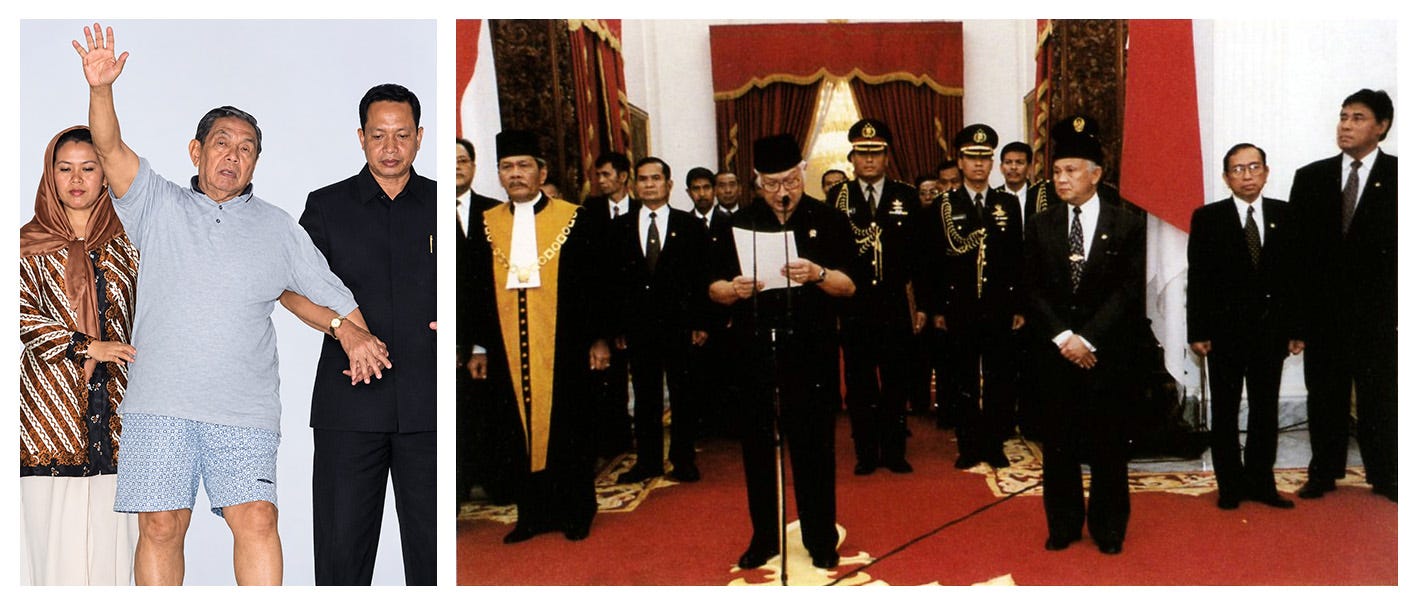
Indonesia’s fourth president, Abdurrahman Wahid, popularly known as Gus Dur, was removed from office by the People’s Consultative Assembly (MPR) on 23 July 2001 following an escalating political conflict with the legislature.
He had also faced allegations of involvement in the misuse of USD 4 million from the Bulog Employee Welfare Fund (Yanatera Bulog) and USD 2 million in personal financial assistance from the Sultan of Brunei Darussalam.
The political conflict reached its peak on 23 July 2001, when Gus Dur issued a presidential decree to freeze the House of Representatives (DPR) and the MPR, restore sovereignty to the Indonesian people, prepare for a general election within one year and suspend the Golkar Party.
In response, the MPR immediately convened an extraordinary session on the same day to revoke Gus Dur’s mandate and remove him from the presidency before appointing a new president and vice-president.
The MPR subsequently appointed Vice-President Megawati Soekarnoputri as Indonesia’s fifth president. Hamzah Haz was later elected vice president by a vote during the MPR’s extraordinary session on 26 July 2001.
Soeharto (1998)
Indonesia’s second president, Soeharto, announced his resignation on 21 May 1998 after 32 years in power, ending the New Order era. Following his resignation, Vice-President B.J. Habibie was sworn in as Indonesia’s third president, marking the beginning of the Reformasi era.
His resignation followed mounting public pressure, largely driven by the Asian financial crisis, which caused soaring inflation and a sharp depreciation of the Indonesian rupiah. As a result, prices of basic necessities increased significantly, while people’s purchasing power declined.
Public dissatisfaction also grew over allegations of corruption, collusion and nepotism (KKN) under his administration. Tensions escalated following the shooting of Trisakti University students during demonstrations on 12 May 1998. On 18 May, students occupied the parliamentary building in Senayan, Jakarta, demanding Soeharto’s resignation.
The growing protests, combined with declining support from political parties and the military, further weakened his position and contributed to his decision to step down.
Mohammad Hatta (1956)
Indonesia’s first vice-president, Mohammad Hatta, also one of the country’s founding fathers and independence proclaimers, resigned on 1 December 1956.
His resignation stemmed largely from differences in political principles with President Soekarno, particularly over the country’s system of government. Hatta supported parliamentary democracy, while Soekarno favoured Guided Democracy.
Hatta also believed that, under the parliamentary system, the prime minister held greater responsibility and authority as head of government, leaving the vice-president with a more limited role. This became clearer after Indonesia established its parliamentary system in 1950.
In addition, Hatta expressed concern over growing corruption within the government. He eventually decided that stepping down from the vice-presidency was the best course of action, given his political differences with Soekarno and his concerns about the government's direction.
🇰🇭 Cambodia:
Prince Norodom Ranariddh (1997)
Cambodian Prince Norodom Ranariddh, the country’s First Prime Minister, was ousted from office following a coup led by his fellow Prime Minister, Hun Sen, in July 1997.
The coup followed escalating political tensions between the Cambodian People’s Party (CPP), led by Hun Sen, and the FUNCINPEC Party, led by Prince Norodom Ranariddh.
Hun Sen justified the military action as a pre-emptive measure to prevent Ranariddh from integrating former Khmer Rouge fighters, who had allied themselves with the prince, into the Cambodian armed forces and promoting them to senior military positions.
Following his removal, Ranariddh went into exile in France and Thailand before returning to Cambodia in 1998.
🇱🇦 Laos:
Prince Souphanouvong (1986)
Laos’s first president, Prince Souphanouvong, who had led the country since 1975, stepped down in October 1986 because of declining health.
Phoumi Vongvichit subsequently served as acting President until August 1991. Former Prime Minister Kaysone Phomvihane succeeded him and was officially appointed Laos’s second president by the Supreme People’s Assembly.
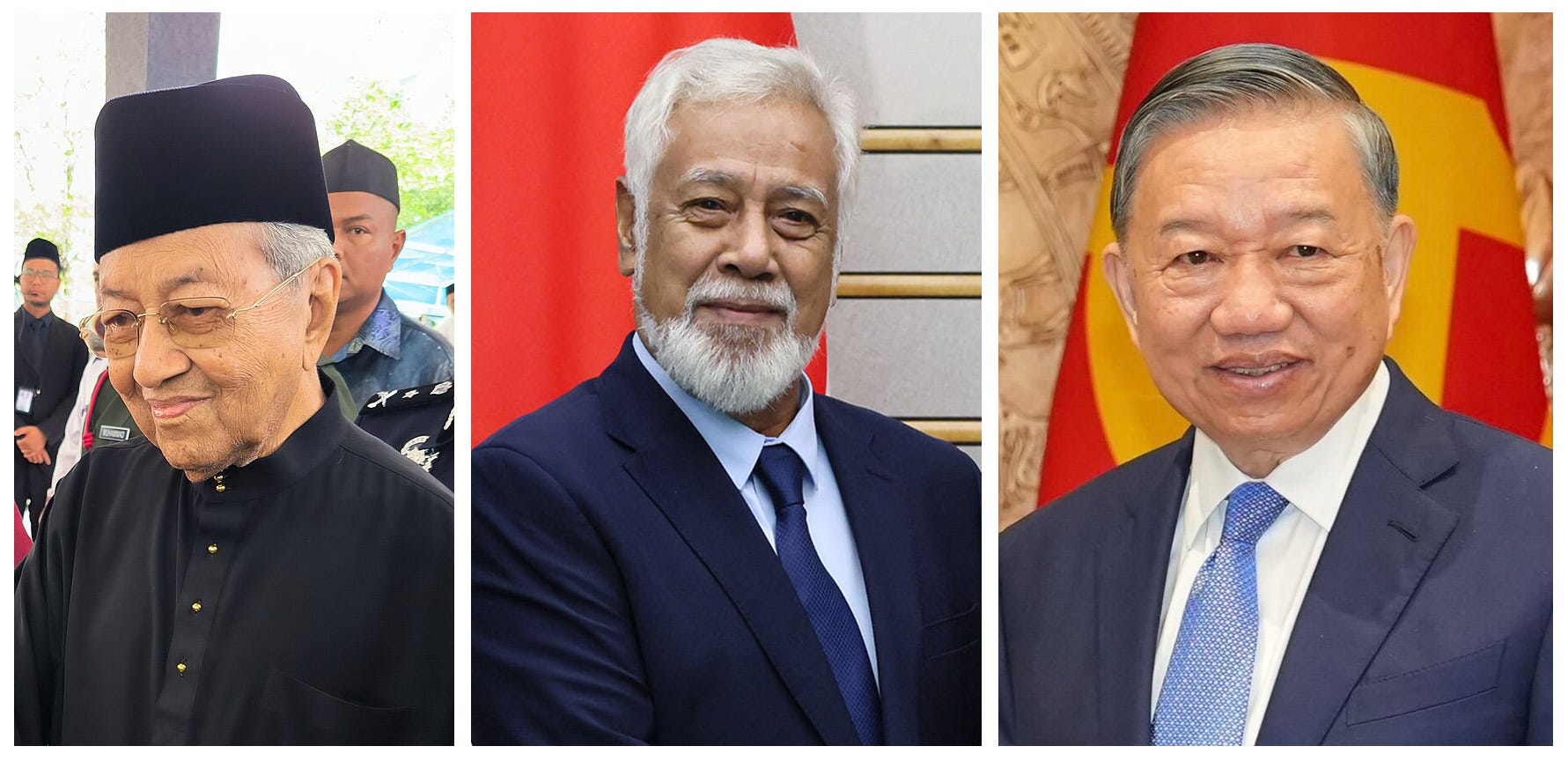
🇲🇾 Malaysia:
Muhyiddin Yassin (2021)
Malaysia’s eighth Prime Minister, Muhyiddin Yassin, officially submitted his resignation to Sultan Abdullah Ahmad Shah on 16 August 2021, after serving for 17 months.
His decision came after he lost majority support in Parliament, including backing from members of UMNO, one of the country’s largest political parties.
Public dissatisfaction with his government’s handling of the COVID-19 pandemic also added to the pressure. The lockdown measures failed to contain the spread of the virus, with Malaysia recording around 1.36 million infections and 12,000 deaths during his time in office.
Mahathir Mohamad (2020)
Malaysia’s seventh Prime Minister, Mahathir Mohamad, announced his resignation to Sultan Abdullah on 24 February 2020, after serving for 22 months.
His resignation followed growing political turmoil within his ruling coalition, particularly after his former deputy, Anwar Ibrahim, became involved in efforts to form a new political alliance.
During a press conference on 26 February 2020, Mahathir rejected claims that he was seeking to hold on to power. He said he formed the government without taking sides or prioritising any political party's interests, and that his focus was solely on the national interest.
Sultan Muhammad V (2019)
Sultan Muhammad V became the first monarch in Malaysian history to voluntarily step down as the country’s 15th King. His abdication took effect on 6 January 2019.
The reason behind his decision remains unknown, as Malaysian royal officials did not provide further details about his departure.
Abdullah Ahmad Badawi (2009)
Another Malaysian Prime Minister who stepped down before completing his term was Abdullah Ahmad Badawi, who announced his resignation on 2 April 2009 following political pressure.
The pressure came after his party suffered significant electoral setbacks in the 2008 general election, losing several constituencies that it had traditionally held.
Tunku Abdul Rahman (1970)
Malaysia’s first Prime Minister, Tunku Abdul Rahman, officially resigned on 22 September 1970 after leading the country for 13 years.
His resignation followed the racial riots between Malay and Chinese communities in Kuala Lumpur on 13 May 1969, which resulted in 196 deaths and 439 injuries.
🇲🇲 Myanmar:
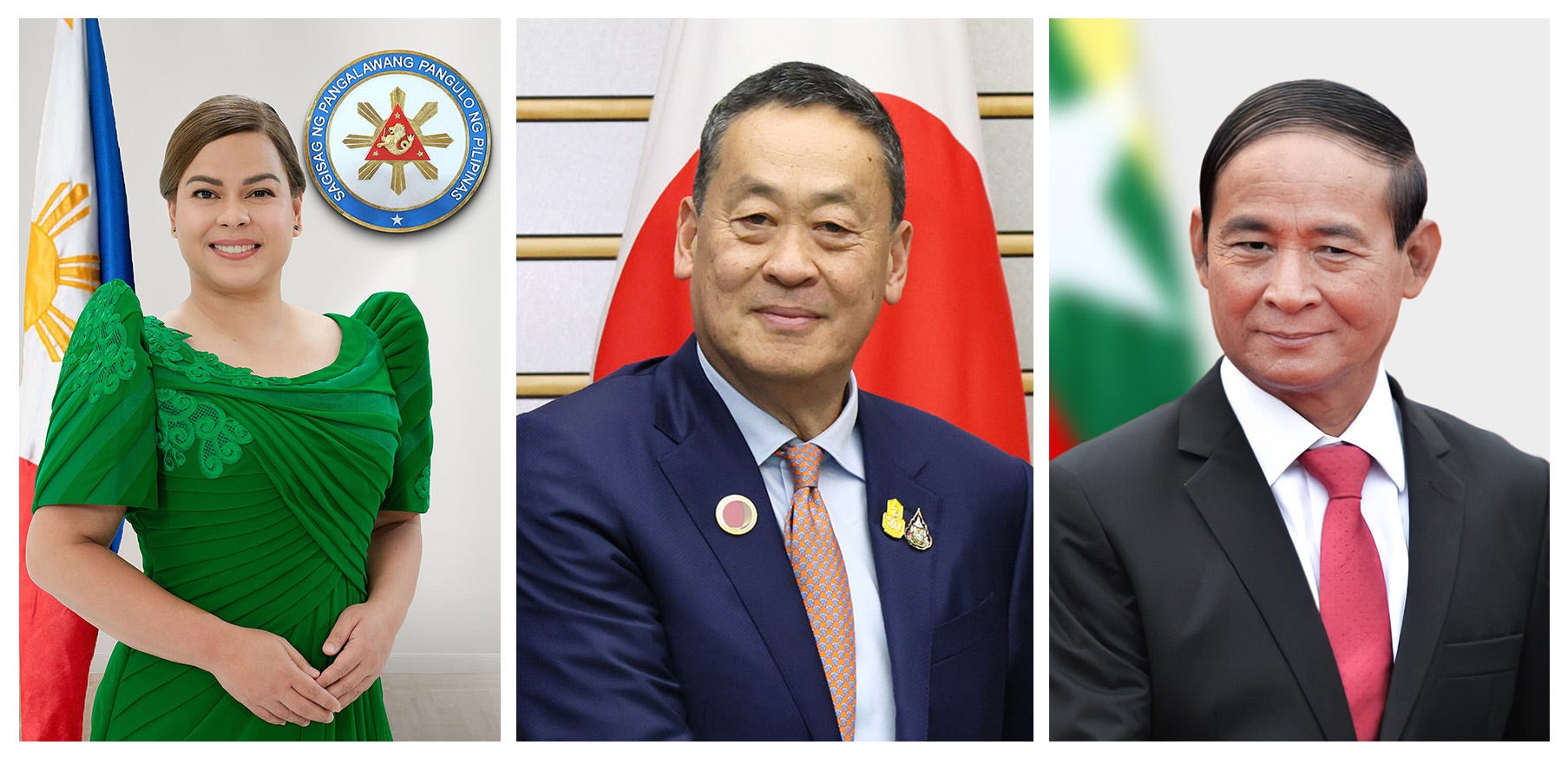
Win Myint (2021)
Myanmar’s President, Win Myint, was ousted from office on 1 February 2021 after refusing to step down under pressure from the military. His refusal was followed by a coup led by Senior General Min Aung Hlaing, who seized power.
The ousted president, along with State Counsellor Aung San Suu Kyi, lawmakers and members of the elected National League for Democracy (NLD) government, was arrested by the military junta.
Win Myint was later sentenced to nine years and six months in prison on corruption and other charges. He was eventually released from Taungoo Prison on 17 April 2026 under a traditional New Year amnesty.
Sein Lwin (1988)
Sein Lwin became the shortest-serving president in Myanmar’s history, holding office for just 17 days before resigning on 12 August 1988.
His resignation came amid nationwide protests and demonstrations involving students, monks, civil servants and doctors.
Known as the 8888 Uprising, the protests began on 8 August 1988, with demonstrators calling for an end to 26 years of military rule and the establishment of a multi-party democracy.
The uprising descended into violence, resulting in around 1,000 deaths as the military violently suppressed the demonstrations.
San Yu (1988)
Sein Lwin’s predecessor, San Yu, also resigned as Myanmar’s president on 27 July 1988 after spending around seven years in office.
His resignation came amid growing pro-democracy demonstrations and anti-government protests across the country, which escalated significantly in March and June 1988.
His departure also followed years of economic mismanagement that left Myanmar among the world’s least developed countries at the time.
Mahn Win Maung (1962)
Myanmar’s third president, Mahn Win Maung, was ousted by the military during a coup led by General Ne Win on 2 March 1962.
Following the coup, he was arrested and imprisoned by the military regime for five years before being released in October 1967.
🇹🇭 Thailand:
Paetongtarn Shinawatra (2025)
Paetongtarn Shinawatra was removed from office as Thailand’s prime minister on 29 August 2025 after the Constitutional Court found her guilty of a serious ethical violation.
The decision followed a 6–3 vote by nine Constitutional Court judges, who ruled that she breached constitutional ethical standards.
The controversy stemmed from a leaked phone conversation with former Cambodian Prime Minister Hun Sen in June 2025, amid escalating border tensions between the two neighbouring countries.
During the conversation, Paetongtarn addressed Hun Sen as “uncle” and criticised the Thai military's actions during the border clashes. The tensions later escalated into deadly fighting in July 2025, resulting in dozens of deaths on both sides and forcing thousands of people to flee their homes.
The court ruled that her conduct had potentially weakened Thailand’s position and allowed Cambodia to interfere in the country’s domestic affairs.
In response, Paetongtarn defended her actions, saying she had intended to protect Thailand’s sovereignty and promote peace by avoiding further fighting and preventing loss of life.
Srettha Thavisin (2024)
Thai Prime Minister Srettha Thavisin was removed from office on 14 August 2024 after the Constitutional Court ruled that he had violated constitutional ethical standards.
He became the fourth Thai prime minister to be removed from office by the country’s judges.
The decision followed a 5–4 court ruling against Srettha over his appointment of former lawyer Pichit Chuenban as a minister attached to the Prime Minister’s Office.
Pichit had previously been sentenced to six months in prison in 2008 for contempt of court, after attempting to bribe court officials with two million baht hidden in a snack bag.
The court ruled that Srettha should have known that he was appointing someone who seriously lacked moral integrity.
Yingluck Shinawatra (2014)
Thailand’s Constitutional Court ordered Prime Minister Yingluck Shinawatra and nine of her cabinet members to leave office on 7 May 2014 after finding her guilty of abusing her power.
According to the court, Yingluck had abused her authority by transferring National Security Council chief Thawil Pliensri to another position in 2011 to benefit her family and political party.
The court ruled that the transfer violated the country’s constitution.
Somchai Wongsawat (2008)
Thai Prime Minister Somchai Wongsawat was also forced to leave office on 2 December 2008 after the Constitutional Court found his political party guilty of electoral fraud.
His People’s Power Party and two coalition partners were ordered to dissolve, while their party leaders were banned from political activities for five years.
Before the court ruling, Thai Army Chief General Anupong Paochinda had also called on Somchai to step down in November 2008.
The demand followed anti-government protests that led demonstrators to occupy Suvarnabhumi International Airport in Bangkok, leaving thousands of passengers stranded.
Samak Sundaravej (2008)
Thailand’s Constitutional Court ordered Prime Minister Samak Sundaravej to leave office on 9 September 2008 after finding him guilty of violating conflict-of-interest laws by accepting payment to host a television cooking show while serving as prime minister.
Meanwhile, massive demonstrations organised by the People’s Alliance for Democracy (PAD) also took place in Bangkok in May 2008, demanding Samak’s resignation.
The protesters accused him of acting as a political proxy for former prime minister Thaksin Shinawatra, who had been ousted in a military coup in 2006.
The demonstrators successfully occupied Government House in Bangkok from August 2008. However, Samak initially refused to step down despite the growing pressure.
Thaksin Shinawatra (2006)
Thaksin Shinawatra was ousted as Thailand’s prime minister on 19 September 2006 following a military coup in Bangkok led by General Sonthi Boonyaratglin, who overthrew the country’s elected government.
The coup followed an escalating power struggle between Thaksin’s populist political movement, which enjoyed strong support from lower-income groups due to his popular policies, and Thailand’s traditional establishment, which centred on the monarchy, military and royalist bureaucracy.
Additionally, Thaksin faced multiple allegations of corruption, abuse of power and conflicts of interest during his nearly five years in office, further increasing political tensions across the country.
🇵🇭 The Philippines:
Sara Duterte (2026)
Sara Duterte, the Philippines’ vice-president and daughter of former president Rodrigo Duterte, faced two impeachment attempts by the House of Representatives, with the second resulting in her impeachment on 11 May 2026.
The first impeachment attempt took place on 5 February 2025, but the Supreme Court later nullified it on 25 July 2025, ruling that the process was unconstitutional.
The second attempt took place on 11 May 2026 and succeeded, with 257 of 318 House members voting in favour of impeaching Sara. The case was subsequently referred to the Senate, with her impeachment trial beginning on 6 July 2026 and remaining ongoing.
She faced several allegations, including plotting to assassinate President Ferdinand Marcos Jr., First Lady Liza Marcos and House Speaker Martin Romualdez.
She was also accused of large-scale corruption and failing to respond adequately to China’s actions against Filipino forces amid tensions in the South China Sea.
Joseph Estrada (2001)
Philippine President Joseph Estrada left Malacañang Palace on 20 January 2001, following massive protests at the EDSA Shrine in Metro Manila, known as the Second EDSA Revolution, which took place from 17 to 20 January 2001.
Estrada faced several allegations, including accepting millions of pesos from illegal gambling operators, using an alias, corruption, betrayal of public trust and violating the Constitution.
He also faced an impeachment attempt initiated by the House of Representatives on 13 November 2000. However, the impeachment trial in the Senate collapsed after 11 senators voted against opening a sealed second bank envelope, while 10 voted in favour.
The envelope allegedly contained evidence of millions of dollars in hidden assets linked to Estrada’s use of the alias “Jose Velarde”. The Senate’s decision triggered widespread public anger and eventually led to the Second EDSA Revolution.
Ferdinand Marcos Sr. (1986)
Philippine President Ferdinand Marcos Sr. was ousted on 25 February 1986 after massive demonstrations in Metro Manila known as the People Power Revolution, or the First EDSA Revolution.
The uprising was fuelled by the assassination of former senator and opposition leader Benigno “Ninoy” Aquino Jr. in August 1983, followed by allegations of electoral fraud during the snap presidential election in February 1986.
The election was marked by allegations of vote-buying, intimidation and widespread irregularities, resulting in Marcos Sr. being declared the winner over opposition candidate Corazon Aquino.
Following his removal from office, Marcos Sr. fled to Hawaii in the United States, where he lived in exile until his death on 28 September 1989.
🇹🇱 Timor-Leste:
Kay Rala Xanana Gusmão (2015)
Timor-Leste’s first president and sixth prime minister, Xanana Gusmão, submitted his resignation as prime minister to President Taur Matan Ruak on 6 February 2015. The president accepted his resignation and appointed Rui Maria de Araújo as his successor on 16 February 2015.
According to Xanana, he stepped down voluntarily to hand over government responsibilities to the younger generation. He also hoped the transition would make the government more efficient and inclusive.
Xanana Gusmão later returned to office after being elected as Timor-Leste’s tenth prime minister on 1 July 2023. He continues to lead the country’s government.
Mari Alkatiri (2006)
Timor-Leste’s third prime minister, Mari Alkatiri, resigned on 26 June 2006 following growing political and military unrest in the capital, Dili, which put intense pressure on him to leave office.
The crisis began after Mari’s government dismissed nearly 600 soldiers from the Timor-Leste Defence Force between March and April 2006. The soldiers had protested against poor working conditions and alleged regional discrimination within the military.
However, the protests escalated into violent clashes, with demonstrators setting fire to cars and looting government buildings.
The situation deteriorated further when some police officers joined the unrest and clashed with military personnel, forcing thousands of civilians to flee their homes in and around the capital.
Mari Alkatiri later returned as prime minister for a second term on 15 September 2017, serving until 22 June 2018.
🇻🇳 Vietnam:
Võ Văn Thưởng (2024)
Vietnamese President Võ Văn Thưởng resigned on 20 March 2024 after serving for just over a year in office.
The Communist Party of Vietnam accepted his resignation following allegations that he had violated party rules and regulations. According to an official statement, his violations had damaged the reputation of the Party and the State and negatively affected public opinion.
However, the authorities did not provide detailed information about the specific violations that led to his resignation.
Nguyễn Xuân Phúc (2023)
Vietnamese President Nguyễn Xuân Phúc announced his resignation on 17 January 2023 after serving for around one year and nine months.
His departure came amid an intensified anti-corruption campaign led by Communist Party General Secretary Nguyễn Phú Trọng, which resulted in the dismissal of several senior government officials, including two deputy prime ministers, Phạm Bình Minh and Vũ Đức Đam.
The Communist Party held Phúc responsible for violations and misconduct committed by several officials under his leadership during his tenure as prime minister from 2016 to 2021.
These cases included corruption scandals linked to the government’s response to the COVID-19 pandemic.
Tô Lâm (2024)
Tô Lâm was elected as Vietnam’s president on 22 May 2024 but left the position on 21 October 2024, after being elected as General Secretary of the Communist Party of Vietnam on 3 August 2024, following the death of Nguyễn Phú Trọng.
His departure from the presidency ended his brief period in the dual leadership role and allowed the country to return to its established collective leadership arrangement.
However, Tô Lâm later returned to the presidency after being elected again on 7 April 2026, for the 2026–2031 term. He also retained his position as General Secretary of the Communist Party, allowing him to hold both of the country’s top leadership positions simultaneously.
🇧🇳 Brunei Darussalam, 🇸🇬 Singapore:
No heads of state or heads of government who voluntarily resigned from office or stepped down following impeachment attempts.
📌 The Bottom Line
Stepping down from political office does not always mean being forced out of power. Some leaders resigned voluntarily, while others were removed through impeachment, court rulings, military coups, or political pressure. Whatever the reason, their departures changed their countries’ political landscapes.
Political leaders should put the public interest before personal ambition. While some chose to step down to protect national unity, improve governance or give younger generations an opportunity, others left office after facing allegations of corruption, political disputes and public criticism. Ultimately, leadership should be about serving the people, not holding on to power.
However, leaving office does not always end a political career. Some leaders were replaced to maintain government stability, while others eventually returned to power. Their successors, meanwhile, faced the challenge of continuing government programmes and addressing existing problems.
Across Southeast Asia, leaders have left office for different reasons, but their departures have reshaped national politics.
From voluntary resignations to forced removals, these cases show how political leadership can change and how important it is to ensure a smooth transition of power.
🔎 Need More Angles?
Antara, Yusril: Wapres Kosong, Prabowo Tetap Jalankan Pemerintahan Sendiri
Mahkamah Agung, Putusan Mahkamah Agung Nomor 742 K/TUN/2026
Mahkamah Agung, Putusan PTUN Jakarta Nomor 62/G/2026/PTUN.JKT
Mahkamah Konstitusi, Putusan Nomor 01/PHPU.PRES-XXIV/2026
Sekretariat Presiden, LIVE: Keterangan Pers Presiden Prabowo, Istana Merdeka, 12 November 2026
Supreme Court of the Philippines, SC: House Impeachment Complaint vs VP Duterte Barred by 1-year Rule, due Process or Fairness Applies During All Stages of Impeachment Process
Wakil Presiden Republik Indonesia, Pernyataan Resmi Gibran Rakabuming Terkait Pengunduran Diri sebagai Wakil Presiden RI
(NGO/QOB)