



🎯 The Main Takeaway
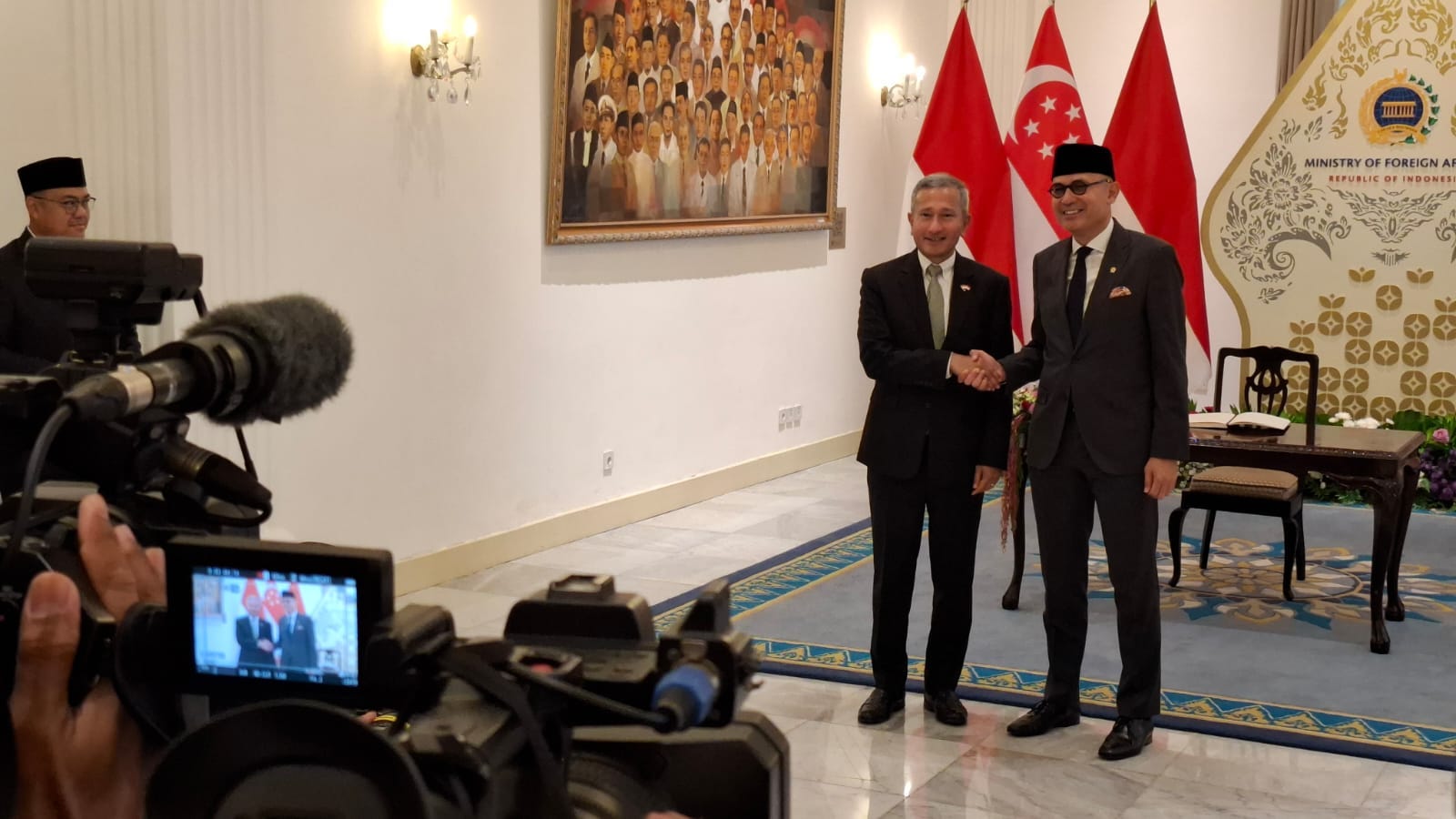
🤝 Diplomatic alignment: On Tuesday (27/10), Singaporean Foreign Minister Vivian Balakrishnan commenced a three-day visit to Jakarta by meeting Indonesia’s newly appointed Foreign Minister Arrmanatha Nasir. The two agreed to establish bilateral communication hotlines and a joint task force to aggressively pursue corporations responsible for transboundary haze.
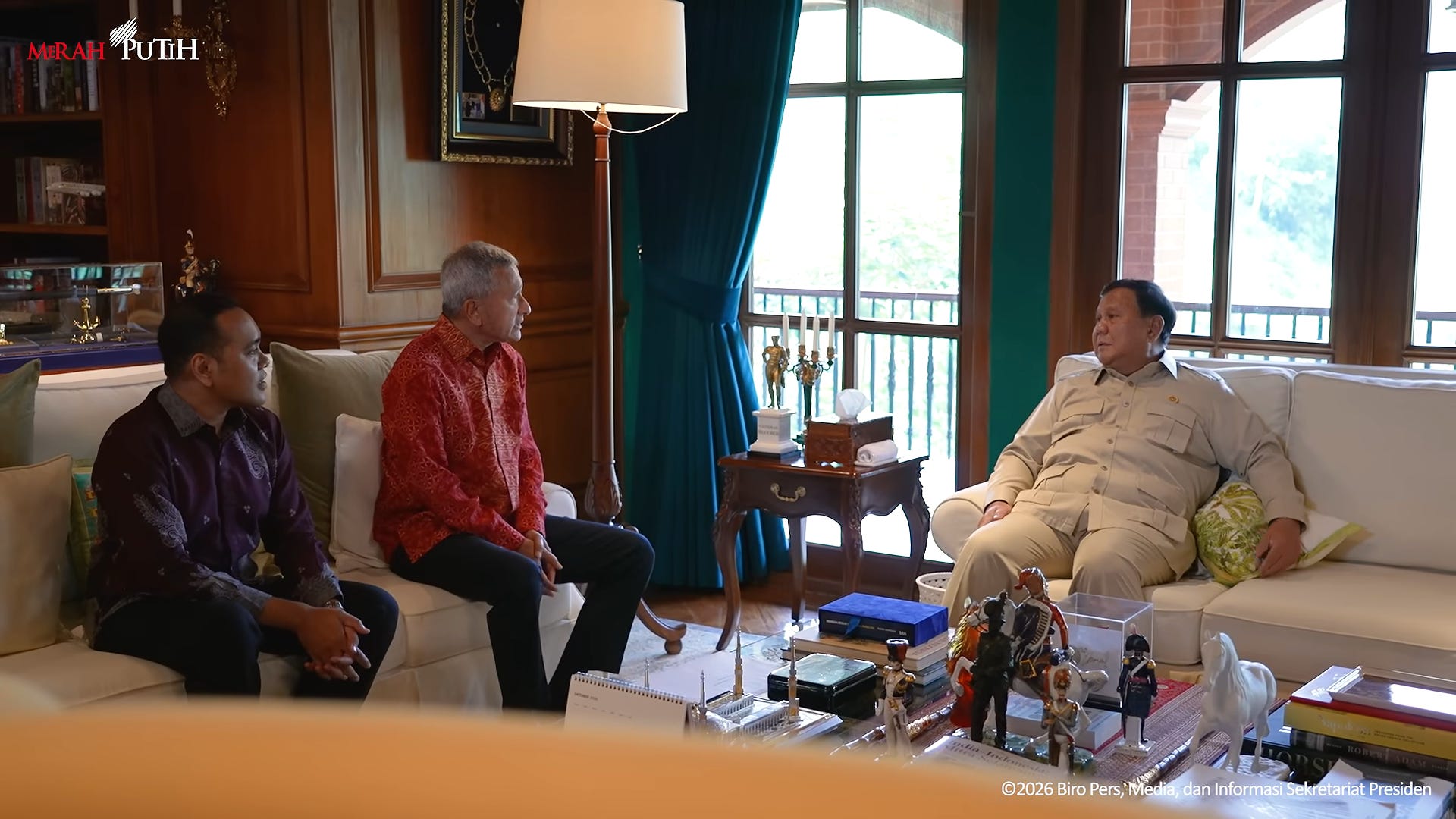
🏛️ Presidential commitment: On Wednesday (28/10), Balakrishnan held a high-level dialogue with Indonesian President Prabowo Subianto in Bogor. The meeting cemented President Prabowo and Prime Minister Lawrence Wong's political commitment to implement bilateral plans and constructively manage recent shifts in cross-border energy supplies.
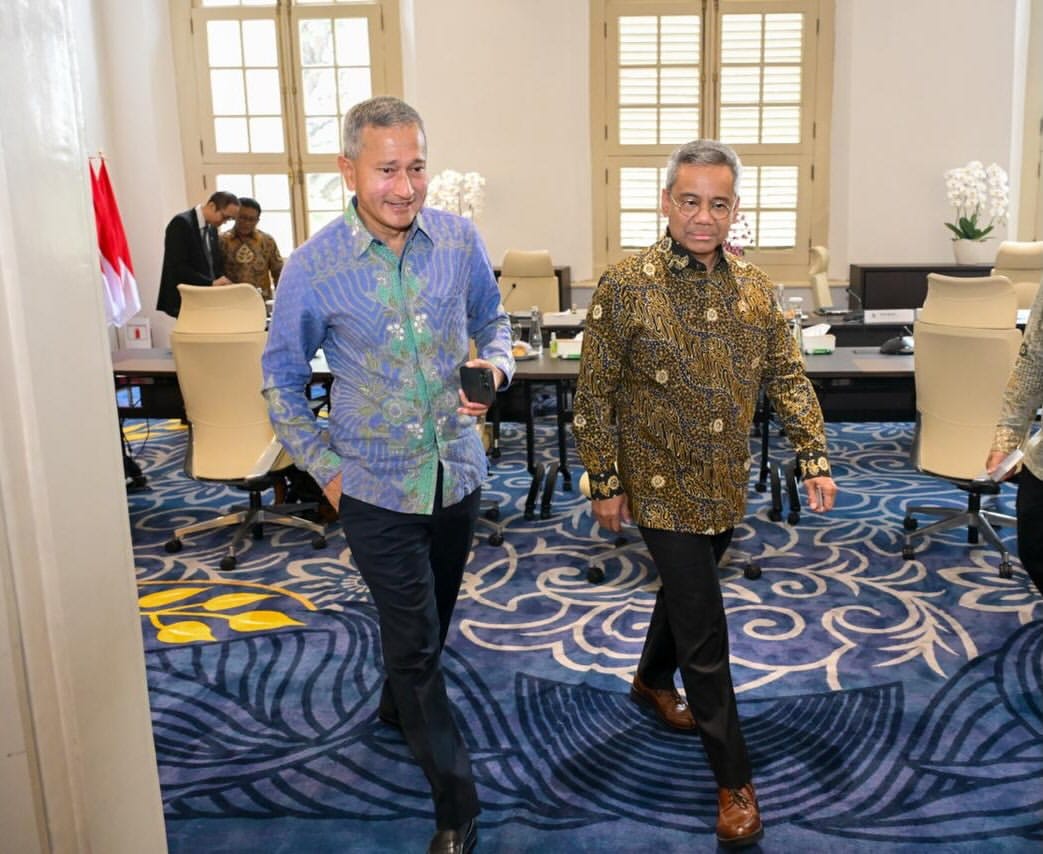
🏦 Financial crackdown: To conclude the tour on Thursday (29/10), Balakrishnan met with Indonesian Finance Minister Suahasil Nazara at the Ministry of Finance. The dialogue reinforced both nations' strategic pivot to treat environmental negligence as a cross-border financial crime, coinciding with Singapore's National Environment Agency (NEA) issuing formal legal notices to 10 Singapore-based companies linked to the fires.
📡 Why It’s on Our Radar
The Indonesia-Singapore bilateral relationship is a critical barometer for Southeast Asian Stability, and several acute challenges require immediate, coordinated action:
🌫️ Transboundary haze is recurring: Severe El Niño conditions have exacerbated land and forest fires in Sumatra and Kalimantan, impacting air quality across the Malacca Strait.
🏢 Corporate impunity crosses borders: Companies profiting from illegal slash-and-burn clearing often utilise complex transnational financial networks to shield their assets.
⚡ Energy demands are surging: Indonesia has cut gas exports by 8 per cent to secure its own domestic needs, a significant shift given that natural gas supplies approximately 95 per cent of Singapore’s electricity generation.
🤝 Interdependent neighbours: Singapore, Indonesia, Malaysia, and Brunei are permanent neighbours who will consistently face common threats like haze and pandemics.
⚠️ Why It Matters?
Jakarta and Singapore's decisions reverberate far beyond their shared maritime border, directly affecting regional public health, economic integrity, and ASEAN centrality.
😷 Citizens bear the brunt: While Indonesian citizens are the front-line victims, the haze also requires robust community responses in Singapore, including volunteers distributing masks precinct by precinct.
💡 Energy security requires balance: Governments have a primary responsibility to secure essential supplies for their people, which requires balancing domestic needs with regional cooperation.
💰 Contracts drive infrastructure: Cross-border energy contracts are crucial because they mobilise finance to expand regional infrastructure, achieving economies of scale that lower unit costs.
🏛️ ASEAN needs leadership: With Singapore assuming the ASEAN Chairmanship in 2027, the diplomatic synergy between the two nations is crucial for deepening regional integration.
“Today, the Indonesia-Singapore relationship is mature enough to speak candidly, especially when we differ. What matters is not what we differ but how we resolve our differences constructively, respectfully and openly.” - Arrmanatha Nasir, Indonesian Foreign Affairs Minister.
🤝 A Mature and Institutionalised Partnership
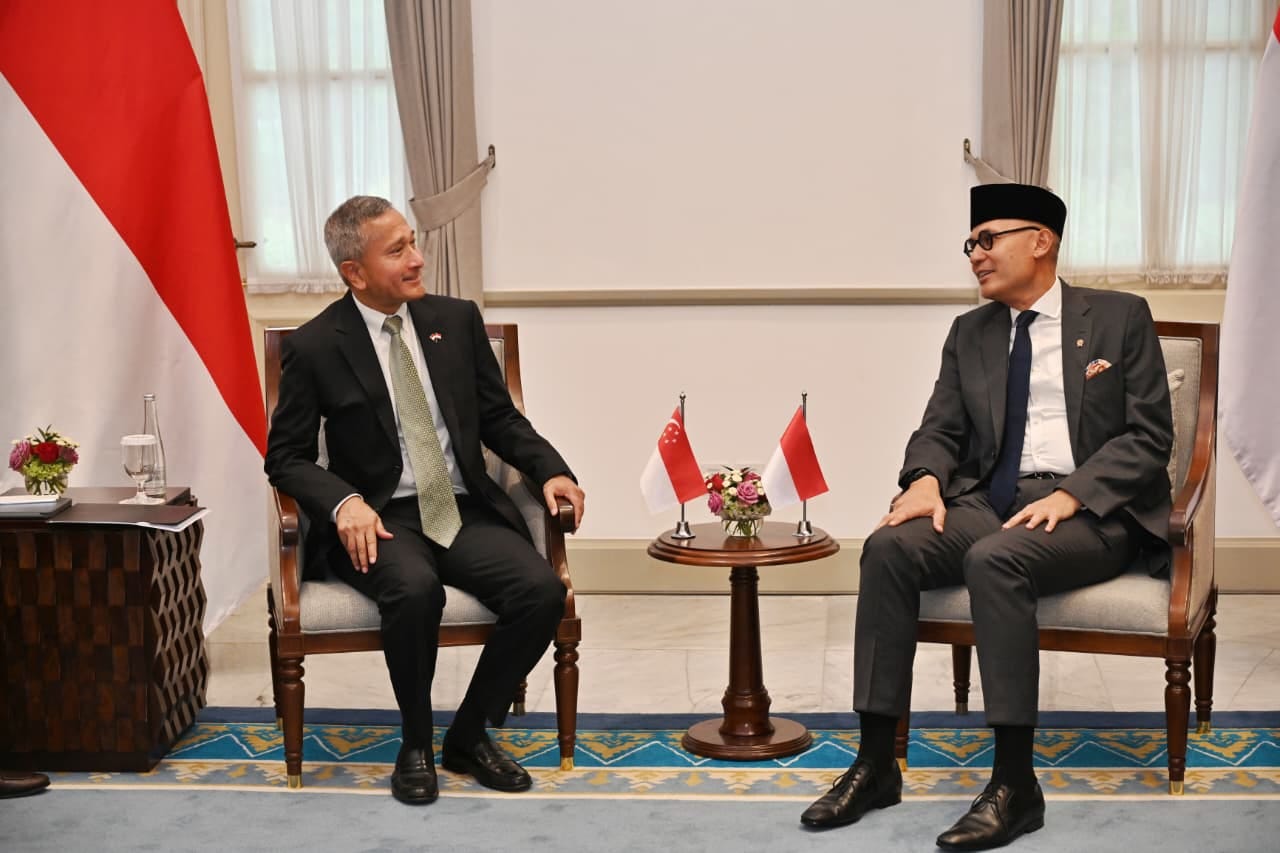
The meeting underscored a transition from ad hoc diplomacy to highly institutionalised cooperation. Recognising that intense bilateral relationships inevitably produce occasional friction, the two ministers agreed to establish dedicated communication hotlines at both the ministerial and senior official levels.
This infrastructure ensures that disputes are managed efficiently and quietly, respecting each nation’s domestic legal frameworks and national circumstances.
Balakrishnan acknowledged that political disagreements and differing priorities are inevitable, but stressed that "cool heads" must prevail to find collaborative solutions. He noted that diplomacy cannot be conducted purely over the phone or through the media.
"As Singaporeans, we have the same weight on our necks, the same weight on our shoulders. Which symbolizes the spirit of loyalty, mutual assistance and cooperation, even in difficult times. Singapore is very confident in the future of Indonesia and wants Indonesia to move forward because our future is bright." - Vivian Balakrishnan, Singaporean Foreign Minister.
🌫️ Tackling the Transboundary Haze Crisis
The most pressing operational issue discussed was the severe land and forest fires in Sumatra and Kalimantan. Minister Arrmanatha made it clear that combating the fires is a “top national priority” under President Prabowo’s administration.
Indonesia has deployed a massive domestic response, mobilising approximately 71,000 ground personnel and 51 aerial units across priority provinces, utilising water bombing, dry ice, and weather modification technologies.
To address this three-decade-long problem, the newly announced Joint Task Force will facilitate a collective response and information exchange to hold anti-social companies accountable.
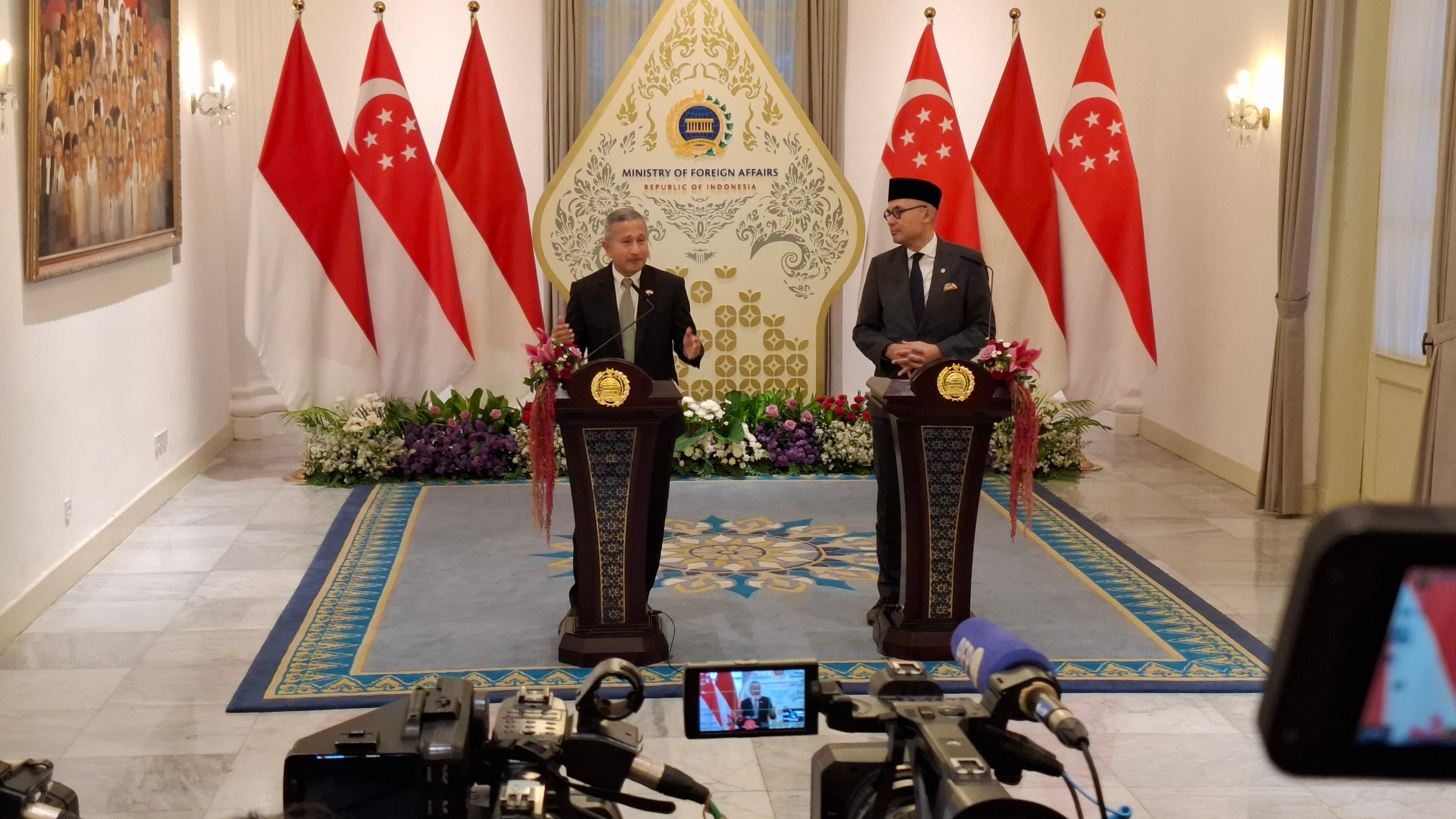
"I completely agree with Pak Tata that in fact the first and the primary victims of the haze are Indonesian citizens, especially those in Kalimantan and in Sumatra. The El Niño is a natural climatic phenomenon. But the haze is not a natural phenomenon... forest and land fires are caused by human actions." - Vivian Balakrishnan, Singaporean Foreign Minister.
💼 The Corporate Crackdown: Coordinated Cross-Border Action
In a significant policy escalation, both nations are moving beyond simple firefighting to aggressively target the corporate actors responsible for the haze.
🇸🇬 Singapore’s legal and regulatory scrutiny:
⚖️ NEA notices: Under the Transboundary Haze Pollution Act (THPA), Singapore’s National Environment Agency (NEA) has issued formal notices to 10 Singapore-based companies. This marks the first time such notices have been issued since the law took effect in September 2014.
🎯 The targeted firms: The list includes major palm oil and pulp producers such as Asia Pulp & Paper, Golden Agri International, Bumitama Agri, First Resources, Indofood Agri Resources, Kencana Agri, Wilmar International, and subsidiaries of TSH Resources. Concurrently, the Singapore Exchange (SGX) asked seven listed agricultural companies about their links to the fires.
🗣️ High-level meetings: Underscoring the severity of the issue, Senior Minister K. Shanmugam met with senior executives from the 10 firms on 28 October.
📋 The demands: Companies must submit details regarding their Indonesian subsidiaries, concession locations, and firefighting measures. All 10 have acknowledged the notices, and most have committed to cooperating. Non-compliance risks a S$5,000 fine or jail time, while firms proven responsible face fines of up to S$2 million.
🇮🇩 Indonesia’s criminal investigations:
🚨 Suspects named: Indonesian police have officially named 20 companies as criminal suspects out of 97 currently under investigation. Four are foreign-owned (identified as HKI, RKA, API, and AI), with investors from Singapore, Malaysia, and South Korea. In total, 22 of the 97 investigated firms have foreign backing, including nine from Singapore.
🛑 Permit revocations: Police have requested the revocation of permits for 23 companies due to repeat fires, fires exceeding 500 hectares, and a lack of mandatory equipment like watchtowers and water reservoirs.
⚖️ The penalties: Suspect companies face charges under the 2009 Environmental Protection and Management Law, with fines ranging from 3 billion to 15 billion rupiah (S$211,000 to S$1.05 million). Additionally, 245 individuals have been named as suspects for clearing land by burning.
🔥 A “crime against humanity”: President Prabowo Subianto has taken a hardline stance, labelling the fires “environmental terrorism” and a “crime against humanity,” ordering police and prosecutors to aggressively pursue all responsible parties.
🏦 Financial Diplomacy and Asset Recovery
To underscore the severity of this corporate crackdown, Balakrishnan concluded his visit on Thursday (29/10) with a meeting with Indonesian Finance Minister Suahasil Nazara at the Ministry of Finance.
The dialogue aligns directly with the new joint task force’s objective of tracing rogue corporations' financial networks. Both nations are moving to treat environmental negligence as a cross-border financial crime, pursuing asset recovery against companies hiding behind international borders.
⚡ Energy Security and Contract Sanctity
The diplomatic visit also addressed Indonesia's recent decisions regarding energy exports. Singapore is managing these disruptions from a position of strength by diversifying its supplies and relying on its liquefied natural gas (LNG) terminals.
Singapore is also exploring storing Saudi crude oil in the Jurong Rock Caverns. Despite shifts in energy policy, both nations affirmed a shared commitment to the "sanctity of contract".
Balakrishnan rejected the label of "resource nationalism," stating that working together and looking after national needs is not a binary choice. He emphasised that initiatives like the ASEAN Power Grid represent the correct path forward for national and regional readiness.
📈 Economic Ties and The "Rising Sixty"
Beyond crisis management, the ministers reaffirmed the deep economic interdependency of the two nations.
Both countries committed to building on the momentum of the July 2026 Leaders’ Retreat between PM Lawrence Wong and President Prabowo, which resulted in 26 agreements spanning energy, defence, digital cooperation, and human capital development.
Looking ahead to 2027, the nations will celebrate 60 years of diplomatic relations through the “Rising Sixty Initiative,” charting an ambitious agenda for the next decade of partnership.
"Singapore has full confidence in the future of Indonesia. We want Indonesia to succeed, and we want this because our futures are intertwined. Singapore's success also depends on a prosperous, stable, peaceful Indonesia." - Vivian Balakrishnan, Singaporean Foreign Minister.
🌏 The Regional Stakes
The bilateral commitments made in Jakarta have direct implications for the broader Southeast Asian region:
🎯 ASEAN Centrality: Indonesia pledged full support for Singapore’s ASEAN Chairmanship in 2027, aiming to keep the bloc united, central, and resilient.
📜 Transboundary Law: The joint task force serves as a practical enforcement mechanism that complements the broader ASEAN Agreement on Transboundary Haze Pollution.
🏆 Regional Standard Setting: By cooperating on cross-border financial intelligence and asset recovery, Indonesia and Singapore are setting a new standard for corporate accountability that could be modelled across the ten-member bloc.
📌 The Bottom Line
The era of addressing transboundary challenges solely through diplomatic protests is ending.
By treating environmental negligence as a cross-border financial crime and managing energy supply shifts with cool-headed contractual respect, Indonesia and Singapore are modernising their bilateral architecture.
🔍 Need More Angles?
Asia News Network Which are the 10 Indonesian firms issued notices under Singapore’s haze law?
Channel News Asia What to know about the 10 Singapore-based companies issued notices over transboundary haze
Jakarta Globe Singapore’s Top Envoy, Indonesia’s Finmin Meet Amid Financial Intelligence Plan
Minister of Foreign Affairs of the Republic of Singapore Transcript of Wrap-Up Interview with Singapore Media by Minister for Foreign Affairs Dr Vivian Balakrishnan in Jakarta, Indonesia, on 28 October 2026
The Straits Times Indonesia names 20 companies as forest fire suspects in crackdown on haze culprits
The Straits Times Singapore, Indonesia committed at highest level to resolving bilateral issues: Vivian Balakrishnan
Warta Ekonomi Menlu Singapura Temui Suahasil Nazara, Ada Agenda Apa di Kemenkeu?
(JUN/NGO/QOB)