



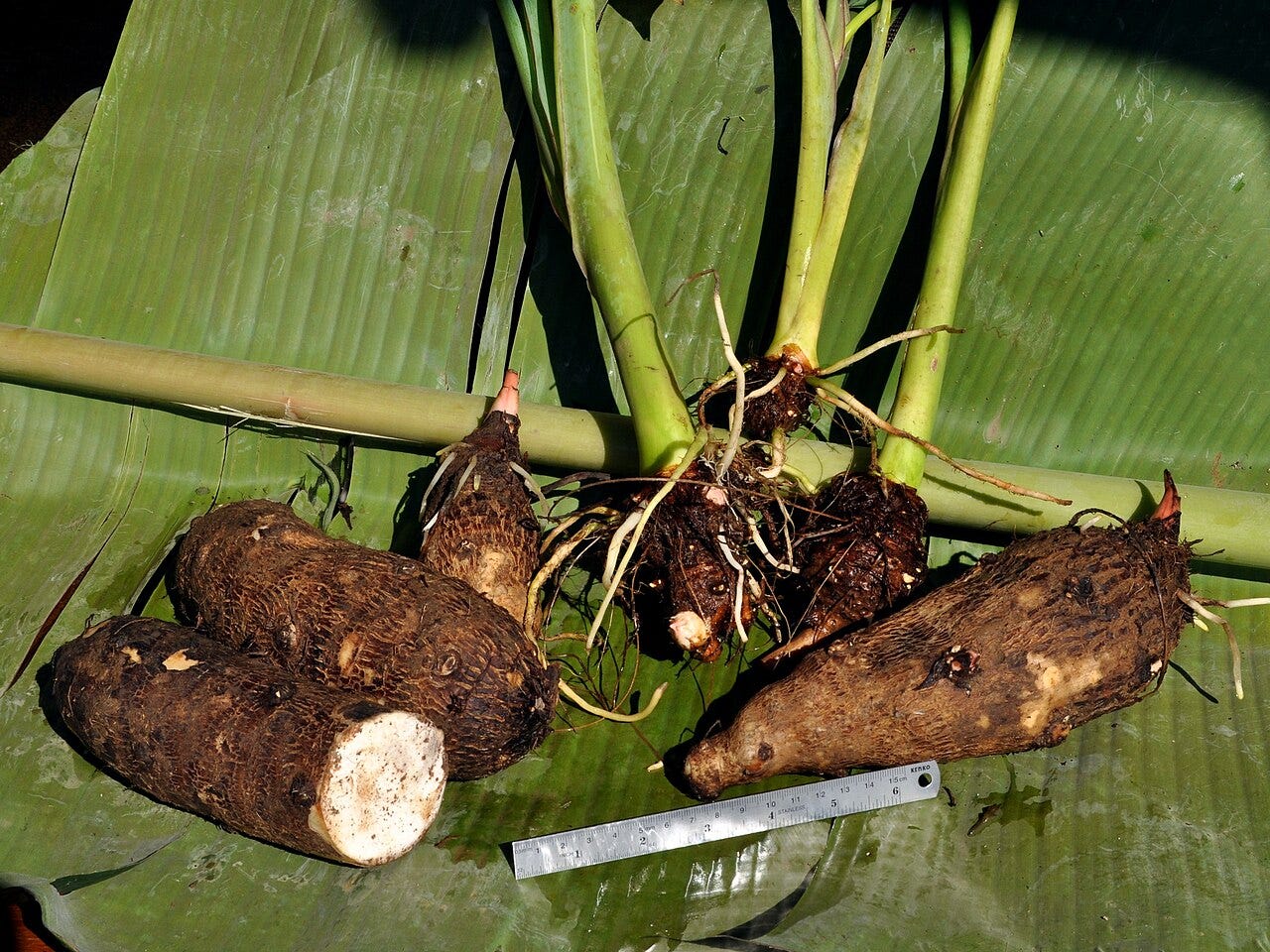
🎯 Main Takeaway
“Karena saya tidak punya, jadi saya ganti kimpul.”
For many Indonesians, this phrase is undoubtedly very familiar on social media.
The phrase, which roughly translates as ‘Because I didn’t have any, I used kimpul instead’, has become the iconic opening line for content creator Ibu @black.sheep8208 on TikTok and Instagram, who has since become known online as Ibu Kimpul.
She takes a simple approach to her content: whenever a recipe calls for a common ingredient, she replaces it with kimpul, a local Indonesian tuber that is still relatively unknown.
What makes her unique is that, rather than using it in traditional dishes, she incorporates kimpul into a variety of contemporary food trends, ranging from chewy biscuits to all sorts of dishes that are currently going viral.
The result is not just a collection of unique recipes, but also an introduction to an ingredient that many Indonesians may never have encountered before, bringing it to a new generation.
Ibu Kimpul is one voice in a wider wave of Indonesian creators reviving forgotten tubers—local ingredients that have quietly disappeared from everyday kitchens even as they remain deeply tied to the country's food history.
👀 Why It’s on Our Radar
🍚 Rice still dominates Indonesia’s food system: During the New Order era, rice self-sufficiency was a top priority in Indonesia’s food policy. This focus ultimately reinforced rice’s position as a staple food, but it also led to various local carbohydrate sources being increasingly neglected or even forgotten.
🇮🇩 Indonesia has plenty of alternatives: According to data from the Food Agency’s library, Indonesia has 77 types of carbohydrate-rich foods, yet these remain underutilised. In fact, diversifying local foods such as cassava, sweet potato, kimpul, and ganyong could form the foundation of food security, especially with increased agricultural production.
👶🏼 Lack of familiarity: For some of the younger generation, many of these tubers may be something they have never even seen or eaten. This is where digital creators play a key role: they are reintroducing local ingredients through familiar dishes such as chewy cookies, lasagna, and even bibim guksu.
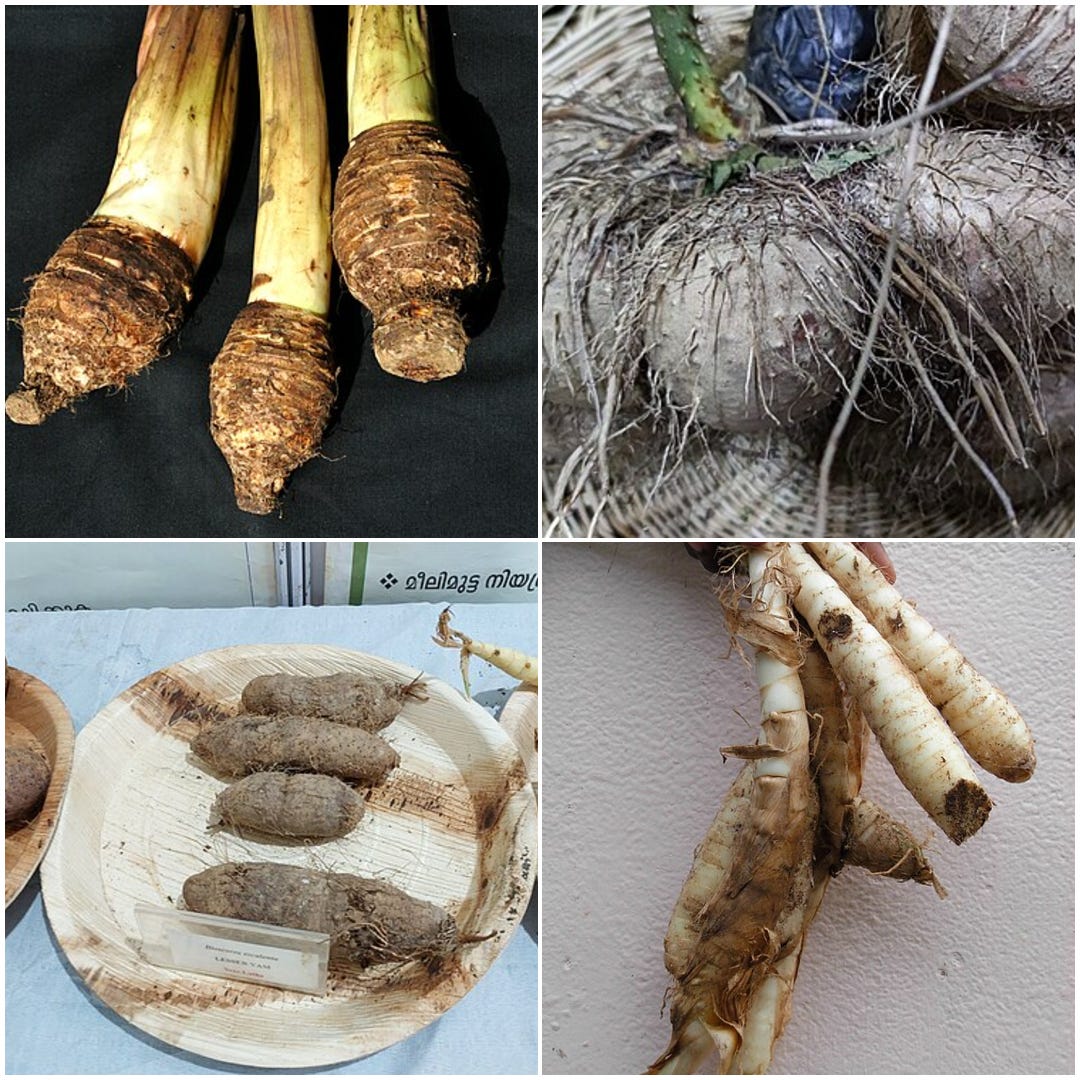
🌱 What Is Kimpul and Are There Other Forgotten Tubers?
Kimpul (Xanthosoma sagittifolium) originates from South America and has since spread to various tropical regions, including Indonesia. In Indonesia, it is known as kimpul or Belitung taro and has long been cultivated and used as a local carbohydrate source.
Although it has long been found in traditional markets, home gardens, and local food systems, kimpul remains largely unknown to many consumers, particularly the younger generation, compared with sweet potatoes or cassava.
However, kimpul has vast culinary potential; when prepared properly, it can be enjoyed in a variety of dishes, both savoury and sweet, while its starch can also be processed into flour. This is just one example from a collection of lesser-known tubers in Indonesia.
Ganyong (Canna discolour), for instance, is another local plant with potential as a source of carbohydrates and flour. Researchers have studied its starch for use in various products, from cakes and rice vermicelli to noodles—most notably mie ganyong, a ganyong-based noodle now gaining renewed attention as a gluten-free, locally sourced alternative to wheat.
Other examples include:
Garut (Maranta arundinacea), traditionally associated with starch and flour products.
Uwi/Purple Yam (Dioscorea alata), a cassava-like tuber with various local varieties, better known as Ube.
Gadung (Dioscorea hispida), a tuber that requires a fairly lengthy and careful processing stage before consumption.
Gembili (Dioscorea esculenta), another local tuber that has attracted attention as an alternative carbohydrate source.
Mbote/taro (Colocasia esculenta), is already fairly well known and is often prepared as ‘uyen’ or fried taro.
These tuberous plants have enormous potential and could be developed into more appealing processed foods; however, they remain unfamiliar to many.
🥗 Beyond the Trend: What’s Actually in These Tubers
Beyond their cultural and culinary value, these forgotten tubers also offer real nutritional value.
Kimpul provides complex carbohydrates, dietary fibre, and plant-based protein, along with vitamin C, B-complex vitamins, iron, and potassium—making it a genuinely balanced substitute for rice or potatoes, not just a novelty ingredient.
One thing to note for anyone keen to cook it at home: kimpul needs to be cooked thoroughly, as it naturally contains oxalate compounds that can cause skin or throat irritation if undercooked.
Ganyong, meanwhile, is particularly rich in starch and naturally gluten-free, which has made its flour increasingly attractive as a wheat substitute—not only for noodles like mie ganyong, but also for bread, biscuits, and baby food.
With Indonesia importing millions of tonnes of wheat each year, locally grown, gluten-free alternatives like ganyong flour are more than a food trend; they’re a small but meaningful step toward reducing that dependency.

🍪 From Traditional Ingredient to Trending Food
The digital creators here are taking a rather interesting approach. Rather than asking the audience to return to traditional tuber dishes, Ibu Black Sheep has instead incorporated ‘kimpul’ into modern dishes widely recognised by the younger generation.
With the opening line of her video, “Since I don’t have it, I’ll substitute it with kimpul,” she creates a variety of modern dishes whilst substituting the main ingredient with local tubers.
For example, chewy kimpul cookie; kimpul lasagna; mashed kimpul; kimpul cheesecake; and ganyong-based guksu noodles.
Her strategy is simple: while the ingredient may be unfamiliar, the form and name of the dish are not. Consumers may never have eaten kimpul or know how to prepare it, but they are familiar with chewy biscuits, lasagne or mashed potatoes.
The strategy is not always to modernise traditional food, but to keep traditional ingredients relevant by incorporating them into dishes that are already popular and familiar to the public. The tuber need not be hidden or lose its identity; it is simply introduced through food forms that feel more familiar.
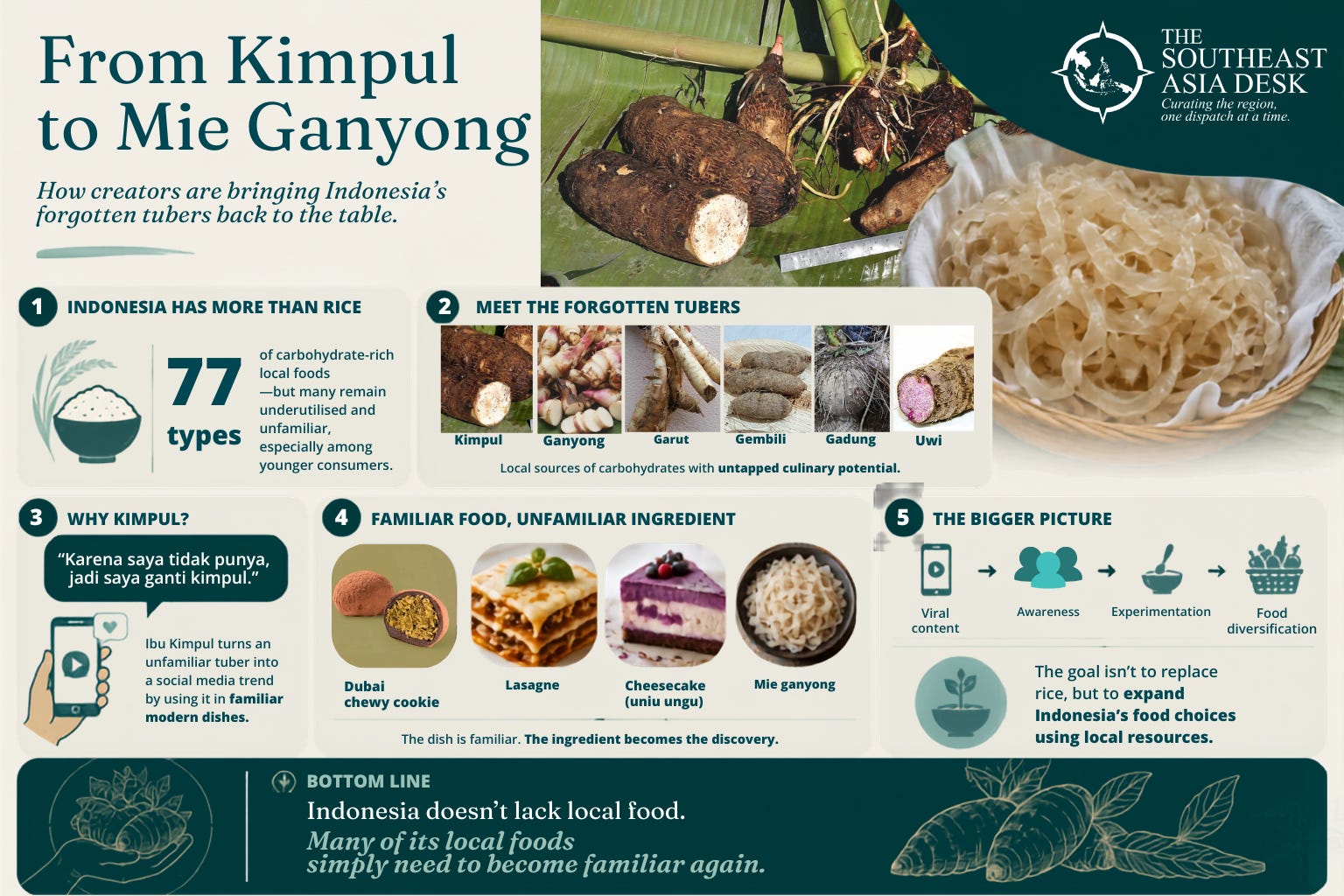
🌾 Bigger Picture: From Social Media Trends to Food Diversification
From viral trend to exploration: Kimpul content doesn’t stop at Ibu Black Sheep. Many creators have tried their hand at adapting recipes featuring kimpul, making this previously unfamiliar ingredient appear more frequently on social media.
Social media opens the door to local food: When kimpul or ganyong appears in various contemporary dishes, people don't need to immediately change their eating habits. They simply need to try something familiar, but using a different ingredient.
Opportunities for food diversification: Indonesia has a wide variety of local carbohydrate sources, yet consumption remains heavily dominated by rice. Reviving tubers such as kimpul and ganyong does not mean replacing rice, but rather expanding the range of food choices derived from local resources.
Trends are a starting point, not an end goal: Although the viral popularity of kimpul has not yet significantly increased market demand, more and more people are becoming aware of it, trying it, and even experimenting with it. This is where the opportunity for food diversification can begin.
❤️ Why This Hits Home
Behind the viral kimpul recipes, this forgotten tuber is more than just an agricultural commodity. It embodies local knowledge, family customs and food traditions from various regions, passed down through the generations.
When a crop is no longer consumed daily, the knowledge of how to grow, process, and consume it is also at risk of being lost.
Therefore, for creators who have a personal connection to agriculture or local crops, kimpul content holds a different significance.
They are not only experimenting with food ingredients, but also ensuring that these ingredients remain relevant to a generation that may never have known them.
From an economic perspective, transforming local food into appealing products can indeed unlock new economic value; however, a single viral video is not enough. Farmers still need stable demand, processors require a consistent supply, and consumers need affordable products.
Social media may not solve everything, but it can start with one thing: making people care about the ingredients.

📌 Bottom Line
Indonesia has no shortage of local food; in fact, wide varieties are simply becoming less and less well-known.
From kimpul to ganyong, digital creators are showing that reviving local food doesn’t always mean going back to the old ways. Sometimes, the way forward is to make traditional ingredients relevant to today’s tastes.
A single chewy cookie, a plate of lasagna, or a bowl of noodles might seem like a small experiment. But as more and more people start asking, “Is this made with kimpul?”, that almost-forgotten ingredient regains its place in conversation and, perhaps, on the dining tables of the next generation.
🔍 Need More Angle?
Badan Pangan Nasional Diversifikasi Pangan Berbasis Sumber Daya Lokal, Strategi Penting dalam Pemenuhan Pangan Nasional
Institut Teknologi Bandung Viral Kimpul Draws Attention, ITB Expert Highlights Its Potential as an Alternative Food Source
Institut Pertanian Bogor Keunggulan Talas Kimpul
The Jakarta Post Rice self-sufficiency and the future of Indonesia’s food sovereignty
Kompas Kimpul Jadi Viral, Menkes Ungkap 3 Manfaatnya untuk Kesehatan
Universitas Airlangga Tren Kimpul di Media Sosial, Ahli Gizi UNAIR Menyoroti Momentum Baik untuk Diversifikasi Pangan Lokal
(DHM/ZIL/QOB)