



🎯 The Main Takeaway
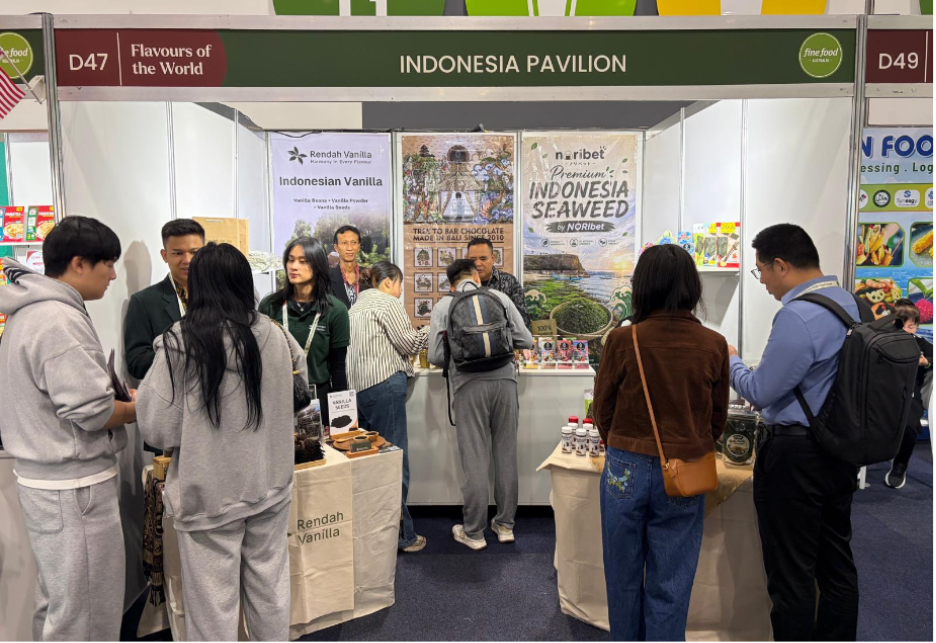
Held from 31 August to 3 September 2026 at the Melbourne Convention and Exhibition Centre (MCEC), it's where buyers, distributors, retailers, and other food-industry professionals can source products, build connections, and explore commercial opportunities.
With more than 900 exhibitors and thousands of food, beverage, hospitality, and retail professionals, it serves as a showcase and an opportunity for Indonesian products to enter, remain, and expand in the international market.
It demonstrates how food and its ingredients can function simultaneously as a commercial product, an export commodity, and part of Indonesia's representation abroad.
📡 Why It’s on Our Radar
Food ingredients have become one of the global trade commodities of Southeast Asia, not only as a source of raw agricultural commodities, but also as a producer of various processed foods, speciality ingredients, snacks, spices, seafood, and beverages
Trade fairs like Fine Food Australia function not only as a Business-to-Business (B2B) platform but also as connective tissue of the global food industry, combining trade promotion with bilateral cooperation.
This also helps Indonesian businesses learn how the Australian market works, identify potential partners, receive feedback, and build trust.
🇦🇺 The Fine Food Australia
Indonesia and Australia have developed an economic relationship over decades, and cooperation has continued to expand through mechanisms such as the Indonesia-Australia Comprehensive Economic Partnership Agreement (IA-CEPA).
Australia describes Indonesia as one of its most important bilateral relationships. In 2024 to 2025, the two-way trade reached AUD 34.83 billion, making Indonesia its ninth-largest trading partner by value.
Fine Food Australia is one of the Southern Hemisphere’s premier trade exhibitions, combining trade promotion with bilateral cooperation.
🇮🇩 Indonesia Goes to Fine Food Australia 2026
Inside the Indonesian Pavilion
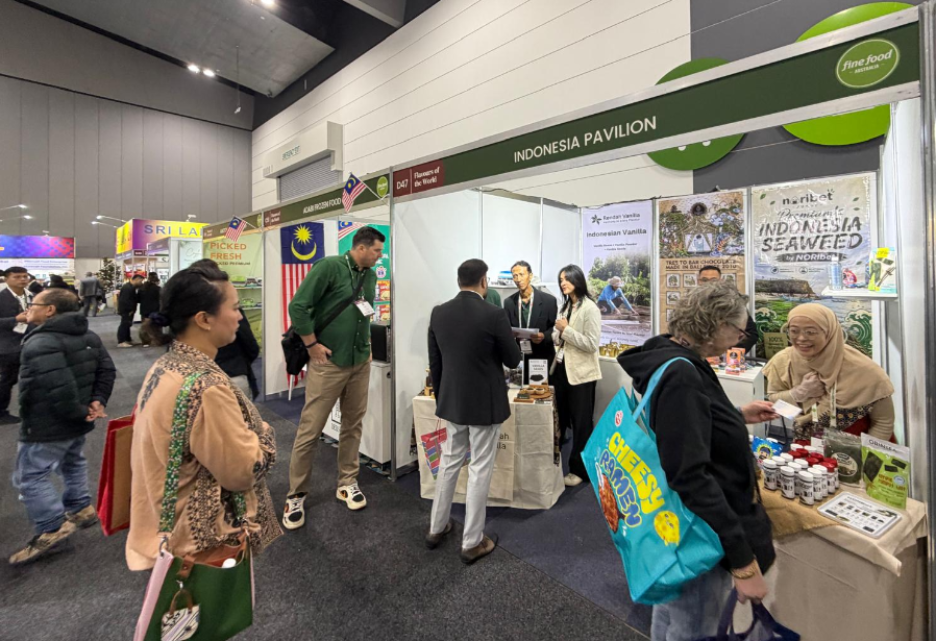
Presented through the Indonesia Consulate General in Melbourne, featuring three Indonesian companies: Jungle Gold Bali, Rendah Vanilla, and Noribet.
The three companies presented different sides of Indonesia’s food economy: a growing chocolate- and cocoa-based product sector, speciality agricultural products with premium market potential, and marine resources that can be developed into food products.
Over the four days, the three companies logged a combined AUD 403.752 in potential transactions
Indonesia Trade Promotion Centre (ITPC) Sydney & Independent Exhibitors.
The Indonesian Pavilion was only one part of Indonesia’s presence at Fine Food Australia; this is shown by running alongside it, ITPC Sydney brought its own 10 Indonesian companies as delegations:
PT Mayora Indah Tbk.
CV Mimpi Masa Kecil Nak Indonesia.
Azaki Food Internasional.
PT Dua Kelinci.
PT Serena Indopangan Industri.
PT Era Bersama Indonesia.
PT Labuna Jaring Nusantara.
PT Loka Boga Industri.
PT Cahaya Desa Ekspor Indonesia.
CV Aroma Sukses.
And 3 other Indonesian companies participated independently:
PT HLJ Indonesia.
PT Natural Indococonut.
Blue Maritime Holding.
The participation expanded Indonesia’s representation at the exhibition and allowed these companies to connect with potential buyers and business partners from Australia and international markets.
It also shows another route into international trade: Indonesian companies do not have to rely solely on a government-organised pavilion and can increasingly represent themselves directly at international industry events.
🌐 The International Market
Getting a product into an international market isn’t as simple as placing it on a foreign shelf or having a great product.
Companies entering foreign markets must consider several things: local and import requirements, packaging communication, supply chains, distributors and retailers, product format and flavour appeal to the buyers, and maintaining consistent quality at a larger scale.
This means companies need not only to research information but also to have direct contact with prospective stakeholders.
Trade exhibitions can help compress some of these processes by bringing multiple parts of the industry into the same physical space.
🏡 Beyond Transaction
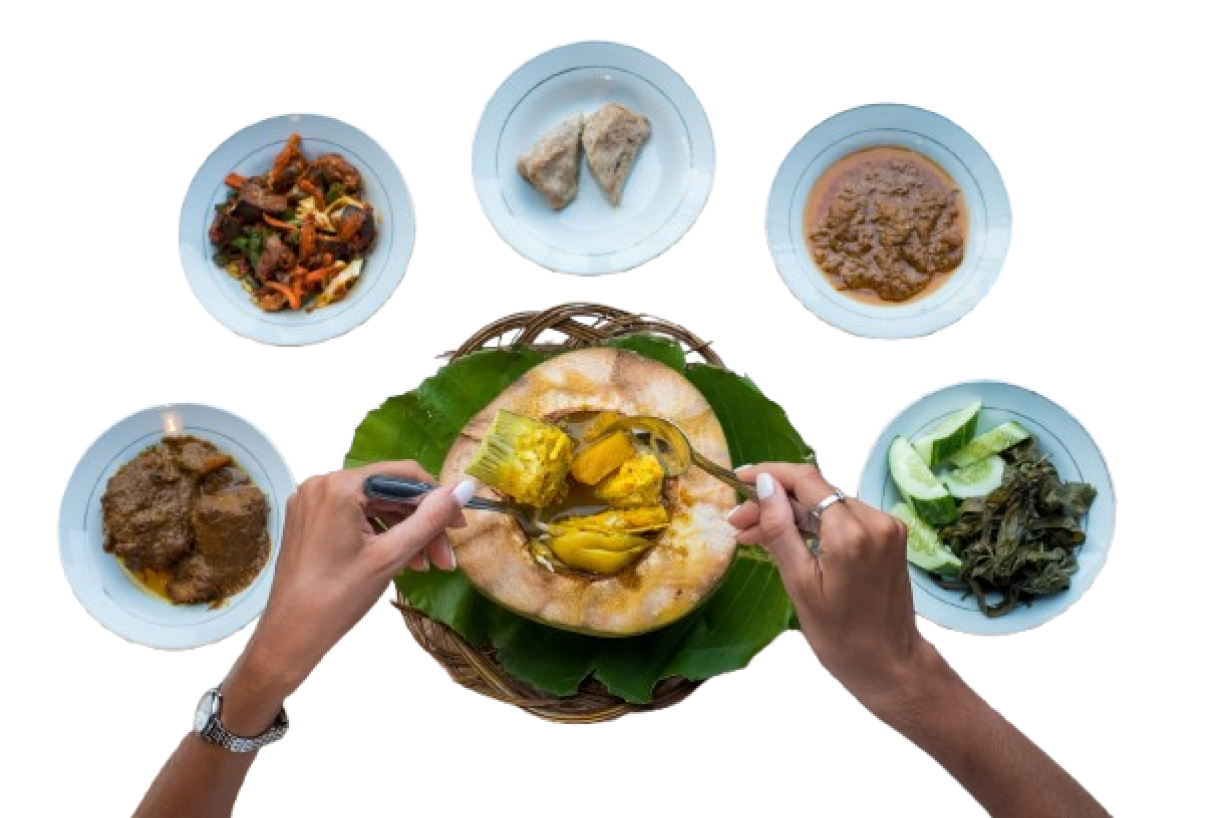
Food is one of the most accessible ways for a country to introduce itself to foreign audiences. It doesn't require specialised political knowledge; it speaks for itself through flavour, ingredients, approaches, traditions, and philosophies.
Indonesia’s presence at Fine Food Australia is also an example of soft power and gastrodiplomacy. However, it is important not to reduce the entire exhibition to gastrodiplomacy.
Every buyer who samples Rendah Vanilla or takes home a sample of Jungle Gold's chocolate isn't just evaluating a product; they're forming an impression of Indonesia itself: its quality standards, its creativity, its place in the global food conversation. Building brand equity and familiarity that extends beyond commercial numbers.
🏁 The Bottom Line
Fine Food Australia gave Indonesian businesses access to an international B2B network, while the wider Indonesia–Australia economic relationship provided the framework for deeper commercial cooperation.
Building the business relationships, market access, and familiarity that allow Indonesian products with elements of Indonesian identity to travel further into the global market.
🔍 Need More Angles?
Australian Government Department of Foreign Affairs and Trade, Indonesia country brief
(DEV/QOB)