



🎯 The Main Takeaway
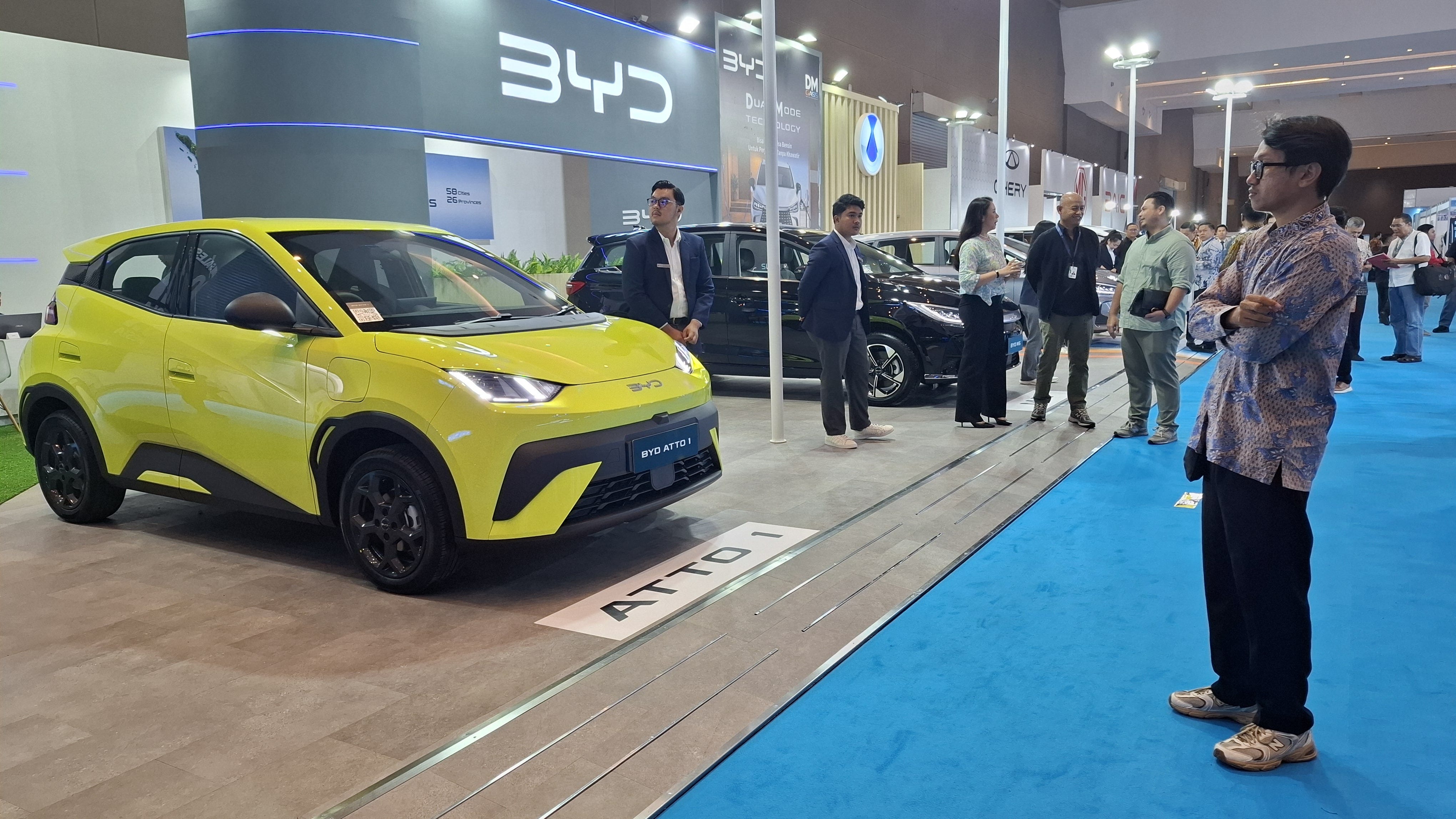
The Indonesian Electric Vehicle Industry Association (PERIKLINDO), together with Dyandra Promosindo, held the fifth PERIKLINDO Electric Vehicle Show (PEVS) 2026 from 29 October to 1 November in Kemayoran, Jakarta.
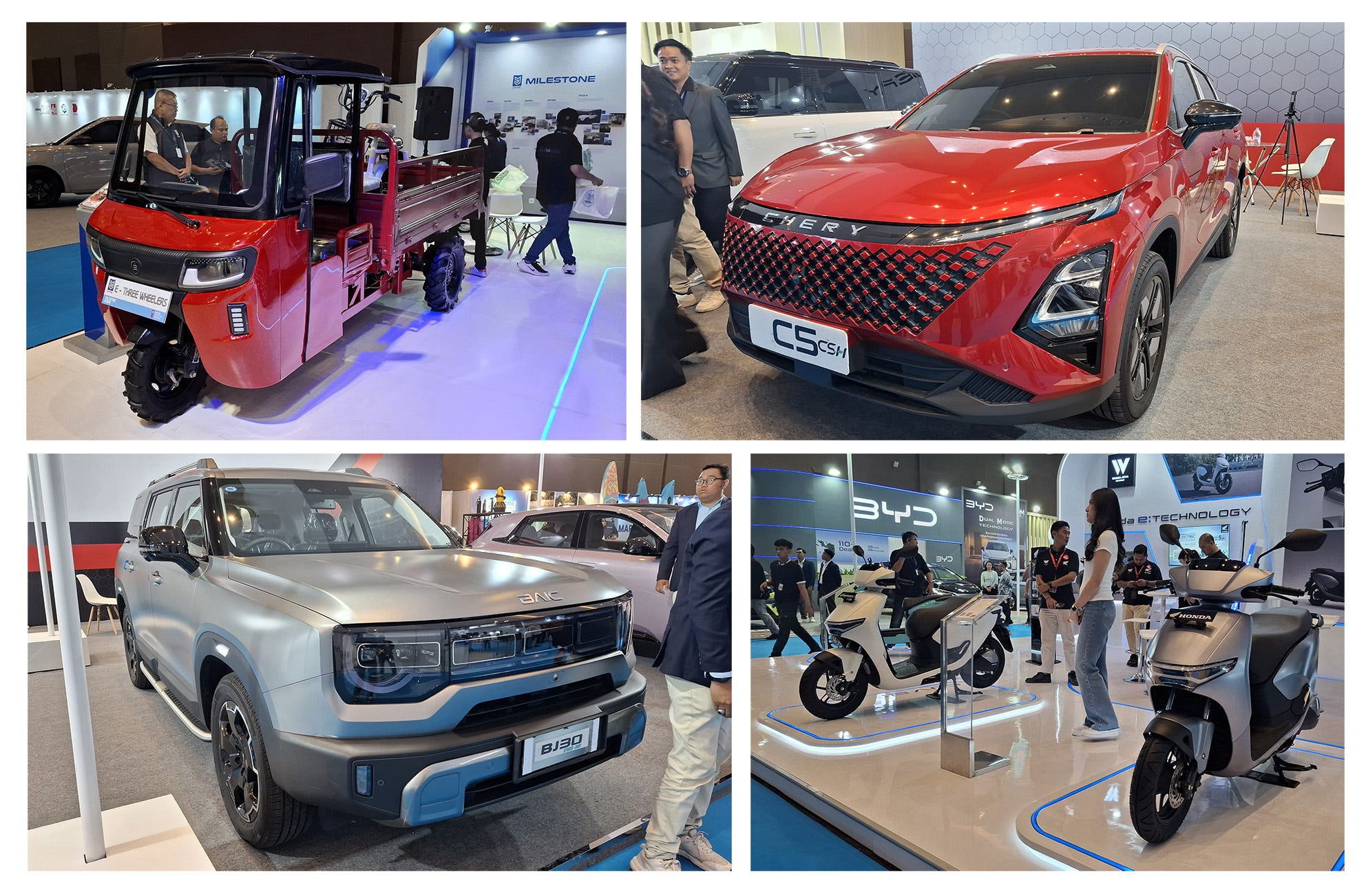
A total of 38 local and international brands, including electric vehicle (EV) manufacturers and supporting ecosystem providers, joined the four-day exhibition to showcase their latest products, technologies and services.
Under the theme “The Future of Clean and Efficient Mobility”, the exhibition aimed to strengthen the role of EVs in various industries and highlight Indonesia’s growing electric vehicle sector.
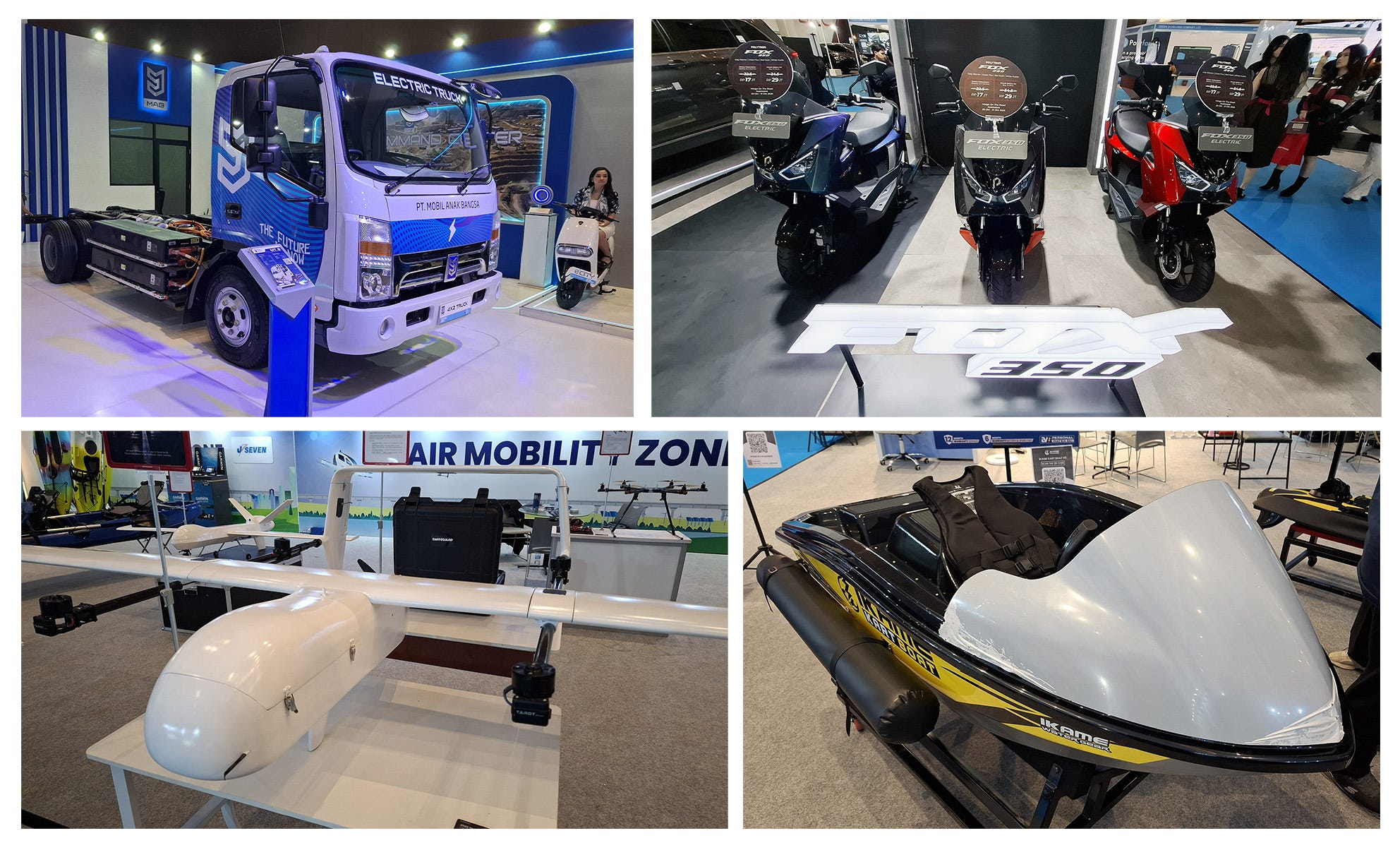
It also showcased developments beyond road transport, including electric marine and air mobility and commercial vehicles.
📡 Why Is It on Our Radar?
Concerns are growing about energy, particularly fossil fuels, which power the internal combustion engine (ICE) vehicles most people worldwide still use.
Declining Fossil Fuel Reserves: Global fossil fuel reserves, particularly crude oil, are limited. Rising demand and consumption are increasing concerns about their long-term availability.
Global Supply Disruptions: Ongoing conflicts, including the US-Israel-Iran conflict and the Russia-Ukraine war, have disrupted global energy markets and raised concerns about crude oil supply security.
Worsening Climate Change: Heavy reliance on fossil fuels contributes to rising carbon emissions, worsening climate change and putting increasing pressure on the global environment.
⚠️ As a Result...
Several major impacts are emerging from the world’s continued reliance on fossil fuels:
Soaring Fuel Prices: Limited oil supplies and supply disruptions have made crude oil prices volatile, with prices reaching around USD 100 per barrel. This has also driven up fuel prices in markets worldwide.
Rising Carbon Emissions: Global carbon emissions from fossil fuels and industrial activities reached a record 37.8 billion tonnes (Gt) in 2024, a 0.8% increase from 2023.
Rising Global Temperatures: Global temperatures are approaching the critical 1.5°C threshold, putting the planet and its biodiversity at greater risk. The consequences include more frequent and intense extreme weather events, such as severe droughts and heavy monsoon rainfall.
📉 To Reduce the Impact...
Countries worldwide are seeking to diversify their energy sources, reduce their dependence on fossil fuels, and explore new technologies to accelerate the transition to clean, green, and renewable energy with lower carbon emissions.
One key technology supporting this transition, particularly in the transport sector, is the electric vehicle (EV). Fully electric vehicles rely on batteries as their primary power source, while hybrid vehicles combine battery power with conventional fuel engines.
According to BloombergNEF, global investment in the energy transition has continued to grow year by year, reaching a record USD 2.3 trillion in 2025, up 8% from USD 2.1 trillion in 2024.
Electrified transport attracted the largest share of investment, totalling USD 893 billion, followed by renewable energy at USD 690 billion and electricity grids at USD 483 billion.
🔋 Why EVs?
The adoption of electric vehicles (EVs) can bring several benefits to countries around the world, including:
Lower Ownership Costs: EV owners can benefit from lower running and maintenance costs, as well as government tax incentives and subsidies in some countries, making electric vehicles more affordable.
Lower Carbon Emissions: Fully electric vehicles produce no tailpipe emissions during operation, helping to improve urban air quality, reduce pollution and support global efforts to tackle climate change.
Reduced Fuel Dependence: Wider EV adoption can reduce countries’ reliance on fossil fuels, particularly imported petrol and diesel, strengthening energy security and reducing exposure to global oil price fluctuations.
💡 How About Indonesia?
Indonesia is among the countries adopting electric vehicle (EV) technology as it faces an imbalance between domestic fuel demand and supply, leaving the country increasingly dependent on imported fossil fuels.
According to the government, Indonesia consumes around 1.6 million barrels of oil per day, but produces only about 600,000 barrels per day. This leaves a supply gap of about 1 million barrels per day, which imports must cover to meet domestic demand.
The government also allocates a substantial budget for energy subsidies, including fuel subsidies, to maintain people’s purchasing power and help control inflation, particularly when global crude oil prices rise.
According to Finance Ministry data, government energy subsidy spending has continued to increase, reaching IDR 164.3 trillion in 2023, IDR 177.6 trillion in 2024, IDR 281.6 trillion in 2025 and IDR 376.8 trillion by September 2026.
To reduce its reliance on imported fuel and ease the fiscal burden on the state budget, Indonesia has been developing its domestic EV industry and supporting ecosystem since 2022.
This includes investments in vehicle manufacturing, battery production and supporting infrastructure, with participation from investors across several countries.
📈 EV Performance in Indonesia
Indonesia aims to become a global hub for electric vehicle (EV) manufacturing and supply chains, targeting annual production of 600,000 EV units by 2030 and 1 million units by 2040.
The country’s EV industry has continued to expand across several areas, from investment and production to sales and market share. Here is a closer look at its performance:
EV Investment: According to the Ministry of Industry, Indonesia secured around IDR 30.4 trillion in battery-based EV investment by September 2026. The investment came from 10 commercial EV manufacturers, 15 four-wheel vehicle manufacturers and 70 two- and three-wheel vehicle manufacturers operating across the country.
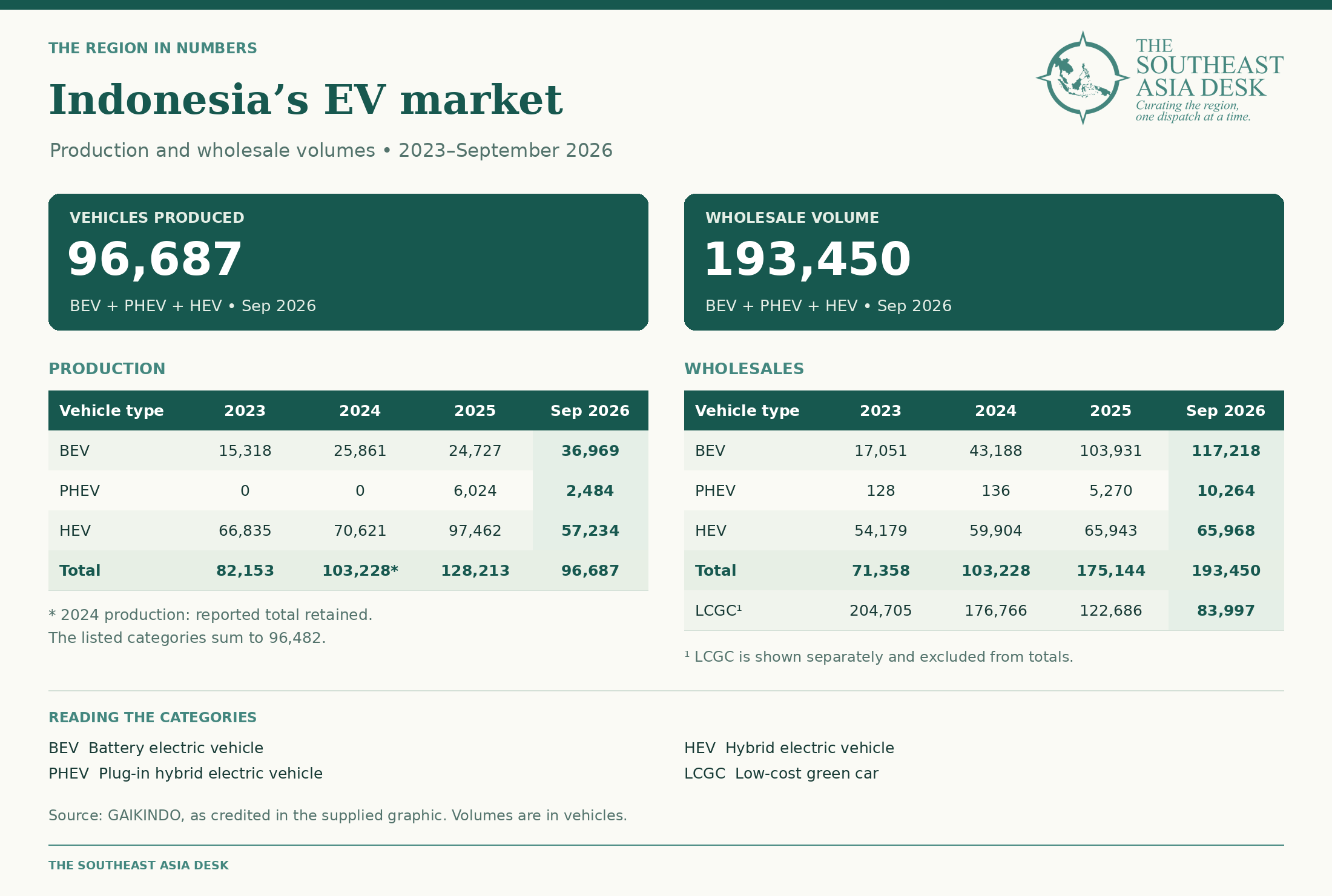
EV Production: EV production in Indonesia has generally increased over the years. Data from the Association of Indonesian Automotive Industries (GAIKINDO) show that production reached 82,153 units in 2023, rose to 128,213 units in 2025, and fell to 96,687 units by June 2026. Hybrid electric vehicles (HEVs) accounted for the largest share of production.
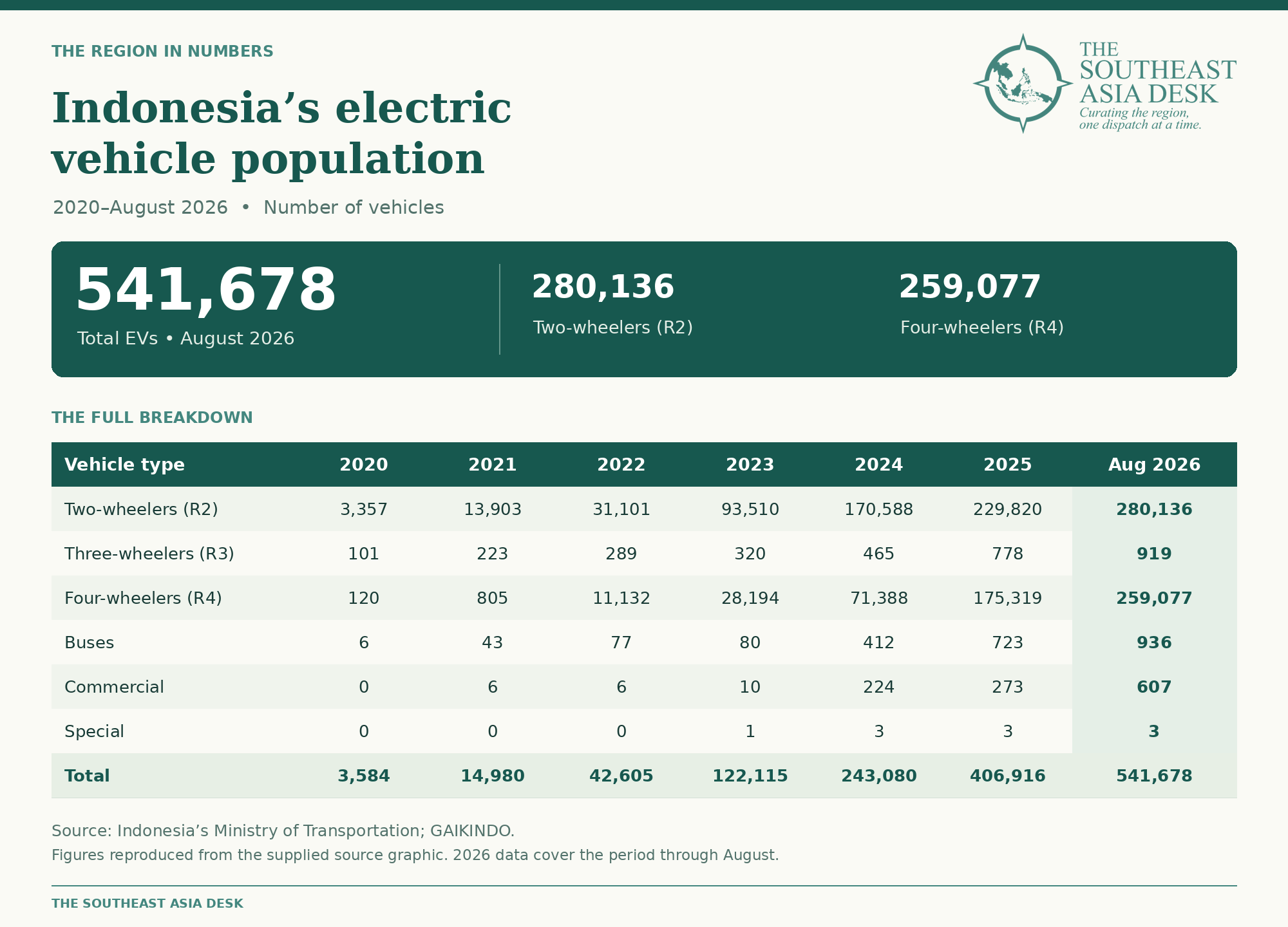
EV Population: The Ministry of Industry also reported significant growth in Indonesia’s EV population, rising from just 3,584 units in 2020 to 541,678 units by August 2026.
EV Wholesales: EV wholesales also increased, reaching 193,450 units by September 2026, up from 71,358 units in 2023. Battery electric vehicles (BEVs) led sales with 117,218 units, while plug-in hybrid electric vehicles (PHEVs) recorded the fastest growth, up 94% from 2025.
EV Market Share: The combined market share of hybrid electric vehicles (HEVs), plug-in hybrid electric vehicles (PHEVs) and battery electric vehicles (BEVs) has grown consistently, rising from 1.5% in 2022 to 28.06% by August 2026. Meanwhile, the market share of internal combustion engine (ICE) vehicles declined from 98.53% to 71.94% over the same period.
LCGC Wholesales: Wholesales of low-cost green cars (LCGCs) have generally declined, falling from 204,705 units in 2023 to 83,997 units in the first nine months of 2026. This trend may reflect growing competition from a wider range of affordable vehicles, including electric cars.
“These figures show that while the journey towards electrification is still long, market acceptance continues to grow, creating opportunities for all players in the automotive industry.” - Daswar Marpaung, President Director of Dyandra Promosindo.
To boost EV sales in Indonesia, several local and international EV manufacturers at the exhibition are exploring new market opportunities beyond the traditional passenger vehicle segment. Their strategies include targeting other potential sectors, such as:
🇮🇩 Indonesia: Mobil Anak Bangsa – EV Trucks, Vans and Pick-ups for Industry
Indonesian electric vehicle manufacturer Mobil Anak Bangsa (MAB) is targeting the commercial vehicle market by offering electric light trucks, heavy-duty trucks, pick-ups and vans for industrial use. Its main target sectors include nickel mining, palm oil plantations and transportation.
According to the company, the commercial EV market offers significant potential, as most EV manufacturers in Indonesia focus on passenger vehicles and private users. With fewer competitors in the commercial segment, MAB sees an opportunity to expand its market presence.
“We see significant market potential for commercial vehicles, and there are far fewer players in this segment than in the passenger vehicle market. This is why we have focused on commercial vehicles from the beginning.” - Kelik Irwantoro, CEO of MAB Indonesia.
To strengthen its competitiveness and improve vehicle safety, MAB also provides a digital monitoring system connected to a central command centre. The system prioritises preventive maintenance by monitoring battery conditions and alerting users to potential issues during vehicle operations.
Currently, the company is focusing on the domestic market, particularly Sumatra, Java and Sulawesi, with plans to expand its EV exports overseas in the future.
“We are focusing on the domestic market because we see enormous potential here, and we want to capture that opportunity. Foreign companies are entering Indonesia, so why should we focus on overseas markets first? Once we can meet domestic demand, we can consider expanding abroad as part of our future business development.” - Kelik Irwantoro, CEO of MAB Indonesia.
Meanwhile, MAB has experienced slower sales of its electric motorcycles amid uncertainty surrounding government EV subsidies. However, the company has seen a significant increase in demand for its electric trucks and buses, partly driven by rising diesel prices.
🇮🇩🇨🇳Indonesia-China: Ikame Samudra Nusantara – Electric Boats for Water Sports and Leisure
Another Indonesian EV manufacturer, Ikame Samudra Nusantara, which collaborates with China, is exploring an alternative EV market in the marine sector. The company offers electric surfboards, electric kart boats and electric speedboats for recreational and commercial use.
The company targets individual customers and communities interested in marine activities, including water sports, jet skiing, surfing, fishing and diving. It also sees potential among entrepreneurs operating tourism resorts and businesses in coastal and beach destinations.
“We see an opportunity because most EVs in Indonesia are currently motorcycles and cars. However, the marine sector remains largely untapped. That is why we decided to innovate in water-based recreational vehicles, such as water karts and personal watercraft, by replacing conventional petrol engines with electric motors powered by batteries.” - Basudewa Suryoajie, Digital Media Strategist at Ikame Watergear.
The company is currently prioritising the domestic market by working with water sports organisers and associations across Indonesia to expand its product reach.
🇨🇳 China: DFSK – Differentiating Its Commercial EV Brand Identity
Meanwhile, Chinese automotive manufacturer DFSK is taking a different approach by introducing a distinct emblem for its commercial vehicle line to differentiate it from its passenger vehicle range.
According to the company’s Chief Operating Officer (COO), its passenger vehicle line focuses on comfort, technology and flexibility to meet customers’ mobility needs. In contrast, its commercial vehicle line prioritises practicality, reliability and the ability to support daily business operations.
“The aim is to clarify the positioning of each product line in the eyes of consumers, as passenger and commercial vehicle users have different needs. Passenger vehicles prioritise smart connectivity, personalisation and driving comfort, while commercial vehicles focus on practicality, cost efficiency and durability. - Franz Wang, COO of Sokonindo Automobile.
The emblem differentiation will not affect the company’s product quality, sales, customer service or after-sales network.
Instead, it aims to reinforce DFSK’s long-term commitment to developing Indonesia’s EV industry by making its product positioning more relevant to market needs to better serve both passenger and commercial vehicle customers.
🚀 Moving Onward...
As Indonesia’s EV industry continues to grow, the government needs to prepare for several challenges to ensure the country can support the transition and meet future demand.
Expand EV Infrastructure: The growing number of EVs must be matched by expanded supporting infrastructure, particularly public charging stations. With around 5,000 charging stations currently available, expanding the network is essential to improve accessibility and prevent long queues.
Increase Electricity Capacity: More EVs and charging stations will require greater electricity supply. The state-owned electricity company must invest and build infrastructure to expand generation and distribution capacity to meet rising demand.
Reorganise Mobility Planning: EV technology is expanding beyond land transport into marine and air mobility. The government needs to update its regulations and spatial planning to better manage these emerging forms of transportation and integrate them into existing mobility systems.
Develop Skilled Manpower: As EV technology continues to evolve, the industry will require more skilled workers to support its development. The government needs to expand vocational training and skills development programmes to strengthen workforce competitiveness, build national capabilities and meet the industry’s growing demand.
“EVs represent a major opportunity for Indonesia to make a significant leap forward and rapidly strengthen its national capabilities. To achieve this, we must prepare our human resources. As more EV factories emerge, companies are looking for people with specialised EV skills. This creates an opportunity for our workforce. Therefore, EV-related industries and businesses must be managed properly.” - Moeldoko, Chairman of PERIKLINDO.
🧭 Government Roadmap for EV Development
In addition, the Indonesian government is preparing several roadmaps to strengthen the national EV industry, increase the added value of domestic products and support economic growth. These include:
Local Component Requirements: The government has set minimum local content requirements for battery electric vehicles (BEVs) to qualify for incentives, encouraging manufacturers to use more domestically produced components. The target is at least 40% in 2026, 60% from 2027 to 2029, and 80% by 2030.
Advanced Charging Technology: The government also aims to improve EV charging technology. The roadmap covers AC Level 1, AC Level 2 and DC fast chargers during 2021–2023, followed by the development of ultra-fast charging technology from 2024 onwards.
Domestic Battery Materials: Indonesia also aims to develop its EV battery industry by moving beyond basic raw materials towards higher-value products. The roadmap covers nickel sulphate and cobalt sulphate production from 2022 to 2025, followed by cathode and anode material development from 2026 to 2030.
“The increase in these targets reflects the deeper stages of industrial development. We are moving from market development and investment attraction towards increasing the number of battery electric vehicles and cars manufactured domestically, while strengthening our capacity to produce key components, including battery cells in Indonesia.” - Setia Diarta, Director General of Metal, Machinery, Transportation Equipment, and Electronics at the Ministry of Industrial Affairs Indonesia
The government also encourages all relevant stakeholders to actively collaborate in developing the EV industry to accelerate the energy transition and attract more investment, reducing the financial burden on the state budget.
We fully support this event as part of our collective efforts to promote the energy transition and accelerate the development of Indonesia’s electric vehicle ecosystem. We believe that synergy between the government, industry players and the public is key to making Indonesia a major player in the global electric vehicle industry.” - Rahmat Pambudi, Minister of Indonesia National Development Planning/Head of Bappenas.
🌏 The Regional Stake
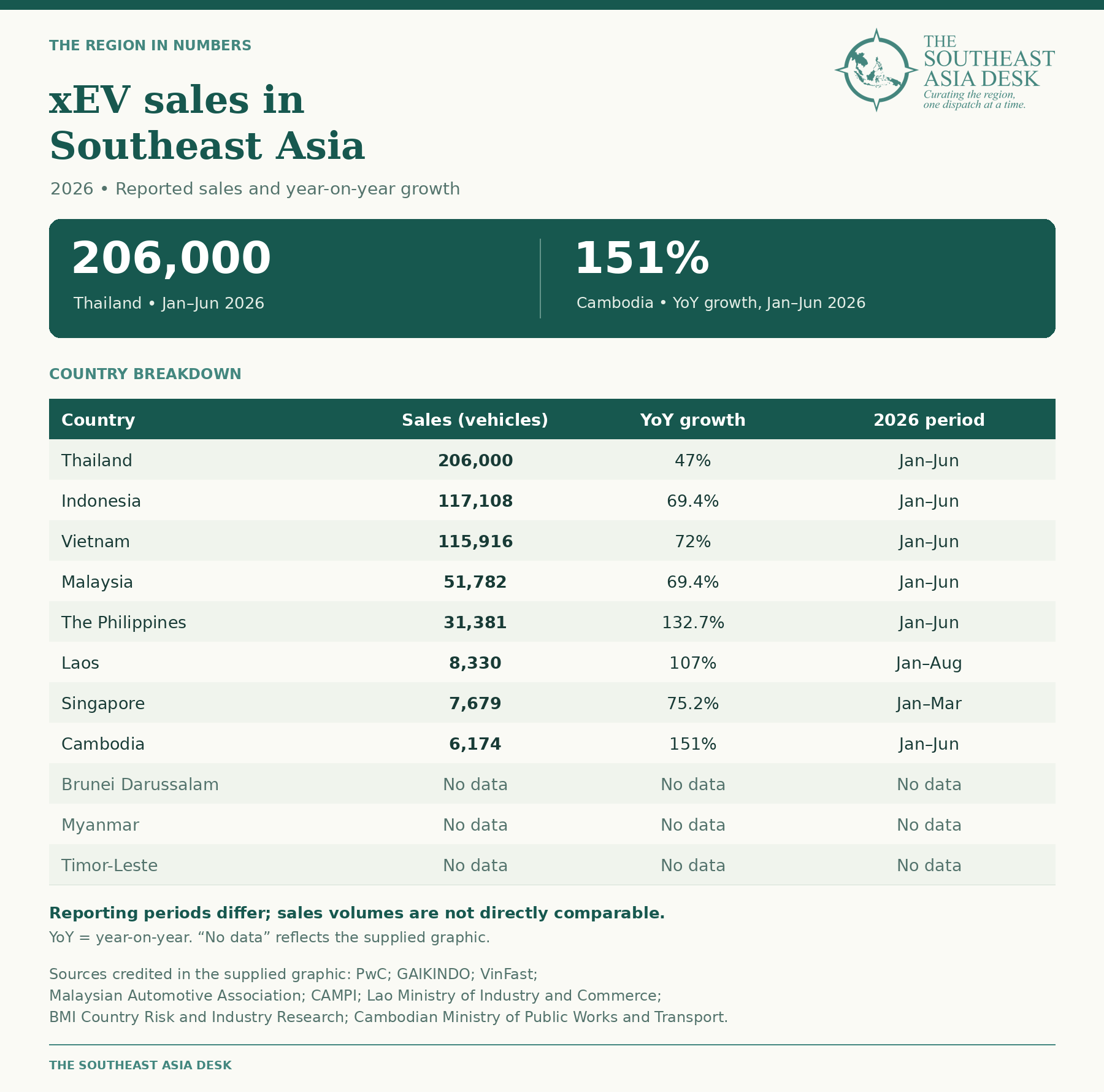
Most Southeast Asian countries have already adopted electric vehicles (EVs), although their sales performance varies, particularly in the first half of 2026.
Thailand Leads Sales: Thailand recorded the highest EV sales in the region, with 206,000 units sold between January and June 2026, representing 47% year-on-year growth. It also recorded the lowest growth rate among the countries listed.
Cambodia Records Growth: Cambodia experienced the highest year-on-year growth in EV sales among ASEAN member states during the first half of 2026, at 151%, although only 6,174 EVs were registered during the period.
Limited Sales Data: No EV sales data were available for Brunei Darussalam, Myanmar or Timor-Leste, making it difficult to compare their market performance with other Southeast Asian countries.
📌 The Bottom Line
Indonesia’s electric vehicle (EV) transition is not only about reducing carbon emissions, but also about reducing dependence on imported fuel, attracting investment and supporting economic growth.
With EV sales and investment continuing to grow, the country has an opportunity to strengthen local manufacturing, battery production and charging infrastructure while exploring new markets beyond passenger cars and motorcycles.
However, becoming a global EV manufacturing hub requires more than market growth and government support. It also needs skilled workers and close collaboration between manufacturers, investors, businesses and the public.
Events such as PEVS 2026 play an important role not only in showcasing the latest EV products and technologies, but also in connecting industry players, attracting potential investors and creating new business opportunities to accelerate Indonesia’s EV industry.
🔎 Need More Angles?
Bisnis Indonesia, Investasi Kendaraan Listrik di RI Capai Rp30,4 Triliun, Serap 10.650 Pekerja
BloombergNEF, BloombergNEF Finds Global Energy Transition Investment Reached Record $2.3 Trillion in 2025, Up 8% from 2024
GAIKINDO, Indonesia’s Electric Vehicle Production Report, January – June 2026
GAIKINDO, Statistik
International Energy Agency, Global Energy Review 2025, CO2 Emissions
Kementerian Keuangan, Masyarakat Pun Menikmati APBN: Belanja Subsidi Energi Tahun 2024 Capai Rp169,5 triliun
Manila Bulletin, EV Sales Surge While Gas-Powered Cars Drop as Overall Auto Market Weakens
PricewaterhouseCoopers, Thailand Leads ASEAN-6 Electrified Vehicle Sales as Volumes Jump 47% in H1 2026
The Star, Vehicle Sales Rise 3.1% in First Half of the Year
(NGO/INN/QOB)