



🎯 The Main Takeaway
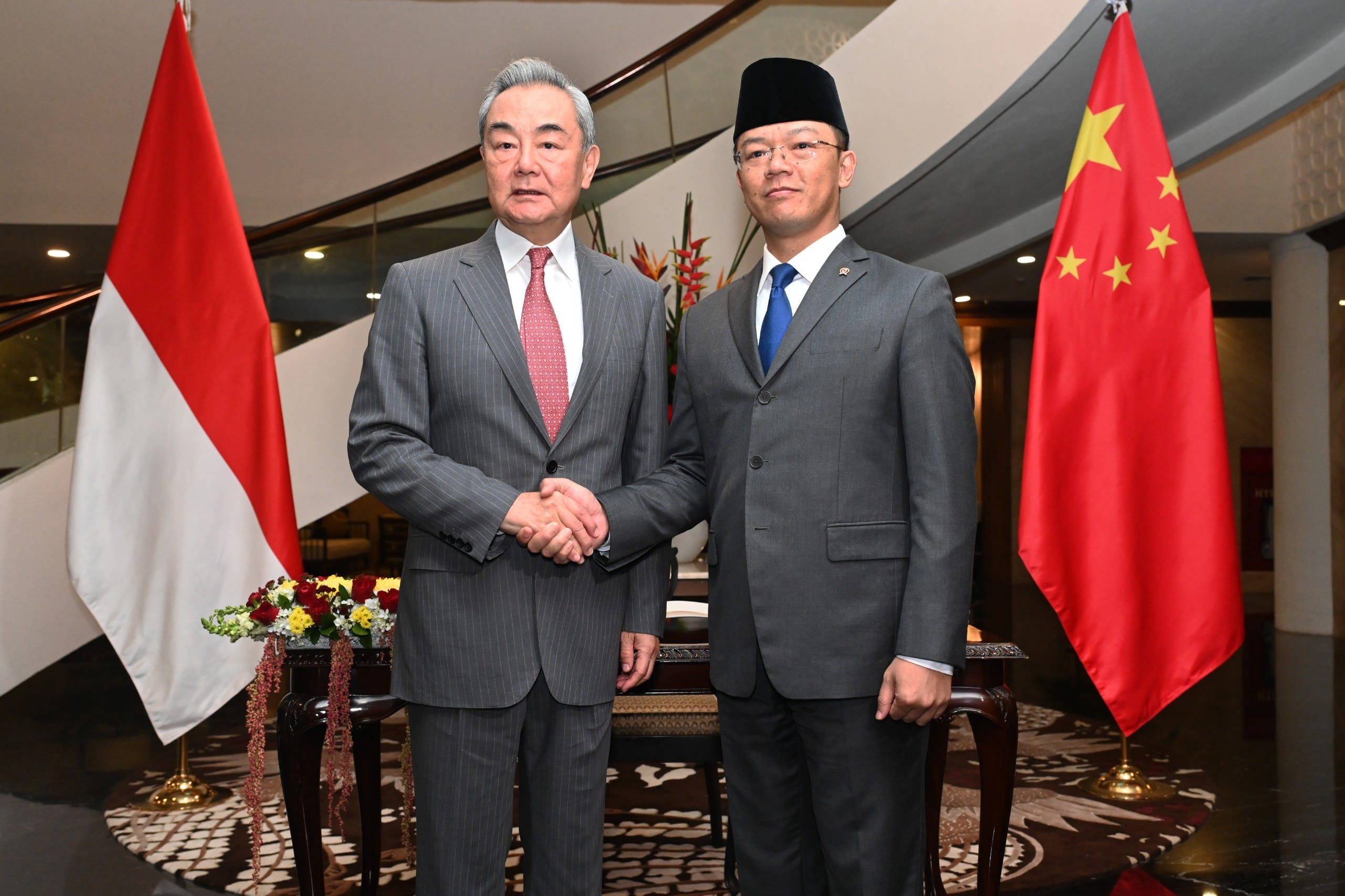
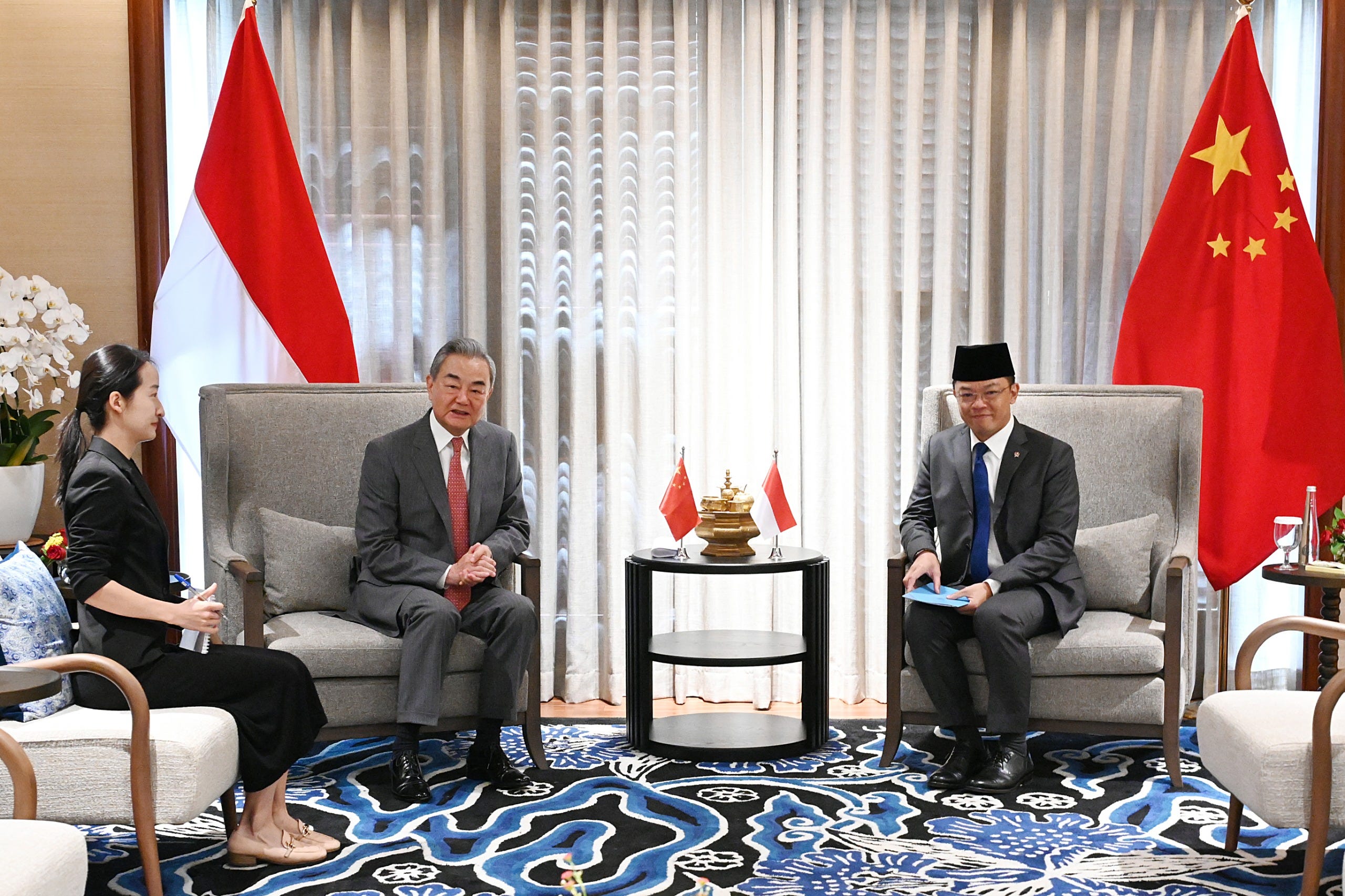
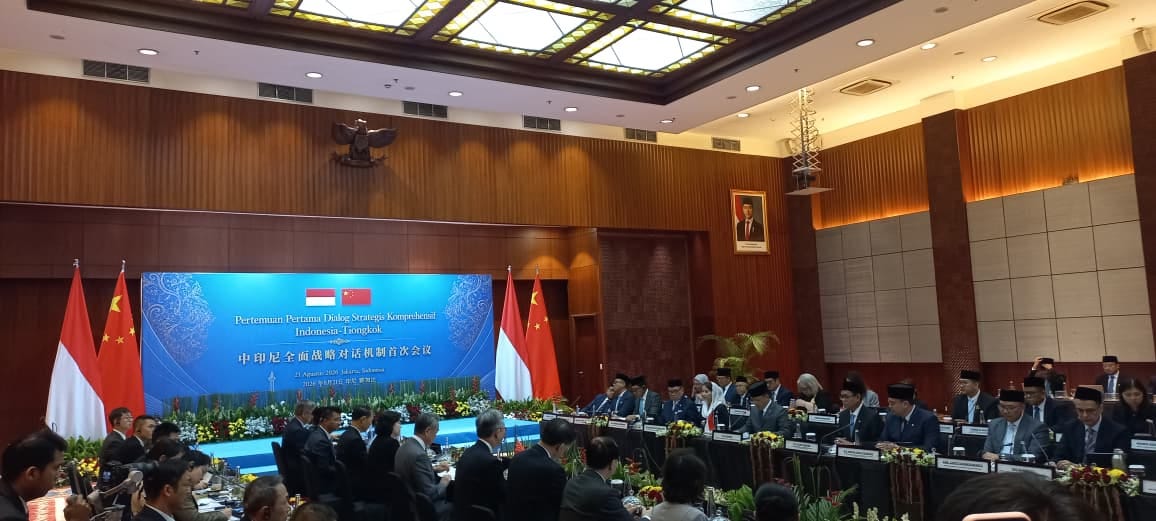
Indonesian Foreign Minister Sugiono hosted Chinese Foreign Minister Wang Yi and his delegation at the Ministry of Foreign Affairs of the Republic of Indonesia met in Jakarta (21/08) for a historic double-header: the inaugural Comprehensive Strategic Dialogue (CSD) and the second Joint Foreign and Defense Ministerial Dialogue (2+2).
The back-to-back meetings marked a significant milestone, elevating the bilateral partnership from traditional economic ties to a multi-layered alliance encompassing advanced technology, maritime security, and global diplomacy under the leadership of President Prabowo Subianto and President Xi Jinping.
The leaders exchanged views on regional developments, reaffirmed their commitment to aligning national development goals, and solidified their roles as leading voices for peace and prosperity in the Global South.
📡 Why It’s on Our Radar
China and Indonesia have cultivated a deeply intertwined relationship, which has accelerated significantly in recent years:
💰 Economic Anchor: China remains one of Indonesia’s most crucial partners, with bilateral trade volume reaching an impressive USD 167 billion. To push this further, Indonesia officially reaffirmed its commitment to creating an even more conducive business environment for Chinese investors.
🚆 Infrastructure Pioneer: The successful implementation of the Belt and Road Initiative (BRI), highlighted by the Jakarta-Bandung High-Speed Rail, serves as a cornerstone for future joint infrastructure and connectivity projects.
🌐 A United Global South: The partnership is increasingly positioned as a model for developing nations, pushing back against unilateralism and advocating for a more balanced, multi-polar global order.
🕰️ 76 Years of Ties & The Hedging Strategy
Diplomatic relations between Indonesia and China have spanned 76 years.
Officially established on April 13, 1950, the relationship survived a severe disruption during the Cold War in 1965 to become the economic powerhouse it is today.
This modern era is driven by massive Chinese investments in Indonesia’s digital economy, mineral downstreaming (particularly nickel), and infrastructure like the Whoosh high-speed rail.
Yet, navigating the current geopolitical landscape under President Prabowo Subianto requires a delicate balance.
Prof. Dafri Agussalim, an International Relations expert at Universitas Gadjah Mada, recently noted that Indonesia’s participation in Western-led initiatives, such as the Board of Peace (BoP) and the Agreement on Reciprocal Trade (ART), created the perception that Jakarta was leaning too far toward the West.
To avoid this strategic “trap” and maintain its “free and active” foreign policy, Indonesia is utilizing these new bilateral dialogues with China as an exercise in hedging diplomacy.
By deepening ties with Beijing across defence and tech, Jakarta is visibly rebalancing its global posture, leveraging its ASEAN centrality to secure national interests without fully aligning with either Washington or Beijing.
⚠️ The Comprehensive Strategic Dialogue
The CSD served as a platform to translate the consensus of both Heads of State into actionable frameworks.
The dialogue opened on a deeply human note, with the foreign ministers exchanging heartfelt condolences over recent natural disasters in their respective countries.
To ensure broad implementation, the dialogue was attended by a massive cross-sector delegation: Indonesia was represented by Vice Ministers of Trade, Energy and Mineral Resources, and Communication and Digital. China brought its Vice Ministers of Foreign Affairs, Commerce, Agriculture and Rural Affairs, as well as the Vice Chairman of the National Development and Reform Commission (NDRC).
The core of the CSD focused on establishing the Five-Year Action Plan (2027–2031) to seamlessly succeed the 2022–2026 framework, aligning China’s 15-year plan with Indonesia’s Golden Indonesia 2045 vision.
A significant portion of the dialogue moved beyond traditional commodities to focus on “new productive forces,” including Artificial Intelligence (AI), joint development of communication satellites, and sustainable energy transitions.
“Today, the bilateral relationship enters a stronger chapter with the launch of the first Comprehensive Strategic Dialogue.” - Sugiono, Indonesian Foreign Minister.
🛡️ The 2+2 Defense & Security Dialogue
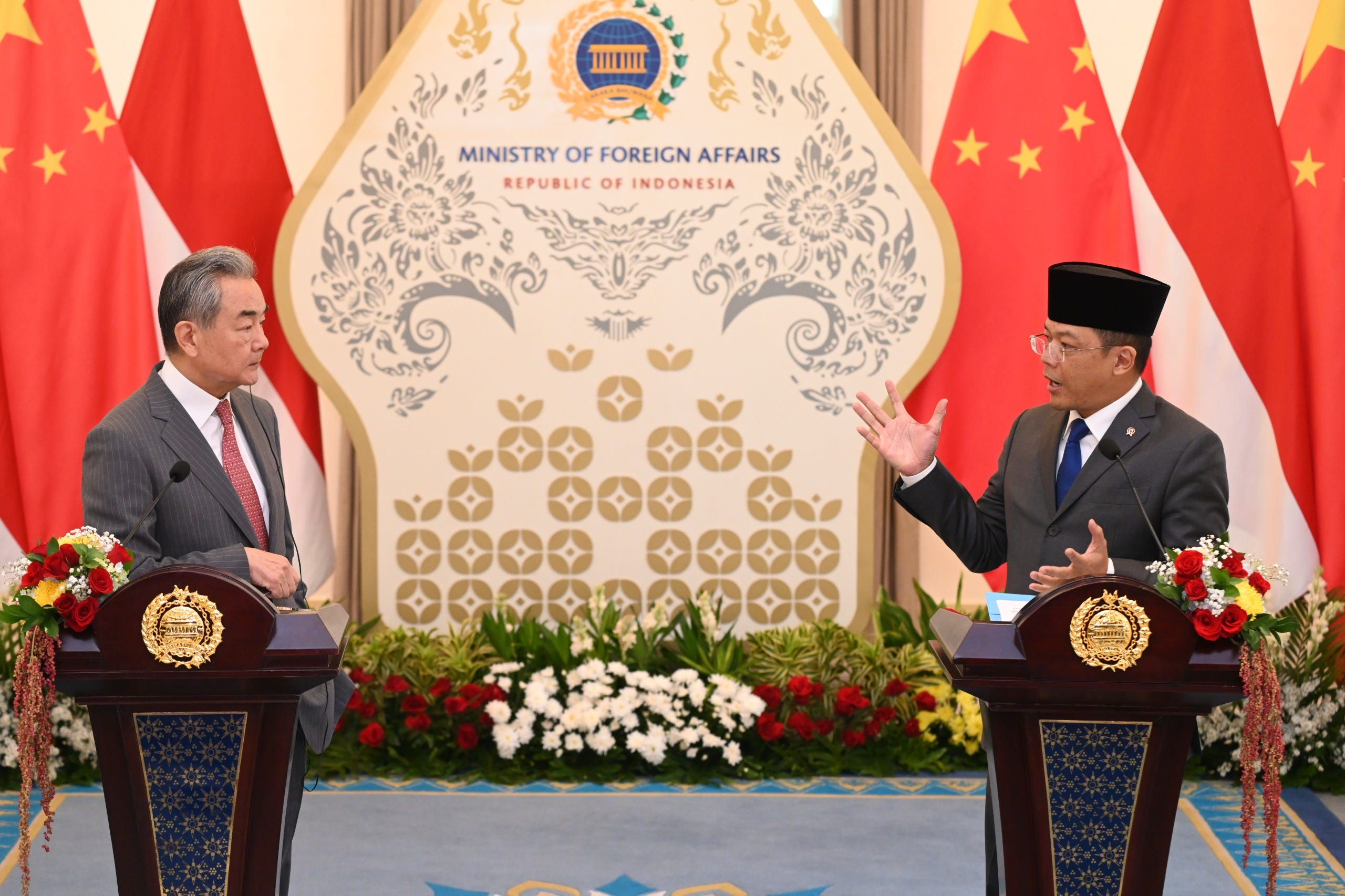
Immediately following the CSD, the strategic alignment moved from diplomacy to defence. Foreign Minister Sugiono and Defence Minister Sjafrie Sjamsoeddin co-chaired the 2+2 Dialogue with Chinese Foreign Minister Wang Yi and Minister of National Defence Dong Jun.
This mechanism completes the architecture of the five strategic pillars agreed upon by both Heads of State. Indonesia used the platform to emphasise that, amid a high-pressure international climate, dialogue is an absolute necessity for building trust and safeguarding regional cooperation. Key security agreements included:
🚀 Joint Arms Manufacturing: A landmark plan to establish joint munition, rocket, and missile factories in Indonesia. This directly supports Indonesia’s modernisation efforts and its emerging anti-access/area denial (A2/AD) strategy.
🪖 Military-to-Military Ties: A commitment to significantly increase joint military exercises between the Indonesian National Armed Forces (TNI) and the People’s Liberation Army (PLA).
🌊 South China Sea: Indonesia and China reaffirmed their support for the full implementation of the Declaration on the Conduct of Parties (DOC) and pledged to accelerate the Code of Conduct (COC). Crucially, they agreed to align maritime capacity building with international law, explicitly citing UNCLOS 1982.
🕊️ Middle East Solidarity: Both parties exchanged views on the Middle East, stressing the vital importance of international efforts to achieve a just and sustainable political solution for Palestine.
“Our region needs a partnership built on the principles of mutual respect and mutual understanding to keep the region peaceful, open, and inclusive.” - Sugiono, Indonesian Foreign Minister.
🔎 The Defence Reality Check
While China dominates Indonesia's economic influence—with a recent ISEAS survey showing that 80.1% of Indonesians would side with China over the US if forced to choose—Beijing severely lags in the defence sector.
📊 The Gap: Between 2003 and 2022, Indonesia and China held only 4 joint military exercises, compared to 110 with the United States. Furthermore, Indonesia’s military has historically operated only three types of Chinese-made defence technology.
⚖️ Strategic Hedging: For Jakarta, the agreements to build joint missile factories and boost military exercises balance the Major Defence Cooperation Agreement Indonesia signed with the US in April 2026, ensuring neither superpower holds a monopoly over Indonesia’s military modernisation.
⚠️ The Risks: Establishing Chinese missile factories on Indonesian soil requires delicate management. Jakarta must navigate potential anxiety among ASEAN neighbours, technical friction with its existing Western-heavy military hardware, and intense scrutiny from Western defence partners.
🚀 Moving Forward…
Foreign Minister Sugiono and Foreign Minister Wang Yi outlined key priorities to guide the relationship through global uncertainties:
📝 Finalise the 2027-2031 Action Plan: Both nations will immediately begin negotiations to lock in the pillars of their strategic cooperation across trade, energy, minerals, and maritime sectors.
🤖 Deepen the Tech Ecosystem: Move beyond traditional infrastructure to co-develop cutting-edge technologies, integrating Chinese advancements in space, meteorology, and AI into Indonesia’s tech landscape.
🤝 Strengthen Multilateral Solidarity: Coordinate closely on global platforms to defend the legitimate rights of developing nations. Indonesia formally expressed its support for China’s APEC chairship in 2026 and for the success of the upcoming APEC Summit in Shenzhen later this year.
💡 The Result…
Several concrete cooperation directives were established across the following sectors:
📈 Trade and Investment: A commitment to expand the USD 167 billion trade volume by increasing market access for Indonesia’s top commodities and fostering industries that support national resilience in food, energy, and minerals.
🏗️ Infrastructure & BRI: Reaffirmed commitment to the continued funding and operational optimisation of the Jakarta-Bandung High-Speed Rail.
🎓 Human Capital & Health: Expanding scholarships for Indonesian students in China, particularly in STEM, alongside joint advancements in vaccine production and medical technology.
“The success of Chinese companies in Indonesia is Indonesia’s own success. And the success of China-Indonesia cooperation is the success of the development and rise of the Global South.” - Wang Yi, Chinese Foreign Minister.
🧭 Beyond the Headlines
High-stakes diplomacy often hinges on quiet, human moments behind the scenes. Before the official cameras rolled for the CSD, a hot mic captured the candid realities of international negotiations.
Delegates were heard navigating the technicalities of translation equipment—“In Chinese, you only press one button. In English, you press two buttons... It’s hard to talk in English,” one delegate chuckled.
More importantly, the open mic captured the rapid-fire introductions of the extended delegations.
The presence of specialised officials, ranging from Vice Ministers of Agriculture and Commerce to Energy and Digital Communications, underscored that this dialogue wasn’t just a geopolitical handshake; it was a deeply integrated, working-level summit aimed at executing complex, cross-border projects.
📌 The Bottom Line
China and Indonesia are rapidly becoming the dual engine driving the Global South.
By launching the Comprehensive Strategic Dialogue and simultaneously hosting the 2+2 Defence Dialogue, Jakarta and Beijing have created a formalised vehicle to merge their economic and security ambitions.
For Beijing, these agreements represent a critical breakthrough to increase its defence footprint in Southeast Asia’s largest nation.
For Jakarta, under President Prabowo, it is a calculated opportunity to secure vital technology transfers and build domestic defence capabilities without compromising its non-aligned stance.
If managed with strategic clarity and rigorous risk mitigation, this evolving 76-year-old partnership will not only modernise Indonesia’s technological and military sectors but fundamentally shape the balance of power and stability across the region.
🔍 Need More Angles?
The Diplomat. What the Latest ‘2+2’ Dialogue Tells Us About China-Indonesia Relations
Universitas Gadjah Mada. Reflecting on 76 Years of Indonesia–China Diplomatic Relations
(JUN/QOB)
China is preparing to invade and take over all of Southeast Asian just as Japan did in 1941. First Through economic trade, then the sharing of weapons that China will keep a "kill Switch" on the day of invasion just like when they invaded Viet Nam, but Viet Nam repelled its neighbor with soviet weapons not made by China. Taiwan is not the only Island Country in China's sights because, just like Japan, it needs the mineral resources like oil from the oil rich south Asian countries. Don't let Indonesia's leaders lead the 4th most populated country and 3rd largest democracy into the clutches of China and its oppressive regime. "... navigating the current geopolitical landscape under President Prabowo Subianto requires a delicate balance." as the current demonstrations in Jakarta have pointed out. The Dutch ruled Indonesia for 400 years and we do not want China to rule Indonesia for another 400 years as well.
81 years of independence should not end with bad trade deals and debt to another country. "...Establishing Chinese missile factories on Indonesian soil requires delicate management. Jakarta must navigate potential anxiety among ASEAN neighbors, technical friction with its existing Western-heavy military hardware, and intense scrutiny from Western defense partners." ...." Between 2003 and 2022, Indonesia and China held only 4 joint military exercises, compared to 110 with the United States." The USA projects power with a Navy that has 13 active aircraft carriers than spend time around the world where China has been building fortified bases in the South China Sea on islands claimed by other nations and poo-poo international laws regarding sovereignty and economic claims by Indonesia's neighbors. The USA asked permission to enter Indonesia's waters while China just takes. Beware of "Trojan Horses"