




🎯 The Main Takeaway
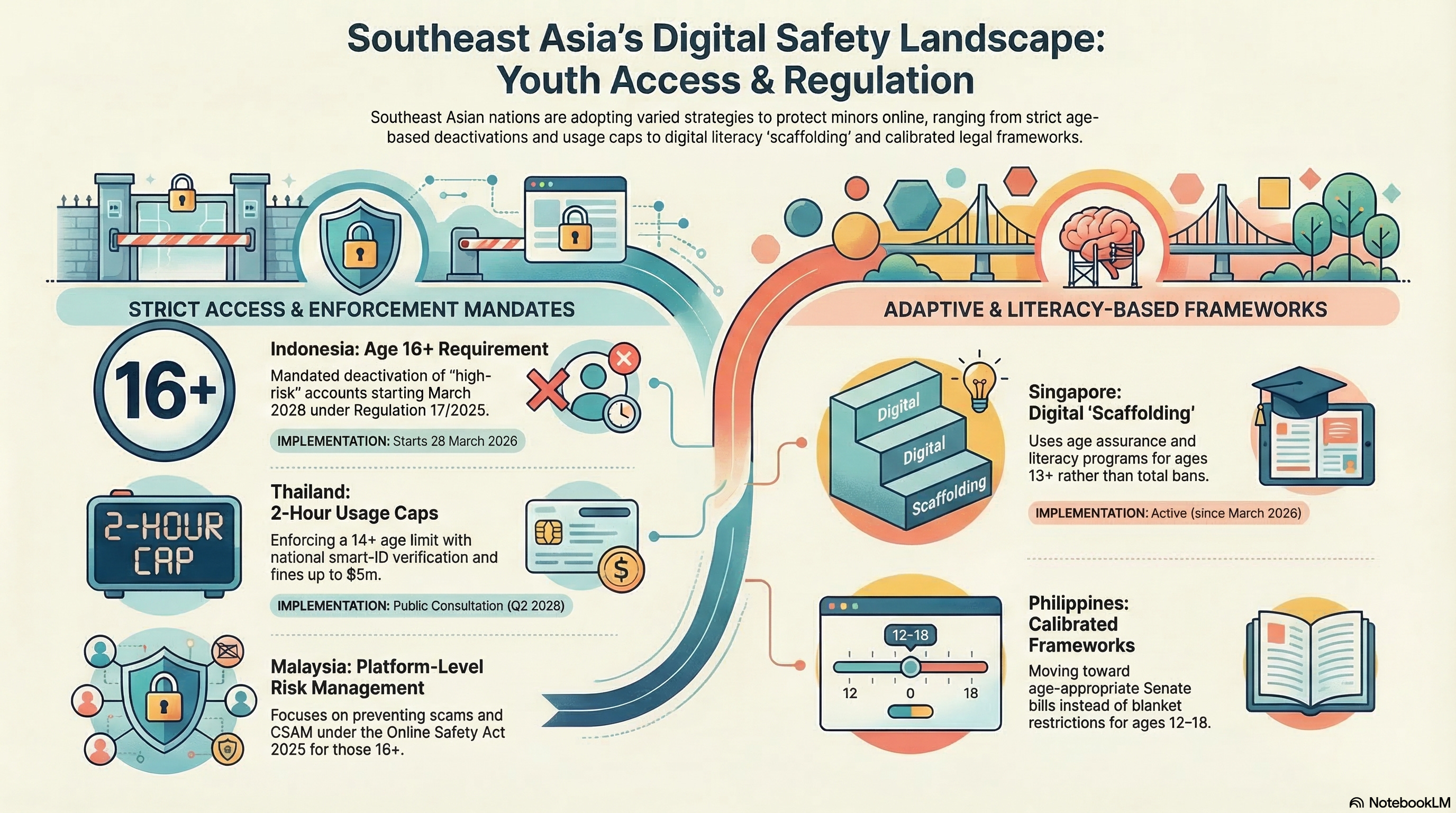
Indonesia has officially banned children under 16 from holding accounts on major social media and digital platforms, including YouTube, TikTok, Facebook, Instagram, X, and Roblox. The policy is planned to take effect on 28 March 2026.
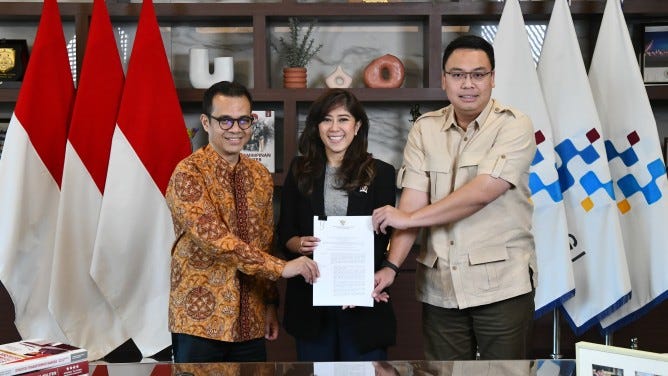
The Minister of Communications and Digital Affairs, Meutya Hafid, in an official statement on Friday, March 6, 2026, described the move as a necessary intervention in what she called a “digital emergency,” adding that “the government is stepping in so that parents no longer have to fight alone against the giants of algorithm-driven platforms.”
📡 Why It’s on Our Radar
Indonesia’s decision reflects a broader regional and global shift toward stricter regulation of children’s online activity.
With Australia implementing the world’s first under-16 social media ban in December 2025, countries across Southeast Asia are now racing to develop their own frameworks—but questions persist about enforcement, privacy and whether bans are the most effective solution.
For Indonesia, home to hundreds of millions of internet users and Southeast Asia’s largest digital economy, the policy marks a significant regulatory escalation with implications for platform operators, parents and children across the country.
⚖️ What’s at Stake
🛡️ Child Safety vs. Digital Rights: The ban aims to shield children from online harm, but critics argue it may restrict access to information and freedom of expression.
🔐 Data Privacy Concerns: Implementing age verification will require collecting sensitive personal data from children. Privacy advocates warn that without robust safeguards, such systems could create new vulnerabilities.
📱 Enforcement Realities: Tech-savvy teens may easily bypass restrictions using VPNs or by creating accounts with false ages.
🌏 Regional Alignment: Malaysia, The Philippines, and others are also pursuing age restrictions, creating potential momentum for ASEAN-wide coordination—or a fragmented regulatory landscape that complicates compliance for global platforms.
🗺️ The Regional Picture: Southeast Asia’s Push for Online Child Protection
While Indonesia has set a hard deadline, its neighbours are pursuing a mix of bans and “scaffolding” strategies:
🇲🇾 Malaysia | Moving Toward a Ban: Following the Online Safety Act 2025. Malaysia plans to enforce a social media ban for under-16s this year. The government is focusing on systemic risk management, shifting the burden onto platforms to identify “priority harms” like scams and child sexual abuse material (CSAM).
🇸🇬 Singapore | The “Scaffolding” Approach: Rather than a “zero or one” ban. Singapore is implementing Age Assurance Requirements (effective March 2026). This forces platforms to restrict under-18s from downloading age-inappropriate apps while encouraging “L-plate” learning—guiding teens through digital spaces rather than locking them out.
🇹🇭 Thailand | The 14-Year Floor & Usage Caps: The Ministry of Digital Economy and Society (DES) is drafting rules to bar under-14s from personal accounts entirely. For those aged 14–16, Thailand is considering a unique "double-lock": mandatory parental consent via the national e-ID system and strict 2-hour daily usage caps enforced by automatic in-app logouts. Platforms face fines of up to ฿5 million for non-compliance.
🇵🇭 The Philippines | Calibrated Regulation: The Senate is currently debating five separate bills with varying age limits (from 12 to 18). Experts here are pushing for an “age-appropriate framework” that acknowledges a 12-year-old’s developmental needs are different from a 16-year-old’s, prioritizing digital literacy over a blanket prohibition.
The Regional Debate | Protection vs. Privacy: Across Southeast Asia, a central tension has emerged: enforcing these bans requires collecting sensitive personal data (such as passports or biometrics) for age verification. Critics warn this could lead to massive data breaches, potentially trading one digital risk for another.
🌏 The Bigger Picture: A Global Movement
Australia’s world-first under-16 social media ban, which took effect in December 2025, has sparked a wave of similar proposals worldwide.
Platforms face fines of up to A$49.5 million for non-compliance, and early implementation has revealed both challenges and public support—two-thirds of Australian voters back the measure.
France, Spain, Italy, Denmark, and Greece are jointly testing a prototype age verification app. The UK launched a public consultation on a similar ban in early 2026, while Germany’s ruling party has announced support for restrictions.
🏠 Why This Hits Home
For parents across Southeast Asia, children's digital safety is an urgent daily concern.
A 2023 UNICEF survey found that roughly half of 510 Indonesian children surveyed had been exposed to sexual images on social media.
In Malaysia, police recorded RM2.7 billion in reported losses from online scams between January and November 2025 alone.
But as one Malaysian parent, Siti Sharifah Sharina Abdullah Sahani, put it: “Banning doesn’t mean full protection. Technology is unavoidable, so it’s better to teach children how to use it safely.”
🔮 The Bottom Line
Indonesia’s social media ban represents a bold intervention in an urgent crisis—but it also raises fundamental questions about how societies should balance protection with participation in an increasingly digital world.
The coming months will reveal whether age-based restrictions can be effectively enforced, what unintended consequences may emerge, and whether Southeast Asian nations can coordinate their approaches to create meaningful protection without fragmenting the digital ecosystem.
As the region watches Australia’s experiment unfold and Malaysia prepares to follow suit, one thing is clear: the era of unfettered digital access for minors is ending. What replaces it remains very much in question.
🔎 Need More Angles
BBC Indonesia to ban social media and other online platforms for under 16s
Bernama Online Safety Act 2025 Strengthens Regulatory Oversight Of Digital Platforms
CNA IN FOCUS: Should social media be banned for teens in Singapore?
Hey Thailand News Thailand Proposes Blocking Under-14s from Social Media With Usage Limits
Rappler Social media regulation in PH: Experts push for ‘age-appropriate’ framework for minors
Tempo English Malaysia Plans to Ban Social Media for Children Under 16, Following Australia
Tempo English Indonesia Bans Social Media Accounts for Children Under 16
(ELS/QOB)