



🎯 The Main Takeaway
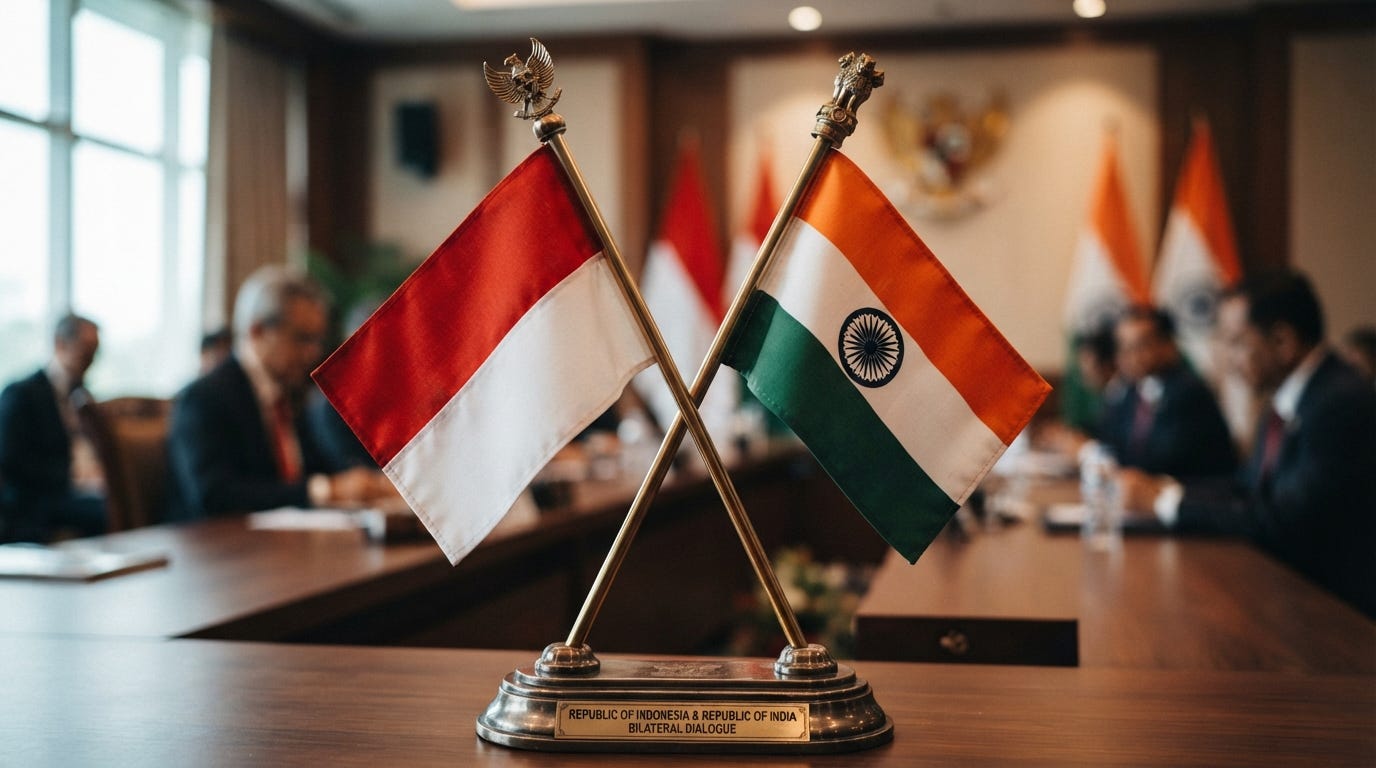
The historic State Visit by Indian Prime Minister Narendra Modi to Indonesia (July 6–8, 2026) concluded with the signing of 20 landmark memorandums of understanding (MoUs), solidifying an operational blueprint for a durable Comprehensive Strategic Partnership.
The summit moved beyond political symbolism, resolving long-pending pacts to lock in advanced defense manufacturing, critical mineral supply chains, and cross-border financial integration.
🤝 The State Welcome
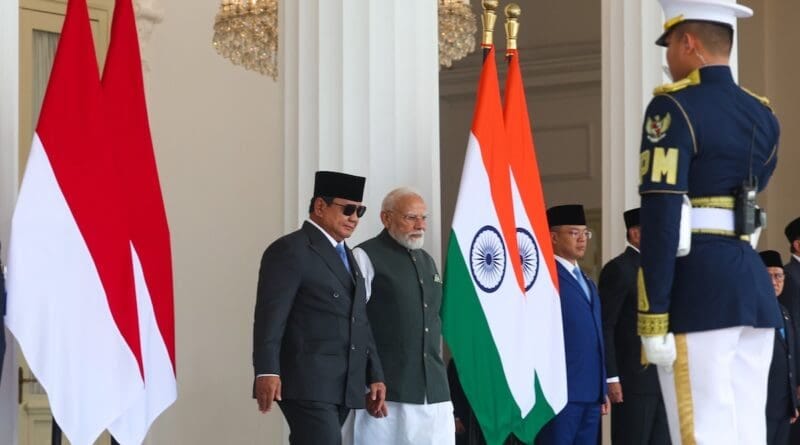
Full State Honors: Prime Minister Modi was greeted at Jakarta’s Merdeka Palace on July 7 with a spectacular convoy escorted by 17 motorists and 120 cavalrymen, culminating in a 21-gun salute.
Cultural Reception: Hundreds of enthusiastic primary students waved bilateral flags alongside a performance of the traditional Betawi dance, “Kemilau Jakarta.”
High-Level Delegation: Following a warm embrace and a tête-à-tête, bilateral talks commenced with top Indonesian brass, including Coordinating Minister for Politics and Security Djamari Chaniago, Defense Minister Sjafrie Sjamsoeddin, and Foreign Minister Sugiono.
“Mr. Prime Minister, thank you for the visit. We have a relationship that has been built for thousands of years, so we really appreciate the friendship between Indonesia and India.” - Prabowo Subianto, President of the Republic of Indonesia.
🏛️ The Cultural Capstone
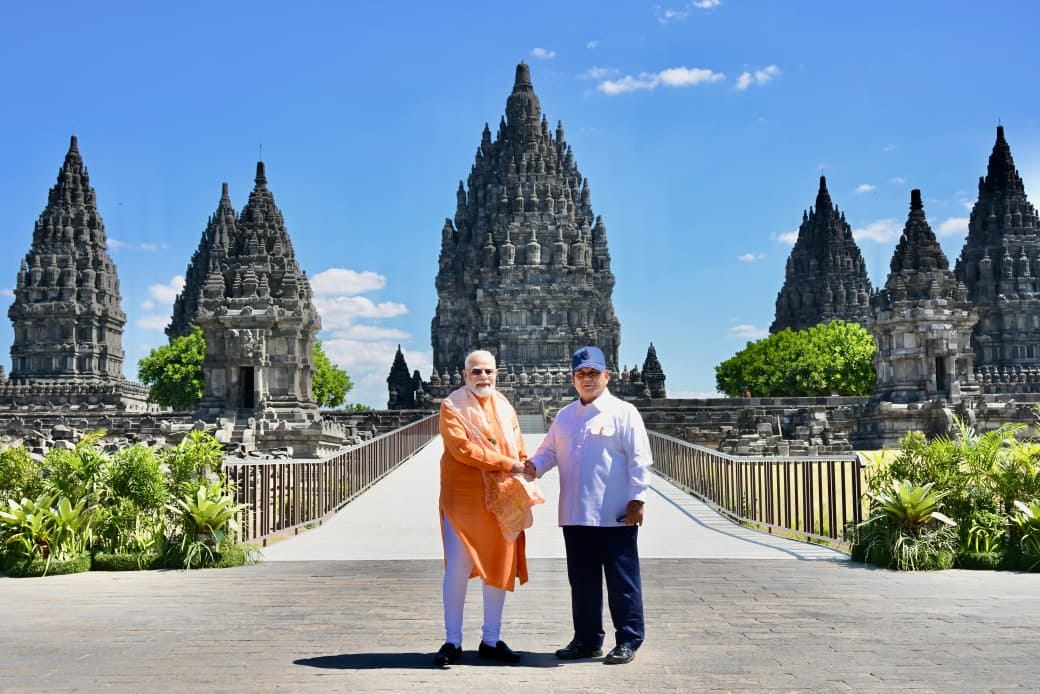
The visit wasn’t solely about geopolitics—it culminated in a profound celebration of the shared civilizational roots between the two nations. On July 8, President Prabowo and PM Modi traveled to Yogyakarta to visit the Prambanan Temple Complex, a UNESCO World Heritage site.
Aerial Tour & Javanese Welcome: After circling the historic site by helicopter, the leaders were greeted by Minister of Culture Fadli Zon. They were welcomed with a classical Yogyakarta-style Ramashinta dance, performed to gamelan music, beautifully highlighting the Indian-originated Ramayana epic carved into the temple’s reliefs.
Spiritual Ties: In a deeply symbolic moment, PM Modi performed Hindu worship at the Shiva Temple, while 290 priests and devotees gathered to pray simultaneously at the Vishnu and Brahma temples, creating a highly solemn atmosphere.
Conservation Partnership: Following up on a Letter of Intent (LoI) signed during the Jakarta summit, the leaders unveiled a plaque to officially kick off a joint conservation project. Led by the Indonesian Ministry of Culture, the Indonesian Heritage Institute, and the Archaeological Survey of India (ASI), the project aims to preserve the thousand-year-old temple using international standards. This is vital for the local economy; Prambanan saw over 2.3 million tourists in 2025 and has already surpassed 1.3 million visitors in the first half of 2026, cementing its status as a world-class cultural destination.
⏳ The Historical Context
The modern India-Indonesia partnership is built on two millennia of shared history, stretching back to ancient cultural, commercial, and religious exchanges.
Civilizational Influence: President Prabowo highlighted how deeply Indian civilization has shaped Indonesia, noting that nearly 50% of the Indonesian language originates from Sanskrit.
Post-Independence Allies: The shared struggle against colonial powers forged a strong bond; Indonesian President Soekarno was the Guest of Honor at India’s very first Republic Day in 1950. That honor came full circle when President Prabowo served as the Chief Guest at India’s 76th Republic Day in January 2025.
Policy Evolution: The bilateral relationship rapidly accelerated following India’s adoption of the “Look East” policy in 1991, later upgraded to the proactive “Act East” policy in 2014.
“Our history is built on shared culture, independence, and mutual trust, and our future will likewise be defined by shared prosperity.” - Narendra Modi, Prime Minister of India.
📡 Why It’s on Our Radar
As the U.S.–China rivalry intensifies across the Indo-Pacific, New Delhi and Jakarta are positioning themselves as independent middle powers asserting strict strategic autonomy. Rather than joining competing geopolitical blocs, both nations are pursuing a pragmatic foreign policy—maintaining robust ties with the West, China, and Russia simultaneously—proving that regional giants can cooperate successfully without bowing to external superpowers.
⭐ However...
The true highlight of the summit was the finalization of a blockbuster $630 million defense package that transforms India from a basic security partner into an elite military technology supplier for Indonesia.
Supersonic Strike: BrahMos Aerospace signed a comprehensive contract with Indonesia’s Ministry of Defense to supply the Mach 3 BrahMos supersonic cruise missile system, complete with operational infrastructure, training, and long-term maintenance.
Air-to-Air Breakthrough: In a historic first, Indonesian private defense giant Republikorp signed a pact with India’s Bharat Dynamics to induct India’s indigenous Astra beyond-visual-range air-to-air missile. The integration streamlines Jakarta’s logistics by building upon existing India-Indonesia cooperation in Sukhoi fighter jet maintenance and training.
“Securing Indonesia as the first export market for Astra marks a breakthrough for India in a highly competitive, niche area, allowing New Delhi to position itself as a serious defense exporter and effectively opening the door for future defense sales to the wider ASEAN market.” - Dinakar Peri, Fellow in the Security Studies Program, Carnegie India.
⚠️ Why It Matters?
The economic and strategic convergence between New Delhi and Jakarta has massive implications for the Indo-Pacific:
De-dollarization & Financial Tech: The operationalization of Local Currency Transactions (LCT) and a Cross-Border QR Payment Linkage will allow direct Rupee-Rupiah transactions, bypassing the US Dollar.
Global Supply Chain Control: Bilateral trade surged to $28 billion for FY 2024/25. A pioneering three-way MoU between India’s private firm Midwest Ltd, Indonesia’s state-run PT Perusahaan Mineral Nasional (PERMINAS), and the Non-Ferrous Materials Technology Development Center (NFTDC) marks the first time a private Indian enterprise has secured overseas rare earth assets. The alliance will build a global supply chain anchored by a new rare earth magnet manufacturing plant in Indonesia.
Global South Leadership: Both nations are firmly backing each other on the global stage. Indonesia reaffirmed its support for India’s 2026 BRICS Chairship, while India backed Indonesia’s role as a BRICS member. Both are pushing hard for reforms to the United Nations Security Council.
📉 As the Result...
The bilateral talks yielded immediate agreements that will trigger developments across several key sectors:
Rare Political Privilege: Prime Minister Modi was invited to address the People’s Consultative Assembly (MPR). This is a rare honor in Indonesian history, previously granted only to Xi Jinping in 2013 and Saudi King Salman in 2017.
Real-Time Security Links: Alongside a renewed coast guard arrangement, Indonesia will post an International Liaison Officer at India’s Information Fusion Centre-Indian Ocean Region (IFC-IOR) in Gurugram, bridging the historic gap in real-time maritime domain intelligence.
Heavy Industries: A major joint venture between the Steel Authority of India Limited (SAIL) and PT Krakatau Steel was formalized to establish a state-of-the-art stainless-steel slab manufacturing facility in Indonesia.
Digital Economy: Indonesia launched the Indonesia Open Network (ION), modeled after India’s Open Network for Digital Commerce (ONDC), to plug local MSMEs directly into a broader digital ecosystem.
🧭 The Big Picture
The India-Indonesia alignment is a stabilizing force in a volatile geopolitical landscape.
Both nations reiterated their commitment to a free, open, and rules-based Indo-Pacific, grounded in the 1982 UNCLOS. They expressed deep concern about the ongoing situation in West Asia, stressing the absolute necessity of maintaining freedom of navigation through critical chokepoints, such as the Strait of Hormuz.
🏡 Why This Hits Home?
For the local economies of both nations, the focus on Infrastructure and Connectivity is the biggest immediate win.
The push to develop Sabang Port in Indonesia’s Aceh province will directly link Sumatra to the Andaman and Nicobar Islands off India's coast. This port-to-port and air connectivity initiative is expected to generate massive local investment, spur employment in ship-building and repair, and boost regional marine tourism.
“Such a partnership —spanning cruise and marine-tourism facilities, maritime industries (ship-repair and shipbuilding), and shore-based services supporting offshore energy activities in the Andaman Sea — would foster institutional, physical, digital and flow of people and commodities between Andaman and Nicobar Islands of India and Provinces in Sumatra Island, that contribute to generating investment, employment, transfer of technology and shared regional prosperity.“ - India-Indonesia Joint Statement, July 07, 2026.
🌍 The Insights on Sector Cooperation
The Joint Statement highlighted several specialized areas of collaboration:
Health & Pharma: The “Red and White Cooperative Network” will serve as a logistical hub for distributing medical products, bolstered by branch clinic investments from India’s Apollo and Artemis hospital groups.
Disaster Management: Recognizing their shared vulnerability to natural disasters, both nations signed agreements to share data, build disaster-resilient infrastructure, and improve emergency response protocols.
Educational Diplomacy: 2026–2027 has been officially declared the “Tagore–Dewantara Year” to celebrate shared educational and cultural ties.
💡 The Solutions and Countermeasures
To maintain this momentum, both governments have outlined strict follow-up mechanisms:
Short-term: Convene the 3rd Joint Task Force Meeting on Andaman-Aceh Connectivity in the second half of 2026 to expedite the Sabang Port project.
Long-term: Accelerate Preferential Trade Agreement (PTA) negotiations and conclude the ASEAN India Trade in Goods Agreement (AITIGA) review to remove outstanding non-tariff barriers.
📌 The Bottom Line
The 2026 state visit confirms that India and Indonesia are no longer just passive neighbors sharing an ocean; they are active, deeply integrated partners.
Rooted in shared post-colonial struggles and centuries of civilizational ties, they are now locking in agreements on defense production, digital payments, and critical minerals to build a resilient economic and security architecture that favors regional agency in the Indo-Pacific.
🔍 Need More Angles?
ANTARA, Prabowo highlights Indonesia’s longstanding ties with India
Cabinet Secretariat of the Republic of Indonesia, President Prabowo and PM Modi Visits Prambanan Temple, Signifies Indonesia-India Historical and Cultural Ties
Cabinet Secretariat of the Republic of Indonesia, President Prabowo, PM Narendra Modi Visit Prambanan Temple
Cabinet Secretariat of the Republic of Indonesia, President Prabowo Welcomes PM Modi at the Merdeka Palace
Consulate General of India, India - Indonesia Bilateral Relations
Eurasia Review, India And Indonesia: Asian Giants That Refuse To Bow To The Superpowers – Analysis
Ministry of External Affairs of the Government of India (Media Release), India-Indonesia Joint Statement on the State Visit by Prime Minister of India to Indonesia (July 06 - 08, 2026)
The Diplomat, India, Indonesia Put in Place a Blueprint for a Durable Strategic Partnership
(JUN/QOB)