



🎯 The Main Takeaway
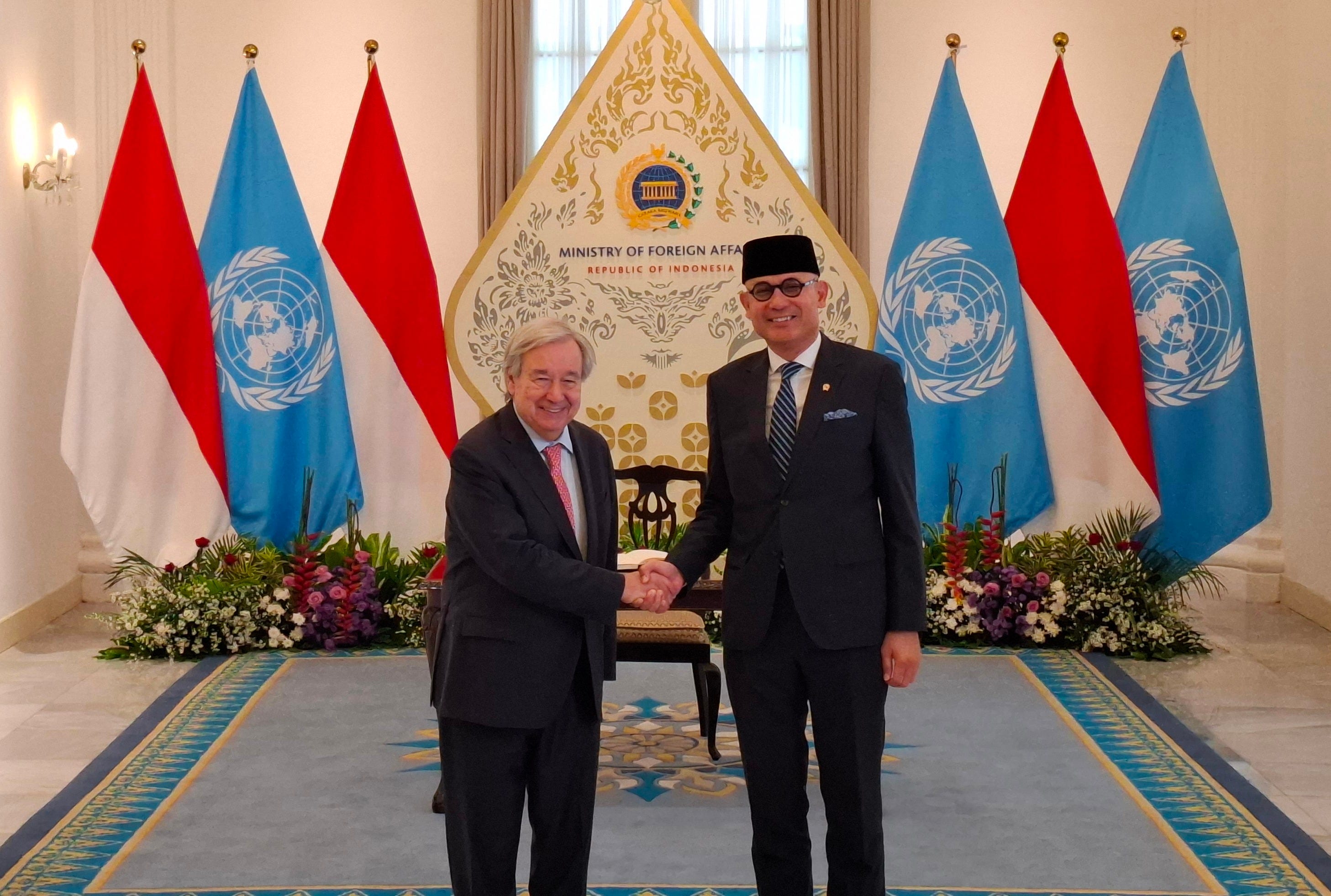
United Nations (UN) Secretary-General António Guterres paid a state visit to Indonesia from 17 to 19 October.
The visit aimed to express the UN’s gratitude and appreciation for Indonesia’s active role in supporting the organisation and promoting global peace. It also sought to strengthen UN–Indonesia relations and explore opportunities to enhance multilateral cooperation to address ongoing global challenges.
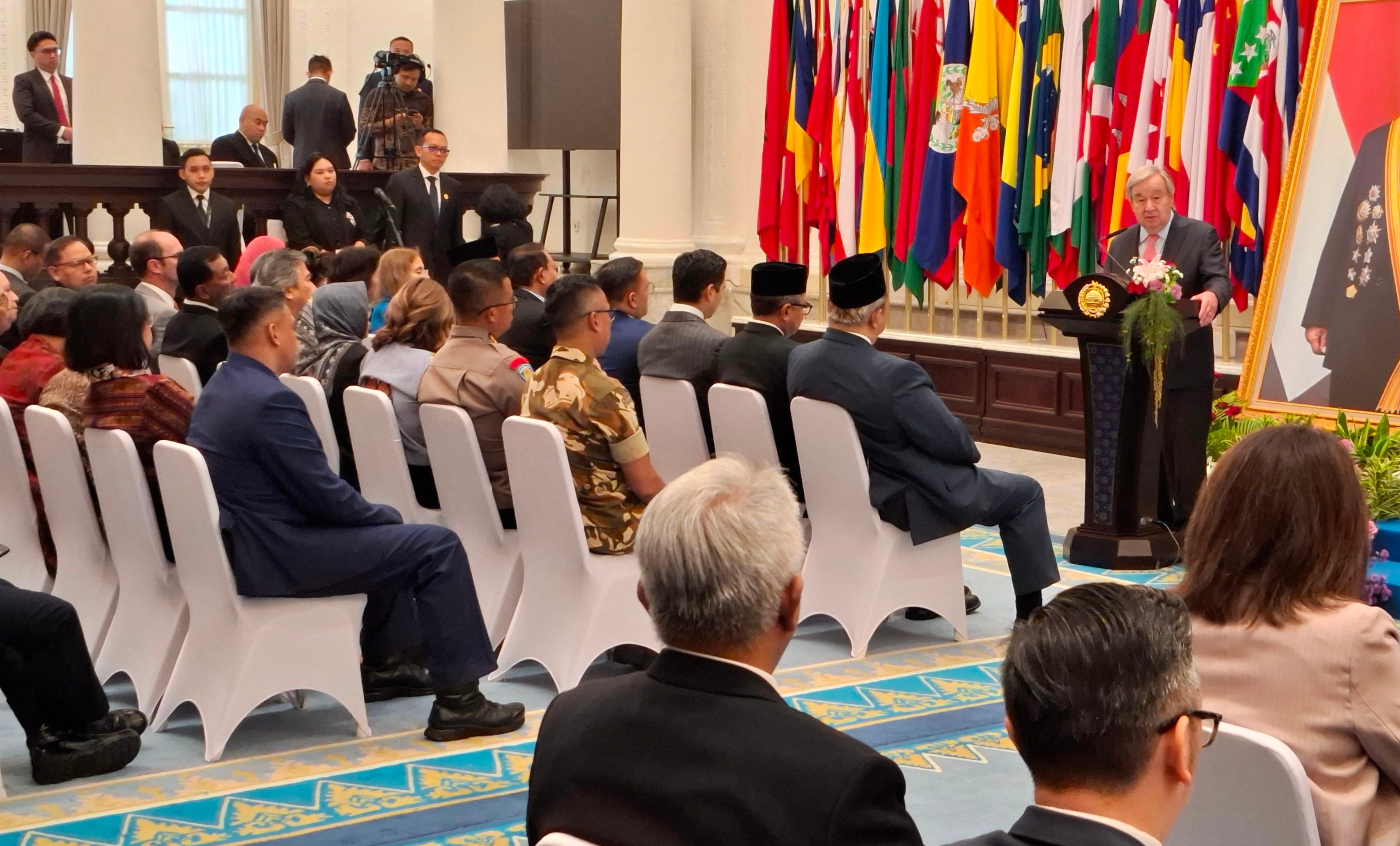
During his three-day visit, Guterres held foreign policy talks with diplomats and invited guests at the Ministry of Foreign Affairs, visited the Indonesian National Armed Forces Peacekeeping Mission Centre (PMPP TNI) in Sentul, and met Indonesian President Prabowo Subianto at his residence in Hambalang.
📡 Why It’s on Our Radar
Several ongoing global challenges require urgent attention, dialogue, and collective action from the United Nations (UN) and Indonesia:
Unilateralism is intensifying: Some major powers are increasingly pursuing their own interests rather than prioritising dialogue, diplomacy, and international cooperation.
Competition is rising: Rivalry between major powers, including the US, China, and Russia, continues to reshape global politics and the world economy.
Trust in institutions is declining: Public trust in the UN is declining amid concerns about its ability to take concrete action on major conflicts and consistently apply international law.
Conflicts are multiplying: Major conflicts continue in several parts of the world, including Israel-Palestine, US-Israel-Iran, Russia-Ukraine, and conflicts across Africa.
Technology is transforming: Rapid technological advances, particularly in artificial intelligence (AI), are improving human activities but also creating new risks and challenges for humanity.
Climate change is accelerating: Rising global temperatures continue to threaten the planet and its biodiversity, driven largely by greenhouse gas emissions.
⚠️ Why It Matters?
These ongoing global challenges are having far-reaching consequences for international relations, economic stability, human welfare, and the environment.
Geopolitical divisions are deepening: Countries are becoming increasingly divided by their political choices and support for major powers, blocs, or alliances.
New blocs are emerging: Growing unilateralism has encouraged some countries to form or strengthen multilateral groups such as BRICS, giving emerging and developing countries in the Global South a greater voice in global decision-making through dialogue, mutual respect, and cooperation.
Institutions are reforming: The UN faces growing calls for institutional reform, particularly regarding the Security Council and its veto power. Reform is needed to strengthen multilateralism and promote the equal application of international law.
Humans are suffering: Conflicts continue to cause thousands of deaths and displace millions of people, while worsening hunger, limiting access to healthcare, and disrupting education.
Global uncertainty is increasing: Conflicts are disrupting commodity supplies and global supply chains, increasing economic uncertainty and contributing to higher energy and food prices.
People are adapting: Rapid technological advances, particularly in artificial intelligence (AI), are transforming industries and workplaces. People must develop new skills to remain competitive and meet changing industry demands.
Extreme weather is worsening: Climate change is altering weather patterns and increasing the risks of extreme droughts, heavy monsoon rainfall, and other disasters that threaten agriculture, livelihoods, and ecosystems.
“We cannot risk a fragmented world. Instead, we need to work towards a networked multipolarity with multiple centres of power sustained by a dense web of economic, political, social and technological connections. I see Indonesia as one of the centres of that network, and we must recognize another truth, an increasingly multipolar world requires effective and representative multilateral institutions.” - António Guterres, UN Secretary General.
🇮🇩 Why Indonesia Is Important to the UN?
According to Guterres, Indonesia is a diverse country and a global pillar of multilateralism. With a population of more than 280 million, the country is home to over 1,300 ethnic groups and six officially recognised religions, whose communities live side by side in harmony.
Indonesia is also a symbol of resilience. After a revolutionary struggle against Dutch colonial rule, Indonesia declared its independence on 17 August 1945, inspiring independence movements across Africa and other parts of Asia.
Indonesia’s experience in maintaining harmony amid diversity, alongside its struggle for independence, has positioned the country as a potential diplomatic bridge-builder between the UN and different regions of the world.
Since joining the UN on 28 September 1950, Indonesia has strengthened multilateralism by amplifying the voices of developing countries, particularly in the Global South, and promoting their participation in global decision-making to advance peace, security, and equality.
“Indonesia continues to play an influential role in shaping international cooperation across the Asia-Pacific and the wider Global South, as a critical member of ASEAN, the G20, the D8, BRICS, APEC, and the Organization of Islamic Cooperation, and of course, the United Nations.
I want to recognize Indonesia’s leadership in helping to forge and strengthen ASEAN-UN ties, a partnership spanning peace and security, development and human rights.” - António Guterres, UN Secretary General.
🤝 Multilateralism in Necessity
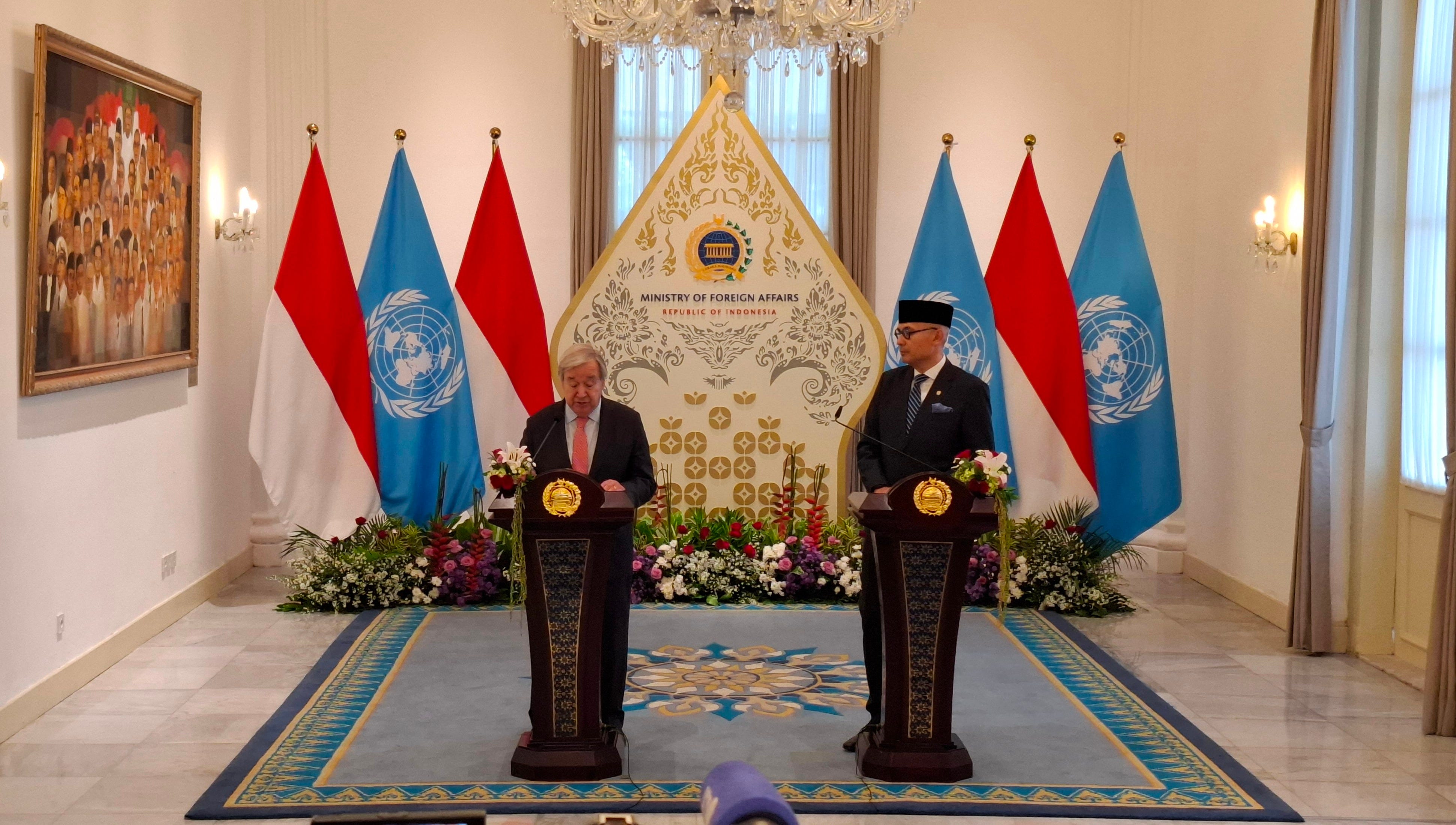
In response, Indonesia’s Foreign Affairs Minister Arrmanatha Nasir stated on Monday (19/10) that multilateralism is not just an option for Indonesia and the Global South, but a necessity.
He explained that no country, including the world’s major powers, can address global challenges alone. Countries need international cooperation and mutual support to achieve their goals.
“For Indonesia, multilateralism is not an option. It is a necessity. And let me be frank, just when the world needs cooperation the most, the space for multilateral dialogue is shrinking. That is why reform is no longer simply desirable, it is urgent.” - Arrmanatha Nasir, Indonesian Foreign Affairs Minister.
Additionally, Indonesia follows an independent and active foreign policy, allowing it to respond to international developments without siding with any bloc. Instead, Indonesia actively promotes global peace and security through diplomacy and dialogue with all sides.
This effort aims to bring countries together to share ideas and develop solutions to ongoing global conflicts, promoting peace and prosperity for all nations.
“We believe a strong and resilient Indonesia can do more for peace and prosperity beyond our border. A resilient Indonesia waits for a more resilient world. A resilient world waits for a stronger Indonesia. That is the spirit we bring to the United Nations. We do not only come to take part, we come to bring ideas, people, and solutions.” - Arrmanatha Nasir, Indonesian Foreign Affairs Minister.
💔 The Gaza Humanitarian Crisis
UN Secretary-General António Guterres highlighted the Israeli–Palestinian conflict, particularly the humanitarian crisis in Gaza, as one of the most urgent global issues requiring a solution. The conflict escalated on 7 October 2023, when Hamas launched an attack on southern Israel, triggering Israel’s subsequent military offensive in Gaza.
Guterres condemned Hamas’s attacks, but also criticised Israel’s military response, which has caused widespread destruction across Palestinian territories, particularly the Gaza Strip. The situation has raised grave concerns over genocide, the forced displacement of Palestinians, and Israel’s continued illegal occupation of Palestinian territory in the West Bank.
The crisis has become a major test for multilateralism, particularly in de-escalating tensions and ensuring that international law is applied equally to all countries, regardless of their political influence or national interests.
The United Nations remains committed to a two-state solution, supported by 142 UN member states, including Indonesia, as a path towards lasting peace. It advocates for an independent Palestinian state alongside Israel to help resolve the conflict.
“I pay tribute to Indonesia, which has always been in the forefront for the Palestinian people and their right to self-determination. The peace plan for Gaza must be fully implemented, and we cannot allow the two-state solution to disappear before our eyes. With the support of countries like Indonesia, we can continue working to strengthen the multilateral system for the force of law to prevail over the law of force.” - António Guterres, UN Secretary General.
Indonesia reaffirmed its commitment to Palestine’s independence and sovereignty, based on equality and solidarity, guided by the spirit of multilateralism in decision-making.
“Our constitution calls us to help build a world order based on freedom, lasting peace, and social justice. That is why our support for the independence and self-determination of the Palestinian people has never wavered.” - Arrmanatha Nasir, Indonesian Foreign Affairs Minister.
🛠️ The UN Institutional Reform
The Secretary-General also highlighted the need for UN institutional reform, particularly of the Security Council, whose permanent membership does not fully represent all regions of the world.
All five permanent members of the Security Council hold veto power, allowing them to block resolutions, including those aimed at ending wars and conflicts, even when a majority of member states support them. This can limit the UN’s ability to promote international peace and stability.
Moreover, some permanent members have engaged in military actions against other countries that have raised concerns about violations of international law and contributed to humanitarian crises.
“The reform of the Security Council is a must if we want to have a multilateral instrument that is effective in peace and security. And today, unfortunately, we sometimes see permanent Members of the Security Council starting wars in disrespect of international law. That makes the capacity of the UN to promote peace and security in the world extremely limited.” - António Guterres, UN Secretary General.
Indonesia agreed that UN reform is necessary and important, emphasising that its main goal is not to weaken the organisation, but to make it more fit for purpose in the world we live in today and tomorrow, while ensuring that the UN remains a platform for finding solutions to global challenges.
“Reform is not about reinventing the wheel. It is not changed for the sake of change. It is about a UN that delivers, a UN that serves, a UN that knows what it is for. Inclusive in how it decides, adaptable to what comes next, effective in what it delivers. We will push for the council that is more impactful, more representative, and more goal-driven. The Security Council must be a room for solution, not a room for vetoes.” - Arrmanatha Nasir, Indonesian Foreign Affairs Minister.
🌱 The UN 2030 SDG Agenda
The UN 2030 Agenda for Sustainable Development is also a key priority, in effect since January 2016. It consists of 17 Sustainable Development Goals (SDGs) and 169 targets, aimed at protecting the planet and improving people’s lives by 2030.
However, two-thirds of the SDGs are behind schedule because of insufficient investment, with around USD 4 trillion needed annually to achieve them. This financial gap pressures developing countries to allocate more resources to support sustainable development initiatives.
As a result, reforming the global financial architecture is essential. This should be accompanied by measures to address debt distress, scale up financing, and improve developing countries’ access to financial support to achieve their sustainable development goals.
Guterres also praised Indonesia’s innovative financing mechanisms, which encourage private-sector investment through partnerships to support sustainable development across the country.
“You are pioneering innovative finance mechanisms to unlock billions of dollars in private capital for sustainable development. In a world of scarce resources, every coin counts. Indonesia is showing how public finance can be used as strategic leverage to mobilize private capital for development.” - António Guterres, UN Secretary General.
☀️ Tackling Climate Change
Guterres reminded attendees that climate change is accelerating and that the world is approaching the 1.5°C warming limit, driven by rising greenhouse gas emissions. He emphasised the need for urgent action to protect people and the planet from its impacts.
He said developed countries must fulfil their commitment to mobilise around USD 300 billion annually in climate finance and triple adaptation finance to help developing countries tackle climate change.
As one of the world’s largest greenhouse gas emitters, the Secretary-General urged Indonesia to accelerate its clean energy transition to reduce carbon emissions and address climate change.
Guterres praised the Indonesian government’s ambitious plan to develop 100 GWp (gigawatts-peak) of solar power capacity to accelerate the energy transition, achieve energy self-sufficiency, strengthen energy security, and improve the country’s competitiveness.
Indonesia is also rich in critical minerals needed for the global clean energy transition. Guterres urged the country to gain more economic benefits from these resources by developing local industries and creating decent jobs, while ending exploitation and protecting biodiversity.
“I commend Indonesia for all you are doing to protect your extraordinary biological diversity, including forests, seas and peatlands, as well as strengthen monitoring and enforcement to safeguard this natural heritage for humanity.” - António Guterres, UN Secretary General.
🤖 Addressing the Risks of AI
António Guterres urged countries to pay attention to the rapid development of artificial intelligence (AI). While AI can accelerate development and bring economic benefits, it can also deepen inequality and put jobs at risk through automation.
The United Nations is working to bring countries together to find solutions. It has established the Independent International Scientific Panel on AI and is promoting a multilateral framework to manage AI risks.
Guterres also welcomed Indonesia’s initiative to develop an AI framework to ensure that the technology creates new jobs and supports the country’s economic growth.
🕊️ Meeting with Peacekeepers
UN Secretary-General António Guterres visited the Indonesian National Armed Forces Peacekeeping Mission Centre (PMPP TNI) in Sentul, West Java, on Monday (19/10) to meet Indonesian peacekeepers, particularly those preparing to join the UN Multidimensional Integrated Stabilization Mission in the Central African Republic (MINUSCA).
Indonesia has participated in UN peacekeeping operations since 1957, deploying its Garuda Contingent to more than 30 missions in conflict zones, including Egypt, Lebanon, the Democratic Republic of the Congo, the Central African Republic, and other countries in Africa.
In total, Indonesia has deployed more than 60,000 peacekeepers worldwide. The country currently contributes 1,972 personnel to UN peacekeeping operations, ranking sixth globally after Nepal, India, Rwanda, Bangladesh, and Pakistan.
Peacekeepers are responsible not only for maintaining peace and de-escalating tensions in conflict areas, but also for facilitating humanitarian aid deliveries, protecting civilians, and creating space for political and diplomatic solutions to conflicts.
Guterres praised the peacekeepers for their dedication, service, and sacrifice. He also delivered a message to Indonesian personnel preparing to deploy to the Central African Republic under MINUSCA, where they will serve in one of the world’s poorest countries, facing limited state presence across much of its territory and the continued proliferation of armed groups.
“Your mission will be decisive in order to guarantee that we are able to fully stabilize the Central African Republic. To guarantee that their institutions can work in the whole of the territory, that the rest of the armed groups are progressively integrated in the peace process, and at the same time that the country is able to enter into a phase of development because of the extreme poverty and the extreme suffering of its people.” - António Guterres, UN Secretary General.
Guterres expressed hope that the Garuda Contingent would help the Central African Republic become stable, with peace maintained and the government able to exercise control over its entire territory.
In response, Indonesia reaffirmed its commitment to supporting the UN’s peace agenda by continuing to deploy Garuda peacekeepers to conflict zones worldwide.
“Indonesia’s commitment to the UN will never waver. We will keep sending peacekeepers and keep shaping the UN’s agenda on security, humanitarian, and development.” - Arrmanatha Nasir, Indonesian Foreign Affairs Minister.
In addition, Indonesia and the Netherlands will co-host the 2027 UN Peacekeeping Ministerial Meeting in Jakarta, in the fourth quarter of next year.
🥀 The Peacekeepers’ Tragedy
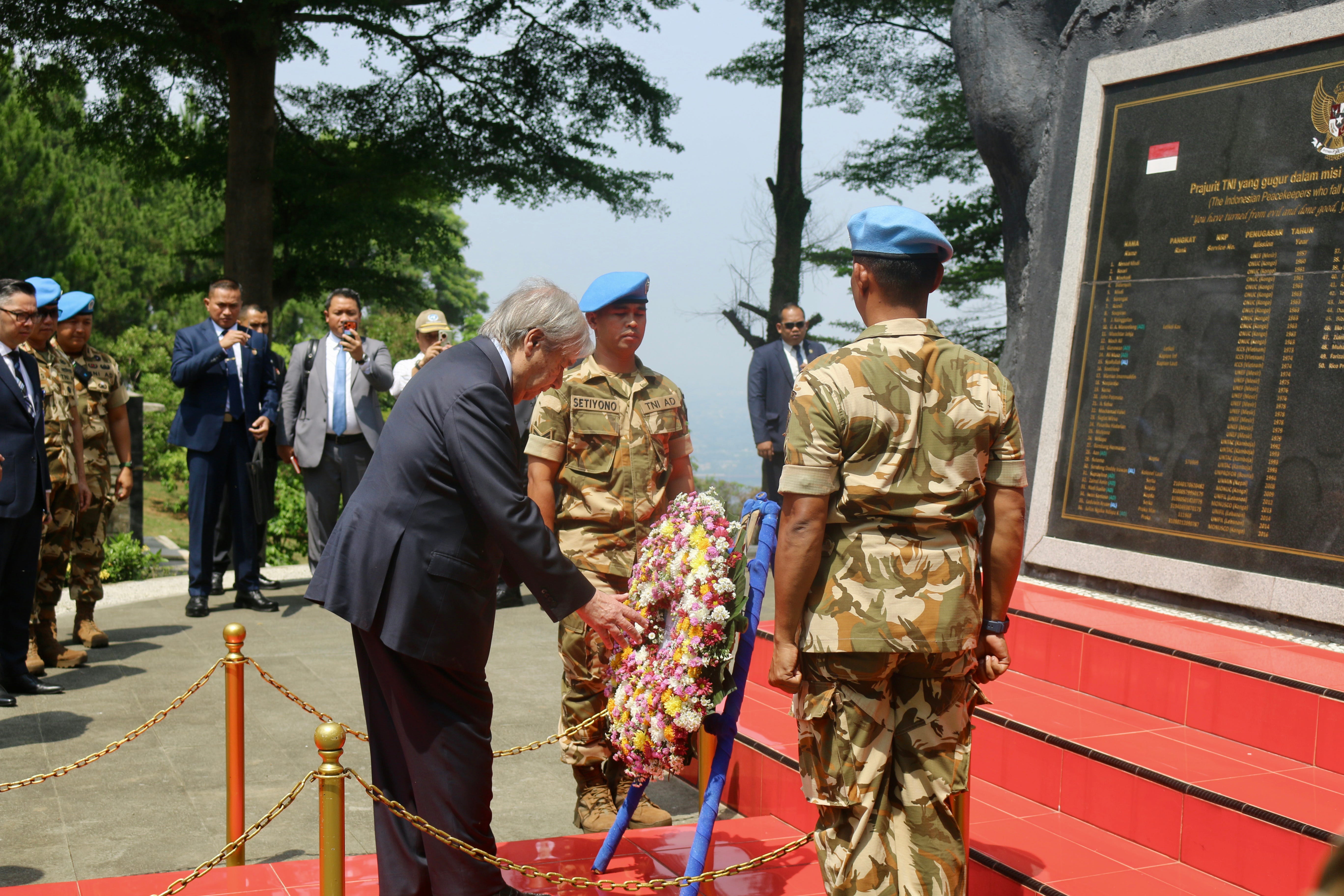
On the same day, Guterres also laid a wreath in honour of 50 Indonesian peacekeepers who lost their lives while serving under the blue helmets, including four who died in Lebanon this year.
Four Indonesian peacekeepers serving with the United Nations Interim Force in Lebanon (UNIFIL) lost their lives in incidents in southern Lebanon on 29 and 30 March.
The first incident involved a projectile strike at a UN peacekeeping base in Adchit Al Qusayr on 29 March, allegedly involving an Israeli tank. A day later, an explosion targeted a UNIFIL convoy in Bani Hayyan, allegedly involving Hezbollah.
UN Secretary-General António Guterres condemned the attacks, stressing that attacks on UN peacekeepers violate international law and may constitute war crimes.
The UN called for accountability and urged all member states to uphold their international law obligations to protect the safety and security of UN personnel serving in peacekeeping missions.
➕ Additionally…
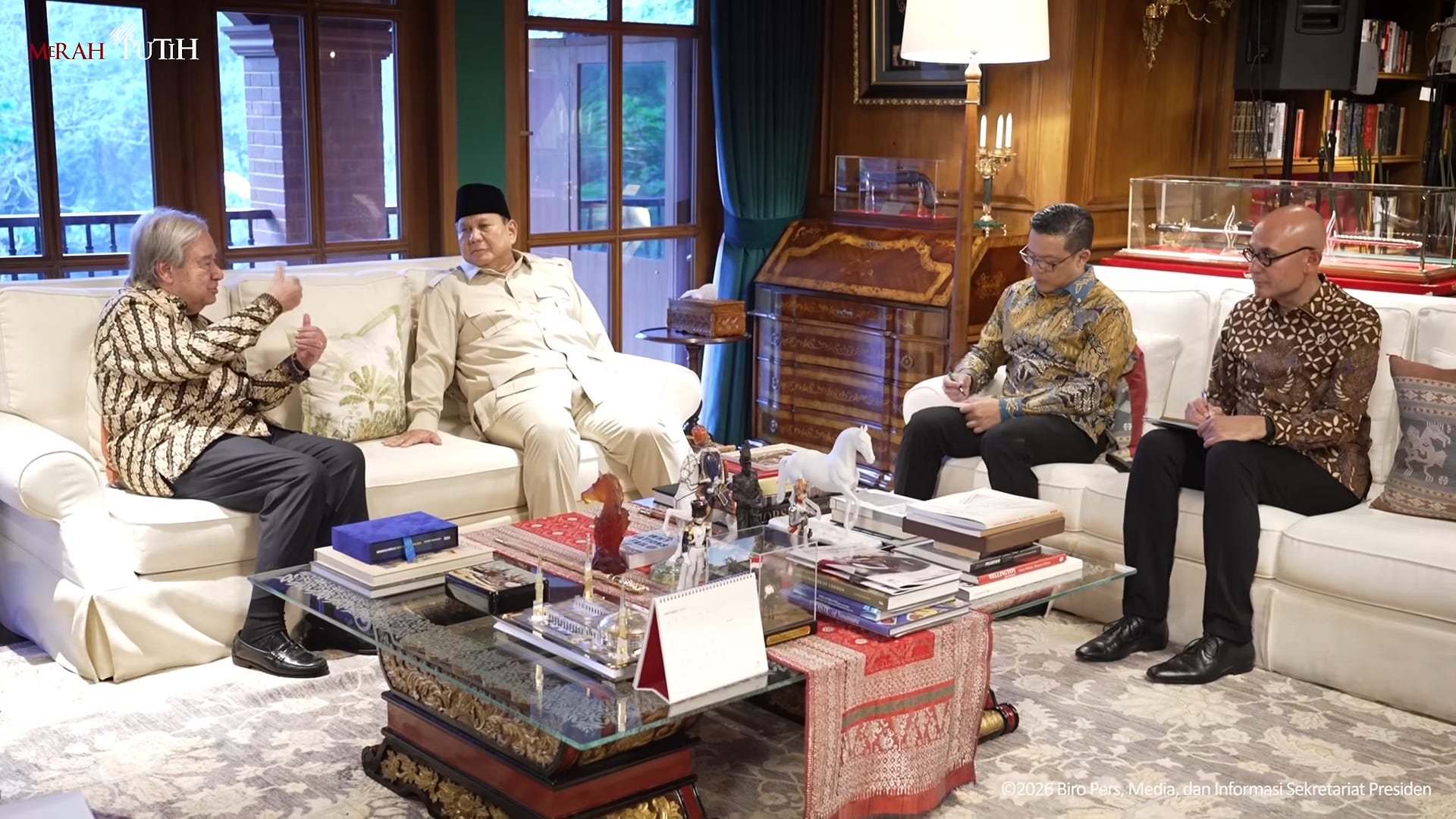
UN Secretary-General António Guterres also held a bilateral meeting with Indonesian President Prabowo Subianto at the president’s private residence in Hambalang, West Java, on Sunday (18/10).
Although the Presidential Secretariat released no details about the meeting, it said the two leaders discussed several global issues, including multilateral reform, the situation in Palestine, and progress toward the UN 2030 Agenda for Sustainable Development.
The meeting also aimed to strengthen dialogue and partnership between Indonesia and the UN, highlighting the importance of international cooperation and multilateral approaches to promoting peace, stability, and solutions to global challenges.
🌏 The Regional Stakes
All ASEAN member states are also members of the United Nations and have taken some actions to address several issues highlighted by the Secretary-General, including:
Multilateralism: Each ASEAN member state has its own priorities and views on regional and global crises. However, ASEAN continues to promote multilateralism, unity, and centrality through dialogue and cooperation while managing differences.
Palestine: ASEAN foreign ministers support the Palestinian people’s rights to self-determination and their homeland. It also calls for meaningful dialogue and a peaceful resolution based on the two-state solution and international law.
UN reform: Most ASEAN member states called for UN institutional reform to reflect current global challenges, keep dialogue open, improve transparency, ensure international law is upheld, and restore public trust in the United Nations.
Energy transition: ASEAN endorsed the ASEAN Plan of Action for Energy Cooperation (APAEC) 2026–2030 in October 2025. Its 2030 targets include 30% renewable energy in total primary energy supply, 45% renewable energy in installed power capacity, and a 40% reduction in energy intensity from 2005 levels.
Peacekeeping: As of July 2026, seven ASEAN member states had deployed around 3,580 military personnel to UN peacekeeping missions. Indonesia contributed the most, with 1,972 personnel, while Laos, Myanmar, Singapore, and Timor-Leste had not deployed personnel.
Artificial intelligence: ASEAN also adopted the ASEAN Responsible AI Roadmap 2025–2030 to guide policymakers and stakeholders in promoting responsible AI across the region and help ASEAN Member States use AI in a meaningful, impactful, and sustainable way by 2030.
📌 The Bottom Line
The United Nations is not just an international organisation, but also a platform for countries to work together, protect human rights, and build a more peaceful world.
The world needs multilateralism most when countries turn inward. Cooperation is not just about bringing countries together, but also about solving global challenges. Indonesia’s partnership with the United Nations shows that no country can solve these challenges alone.
Supporting Palestine’s independence is not only about recognising its rights, but also about ensuring that international law applies equally to all. Countries must turn their promises into action to support Palestinian self-determination and achieve lasting peace.
Reforming the United Nations is not about weakening the organisation, but making it more representative and effective. The UN must focus on finding solutions rather than letting political divisions and veto powers block progress.
Achieving the Sustainable Development Goals isn't just about setting targets; it's about providing funding and taking action. Countries must turn their promises on clean energy, climate finance, and responsible AI into real results to protect people and the planet.
🔍 Need More Angles?
ASEAN Center for Energy, The 9th ASEAN Energy Outlook
ASEAN Secretariat, ASEAN Foreign Ministers’ Statement on the Rights of Palestinians to Self-Determination
ASEAN Secretariat, ASEAN Responsible AI Roadmap (2025-2030)
Sekretariat Kabinet RI, Presiden Prabowo Sambut Kunjungan Sekjen PBB António Guterres di Hambalang
UN Trade & Development, Countries agree $300 billion by 2035 for new climate finance goal – what next?
United Nations, Read what was said at the UN
United Nations, Troop and Police Contributors
United Nations Web TV, General Assembly
(JUN/NGO/QOB)