



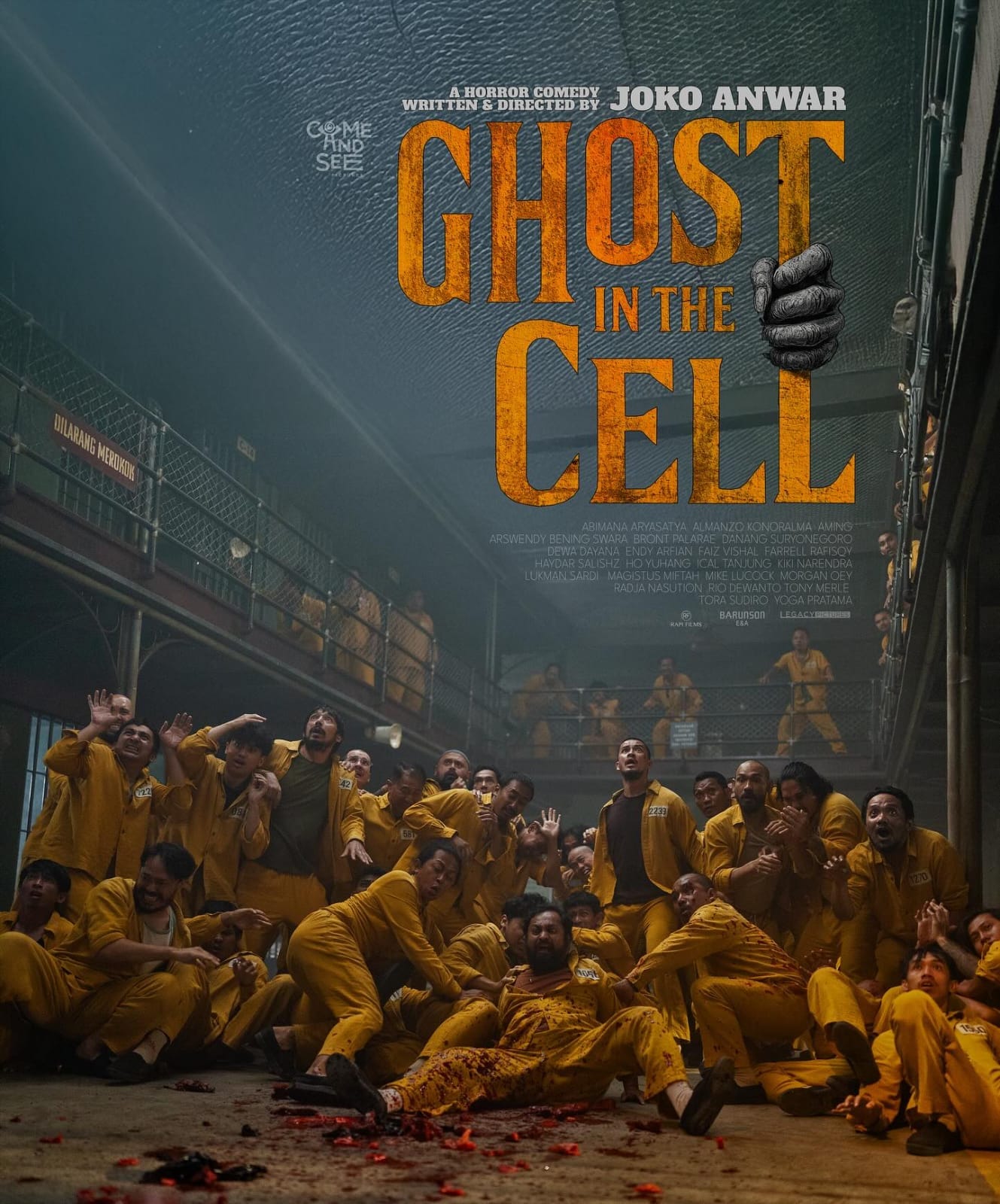
A prison cell is never truly silent.
What lingers is louder than words—fear, memory, guilt, and hope that refuses to die. Inside those walls, brutality is routine. Until something far worse arrives 👻
🎯 The Main Takeaway
Ghost in the Cell, the latest film by Joko Anwar, has been selected for the Berlinale Forum 2026 and secured international distribution—marking a significant moment for Southeast Asian cinema on the global stage.
🔍 Why It’s on Our Radar
This isn’t just another genre title crossing borders.
Ghost in the Cell arrives in Berlin carrying a distinctly Southeast Asian voice—melding horror, dark comedy, and social critique to confront power, violence, and confinement from the inside out.
Its selection reflects a growing global appetite for stories that are deeply local in texture, yet urgent and universal in theme.
⚖️ What’s at Stake
Southeast Asian cinema is often boxed into two extremes: arthouse “exotica” or commercial spectacle.
Ghost in the Cell cuts through that divide. Its international reception could help reposition the region’s stories—not as niche curiosities, but as necessary interventions in global conversations on power and accountability.
🎥 The Big Picture
Set inside Labuan Angsana, one of Indonesia’s most notorious prisons, the film is built on a simple but chilling premise: a place where neither humans nor ghosts can escape.
Violence is normalized. Survival is uncertain. Hope is rationed.
When a supernatural presence begins claiming victims one by one, familiar brutality mutates into something far more terrifying. Order collapses. Trust becomes lethal. Rival inmates are forced into an impossible choice: unite—or disappear together.
❤️ Why This Hits Home
The prison in Ghost in the Cell is more than a setting—it’s a metaphor.
For institutions that normalize cruelty. For systems that silence abuse. For the ghosts created not by myth, but by neglect and impunity.
What haunts Labuan Angsana isn’t only supernatural. It’s systemic—and unsettlingly familiar.
🌏 The Regional Stakes
The film’s journey beyond Indonesia is recognition, not coincidence. Ghost in the Cell has been acquired by Germany-based Plaion Pictures, the distributor behind Anatomy of a Fall, Parasite, and The Whale.
Its selection at the Berlinale Forum places it among politically conscious, boundary-pushing works such as Snowpiercer (2014) and Exhuma (2025), reinforcing Southeast Asia’s growing influence in global cinema conversations.
🔎 Beyond the Headlines
Southeast Asia’s horror resurgence is increasingly shaped by two towering figures: Joko Anwar (Indonesia) and Banjong Pisanthanakun (Thailand).

Anwar is known for merging horror with strong narratives and social critique, as seen in Pengabdi Setan, Perempuan Tanah Jahanam, and Siksa Kubur.
Banjong, meanwhile, has defined modern Thai horror with psychologically unsettling films such as Shutter, Pee Mak, and The Medium, all deeply rooted in local culture.
Together, their work signals a regional horror cinema that is no longer peripheral—but influential.
📅 When Will It Be Screened?
Led by an ensemble cast including Abimana Aryasatya, Lukman Sardi, Morgan Oey, Tora Sudiro, Rio Dewanto, and Kiki Narendra, alongside Malaysian actors Bront Palarae and Ho Yuhang, the film reflects a genuinely cross-border Southeast Asian identity.
Ghost in the Cell will screen at the Berlinale Forum from 12–22 February 2026, with its world premiere on 13 February at Berlin’s historic Delphi Filmpalast am Zoo.
The Indonesian theatrical release is set for April 2026—bringing the story home, not as an export, but as a reckoning.
This April, the cell doors open.
The question is not whether you’ll be scared—but whether you’re ready to see what’s been locked inside.
(VIL/VBD/QOB)