



🎯 The Main Takeaway
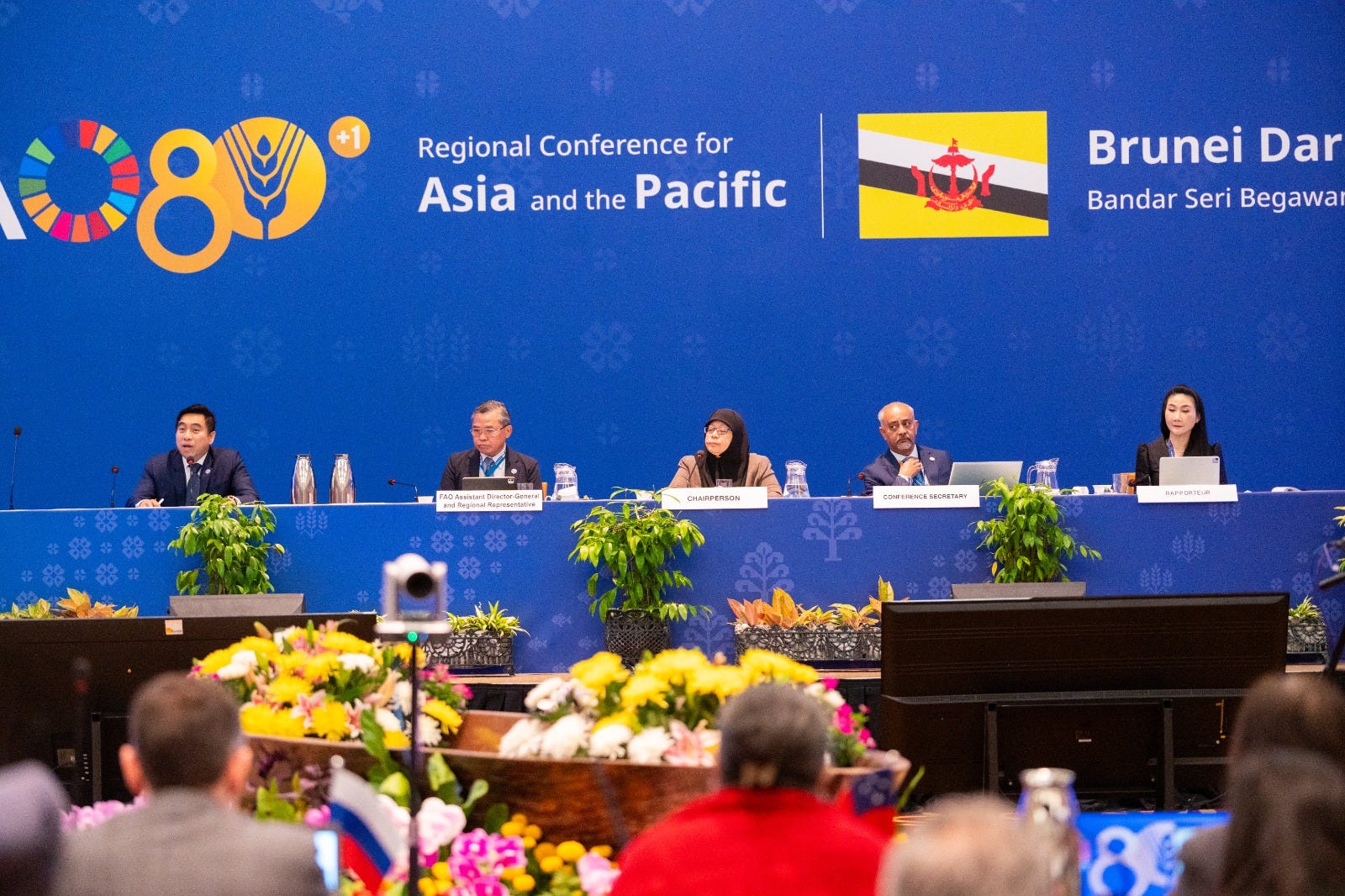
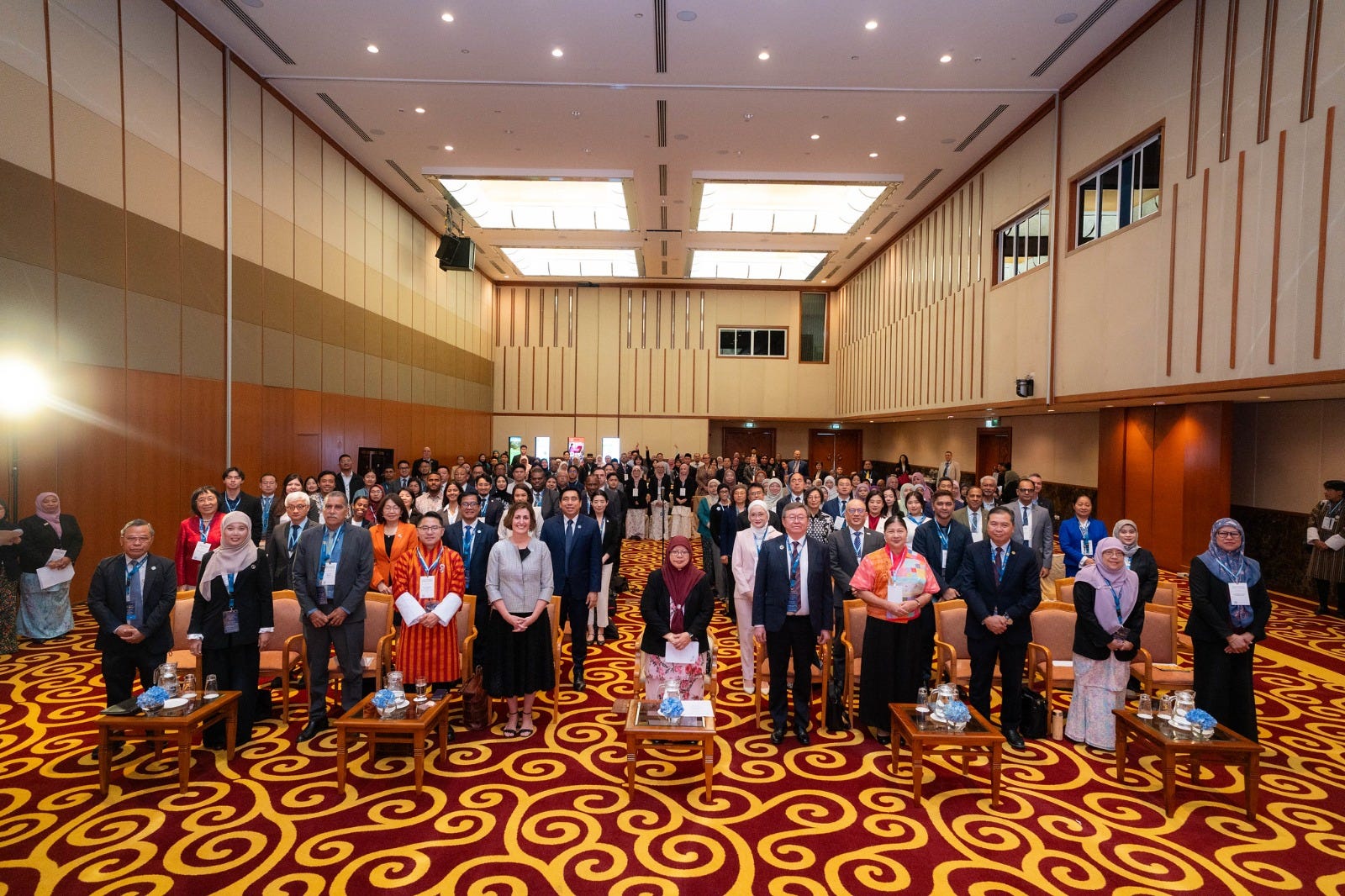
The 38th Session of the Food and Agriculture Organization Regional Conference for Asia and the Pacific (APRC38) was held in April 2026 in Bandar Seri Begawan, Brunei Darussalam.
The event revealed that Asia-Pacific’s challenge is no longer simply how to produce food, but how to ensure that its vast agricultural capacity translates into real food security.
At the center of this shift is a key question — whether smallholder farmers can access the technology, markets, and investment needed to sustain both production and livelihoods.
⚠️ Why It Matters
🌏 Global center: Asia-Pacific accounts for over 50% of the world’s population and food production — making the region central to global food stability
🍽️ Hunger concentration: 42% of the world’s ~285 million undernourished people live in the region — showing that production gains have not translated evenly into access
🌱 Smallholder dominance: 80% of producers are smallholder farmers — forming the backbone of supply, yet remaining highly exposed to shocks
💸 Affordability gap: 1.2 billion people cannot afford a healthy diet — shifting the challenge from availability to purchasing power
📈 Rising demand: an additional 200 million people will need to be fed by 2050 — increasing pressure on already strained systems
🐟 Production paradox: smallholders generate 54% of global agricultural and fisheries output — yet capture limited value within supply chains
🤝 Regional scale: 46 FAO member states participated in APRC38 — reflecting the breadth of coordination required
⚠️ Persistent insecurity: nearly one billion people face food insecurity — underscoring how structural the challenge remains
🧭 Conference Scope
📌 The conference progresses in sequence — from technical groundwork to political direction:
🧩 Senior Officers Meeting (SOM)
🥗 Access lens: food security framed around affordable and nutritious diets — not just supply
🌱 Production shift: accelerating low-carbon and sustainable agriculture under climate pressure
⚙️ System efficiency: improving inclusion across agrifood systems, particularly for small producers
🌐 Market integration: addressing fragmentation in trade and unequal access
💰 Financing need: mobilising domestic and international investment as a prerequisite for transformation
🚀 Asia-Pacific Food Forum (APFF)
💥 Scaling gap: solutions exist across the region — but remain limited in reach and scale
💼 Investment linkage: bridging innovation with financing to move beyond pilot-level impact
🔬 Science to policy: embedding evidence and innovation into decision-making processes
👩🌾 Inclusion driver: women and youth positioned as active agents of change
🤝 System connection: initiatives like Hand-in-Hand and OCOP used to align farmers, markets, and capital
🏛️ Ministerial Session
🍽️ Food security reframed: linking supply with access to healthy diets
🌊 Aquatic systems: fisheries and aquaculture recognised as central to regional nutrition
💡 Innovation priority: technology positioned as essential to sustaining productivity under pressure
🐄 Health linkage: transboundary animal diseases framed as both food and public health risks
🌿 Bioeconomy pathway: expanding food systems into broader resource-based economic models
🔍 Key Highlights
At the Ministerial Roundtable, several innovations include:
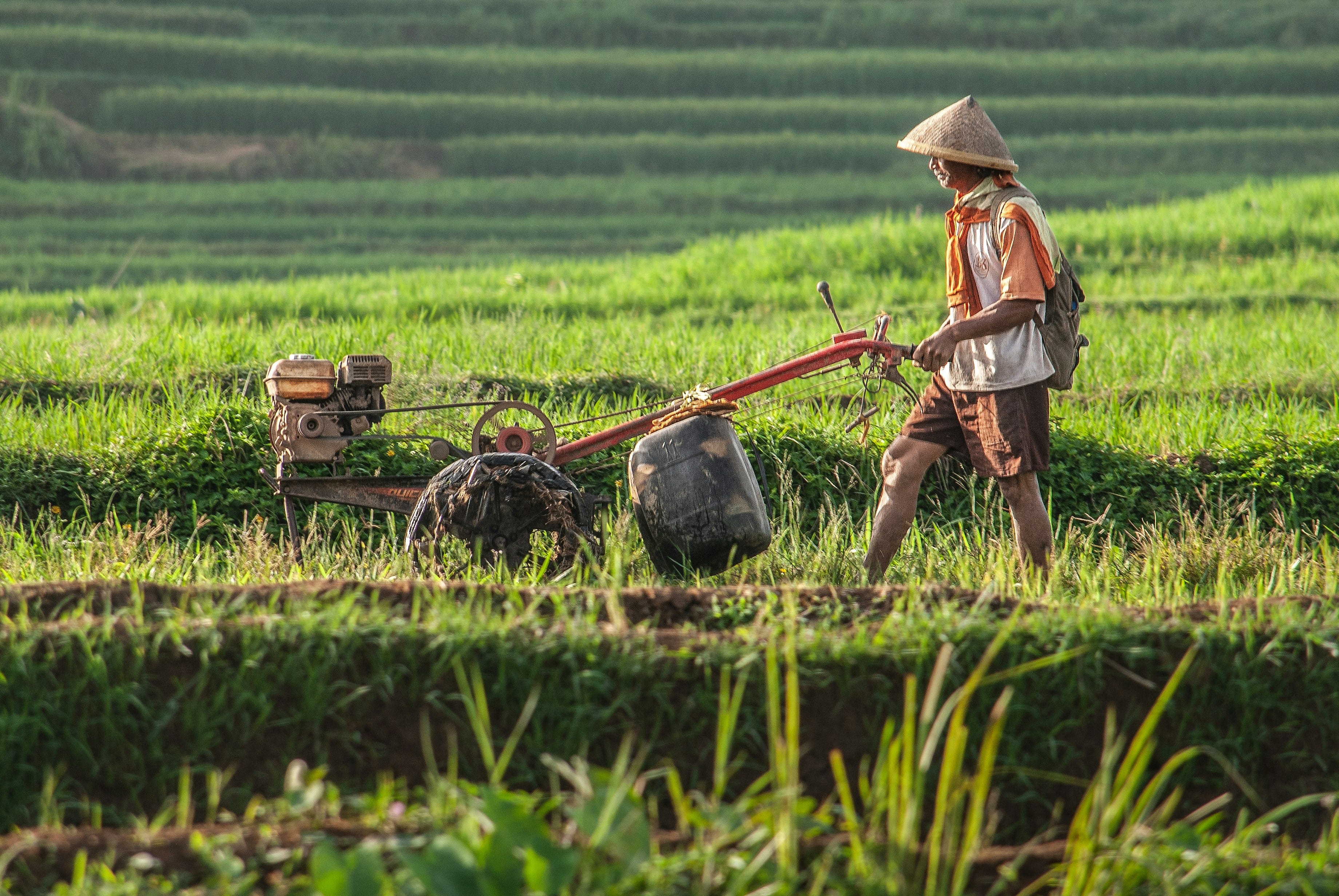
💡 Innovation for food security: advances in crop science, AI, and digital agriculture are expanding — but impact depends on whether smallholders can access and apply them
🐄 Transboundary animal diseases: cross-border outbreaks expose vulnerabilities across both food and health systems, reinforcing the need for One Health approaches
🤝 Investment pathways (HiH): capital is available — but the challenge lies in directing it toward the real needs of small farmers
🌊 Blue Transformation: aquatic food systems are not supplementary — they are central to both nutrition and livelihoods
🌿 Sustainable bioeconomy: biological resources are increasingly viewed as drivers of food, energy, and high-value materials
🌏 The Regional Challenges
For Asia-Pacific, the implications extend beyond food systems — into stability, economics, and regional positioning:
🌍 Middle East conflict (2026): disruptions to global trade and energy markets are increasing agricultural price volatility and constraining fertiliser supply chain
💸 Cost crisis & food inflation: rising energy and input costs are compressing already thin smallholder margins, compounded by declining export revenues to Gulf markets
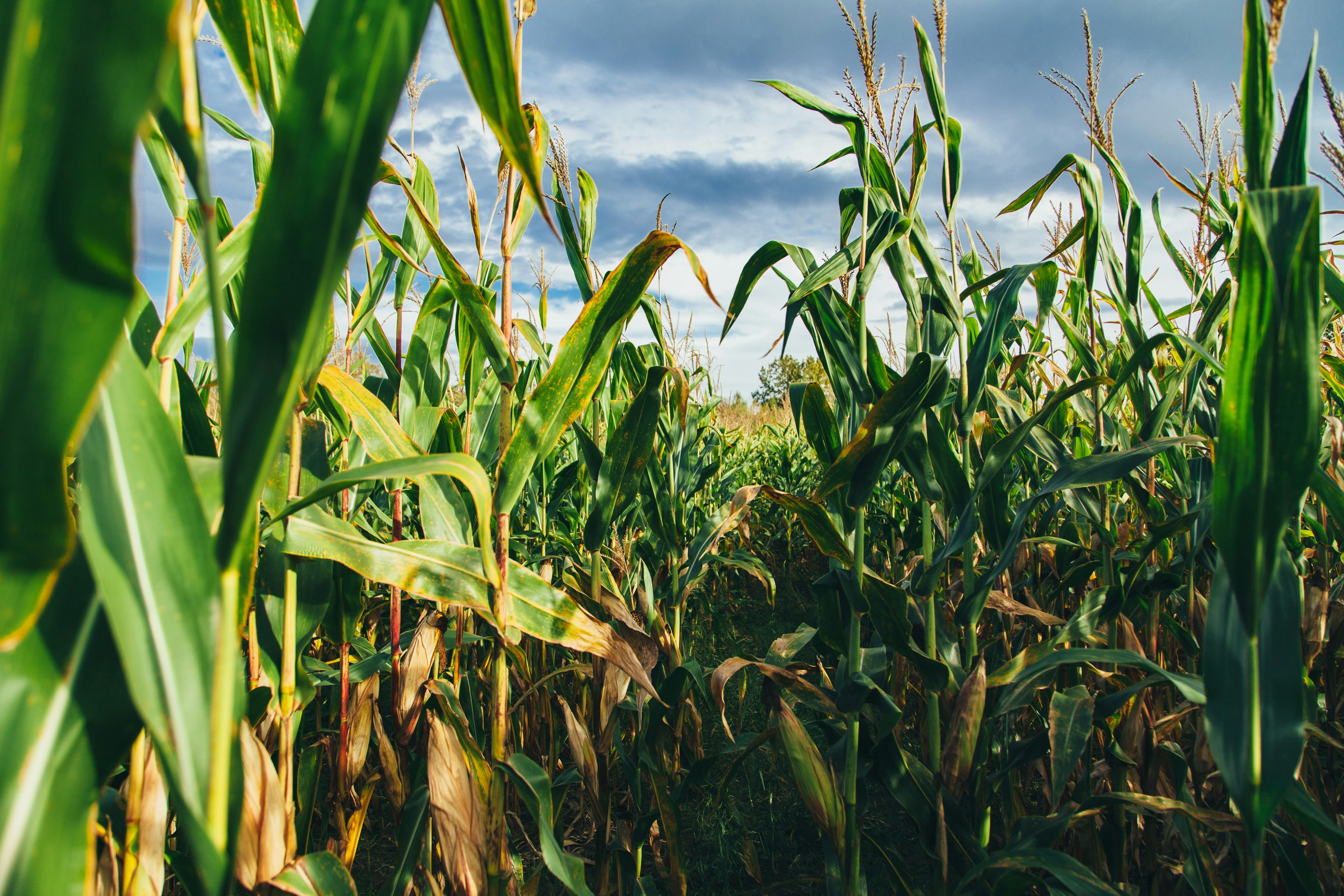
🌧️ Climate change: more frequent droughts, floods, and extreme weather events are directly destabilising agricultural production, worsened by land and water degradation
🥗 Triple burden of malnutrition: undernutrition, micronutrient deficiencies, and rising obesity now coexist — reflecting systemic imbalance
⚖️ Inequality in access: smallholders, women, and youth continue to face structural barriers to technology, finance, and markets
Southeast Asia sits at the intersection of production and vulnerability — as both a major exporter and a climate-exposed sub-region
🔗 Asia-Pacific Response
The response is gradually shifting — from fragmented initiatives to coordinated systems:
🤝 Hand-in-Hand Initiative (HiH): connecting governments, financial institutions, and the private sector with real, data-driven needs on the ground
🌾 One Country One Priority Product (OCOP): strengthening value chains to improve productivity, traceability, and market access
🌐 South-South & Triangular Cooperation (SSTC): countries in the region are increasingly acting as providers of knowledge, innovation, and financing models
🚀 Asia-Pacific Food Forum (APFF): linking solutions with investment and policy — turning priorities into implementation
“These new Centres of Excellence (APFF) will enable smallholder producers in Asia and the Pacific to sustainably increase production with fewer resources, strengthen resilience to natural disasters and climate pressures, deliver healthier food, and enhance the traceability of specialised agricultural products from farm to premium consumers,” Alue Dohong, FAO Assistant Director-General and Regional Representative for Asia and the Pacific.
🇮🇩 Indonesia as a Player
🌍 Within this broader regional landscape, Indonesia reflects both the scale of opportunity and the complexity of the challenge:
📊 Economic role: agriculture contributes around 14% of national GDP and supports over 40 million people
🌱 Structural profile: the sector is largely driven by smallholder farmers, aligning with regional patterns
🌍 Commodity base: palm oil, rice, coffee, and cocoa link domestic production to global markets and potential OCOP value chains
🧭 Regional proposal:
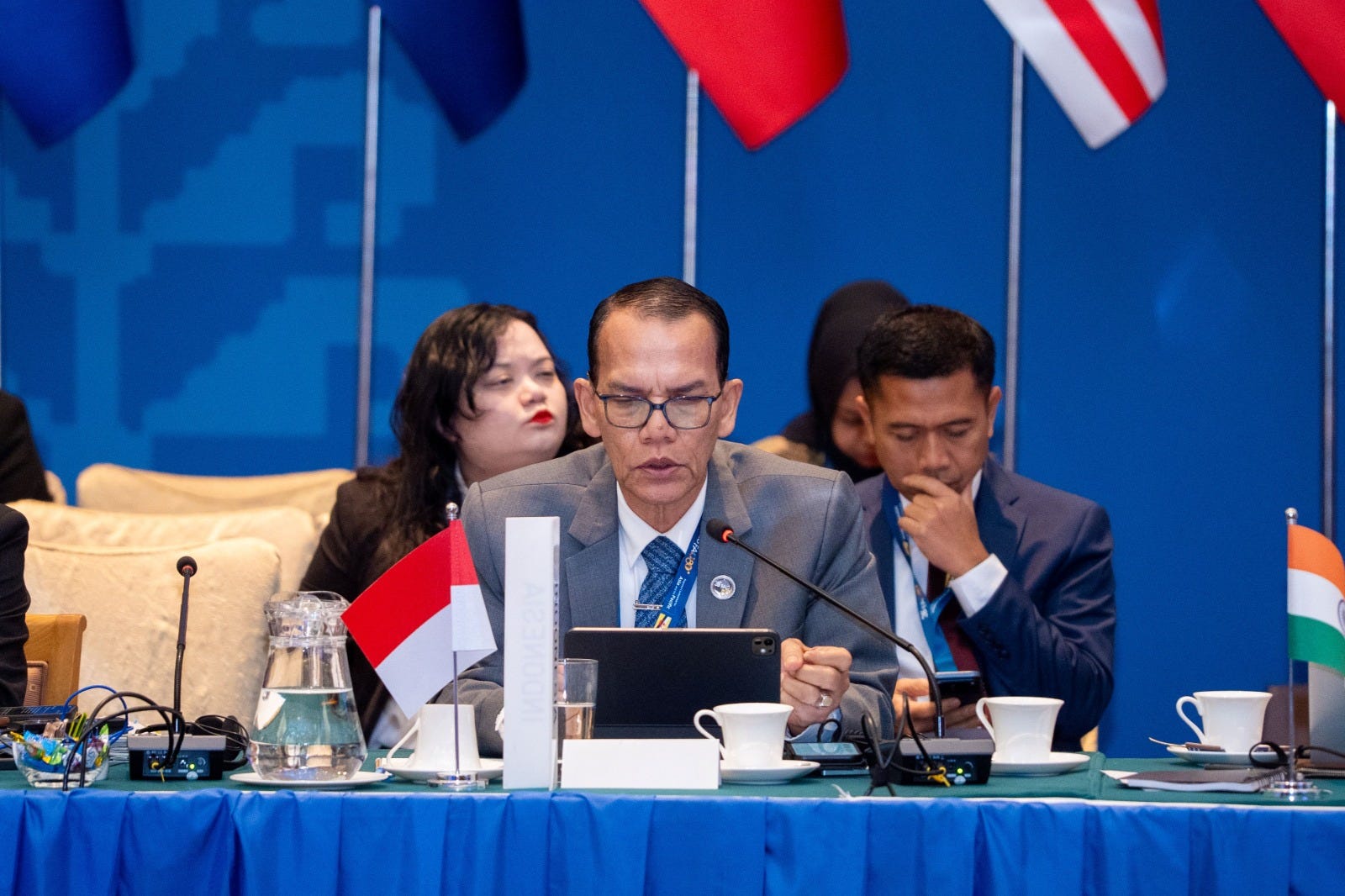
Indonesia proposed exploring a Southeast Asia sub-regional platform to strengthen coordination on food system transformation, with a focus on aligning policies and deepening knowledge exchange across ASEAN. The initiative also aims to mobilise joint investment mechanisms and strengthen structured South-South Cooperation to support long-term transformation.
“Indonesia proposes exploring a Southeast Asia sub-regional platform on food systems transformation to enhance coordination, knowledge exchange, and financing, including South-South cooperation.” Ali Jamil, Acting Director General of Plantations at the Ministry of Agriculture of the Republic of Indonesia
🌍 The Bigger Picture
The conference ultimately points to a deeper structural shift:
⚖️ Production ≠ security: Asia-Pacific produces enough food — yet hunger persists, showing that access and distribution are now the core challenge
🔄 System transition: food systems are moving from yield-focused → resilience, sustainability, and inclusion under pressure
🌡️ Climate multiplier: climate change is no longer a future risk — it is actively reshaping how and where food can be produced
💸 Financing reality: public funding alone is insufficient — large-scale private and blended finance is becoming essential for transformation
🧱 Structural imbalance: smallholders produce the majority of food, yet remain the least protected — exposing a systemic imbalance at the core of agrifood systems

❤️ Why This Hits Home
Farmers are not distant actors in the food system — they are its foundation. Across the Asia-Pacific, smallholders grow the food that sustains households, economies, and entire societies.
Yet hunger, malnutrition, and unequal access to food remain daily realities for millions. These gaps are not just statistics — they reflect how fragile the link is between production and access.
🧭 The Bottom Line
Food security is not just a development goal — it is the basis of continuity for human civilisation.
If the systems that produce and distribute food continue to fracture under pressure — from climate, conflict, and inequality — the consequences extend far beyond agriculture.
Protecting food systems is, ultimately, about protecting the future itself.
📰 Need More Angle?
Food and Agricultural Organization (FAO) The State of Food Security and Nutrition in the World 2025
FAO Regional Office for Asia and the Pacific 38th Session of the FAO Regional Conference for Asia and the Pacific
World Food Programme The State of Food Security and Nutrition in the World (SOFI) Report
(BRZ/QOB)