



🎯 The Main Takeaway
The Eurovision phenomenon is finally conquering the East. 🌏 After a decade of geopolitical hitches, licensing stalls, and a cancelled Australian-led attempt, the inaugural Eurovision Song Contest Asia is set for 14 November 2026 at Bangkok’s IdeaLive Arena. 🇹🇭
Organized by Voxovation under an EBU licence, partnering with Thailand’s Channel 3 and S2O Productions, this live competition adapts the iconic European format for a massive, digital-first Asian demographic. 📱 To win, delegates must navigate a strict 50/50 voting split between professional juries and international public voting 🗳️ across participating nations and the “Rest of the World.” 🌍
🔍 Why It’s on Our Radar
🕰️ A long-awaited revival: The European Broadcasting Union (EBU) originally licensed the format to Australia’s SBS in 2016, but geopolitical friction and pandemic delays scuppered those plans.
🤝 The new power players: Production rights sit with Voxovation (headed by former Eurovision producer Christer Björkman), alongside Thai event giants S2O Productions and host broadcaster Channel 3.
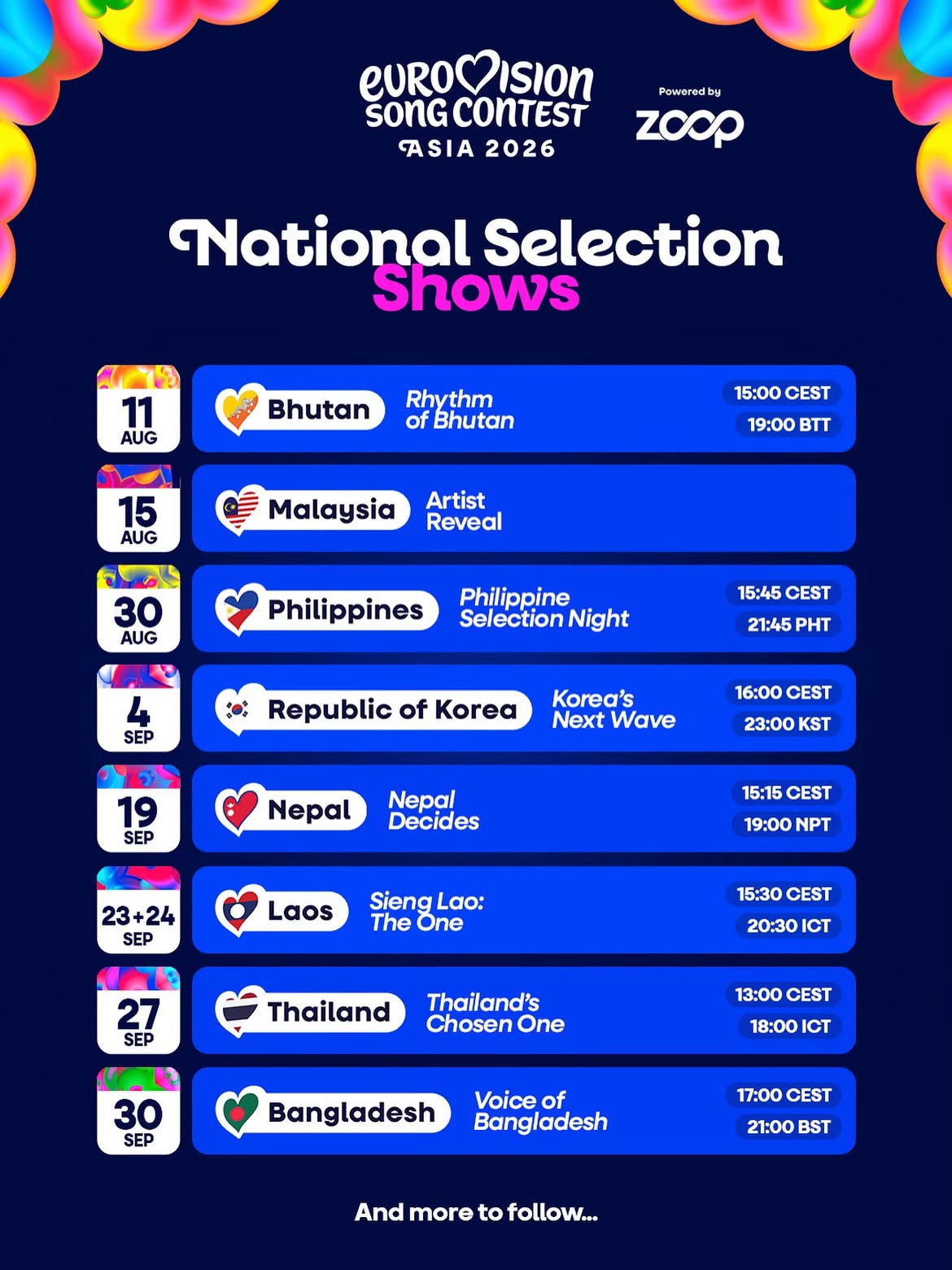
🎤 Auditions in full swing: Broadcasters across a 10-country lineup—South Korea 🇰🇷, the Philippines 🇵🇭, Thailand 🇹🇭, Vietnam 🇻🇳, Malaysia 🇲🇾, Laos 🇱🇦, Nepal 🇳🇵, Bangladesh 🇧🇩, Cambodia 🇰🇭, and Bhutan 🇧🇹—are holding televised selections through September.
🇧🇹 Bhutan leads the pack: On 11 August 2026, Bhutan locked in the first delegate: 24-year-old Nyendra singing “Lhayi Semo.”
🗓️ Upcoming selection dates: Malaysia (15 August), Philippines (30 August), South Korea (4 September), Nepal (19 September), Laos (23–24 September), Thailand (27 September), and Bangladesh (30 September).
🤫 Host reveal pending: Live host details are under wraps until late September. Industry expectations point to a hybrid pair: top Thai broadcast talent alongside an English-fluent international co-host.
⚖️ What’s at Stake
🏛️ Cultural soft power: Participating nations gain a platform with potential global viewings in the hundreds of millions.
🌟 The K-pop factor: South Korea’s involvement elevates the stakes, forcing regional industries to bring arena-grade production values to remain competitive.
🏆 Format credibility: Voxovation needs a flawless Asian rollout to prove the Eurovision model translates outside Europe following the cancellation of the American Song Contest.
🌏 The Big Picture
Asia represents over half the global population and houses the world’s fastest-growing music streaming markets. 🎧 Bridging regional sectors creates an unprecedented cross-border media network. 🌐
🇪🇺 1956: Europe launches the original contest.
🇦🇺 2015: Australia joins the European broadcast as a guest competitor.
🇹🇭 2026: Asia formally launches its own regional edition in Bangkok.
🏠 Why This Hits Home
🪕 Pan-Asian representation: Fans get a rare, non-Western stage where local languages, native instruments, and regional pop tropes compete on equal terms.
📲 Direct viewer influence: International audiences outside participating nations can cast votes via official streams under a unified “Rest of the World” block.
🗺️ The Regional Stakes
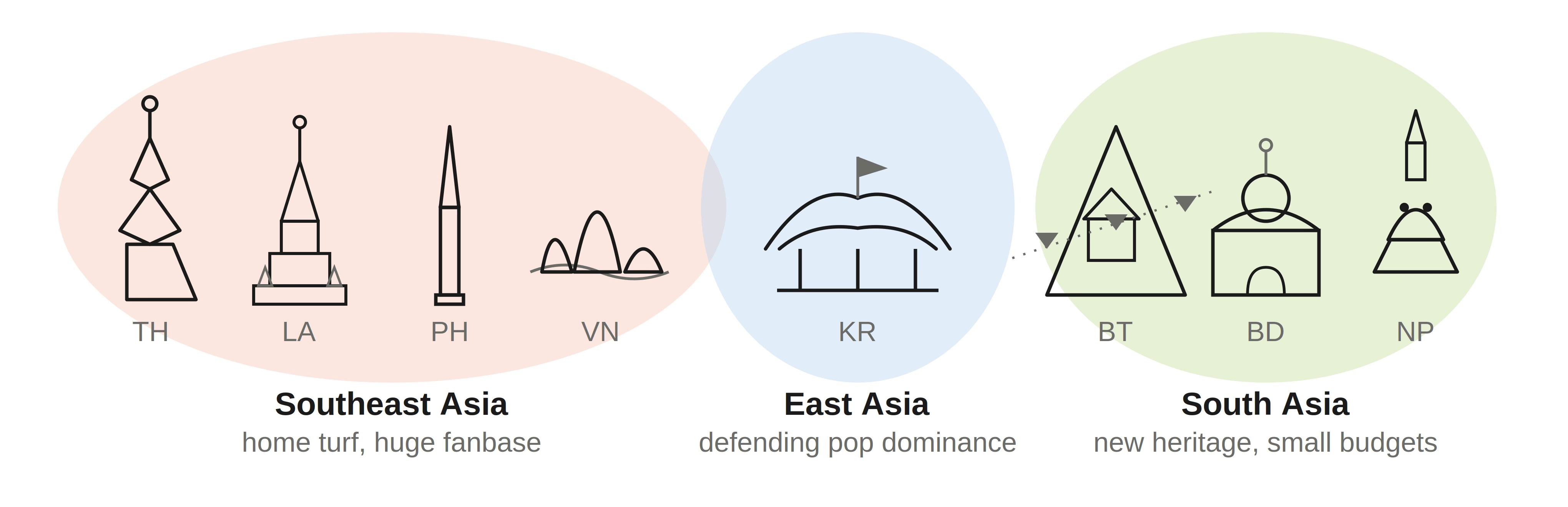
🌴 Southeast Asia (Thailand, Philippines, Vietnam): Banking on massive home advantage and social media fanbases. The Challenge: Translating local digital engagement into cross-border jury votes. 📉
🏙️ East Asia (South Korea): Reinforcing international music dominance. The Challenge: Avoiding voter backlash against overly commercialized entries. 💸
🏔️ South Asia (Bhutan, Bangladesh, Nepal): Introducing distinct cultural heritage to global pop audiences. The Challenge: Competing with multi-million-dollar production budgets from larger markets. 💰
💡 Unique Bits You Might Not Know
✈️ A ticket to Europe: The winner of Eurovision Asia 2026 performs as a featured interval act at the main Eurovision Song Contest 2027 in Europe.
⏰ The 11-time zone hurdle: Australia’s SBS abandoned the original concept largely due to the logistical nightmare of synchronizing live prime-time broadcasts across 11 distinct time zones.
⏱️ Strict 3-minute rule: Every song must stay under 3 minutes with no more than six performers on stage—strictly mirroring the European code. 👯♂️
🏁 The Bottom Line
Nations are picking their champions now. ⚔️ With Bhutan already secured and selection shows running through September, the stage is set for Bangkok on 14 November 2026. 🎆
(NZL/ARS)